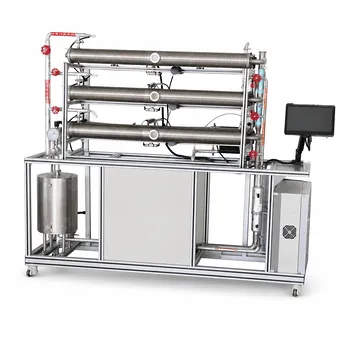
When setting technical requirements for process analyzers in unit operations pilot plants, the parameters you evaluate determine whether the instrument becomes a reliable control tool or a constant source of frustration. At a minimum, you must define the measurement objective—quantitative or qualitative—and nail down the required analysis speed, accuracy, and precision. Then, map those targets against the physical state of the sample (gas, liquid, slurry, solid) and the process environment’s temperature, pressure, corrosiveness, viscosity, and toxicity. The critical filter is ruthlessly separating necessary specifications from the tempting but non-essential “nice-to-haves.”
Setting analyzer requirements is not a sensor shopping list; it is a multidisciplinary exercise that balances analytical performance with harsh process realities, mechanical integration constraints, and the specific pedagogical or research goals of the pilot plant. Begin by defining the process-control problem, then frame every performance parameter around what is technically achievable and truly required to demonstrate the unit operation successfully.
Define the Measurement Objective First
All technical requirements must flow from a crystal-clear understanding of what the analyzer is supposed to accomplish in the pilot-plant loop.
Quantitative vs. Qualitative Determination
A quantitative analysis measures a concentration, yield, or conversion, typically demanding traceable calibration and tighter error control.
A qualitative trigger, like detecting a breakthrough or a phase change, may accept threshold‑level signals and far looser precision.
Choosing between them defines the subsequent accuracy, speed, and sampling demands.
The Speed–Accuracy–Precision Triangle
These three parameters interact, and they are limited by fundamentally different error sources.
Accuracy measures how close the online reading is to a trusted reference; it is capped by calibration model errors, sampling inhomogeneity, time assignment mismatches, and the reference method itself.
Precision captures repeatability over time and is dominated by process fluctuations and instrument noise/drift—typically about ten times better than accuracy in dynamic pilot‑plant streams.
When setting requirements, specify the minimum acceptable accuracy for the control loop, then verify that the expected precision can deliver a usable signal-to-noise ratio.
The “Must‑Have” vs. “Nice‑to‑Have” Discipline
Pilot plants operate under tight budgets, limited space, and clear teaching or research scopes.
Requirements should be stripped to those that directly enable the target process‑control demonstration.
Leave complex features like multi‑component chemometric models or redundant internal diagnostics on the “nice‑to‑have” list unless they are proven to solve a real pilot‑plant problem.
Characterize the Process Stream and Its Quirks
An analyzer’s theoretical performance means nothing if the sample it receives is unrepresentative, fouled, or out of phase.
Physical State and Phase Stability
Different technologies are sensitive to phase. For example, process NMR demands a completely liquid sample—any solids quench the proton signal and destroy accuracy.
Slurries or waxy streams require heating (e.g., to ≈80 °C) to reduce viscosity and keep all components dissolved.
Specify the expected phase envelope, including potential crystallization or phase‑transition points, so the sampling system can be designed to match.
Temperature, Pressure, and Viscosity
Temperature swings disturb not only the sample but also the analyzer itself. NMR, for instance, tolerates no more than ±3 °C drift at the probe to maintain magnetic field stability.
High‑viscosity fluids demand sample‑line heating and often dictate minimum transport velocities to avoid plugging.
Pressure ratings influence the materials of construction and whether the analyzer must be installed post‑let‑down.
Corrosiveness, Toxicity, and Hazard Ratings
The process stream’s chemical aggressiveness dictates wetted parts and sealing materials.
Flammability, toxicity, or dust‑explosion risks drive the need for explosion‑proof enclosures, inert purges, or sealed sample loops.
These safety‑related parameters are never negotiable—they become hard boundary conditions in your technical specification.
Sampling‑System Dynamics
Flow‑rate requirements can be high; for NMR, trans‑port streams typically run 260–340 liters per hour to ensure fresh sample at the probe.
Include startup and shutdown scenarios: dead‑legs or sudden temperature drops can cause condensation, product degradation, or blockages that corrupt the analyzer input.
Map Mechanical and Installation Constraints
Even the most brilliant analytical principle fails if the physical fit is wrong.
Probe Dimensions and Insertion Depth
Insertion probes must match the pipe diameter and penetration depth to sit in the representative flow zone, avoiding wall effects or stagnant pockets.
Large‑format probes may require flanged nozzles that influence piping layout from the earliest design stage.
Utility and Space Footprint
Analyzers consume electricity, instrument air, cooling water, or even specialty gases. In a crowded pilot‑plant bay, these utility demands must be mapped against existing distribution panels.
The unit’s physical size and weight matter. A floor‑standing chromatograph with a large shelter may be impractical in a flexible teaching lab.
Communication Protocols and Control Integration
Automation engineers need to read the sensor signal into the pilot plant’s DCS or PLC.
Specify the signal type (4–20 mA, HART, Modbus, Profibus, etc.) early to avoid expensive converters or interface gaps.
Account for Operational and People‑side Constraints
A pilot plant is a living laboratory; technical requirements that ignore the human operator and the maintenance schedule will waste money and time.
Cross‑functional Coordination
Requirements must be written with input from site operations (process know‑how), analytics specialists (sampling interface design), automation engineers (control loop integration), and maintenance staff (reliability and accessibility).
Without this collaboration, the “perfect” analyzer may arrive with a sampling skid that operators cannot safely prime.
Training and Labor Availability
Sophisticated instruments demand skilled personnel for routine calibration and troubleshooting. In a university pilot plant, student turnover is high—so ease of use and error‑resistant interfaces become genuine technical requirements, not luxuries.
Total Lifecycle Cost
Capital cost is just the entry ticket. Factor in utility consumption, consumables (carrier gases, reagents), and anticipated maintenance hours.
A proposal that doesn’t align with the lab’s operational budget will stall before any data is collected.
Common Pitfalls and Trade‑offs
Ignoring these subtle realities is what turns a requirements document into a recipe for disappointment.
Over‑Specifying Accuracy and Precision
Targeting laboratory‑grade accuracy on a skid that sees raw, bubbling, corrosive process fluid is a recurring mistake.
Use the precision‑to‑accuracy rule of thumb (≈10:1) to set realistic targets; chasing an accuracy number that the sampling system cannot deliver simply wastes money.
Ignoring Process Dynamics
An analyzer that takes 10 minutes to report a result is useless for fast‑response control loops.
Conversely, startup and shutdown transients may produce off‑spec material that coats or damages the sensor—requirements must call out the range of dynamic conditions, not just steady‑state operation.
Treating the Analyzer in Isolation
The analyzer’s ultimate performance is limited by sample conditioning, time alignment to grab samples, and the quality of the reference laboratory method.
If the lab’s “reference” has poor precision, no online instrument can be validated against it. Always view the analyzer as one link in a measurement chain.
Making the Right Choice for Your Pilot Plant
Once you’ve cataloged the parameters, tailor the final specification to your core mission.
- If your primary focus is demonstrating closed‑loop process control: Prioritize response speed and rugged reliability over extreme accuracy. Direct seamless integration with the control system is a must-have.
- If your primary focus is collecting research‑grade kinetic or thermodynamic data: Specify tight temperature control, high accuracy, and be prepared to invest in a rigorous sampling‑conditioning skid and frequent re-calibration.
- If your primary focus is teaching unit operations: Emphasize analyzers that are student‑proof, intuitive, and provide real‑time visual trends; safety and minimal maintenance should dominate the specification.
- If your pilot plant handles aggressive or hazardous materials: Elevate material compatibility, containment and hazard‑area certifications to the top of the must‑have hierarchy from day one.
By scrutinizing each parameter through the lens of your pilot plant’s true objectives, you turn the analyzer from a potential science‑project bottleneck into a trusted partner that reliably illuminates the process—and teaches the operators exactly what’s happening inside the pipe.
Summary Table:
| Parameter Category | Key Evaluated Parameters | Crucial Design Considerations |
|---|---|---|
| Measurement Objective | Quantitative vs. Qualitative, Speed, Accuracy, Precision | Define loop control needs; maintain the ~10:1 precision-to-accuracy ratio. |
| Stream Characteristics | Phase state, temperature, pressure, viscosity, toxicity | Ensure phase stability, select compatible wetted materials, and plan safety enclosures. |
| Mechanical & Utility | Probe dimensions, physical footprint, utility needs, protocol | Match line diameters, verify available power/gas utilities, and check PLC/DCS compatibility. |
| Operational Factors | Operator skill level, maintenance, lifecycle costs | Choose intuitive interfaces for student labs; factor in consumable and calibration costs. |
Optimize Your Unit Operations Pilot Plants with LABPARK
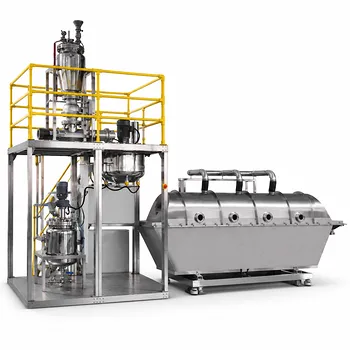
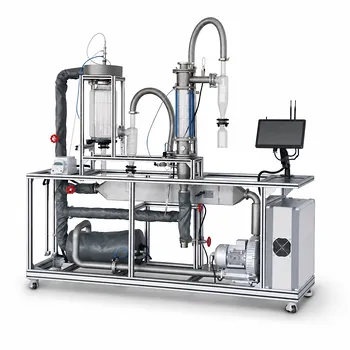
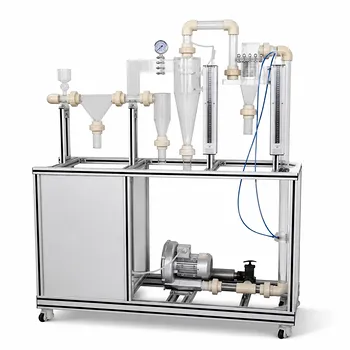
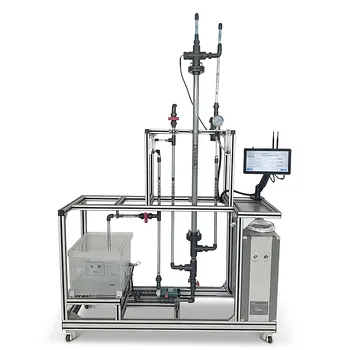
Integrating the right process analyzers is critical to the success of any chemical engineering, bioprocess, or environmental treatment pilot loop. LABPARK provides premium Educational and Vocational Unit Operations Pilot Plants designed specifically for universities, research institutes, and enterprises.
Our systems are built with rugged, industry-standard instrumentation to ensure reliable process control, easy integration, and student-proof operation.
Let us help you build a training platform that bridges the gap between theory and industrial reality. Contact LABPARK today to discuss your custom pilot plant requirements!
Related Products
- Polymerization Granulation and Pellet Processing Educational Unit Operations Pilot Plant
- Multi Pump Fluid Transport Process Piping Unit Operations Training Pilot Plant
- Multimodal Absorption and Desorption Pilot Plant for Unit Operations Training
- Natural Product Extraction Unit Operations Training Pilot Plant
- Multi-Functional Drying Educational Unit Operations Pilot Plant
People Also Ask
- How do educational unit operations pilot plants bridge theory and design? Bridge the Engineering Gap
- How do educational unit operations pilot plants address safety and waste management when scaling up?
- Why Compare Predicted and Experimental Excess Enthalpy? Key to Accurate Pilot Plant Scale-up
- When to transition from PID to adaptive control in pilot plants? Key process indicators.
- Why Use PTFE & Hastelloy in Chemical Pilot Plants? Prevent Corrosion & Ensure Safety