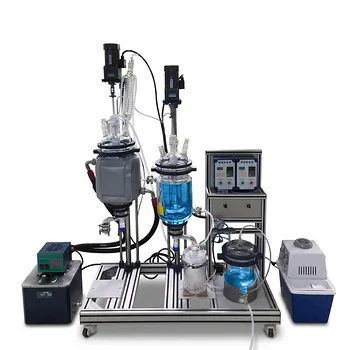
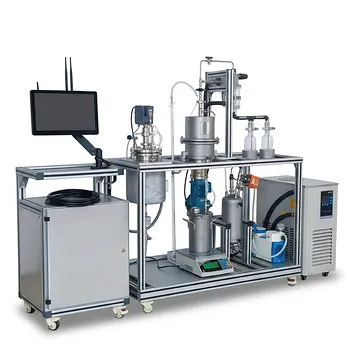
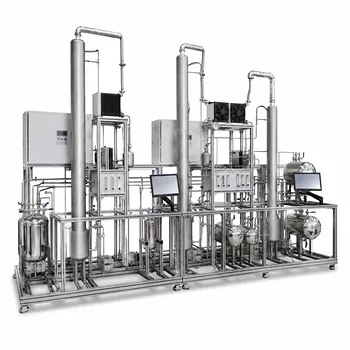
To minimize impurity entrainment and produce high‑purity crystals in a pilot‑scale crystallizer, operators must orchestrate a precise balance of supersaturation generation, hydrodynamic conditions, and downstream solid‑liquid separation. The primary defense against impurity entrapment is to keep crystal growth slow and controlled within the metastable zone—achieved by managing cooling rates, feed concentration, and agitation. An overly aggressive supersaturation profile triggers explosive nucleation, creating fine, agglomerated crystals that physically occlude mother liquor. At the same time, moderate stirring prevents crystal settling without causing shear‑induced breakage, and deliberate seeding directs growth onto well‑formed particles. Finally, the integrated filtration and washing system must displace residual mother liquor with a cold, pure solvent to remove surface impurities without dissolving the product. When all these parameters are correctly tuned on a pilot plant, you can systematically eliminate the pathways that trap impurities inside or onto crystals.
Crystallization purity hinges on controlling kinetics, not just thermodynamics. By staying within the metastable zone, minimizing crystal damage and fines, and using a rigorous, cold‑solvent washing step, you can consistently achieve high‑purity solids—even at pilot scale.
Controlling Supersaturation: The Heart of Purity
The generation and consumption of supersaturation determine whether crystals grow cleanly or trap impurities. In a pilot plant, this balance is governed by thermal load, feed dynamics, and the chosen operating point on the solubility curve.
The Metastable Zone and Supercooling
Every solute has a metastable zone—a region of mild supersaturation where crystal growth occurs but spontaneous nucleation is suppressed. Working within this zone is the single most effective way to avoid impurity entrainment. The supercooling ($\Delta T$) directly dictates the balance. For many systems, a low $\Delta T$ (e.g., below 4 °C for magnesium sulfate heptahydrate) yields controlled, high‑quality growth. Exceeding a critical $\Delta T$ (≥ 8 °C) pushes the system into the labile zone, triggering uncontrolled nucleation that forms fragile, needle‑like, or dendrite‑like crystals with occluded solvent.
Cooling and Evaporation Rates
The rate at which supersaturation is generated is just as important as its absolute level. A rapid cooling profile causes a sudden spike in supersaturation, leading to massive secondary nucleation and impurity inclusion. Precise control of the cooling ramp—often using stepwise or linear cooling over several hours—keeps the system inside the metastable zone, allowing growth to dominate. In evaporative crystallizers, the heat input rate and vacuum level must be similarly constrained to avoid localized supersaturation peaks near heating surfaces.
Feed Characteristics and Concentration
The feed stream’s concentration, flow rate, and purity directly influence the initial supersaturation when it enters the crystallizer. A highly concentrated feed that is dosed too quickly can create local supersaturation hot‑spots, triggering spontaneous nucleation. Pre‑heating and filtering the feed solution eliminates undissolved nuclei and ensures a uniform composition, preventing erratic nucleation events.
Hydrodynamics and Crystal Damage
The mechanical environment inside the crystallizer can either preserve or destroy product purity. Collisions between crystals or between crystals and the vessel walls create fines that are notorious impurity carriers.
Optimizing Agitation Speed
Agitation must be set at a speed that keeps crystals suspended uniformly, preventing them from settling into a dead zone where localized growth and impurity occlusion occur. Yet shear forces that exceed the crystal’s fracture threshold break larger particles into irregular fragments, increasing the surface area that can entrain mother liquor. The optimal speed is the lowest that still prevents sedimentation while keeping all particles gently fluidized.
Impeller Material Selection
The material of the impeller significantly impacts secondary nucleation. Hard, stainless‑steel impellers can shatter crystals upon impact. Switching to softer impellers made of PTFE or rubber‑coated blades reduces the mechanical energy transferred during collisions. This simple change can dramatically lower the population of unwanted fine crystals, improving purity without sacrificing suspension quality.
Seeding for Uniform Growth
Introducing a carefully prepared seed slurry gives crystals a starting template, suppressing spontaneous nucleation and directing growth onto clean, uniform surfaces.
Inducing Controlled Nucleation
By adding a known mass of milled or sieved crystals at the moment the system enters the metastable zone, you lock the crystallization onto the seed surface. This technique prevents the sudden bursts of nucleation that produce clusters of tiny crystals with trapped impurities. The seed size, mass, and surface quality must be controlled; too many seeds create an excessive surface area that spreads growth too thin, while too few seeds can still allow some spontaneous nucleation.
Fines Management: Eliminating Microscopic Impurity Carriers
Fines—particles smaller than a few tens of microns—are a direct consequence of excessive nucleation or mechanical breakage. Their high specific surface area and rapid dissolution/re‑growth make them a sink for impurities.
Fines Destruction Loops
A fines destruction loop passes a slipstream of slurry through a heat exchanger or an undersaturated zone to dissolve the smallest crystals, then returns the clarified mother liquor to the crystallizer. This continuously purifies the crystal size distribution, removing the particles most likely to entrap mother liquor. Implementing a fines destruction loop on a pilot plant allows you to study the interplay between dissolution kinetics and product purity in real time.
Feed Pre‑treatment
Pre‑heating the feed to dissolve any dried‑in nuclei and then passing it through a fine filter removes external seed sources that would otherwise catalyze uncontrolled nucleation. This simple step is often overlooked but can deliver a step‑change improvement in crystal purity.
Washing: The Final Purification Step
Even a perfectly grown crystal meets a layer of impure mother liquor when it leaves the crystallizer. The washing and filtration protocol removes that contamination and must be designed not to re‑introduce impurities or dissolve the product.
Cold Solvent Wash
Using a cold, pure solvent that is identical to (or fully miscible with) the mother liquor displaces the adhering impurity‑laden solvent without rewetting the crystal surface. The wash solvent must be pre‑cooled to a temperature at which the product’s solubility is minimal, preventing crystal erosion that would create new surface area and re‑deposit impurities.
Integration of Filtration and Washing
A pilot plant that integrates a pressure or vacuum filter with a spray‑wash system allows controlled cake washing. Optimizing wash ratios, wash‑solvent temperature, and cake thickness ensures that the mother liquor is thoroughly displaced through the cake without channeling. In‑line conductivity or pH probes can confirm that the wash step has removed the desired fraction of soluble impurities.
Understanding the Trade‑offs
No single parameter can be tuned in isolation; every adjustment ripples through the process, often with conflicting outcomes.
- Growth rate vs. purity: Slower cooling improves purity but extends batch cycle time and reduces throughput.
- Agitation intensity vs. breakage: Higher RPMs prevent sedimentation and improve heat transfer, yet increase fines population and impurity entrainment.
- Fines removal vs. yield: Dissolving fines improves purity but directly sacrifices mass; the loop must be balanced against economic targets.
- Aggressive washing vs. product loss: Using too much wash solvent or a solvent that is not cold enough dissolves the crystal surface, lowering yield.
- Seeding level vs. size distribution: Over‑seeding produces a broad size distribution with many small crystals that are harder to wash; under‑seeding risks uncontrolled nucleation events.
Making the Right Choice for Your Pilot Plant Goal
Your operating strategy should be tailored to what you are trying to achieve with the pilot run.
- If your primary focus is maximizing purity: Operate at the lowest sustainable supersaturation (largest metastable zone width), use soft‑impeller agitation just above sedimentation velocity, employ a well‑characterized seed bed, and implement a fines destruction loop followed by a thorough cold‑solvent wash.
- If your primary focus is balancing purity with yield: Accept a slightly higher supersaturation to boost growth rates, limit the fines destruction loop to avoid excessive mass loss, and optimize the wash ratio to remove surface impurities without dissolving product.
- If your primary focus is studying impurity incorporation mechanisms: Deliberately vary cooling profiles and agitation speeds while using in‑situ probes (FBRM, ATR‑FTIR) to correlate process deviations with crystal purity, allowing you to map out safe operating limits.
By methodically controlling supersaturation, hydrodynamics, and washing across the crystallization unit, you transform the pilot plant from a simple scale‑up tool into a precise impurity‑engineering platform—and that directly translates to consistently high product purity.
Summary Table:
| Parameter | Control Strategy | Impact on Purity |
|---|---|---|
| Supersaturation | Keep within the metastable zone via controlled cooling/evaporation | Prevents explosive nucleation and solvent occlusion |
| Agitation Speed | Minimum speed required to maintain suspension | Reduces crystal shear, breakage, and secondary fines |
| Impeller Material | Use soft materials (PTFE or rubber-coated blades) | Minimizes impact energy and mechanical crystal damage |
| Seeding | Add quality seed crystals at the metastable boundary | Directs growth onto templates, avoiding random nucleation |
| Fines Management | Implement a fines destruction dissolution loop | Removes high-surface-area impurity carriers |
| Cake Washing | Displace mother liquor with a cold, pure solvent | Removes surface impurities without dissolving the product |
Optimize Your Crystallization Scaling with LABPARK
Achieving consistent product purity requires precise control over every pilot-scale parameter. LABPARK provides state-of-the-art Educational and Vocational Unit Operations Pilot Plants in chemical engineering, bioprocess & biotech, and environmental & water treatment.
Designed specifically for universities, research institutes, and enterprises, our pilot plants offer the precise control and reliability needed to master complex processes like crystallization.
Ready to elevate your research and training capabilities? Contact LABPARK today to find the perfect pilot plant solution for your facility!
Related Products
- Multi Functional Membrane Crystallization Educational Unit Operations Pilot Plant
- Potassium Salt Thermal Dissolution and Crystallization Separation Educational Unit Operations Pilot Plant
- Multi-Modal Distillation Unit Operations Training Pilot Plant
- Multi-Reactor Educational Pilot Plant for Reaction Engineering Unit Operations
- Dual-Mode Rectification Pilot Plant for Practical Training Unit Operations
People Also Ask
- Why is precise temperature control critical in crystallization pilot plants? Key to Scale-Up Success
- Control Crystallization Pilot Plant Secondary Nucleation: 4 Key Adjustments
- What key factors should be considered when configuring a crystallization unit operations pilot plant?
- What are the benefits of integrating online PAT tools like ATR-FTIR into crystallization unit operations pilot plants?
- How to use crystallization pilot plant agitation speed to identify diffusion vs reaction growth?