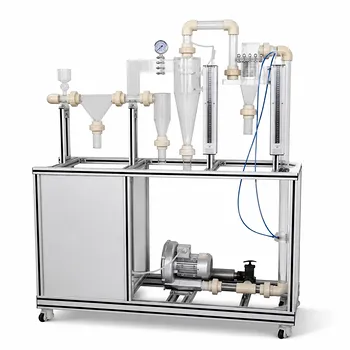
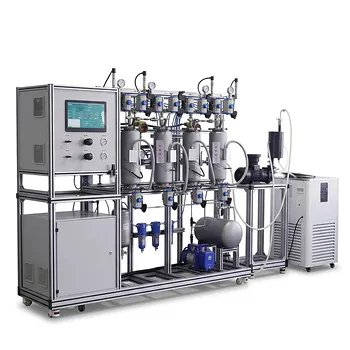
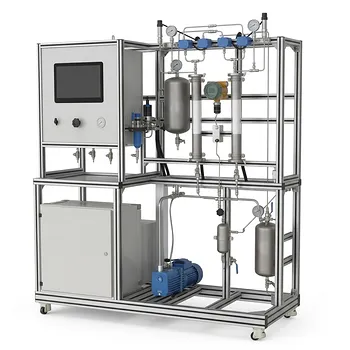
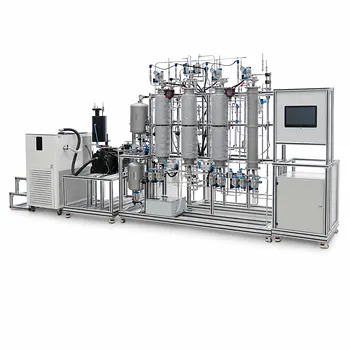
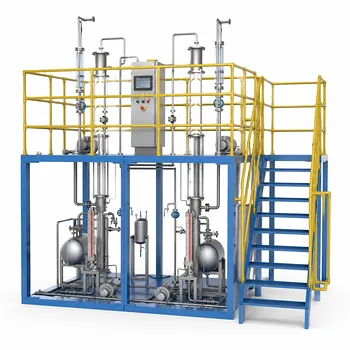
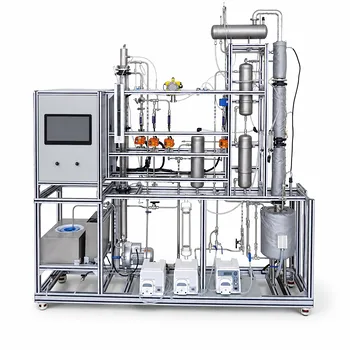
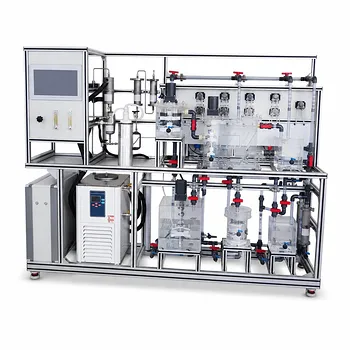
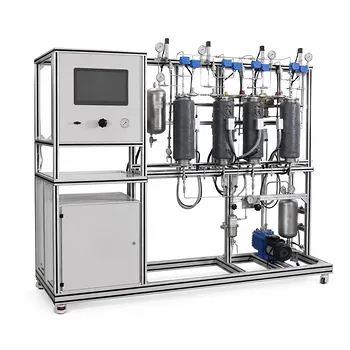
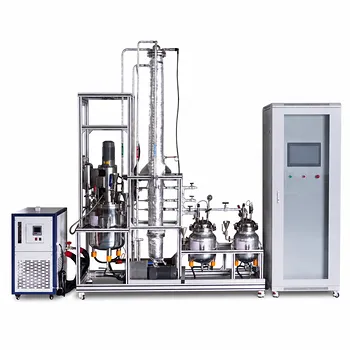
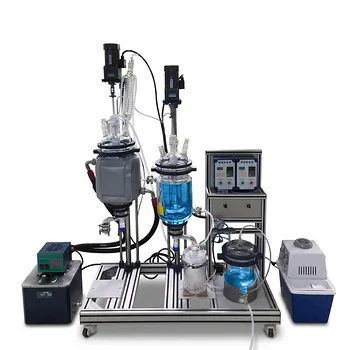
When training operators on a cryogenic gas separation pilot plant containing trace CO2, the non-negotiable operational parameters are precise monitoring of temperature, pressure, and CO2 concentration. The core physical risk is the sublimation of solid CO2 on cold column internals, which can cause blockages, pressure spikes, and safety incidents—so the primary safety measure is preventing that freeze-up by staying above the CO2 solubility limit. In addition, because the plant operates at cryogenic temperatures, training must cover pressure relief system functionality, ambient oxygen monitoring for asphyxiation hazards, cryogenic-safe material handling, and automated emergency shutdown sequences.
The central safety challenge in a trace-CO2 cryogenic pilot plant is managing the relationship between temperature, pressure, and CO2 solubility. Training must first teach operators that allowing the column to drift too cold at a given pressure will cause solid CO2 to form, and then show how to correct course—by raising pressure or temperature—even if that reduces product recovery. All other safety measures, from relief valves to gas detection, serve as layers of protection around that core thermodynamic vulnerability.
Understanding the Freeze-Up Mechanism: Why Trace CO2 is a Hazard
The presence of even small amounts of carbon dioxide in a cryogenic demethanizer creates an outsized risk that trainees must learn to anticipate. Unlike methane and lighter hydrocarbons, CO2 has a much higher freezing point.
The Thermodynamic Trigger
At typical demethanizer operating pressures around 200 psia, the solubility of CO2 in the liquid phase collapses as the temperature drops. When the liquid on the coldest upper trays approaches roughly -166°F, the solubility limit falls to a few mol%. At that point, the CO2 can no longer stay dissolved and nucleates as a solid.
This solid formation accumulates on tray decks and downcomers, restricting flow and altering the column’s hydraulic profile. Trainees need to internalize that the freezing point is not fixed—it is a function of composition, pressure, and local tray temperature.
The Monitoring Triad
Operators must constantly monitor three interlinked process variables to stay ahead of solid formation.
- Temperature Profile: The coldest tray, usually Tray 1, must be kept above the CO2 saturation temperature.
- Column Pressure: Pressure shifts the solubility curve; a higher pressure keeps CO2 dissolved at a given temperature.
- CO2 Concentration: Even trace amounts matter; a rising CO2 fraction in the feed or on a tray reduces the safe temperature margin.
Operating Parameter Adjustments: Working with the Solubility Curve
When the temperature drifts too close to the freeze-up limit, the operator has two primary control levers. Training must make these responses instinctive, while also teaching the downstream consequences.
Raising the Operating Temperature: The Fastest Response
Increasing the temperature of the top section, often by reducing reflux or adjusting a reboiler, directly moves the liquid away from the solid-formation region. This is the most immediate and intuitive response trainees practice on a pilot plant. A few degrees of warming can restore a safe solubility margin.
However, a warmer top tray increases the overhead gas temperature, allowing more light hydrocarbons to escape. This directly penalizes the recovery rate of valuable product, such as ethane.
Increasing the Operating Pressure: The Solubility Alternative
Raising the column pressure forces more CO2 to stay dissolved in the liquid. At a higher pressure, the safe operating temperature window widens. Trainees learn to use a back-pressure control valve to adjust this setpoint when the temperature cannot be easily raised.
This strategy also carries a trade-off: a higher pressure reduces the relative volatility between components, which can make separation more difficult and may require increased energy input in the reboiler.
The Data-Driven Recovery Sacrifice
The pilot plant is the ideal place to let students intentionally induce a near-freeze-up condition under supervision. They measure the exact recovery loss when the temperature is raised by 4 degrees versus the pressure increase of 30 psi. This data-driven exercise transforms abstract safety limits into an economic decision they will face in full-scale plants: safety always wins, but the cost must be understood.
Comprehensive Safety Measures Beyond Freeze-Up Prevention
Operational adjustments are the first line of defense, but a cryogenic pilot plant containing CO2 demands multiple engineered and procedural safety layers. The training program must build muscle memory around these systems, drawing from best practices for handling low-temperature, potentially asphyxiating, and blocked-flow scenarios.
Cryogenic-Specific Hazard Awareness
Low-temperature operations introduce risks that are independent of CO2 freeze-up.
- Frostbite and Embrittlement: Piping, valves, and sample points must be rated for cryogenic service and fully insulated. Trainees must wear appropriate personal protective equipment (PPE) and understand that even non-cryogenic-rated metals can shatter on contact with leaked cold fluid.
- Asphyxiation Risk: Cryogenic liquids like methane or nitrogen, if used for cooldown, rapidly expand to huge volumes of gas that displace oxygen. Rooms housing the pilot plant need calibrated ambient oxygen sensors with audible alarms.
Pressure Relief and Blockage Management
If a CO2 freeze-up does start, it creates a unique flow-restriction hazard. A sudden blockage can cause a rapid pressure rise upstream, exceeding the design pressure of the column or connected piping.
- Pressure Relief Valves (PRVs): All sections that can be isolated must be protected by PRVs sized to handle the worst-case blocked-flow scenario. Trainees must verify these are on-line and unobstructed before every cold startup.
- Differential Pressure (dP) Monitoring: High dP across a tray section is the first sign of incipient freezing. The training program must ingrain the habit of checking dP cells as the primary indicator, triggering corrective action before a safety valve is challenged.
Automated and Procedural Safeguards
Modern pilot plants integrate safety into the PLC (Programmable Logic Controller) and plant design.
- Automated Emergency Shutdown (ESD): A single hard-wired ESD button must initiate a safe sequence—closing hydrocarbon inlets, opening vent lines to flare (or a safe vent), and stopping all heat input. Training includes cascading failure drills where the ESD is activated on detecting a hazardous condition.
- Ventilation and Classification: If the process stream contains flammable hydrocarbons, localized ventilation and ATEX-compliant electrical installations are mandatory. Training must highlight that even trace CO2 freeze-up incidents can lead to a flammable gas release if improper manual venting is used to clear a block.
Understanding the Trade-offs and Common Pitfalls
No training is complete without an objective look at the inherent tensions between safety, efficiency, and cost that operators must navigate. The pilot plant makes these visible.
The Recovery Rate vs. Safety Margin
The most critical trade-off is between maximizing ethane/propane recovery and maintaining a generous CO2 solubility margin. Pushing the column temperature down raises recovery but shrinks the margin. Trainees must learn to interpret solubility curves and set alarms with a defined buffer—often a 5–10°F safety margin above the predicted freeze point—and accept the associated recovery loss.
Operational Responses That Backfire
A novice operator might try to chase recovery by reducing pressure, thinking lower pressure aids relative volatility. This simultaneously lowers CO2 solubility, dramatically increasing the risk of an instantaneous freeze-up. The training must explicitly teach that lowering the pressure is the most dangerous move when already near the solubility limit.
The Maintenance Blind Spot
Solid CO2 that sublimates during warm-up can leave behind blockages that later refreeze, or mask corrosion under insulation. Training must include a standard warm-up and inert gas purge protocol to fully clear all passages, and the discipline to never bypass a high dP alarm as “just a gauge problem” after a freeze-up event.
How to Apply This to Your Pilot Plant Training Program
The exact balance of these parameters depends on your specific plant design and training objectives. Use the following goal-oriented recommendations to structure your curriculum.
- If your primary focus is teaching thermodynamic fundamentals: Center the entire training on the solubility curve experiment—let students map safe and unsafe operating envelopes by varying temperature and pressure and directly observing the dP rise as solid CO2 forms.
- If your primary focus is industrial safety protocol: Run leak and freeze-up drills that force trainees to use the ESD system, verify the functionality of oxygen and hydrocarbon sensors, and practice donning cryogenic PPE under time pressure, with a stress on the asphyxiation hazard above all else.
- If your primary focus is economic process optimization: Have operators perform a structured “recovery vs. margin” study. Task them with producing a clear procedure that defines the recovery sacrifice required for a 10°F safety margin, and justify that decision to a mock plant manager.
In a cryogenic pilot plant handling trace CO2, the most valuable lesson an operator can learn is that process safety is not an add-on—it is rooted in the physical chemistry of the system itself, where reading a temperature gauge is both a safety act and an economic choice.
Summary Table:
| Category | Key Parameter / Measure | Safety Action & Significance |
|---|---|---|
| Critical Monitoring | Temp, Pressure, & $CO_2$ concentration | Prevents $CO_2$ sublimation and solid freeze-up on internals. |
| Process Adjustments | Raise temperature / Increase pressure | Widens the $CO_2$ solubility margin (with trade-offs in recovery). |
| Physical Hazards | Ambient $O_2$ sensors & Cryo-PPE | Protects operators from asphyxiation and cryogenic frostbite. |
| Overpressure Protection | PRVs & Differential Pressure (dP) cells | Detects early blockages and prevents catastrophic overpressure. |
| System Safeguards | Automated ESD (Emergency Shutdown) | Instantly isolates hydrocarbon feed and vents safely during alarms. |
Equip Your Lab for Safe, Hands-On Process Training
Ensure your students and operators learn cryogenic and chemical processes under the safest, most realistic conditions. LABPARK provides state-of-the-art Educational and Vocational Unit Operations Pilot Plants in chemical engineering, bioprocess & biotech, and environmental & water treatment.
Specifically engineered for universities, research institutes, and enterprises, our pilot plants integrate advanced safety features like automated ESD systems and precise process monitoring to deliver risk-free, practical training.
Ready to elevate your training curriculum? Contact LABPARK today to request a quote or consultation!
Related Products
- Gas-Solid Heterogeneous Separation Demonstration Educational Unit Operations Pilot Plant
- Bench Scale Dual Column Gas Separation and Capture Educational Pilot Plant
- Multi-Component Gas Pressure Swing Adsorption Pilot Plant for Unit Operations Education
- Pressure Swing Adsorption Educational Unit Operations Pilot Plant
- Fixed-Bed Chemical Reaction and Gas Dust Tar Removal Unit Operations Pilot Plant
People Also Ask
- Why is pressure drop characterization critical in separation pilot plants? Key operational insights.
- What are the key thermodynamic considerations for gas mixture modeling? Expert Guide
- What are the primary operational objectives and physical requirements when running heterogeneous separation pilot plants?
- What are the material limitations of gas separation pilot plants? Key factors to consider.
- What are the trade-offs in olefin-paraffin separation? Optimize Pilot Plant Performance