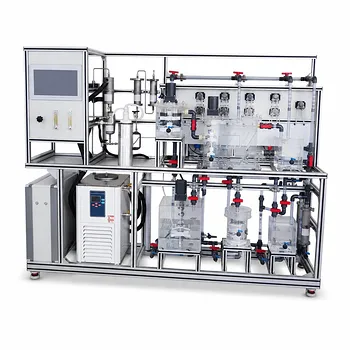
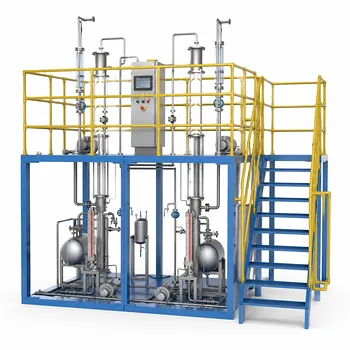
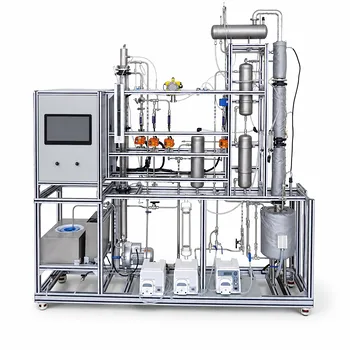
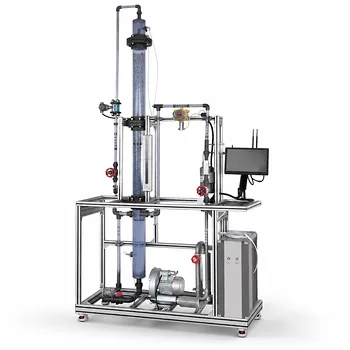
You need to remove the heat of absorption as fast as it is generated—otherwise, the solvent temperature spikes, solubility plummets, and the driving force for mass transfer collapses.
In chemical engineering pilot-plant gas absorption, four practical methods are routinely applied: (1) placing cooling coils or jackets directly on the column trays or in the packing; (2) withdrawing liquid from an intermediate tray, cooling it externally, and returning it to the column; (3) using a shell‑and‑tube absorber where reaction and cooling occur simultaneously; and (4) pushing a high liquid‑spray density so the liquid phase carries away the heat as sensible energy.
The core thermal challenge in exothermic absorption is preserving the solubility driving force, not just preventing a runaway. Each cooling approach trades capital complexity, control responsiveness, and operating cost. Choosing the right method for a pilot plant means matching the heat‑removal strategy to the column internals, the temperature‑sensitive chemistry, and the learning objectives of the experiment.
Why Temperature Control Makes or Breaks Absorption
The solubility–temperature trap
Gas solubility falls as temperature rises, directly shrinking the concentration gradient that pulls the solute into the liquid. If the heat of solution is not removed, the liquid warms up, less gas dissolves, and the column can “stall” at a much lower absorption efficiency than designed.
Pilot plants are often smaller and more sensitive to heat accumulation because the ratio of heat generation to heat loss can be higher than in industrial units. That makes explicit, engineered cooling loops essential, not optional.
How gas bubbles unconsciously help
Turbulence created by rising gas bubbles naturally increases the liquid‑film heat transfer coefficient at cooling surfaces. In a tray column or stirred gas‑liquid contactor, the bubbles keep the boundary layer thin, making jacket or coil cooling more effective than one would predict from still‑liquid correlations. This effect is deliberately exploited in pilot units to safely study highly exothermic reactions in near‑isothermal bulk conditions.
Internal cooling: coils, jackets, and what limits them
The simplest approach is mounting cooling coils or jacketed walls directly on the column plates or around the packed bed. For tray columns, cooling tubes can be positioned in the downcomer or on the tray itself. This keeps the cold surface where the heat is generated, giving fast dynamic response.
However, internal heat exchange is extremely difficult to implement in packed columns. The random or structured packing makes it mechanically impractical to snake cooling coils through the bed without creating flow maldistribution or hot spots. As a result, packed‑column pilot plants almost always rely on external cooling loops.
External Cooling Loops: The Workhorse of Packed Absorbers
How intermediate take‑off works
Liquid is withdrawn from a collection tray part‑way down the column, pumped through an external shell‑and‑tube or plate heat exchanger, cooled, and then reinjected back onto the packing. This strategy breaks the temperature profile into segments, preventing a runaway rise in the lower half of the column.
Pilot‑plant columns typically feature multiple take‑off points, each with a temperature sensor. This lets students map the temperature profile and calculate the local heat load, tying heat‑transfer engineering directly to the mass‑transfer experiment.
Why higher liquid rates become necessary
An external loop forces the liquid to leave the column, lose contact time, and return. To maintain the same effective residence time and wetting of the packing, the circulating liquid flow rate often must be higher than in a purely internal‑cooled design. The additional pump work and the risk of liquid maldistribution are real trade‑offs, but for packed columns this is often the only practical heat‑removal path.
Specialized Equipment and Sensible‑Heat Scavenging
Shell‑and‑tube absorbers
A radically different approach is to replace the absorption column with a shell‑and‑tube exchanger where gas flows inside the tubes and liquid flows outside, or vice versa. Absorption and cooling happen simultaneously along the tube length. This configuration is especially attractive for extremely fast, highly exothermic absorptions (like hydrogen chloride) because the cooling medium can be brought into intimate contact with the reaction zone. The pilot plant becomes a combined absorber‑heat‑exchanger, simplifying the training focus.
Liquid as a moving heat sink
A high liquid‑spray density—far above the minimum required for wetting—can itself be the primary cooling mechanism. The large flow of relatively cool liquid simply absorbs the heat as sensible energy, exiting the column at a modestly elevated temperature. This method is elegant for moderate heat loads where the temperature rise can be tolerated without killing solubility. It eliminates any internal metal surfaces, reducing corrosion concerns, but it directly ties hydraulic design to thermal management.
Understanding the Trade‑offs
Material selection when temperatures climb
Some absorption processes, particularly in acid‑gas removal, deliberately operate with high inlet gas temperatures (180–230 °C) to prevent acid mist formation and to recover low‑grade heat. This high‑temperature environment accelerates corrosion on column internals, piping, and pumps.
In a pilot plant, this forces a hands‑on lesson in materials: low‑alloy cast iron, silicon‑cast iron, or even PTFE linings become essential for safety and longevity. The decision to tolerate higher temperature for mist prevention directly dictates the metallurgical and operating budget.
Internal vs. external cooling: control versus complexity
- Tray columns with internal coils: Excellent dynamic control, minimal external piping. But the coils take up tray area, can foul, and are harder to clean.
- Packed columns with external loops: Mechanical simplicity inside the bed, but require pumps, external exchangers, and careful flow distribution. The thermal response is slower, and the system is more complex to automate in educational settings.
- High liquid spray density: Simplest mechanically, but can lead to higher pump loads, larger column diameters, and potential entrainment issues.
The pedagogical cost of “black‑box” cooling
When a pilot plant hides all cooling inside automated loops, students lose the direct experience of troubleshooting temperature profiles. The most effective teaching units purposely expose the intermediate temperature sensors and manual control valves so that the cause‑and‑effect between heat load and driving force is plainly visible.
Making the Right Choice for Your Pilot‑Plant Goal
After you've mapped the heat of absorption and the solvent’s solubility‑versus‑temperature curve, the cooling strategy can be deliberately matched to the unit’s research or educational purpose.
- If your primary focus is demonstrating isothermal absorption fundamentals: Use a tray column with internal cooling coils. The rapid thermal response and clear tray‑by‑tray temperature profile give students an intuitive feel for how heat removal drives absorption efficiency.
- If your primary focus is operating packed‑bed absorbers safely: Design the column with multiple liquid take‑off points and external shell‑and‑tube coolers. This teaches the unavoidable coupling between liquid circulation rate, heat transfer area, and temperature stability.
- If your primary focus is studying highly exothermic, fast reactions like HCl scrubbing: Replace the absorption column with a shell‑and‑tube absorber where reaction and cooling are integrated. This configuration minimizes safety risks while letting researchers focus on kinetics and mass‑transfer coefficients under nearly isothermal conditions.
- If your primary focus is minimizing capital complexity for moderate heat loads: Rely on a high liquid‑spray density as a sensible‑heat sink, but verify that the resulting temperature rise still keeps the solubility driving force above the experimental target.
Ultimately, the most instructive pilot plant is the one that makes heat removal a visible, controllable variable rather than a hidden utility. When students and researchers can feel the temperature profile shift as they tune a cooling water valve, they internalize the principle that in exothermic gas absorption, thermal engineering is the silent partner of mass transfer.
Summary Table:
| Cooling Method | Mechanism | Key Advantage | Best Suited For |
|---|---|---|---|
| Internal Coils/Jackets | Cooling tubes on trays or jacketed walls | Fast dynamic control; minimal external piping | Tray columns; demonstrating isothermal fundamentals |
| External Loops | Intermediate liquid take-off and external heat exchanger | Simplifies bed internals; segmented temp control | Packed-bed columns; mapping local heat loads |
| Shell-and-Tube Absorber | Simultaneous absorption & cooling inside/outside tubes | Excellent for highly exothermic, fast reactions | Hazardous/fast reactions (e.g., HCl scrubbing) |
| High Liquid-Spray Density | Liquid phase acts as a sensible heat sink | Mechanically simple; zero internal metal surfaces | Moderate heat loads; minimizing capital complexity |
Optimize Your Chemical Engineering Labs with LABPARK
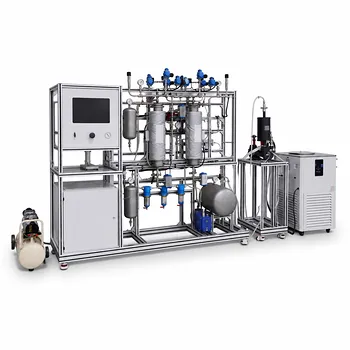
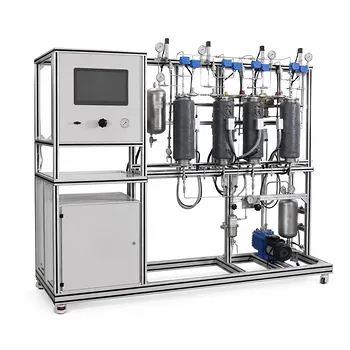
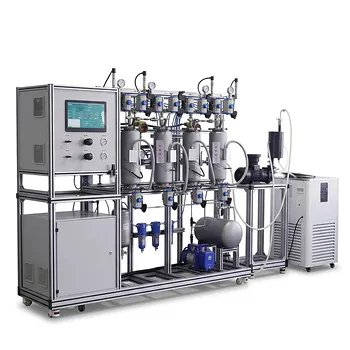
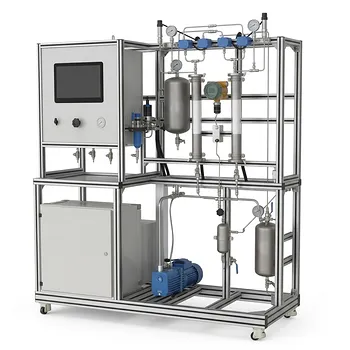
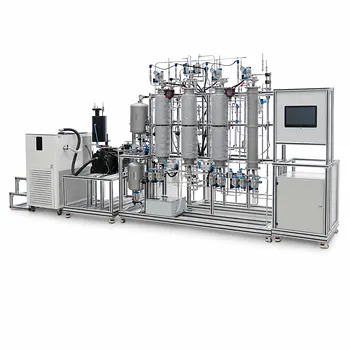
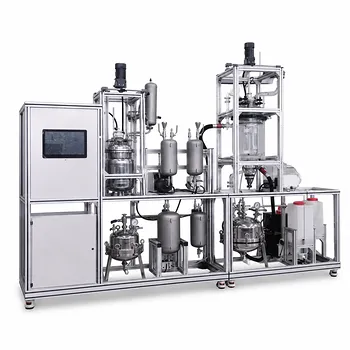
Looking to equip your lab or training facility with high-performance, industry-grade systems? LABPARK provides premium Educational and Vocational Unit Operations Pilot Plants across chemical engineering, bioprocess & biotech, and environmental & water treatment.
Designed specifically for universities, research institutes, and enterprises, our pilot plants turn complex thermodynamic and mass-transfer processes into clear, hands-on learning experiences.
Ready to elevate your research and training capabilities? Contact LABPARK today to discuss your project requirements!
Related Products
- Thermal Desorption Exhaust Gas and Tail Water Treatment Educational Pilot Plant
- Dual-Mode Gas Absorption and Desorption Unit Operations Training Pilot Plant
- Absorption and Desorption Educational Unit Operations Pilot Plant
- Carbon Dioxide Absorption and Desorption Educational Pilot Plant for Carbon Capture Studies
- Packed Bed Absorption Educational Unit Operations Pilot Plant
People Also Ask
- How is P, M, and B alkalinity applied in pilot plants? Prevent Boiler Scaling & Corrosion
- What are inline fluorescence sensor risks, and how can they be managed? Key Strategies
- Lime-Soda vs. Cation Exchange Softening: How Do Effluent Characteristics Compare in Pilot Plants?
- How is iron concentration monitored to evaluate corrosion and filtration efficiency in water treatment pilot plants?
- How do anodic & cathodic inhibitors protect heat exchangers? Optimize Your Water Treatment Pilot Plant