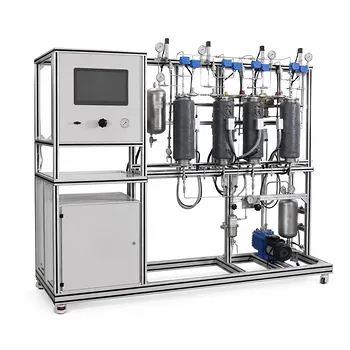
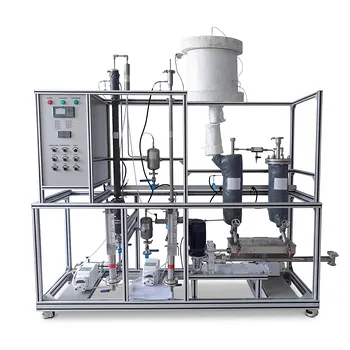
Ammonium carbamate is a silent aggressor in chemical engineering—its solutions demand a deliberate, multi-layered defense to prevent costly equipment failure. To mitigate corrosion in pilot plants handling ammonium carbamate, you must pair high‑grade stainless steel construction with a controlled oxygen/air bleed into the carbon dioxide feed, and favor stripping‑based process designs that drastically reduce the time wetted parts spend in contact with the aggressive liquid phase. These three measures work in concert to protect your pilot plant at the material, chemical, and process‑engineering levels.
The core defense against ammonium carbamate corrosion is not a single “magic” alloy, but a system of reinforcements: a passive alloy that self‑heals its oxide layer, an intentional oxygen trickle to sustain that healing, and a process topology that starves the corrosive medium of residence time. Without this triad, even high‑end metals will eventually fail.
Why Ammonium Carbamate Is So Aggressive
The Unique Challenge of Carbamate Corrosion
Ammonium carbamate is a reactive intermediate that attacks metals through general corrosion and stress‑corrosion cracking. Its aggressiveness stems from the combined presence of ammonia, carbamate ions, and frequently elevated temperatures that accelerate electrochemical reactions.
Unlike a simple acid or base, the solution can destabilize the protective oxide films on which most alloys rely, leaving the underlying metal vulnerable within hours.
How It Defeats Common Materials
Plain carbon steel offers almost no resistance—the solution rapidly strips away any loosely adherent scale and pits the surface.
Copper alloys, while excellent in many service environments, are disastrous here because ammonia forms a stable cupric‑ammonia complex that accelerates copper dissolution in oxygenated water.
This means that any copper‑containing components (heat‑exchanger tubes, instrument lines) must be systematically excluded from the pilot‑plant circuit.
Material Selection: Building Your First Line of Defense
High‑Grade Stainless Steel as the Baseline
The primary line of defense is stainless steel, specifically grades rich in chromium and nickel such as 304, 316, or their low‑carbon variants (304L, 316L).
These alloys naturally form a passive chromium oxide layer that resists carbamate attack—provided it remains intact.
In pilot‑scale equipment, “high‑grade” also means specifying a generous corrosion allowance in vessel walls and pipe schedules to cope with any local breakdown of the film over the plant’s lifetime.
Pair this with stress‑relief heat treatment during fabrication to reduce residual welding stresses, a key trigger for stress‑corrosion cracking.
The Critical Role of Oxygen in Passivation
Stainless steel’s passivity is dynamic; the oxide layer can be scratched or chemically damaged. To keep it self‑healing, a small, controlled amount of air or oxygen is injected into the CO₂ feed stream.
The dissolved oxygen reacts with the steel surface to re‑form the chromium oxide skin, instantly patching microscopic breaches before they grow into pits.
This technique is borrowed from large‑scale urea production, where oxygen is routinely added to the CO₂ to protect stainless‑steel equipment from ammonium carbamate.
In a pilot plant, the oxygen feed must be precisely metered—too little fails to stabilize the oxide, while too much may interfere with later reaction chemistry.
Materials to Avoid and Why
- Carbon steel: Rapid uniform corrosion; not acceptable for wetted parts.
- Copper and its alloys: Succumb to ammonia‑induced complexation; never use in piping, condensers, or instruments that contact the process stream.
- Standard galvanized iron: Attacked by the alkaline nature of the solution and vulnerable to under‑film corrosion.
When designing ancillary circuits (cooling water, heating jackets), perform a full materials‑audit to ensure no unintended metals can contaminate the process side or be attacked by cleaning chemicals.
Process Design: Starving the Corrosive Environment
Stripping Over Recycle: The Genius of Minimal Contact
Traditional carbamate‑solution recycle processes keep a large inventory of corrosive liquid circulating through heaters, reactors, and piping for extended periods.
Stripping‑based processes fundamentally change the game: they rapidly decompose the carbamate and strip out the products, reducing the hold‑up volume and contact time of the liquid phase.
In a pilot plant, this means selecting a flowsheet where the carbamate is formed and immediately decomposed in a falling‑film or packed stripper, rather than being stored and pumped around a loop.
Less liquid residence time translates directly to a lower corrosion dose on the equipment.
Additional Process Safeguards
Design for drainability — eliminate dead legs, low points, and crevices where corrosive solution can stagnate during shutdowns.
Incorporate corrosion monitoring coupons in strategic test sections so you can track actual metal loss and correlate it with process variables.
These coupons, typically of the same stainless steel, provide early warning if the passivation strategy falters.
Where possible, add integrated water treatment loops (deaerators, pH control) to control dissolved gases and ions in utility streams that may contact the process side.
Understanding the Trade‑offs
The Price of Stainless Steel and Oxygen Injection
High‑grade stainless steel and heavier corrosion allowances raise the initial capital cost of the pilot plant.
Oxygen injection, while simple, introduces a potential oxidant that could side‑react with sensitive catalysts or products; its impact on the specific chemistry must be validated before deploying.
The Complexity of Stripping‑Based Pilots
Stripping processes often require higher operating temperatures and energy input, as well as precise level and pressure control to avoid dry running or carry‑over.
For a teaching or early‑stage research unit, this adds a layer of complexity that must be balanced against the safety gains.
Monitoring and Maintenance Overhead
Coupon monitoring, periodic borescope inspections, and chemical cleaning audits all consume operator time and bench resources.
However, the cost of an undetected corrosion failure—lost data, equipment damage, safety incidents—far outweighs this overhead in any environment where ammonium carbamate is present.
Beyond Materials: Embedding Robust Pilot‑Plant Practices
Layering Defensive Design
Stress‑relief heat treatment of fabricated spools and vessels is not optional; it neutralizes the residual stresses that make stainless steel susceptible to chloride‑free stress‑corrosion cracking in this service.
Additionally, PTFE‑lined or glass‑lined components can be reserved for the most aggressive spots—such as the carbamate formation zone—though glass should only be used where no suitable metallic option exists, due to its mechanical fragility.
The Audit Before Every Clean
Before any chemical cleaning (de‑scaling, decontamination), perform a metallurgy‑cleaning‑agent compatibility check.
Stainless steel can be attacked by inhibited acids like sulfamic or hydrochloric acid if left stagnant; avoid these unless the system is thoroughly rinsed and neutralized immediately afterward.
Use only cleaning agents documented to be safe for the specific alloy grade under the intended contact time and temperature.
A Living Safety Protocol
Train all operators on the relationship between oxygen flow, passivation, and visual signs of corrosion (e.g., discolouration, white or brown deposits).
Keep a log of coupon weight‑loss measurements alongside oxygen injection rates. This turns the pilot plant into a learning tool that continuously validates your material‑selection logic.
Making the Right Choice for Your Pilot Plant
Which measure takes priority depends on your specific research or educational mission.
- If your primary focus is maximizing equipment lifespan in a long‑term research campaign: Invest in high‑grade 316L with generous corrosion allowance, implement continuous oxygen passivation, and perform regular coupon monitoring with scheduled inspections.
- If your primary focus is operator safety in a teaching laboratory: Choose a simplified stripping‑based design that minimizes liquid residence time, eliminate all copper components, and integrate fail‑safe oxygen injection with audible alarms.
- If your primary focus is flexibility to test multiple carbamate‑forming reactions: Build a modular skid with quick‑access flanges, specify all‑stainless‑steel wetted parts, and keep a stock of pre‑passivated spares; couple this with a documented material‑cleaning protocol to avoid cross‑contamination.
A pilot plant that handles ammonium carbamate safely is not about a single perfect material—it’s about a living system of passive alloys, active oxide repair, and a process that refuses to give corrosion a foothold.
Summary Table:
| Measure Category | Recommended Strategy & Materials | Key Benefit / Mitigated Risk |
|---|---|---|
| Material Selection | Use 304L/316L stainless steel; inject controlled O2 into CO2 feed | Promotes dynamic self-healing of the passive chromium oxide layer |
| Materials to Avoid | Eliminate carbon steel, copper, and copper alloys | Prevents rapid uniform corrosion and ammonia-induced complexation |
| Process Design | Adopt stripping-based topology; design for complete drainability | Reduces liquid phase residence time and eliminates stagnant zones |
| Mechanical Safeguards | Perform stress-relief heat treatment; install monitoring coupons | Prevents stress-corrosion cracking and tracks active rate of metal loss |
Build Safe, Corrosion-Resistant Systems with LABPARK
Designing pilot plants that handle highly aggressive media like ammonium carbamate requires rigorous material selection and process expertise. LABPARK provides premium Educational and Vocational Unit Operations Pilot Plants in chemical engineering, bioprocess & biotech, and environmental & water treatment.
Whether you are a university, research institute, or enterprise, we deliver customized engineering designs with built-in corrosion safeguards to ensure operational longevity and safety.
Ready to elevate your laboratory capabilities? Contact our engineering experts today to discuss your pilot plant requirements!
Related Products
- Carbon Material Thermal Pretreatment Multiphase Separation Educational Pilot Plant
- Natural Product Extraction Unit Operations Training Pilot Plant
- Multi-Functional Special Distillation Educational Pilot Plant
- Fixed-Bed Chemical Reaction and Gas Dust Tar Removal Unit Operations Pilot Plant
- Methane Cracking Educational Unit Operations Pilot Plant
People Also Ask
- What challenges do gravity transitions present for pressure control in multiphase separation pilot plants?
- How does steady-state multiplicity affect the operation and safety of exothermic reactions within a CSTR pilot plant? - Guide
- Why is temperature regulation via a cooling jacket a critical feature in CSTR pilot plants used for laboratory training?
- What parameters to monitor transitioning from Batch to CSTR? Master Pilot Plant Setup
- How to select the right unit operations pilot plant for liquid separation? A complete guide.