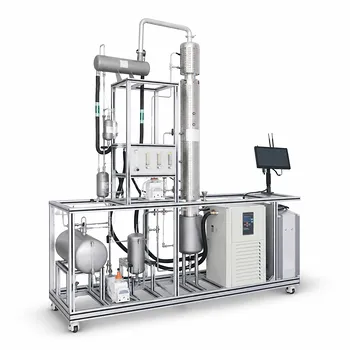
When a utility service suddenly stops, a pilot plant’s safety depends on pre-written, rigorously tested emergency procedures—not on an operator’s ability to improvise in the moment. The key safety procedures you must establish are: (1) a clear Emergency Shutdown (ESD) protocol that safely stops all equipment, (2) specific response plans for each utility outage (power, cooling water, steam, inert padding, compressed air), (3) major release containment steps, and (4) post-incident waste disposal and cleanup procedures.
A pilot plant’s emergency procedures are only as strong as the hazard analysis that created them. The real goal is not just a binder of checklists, but a fail-safe system where each outage scenario has a pre-engineered safe state—grounded in layered protection from inherent design to pressure relief—so that no single failure escalates into injury or release.
The Anatomy of an Effective Emergency Shutdown Protocol
An emergency shutdown is not a single switch; it is a choreographed sequence designed to bring the plant to a safe, energy-free condition without triggering a new hazard. Your protocol must be unambiguous, step-by-step, and practiced.
Trigger Conditions Must Be Defined Without Discretion
Every shutdown procedure starts with a clear, unambiguous trigger. Do not rely on an operator’s judgment under stress.
Define specific, measurable thresholds: a sudden pressure spike above the reactor’s design limit, a rapid temperature rise beyond cooling capacity, a confirmed loss of containment, or a manual emergency stop activation. These triggers should be linked directly to the plant’s critical alarms and automatic interlocks, ensuring that the decision to shut down is as objective as possible.
The Shutdown Sequence Must Fail Safely, Not Just Stop
Stopping a pump is rarely enough. A proper ESD protocol dictates the exact sequence of valve closures, heating medium cutoffs, and agitation stoppage.
For example, in an exothermic reaction, you must maintain agitation and cooling while stopping reactant feeds for as long as possible to avoid a thermal runaway. The procedure must also address how to secure hazardous energy sources. Once the plant is in a safe state, a lockout/tagout (LOTO) step should be included to isolate electrical, mechanical, and pressure energy before anyone re-enters the area, preventing accidental re-energization during inspection.
The Foundation Is a Multi-Layered Safety Design
An emergency protocol only works if the plant is designed to give you time to react. The underlying safety concept must include these layers:
- Inherent safety: Minimize hazardous inventories and choose process conditions that are impossible or difficult to run away.
- Basic Process Control Systems (BPCS): Regulate temperature, pressure, and flow to keep the plant in a stable envelope.
- Critical alarms and human intervention: Give the operator a clear window to act before automatic systems engage.
- Automatic safety interlocks (SIS): Independent shutdown paths—like a separate low-level switch that closes a feed valve directly—that do not rely on the BPCS software.
- Pressure relief systems: The final safeguard to prevent catastrophic vessel rupture.
When you write emergency procedures, you must map each step onto these layers to ensure no single failure disables your ability to shut down safely.
Developing Robust Utility Outage Response Plans
A utility outage is a chain reaction in disguise. Each loss scenario demands its own dedicated response plan because the safe state of every valve and piece of equipment may change depending on which service fails.
Loss of Electrical Power
In a power outage, all electrically driven equipment stops. The procedure must answer one question: what fails open, and what fails closed?
Fail-safe valve positions must be predetermined. A cooling water valve should fail open (unless it presents a flood risk), while a fuel gas valve to a furnace must fail closed. Critical instrumentation should be on uninterruptible power supplies (UPS) long enough to monitor decay heat or complete a safe shutdown sequence.
Loss of Cooling Water or Steam
A cooling water failure during an exothermic process can quickly escalate to a thermal runaway. The response plan must prioritize two actions simultaneously: stopping the heat input (shut off the hot utility or reactant feed) and triggering an emergency quenching or venting system if available.
For loss of steam, the main concern is often solidification or high-viscosity materials that can plug lines. The procedure should include immediate purging or draining of heated lines to prevent trapped material from blocking the system upon cooling.
Loss of Inert Padding or Compressed Air
When inert gas padding is lost, atmospheric oxygen can enter a vessel and form a flammable mixture. The immediate response must isolate the vessel and, if design allows, initiate a backup nitrogen supply or a controlled shutdown to lower the oxygen concentration safely.
Loss of instrument air causes pneumatic control valves to move to their spring-driven fail position. Emergency procedures must be written assuming all actuators have gone to their designated fail-safe state, and the operator’s task is to verify that no unwanted process fluid movement is occurring that could cause an unexpected reaction or overflow.
Step-by-Step Actions Must Be Operator-Ready
Each utility outage plan must be distilled into a simple, numbered checklist posted at the control station. The checklist should tell the operator exactly what to do first, second, and third, with clear criteria for success (e.g., “Reactor temperature trending below 50°C and still decreasing”).
Managing Major Chemical Releases
A major release is both a process safety and a personnel safety event. Your procedures must address containment, ignition prevention, and evacuation in that order.
Immediate Isolation and Containment
The first engineering action is to stop the release at its source by closing isolation valves or activating emergency transfer systems. Secondary containment—such as dikes, curbs, or building ventilation—then limits the spread. For toxic or volatile releases, all operations that generate vapors must be moved inside fume hoods by design, but if a large release occurs in the main lab, the procedure must trigger full room evacuation and activation of emergency ventilation.
Avoiding Ignition and Escalation
In releases of combustible materials, the procedure must eliminate all potential ignition sources within the affected area. This includes systematically shutting down non-rated electrical equipment, hot surfaces, and open flames. The response plan should also verify that flame arrestors on vents and relief discharge lines are in place to prevent a flashback.
Post-Emergency Cleanup and Waste Disposal
After the plant is safe, the lingering hazards are cross-contamination and improper disposal. A formal cleanup and waste disposal procedure is not an afterthought—it is a safety-critical step for the next training session or run.
Preventing Cross-Contamination
Residues from a reaction or spill can create violent reactions when the unit is restarted with new chemicals. The procedure must prescribe a standard solvent flush, steam-out, or neutralization step specific to the materials involved, followed by a documented cleanliness verification.
Securing Hazardous Waste
All spent chemicals, contaminated absorbents, and rinse solutions must be containerized according to their hazard class immediately. The procedure should include a waste labeling and temporary storage protocol that aligns with the facility’s waste management system, ensuring no incompatible materials are mixed.
Common Pitfalls and Trade-offs in Emergency Procedures
A procedure that is too complex can be as dangerous as having none at all. Balancing thoroughness with usability is the central challenge.
Procedural Overload Under Stress
A 20-step emergency protocol with branching logic becomes unworkable in a real crisis. The most effective procedures are short, use universal actions where possible (e.g., “Press ESD-1 to isolate all feeds”), and rely on embedded automation rather than operator recall. The trade-off is that you must invest more in the safety system engineering upfront to simplify the human response.
Over-Reliance on a Single Layer
Some teams assume that a relief valve or an interlock alone will always save the plant. But if a violent reaction plugs a relief device or a sensor fails dangerously, the layer of protection is gone. Robust procedures always direct the operator to verify that the backup layer (e.g., manual quench) is available and to initiate it as a parallel action, not a last resort.
Deferring LOTO for Speed
During an emergency response, speed matters. But once the immediate hazards are controlled, skipping lockout/tagout because the plant “looks safe” has caused many injuries. The procedure must explicitly state the point at which responders stop their emergency actions and formally isolate all residual energy before moving to investigation or cleanup.
Making Your Emergency Procedures Work in Practice
Effective pilot-plant safety is not about the length of your manual; it’s about how seamlessly your people and equipment can execute the plan when the lights go out. Tailor your approach based on what matters most in your facility.
- If your primary focus is educational safety: Design procedures that are transparent and instructional, showing each step’s safety logic. Build in hands-on drills so that students learn why a valve fails closed, not just that it does.
- If your primary focus is industrial compliance and reliability: Align every procedure with the hierarchy of controls and relevant standards (e.g., IEC 61511). Use rigorous hazard analyses to define independent shutdown paths and validate them during commissioning.
- If your primary focus is designing new pilot plant procedures from scratch: Start with a systematic hazard review—inventory chemicals, identify runaway scenarios, and map each utility outage’s effect on all vessels. Then build layered protection into the design before you write the first checklist.
A pilot plant where every emergency procedure is inseparable from its protective design will not just operate safely—it will teach everyone who walks through the door that safety is engineered, not improvised.
Summary Table:
| Outage Scenario | Key Safety Risk | Immediate Fail-Safe Action |
|---|---|---|
| Electrical Power | Loss of all electrical drives | Control valves fail to safe positions; UPS powers critical monitors. |
| Cooling Water | Thermal runaway in exothermic reactions | Cut reactant feed/heat input; trigger emergency quench. |
| Steam Outage | Viscous material solidification & plugging | Immediately purge and drain heated lines to prevent blockages. |
| Inert Padding | Atmospheric oxygen entry & fire hazard | Isolate vessels; initiate backup nitrogen or controlled shutdown. |
| Compressed Air | Loss of control valve actuation | Actuators go to spring fail-safe states; verify line isolation. |
Secure Your Research with Safe, Engineered Pilot Plants from LABPARK
Designing fail-safe systems is critical to protecting researchers and students during unexpected outages. LABPARK designs and manufactures high-quality Educational and Vocational Unit Operations Pilot Plants for chemical engineering, bioprocess & biotech, and environmental & water treatment. Specifically engineered for universities, research institutes, and enterprises, our pilot plants feature multi-layered safety designs, automatic interlocks, and reliable pressure reliefs to ensure secure operations under any conditions.
Maximize safety and compliance in your laboratory—contact LABPARK today to request a quote!
Related Products
- Carbon Dioxide Hydrogen Methanol Synthesis Educational Unit Operations Pilot Plant
- Multi-Reactor Educational Pilot Plant for Reaction Engineering Unit Operations
- Ethyl Acetate Synthesis Unit Operations Pilot Plant for Practical Training
- Multi Pump Fluid Transport Process Piping Unit Operations Training Pilot Plant
- Multi-Modal Distillation Unit Operations Training Pilot Plant
People Also Ask
- How do temp & pressure affect methanol synthesis pilot plants? Optimize equilibrium and catalyst performance.
- Why is a purge system necessary when operating a gas recirculation loop in a methanol synthesis pilot plant? (Guide)
- Why do modern methanol pilot plants operate at lower pressures? Catalyst & Feed Requirements Explained
- What are the operational requirements for catalyst activation? Safe Methanol Pilot Plant Operation
- Why is the chemical plant startup schedule crucial? De-risk scale-up with pilot plants.