The addition of paper pulp to the titration beaker is a targeted, physical solution to a specific measurement problem. During the potentiometric titration of sulfide with silver nitrate, a copious precipitate of silver sulfide (Ag₂S) forms instantly. Because silver sulfide is an electrical insulator, any deposit on the silver indicating electrode disrupts the very potential measurement the entire procedure depends on. The paper pulp acts as a sacrificial scavenger, preferentially adsorbing the precipitate and mechanically shielding the electrode surface to maintain a clean, responsive sensor.
Without intervention, the insulating Ag₂S precipitate fouls the silver electrode, leading to erratic or flat readings that make endpoint detection impossible. Paper pulp is the elegantly simple, low‑tech barrier that keeps the electrode clean so you can capture the sharp potential breaks that define sulfide and cyanide concentrations.
Why Electrode Fouling Destroys Your Results
The potentiometric determination of sulfide (and cyanide) in water treatment laboratories relies on a silver indicating electrode’s ability to track changes in silver‑ion activity. When the electrode surface gets coated with an insulating precipitate, that tracking stops.
The Measurement Principle Demands a Pristine Electrode
The silver electrode responds to the activity of Ag⁺ ions in solution. During the titration, as silver nitrate is added, sulfide precipitates as Ag₂S until the equivalence point. At that moment, a sharp jump in potential occurs because free silver ions suddenly surge in concentration. A second break appears when all cyanide has been complexed as dicyanoargentate.
If the electrode is fouled, the expected Nernstian response is lost. The potential may drift aimlessly, the break becomes a slope, and you can no longer pinpoint the endpoint. In simultaneous sulfide‑cyanide analyses—where cyanide must be at least 0.02% for a clear second break—any electrode fouling makes that resolution impossible.
Silver Sulfide: The Hidden Culprit
Ag₂S is notoriously adhesive and conductive‑like an insulator. The particles readily cling to the silver electrode’s surface, forming a thin film that blocks the ion‑to‑electron exchange at the electrode‑solution interface. The result is a measurement that looks like an open circuit. The electrode effectively goes blind.
How Paper Pulp Solves the Problem
The primary reference describes paper pulp as a means to keep the silver electrode surface free from precipitated deposits. Let’s unpack exactly how that works and why it’s so effective for this application.
A Mechanical Barrier, Not a Chemical Fix
Paper pulp consists of finely divided cellulose fibers suspended in the titration medium. These fibers provide an enormous surface area with a slightly textured, hydrophilic character. When Ag₂S particles form in the vigorously stirred beaker, they encounter the pulp fibers and become trapped—adsorbed or mechanically entangled—before they can reach the electrode.
You can think of the pulp as a moving, sponge‑like filter that constantly sweeps the solution. It does not dissolve the precipitate or alter the chemistry; it simply grabs the particles and holds them in the bulk solution, away from the sensor.
Ensuring Stable, Accurate Potential Readings
By preferentially capturing the Ag₂S, the pulp prevents the formation of an insulating film on the electrode. The electrode continues to see the true silver‑ion activity, producing a clean, well‑defined potentiometric curve.
In addition, the pulp’s light, fibrous suspension does not interfere with stirring or with the electrical contact of the reference electrode (usually a glass electrode in an ammonia‑alkali medium). You get a stable baseline, sharp potential breaks, and reproducible endpoints without the burden of constant electrode polishing or replacement.
Keeping the Sensor Ready for the Cyanide Break
In simultaneous sulfide‑cyanide titrations, the first endpoint corresponds to sulfide precipitation. Immediately after that break, silver ions begin to complex cyanide. If the electrode were fouled by Ag₂S during the first stage, the second potentiometric break—often much smaller—would be smeared out or missed entirely. The paper pulp ensures the electrode remains responsive throughout both phases, preserving the analytical quality of the entire dual titration.
Understanding the Trade‑offs and Practical Pitfalls
While paper pulp is a robust, field‑proven tool, it’s not a magical cure‑all. Being aware of its limitations helps you use it correctly and avoid misleading results.
Pulp Quality and Preparation Matter
Not all paper pulp is created equal. The pulp must be thoroughly washed and free of any ionic contaminants that could leach into the titration medium and interfere with the silver electrode (e.g., traces of chloride, sulfides, or metals). Use only analytical‑grade, ashless filter pulp and pre‑soak it in the titration solvent to condition it. If the pulp itself adds a background signal, you’ve swapped one problem for another.
It Does Not Eliminate All Electrode Maintenance
Paper pulp reduces fouling dramatically, but it does not make the electrode immortal. Over many titrations, some fine precipitate may still adhere, especially if the pulp settles or the stirring is inadequate. Periodic cleaning and calibration remain essential. View the pulp as a daily‑use preventive measure, not a permanent shield.
Optimal Amount and Dispersion
Too little pulp fails to capture enough precipitate; too much can interfere with effective stirring or even entrap the electrode tip in a clump, creating a local concentration cell. A common practice is to add a small tuft (roughly 0.1–0.3 g per 50 mL of sample) and ensure it remains evenly suspended. If you see the pulp settling out, increase the stirring speed or use a finer grade.
Making the Right Choice for Your Lab Work
Knowing why paper pulp is added empowers you to tailor the practice to your specific analytical goals. Use the guidelines below to get the most from this simple intervention.
- If your primary focus is a single, crisp sulfide endpoint: Add just enough clean paper pulp to keep the electrode visibly free of black deposit during the titration. You’ll see the baseline stabilize and the break sharpen dramatically.
- If you need reliable simultaneous sulfide‑cyanide determination: The pulp is non‑negotiable. It preserves the electrode responsiveness through both equivalence points, letting you resolve the cyanide break even when it’s close to the 0.02% detection threshold.
- If you suspect the pulp is introducing contamination: Run a blank titration (sample replaced with deionized water and solvent) with the same amount of pulp. Any unexpected potential changes indicate a need for better‑washed pulp or a switch to a certified low‑contaminant product.
A small wisp of paper pulp transforms a frustrating, fouling‑prone titration into a clean, dependable analytical procedure—ensuring every potential break you see is driven by chemistry, not electrode failure.
Summary Table:
| Parameter | Details |
|---|---|
| Primary Challenge | Insulating $Ag_2S$ precipitate coats the electrode, disrupting potential tracking. |
| The Solution | Analytical-grade paper pulp acts as a mechanical scavenger. |
| Mechanism | Cellulose fibers trap precipitate, keeping the silver electrode clean and responsive. |
| Main Benefit | Sharp potential breaks and reliable dual endpoints for sulfide & cyanide. |
Advance Your Water Treatment and Chemical Engineering Programs
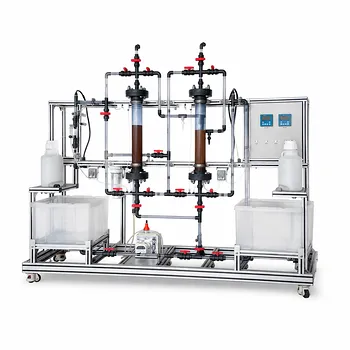
Are you looking to scale laboratory concepts like environmental analysis into practical training? LABPARK provides premier Educational and Vocational Unit Operations Pilot Plants in chemical engineering, bioprocess & biotech, and environmental & water treatment.
Tailored for universities, research institutes, and enterprises, our robust training systems help your students and researchers master industrial-scale processes. Contact LABPARK today to discuss your laboratory's pilot plant requirements!
Related Products
- Ion Exchange Water Purification Educational Pilot Plant for Engineering Unit Operations
- Multi-Functional Special Distillation Educational Pilot Plant
- Carbon Dioxide PVT Curve Determination Educational Unit Operations Pilot Plant
- Quantitative Dosing and Liquid Flow Control Educational Unit Operations Pilot Plant
- Electrolyte Distillation Purification and Formulation Educational Pilot Plant
People Also Ask
- How to Prevent Ion Exchange Channeling? Expert Solutions for Pilot Plants
- What operational precautions should lab operators take for resin volume changes and air pockets? Key Guide
- How does ion exchange work in water treatment pilot plants? Cost & process guide.
- How to use ion exchange pilot plants to verify alkalinity? A hands-on guide for engineering students.
- Why does iron degrade cation resin & how to demonstrate capacity recovery? Step-by-Step Lab Guide