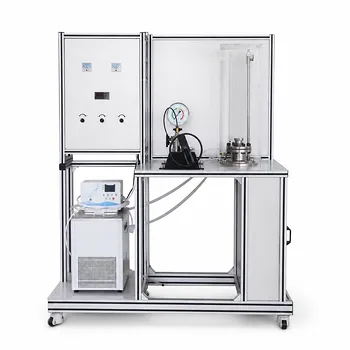
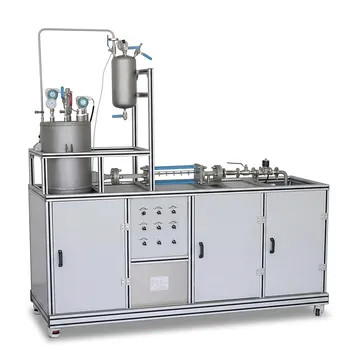
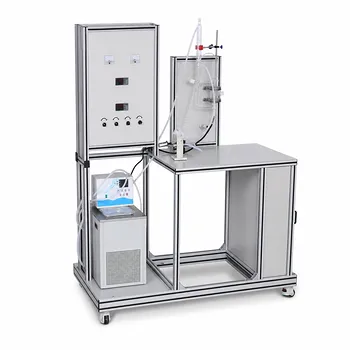
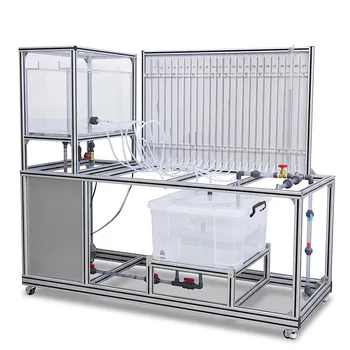
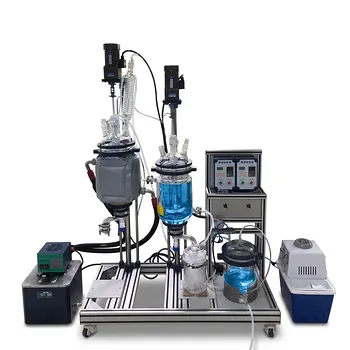
Zeta potential is the bridge between abstract colloid science and real-world water purification. In environmental and water treatment pilot plants—specifically during coagulation and flocculation unit operations—measuring zeta potential directly reveals the electrical stability of suspended pollutants. This measurement transforms a theoretical physical chemistry concept into an actionable, hands-on tool for students and researchers to determine the precise coagulant dosage needed to neutralize particle charge and trigger the rapid aggregation that underpins effective solid-liquid separation.
The core educational value of zeta potential measurement lies in making the invisible forces between particles visible, allowing engineers-in-training to witness charge neutralization in real time. Its practical power resides in giving plant designers and operators a reproducible, data-driven method to minimize chemical waste while maximizing turbidity removal across a wide range of raw water qualities.
Unpacking the Science Through Hands-On Measurement
In a pilot plant, zeta potential is not a static value—it responds dynamically to changes in pH, ionic strength, and coagulant addition. This direct feedback loop transforms abstract concepts into experiential knowledge.
Making the Electrical Double Layer Tangible
Colloidal particles in water carry a surface charge that creates an electrical double layer. When zeta potential, the potential at the shear plane, is high (typically > ±30 mV), electrostatic repulsion prevents particles from aggregating. Students quickly learn that this repulsion is the primary reason fine clays, silica, and organic materials refuse to settle on their own.
By measuring electrophoretic velocity—how fast particles move under an applied electric field—pilot plant users can calculate zeta potential. They observe that as coagulant is added, the measured value begins to drop, providing immediate visual proof of charge screening and double-layer compression.
Witnessing the Path to Isoelectric Aggregation
The most critical pedagogical moment comes when the zeta potential approaches zero, the isoelectric point. At this charge-neutral condition, van der Waals attractive forces overpower the weakened electrostatic repulsion, and particle aggregation becomes spontaneous. The pilot plant demonstrates this elegantly: a sharp drop in turbidity occurs precisely as the zeta potential approaches zero, linking a microscopic measurement to a macroscopic water quality improvement.
Bridging Basic Chemistry and Chemical Engineering Design
For engineering students, the jump from textbook diagrams of the Stern layer to designing a full-scale dosing strategy is enormous. The pilot plant fills this gap. They learn that the optimal coagulant dose is not a fixed number but a function of the raw water’s zeta potential. This hands-on experience of deriving a dose-response curve using electrophoretic measurements is what prepares them to specify chemical dosing skids for municipal or industrial plants.
The Practical Engine Room: Optimizing Real Treatment Operations
Beyond education, the measurement serves as a powerful diagnostic and optimization tool in pilot-scale applied research. It answers the single most expensive operational question: “How much chemical is enough?”
Data-Driven Coagulant Selection and Dosing
Different coagulants—alum, ferric chloride, polyaluminum chloride—yield different charge neutralization curves. By running zeta potential titrations on actual wastewater, pilot plant operators can select the most effective chemical and pinpoint the exact dose that brings the system near zero, avoiding both underdosing (poor flocculation) and overdosing (restabilization with reversed particle charge). This directly translates to lower chemical consumption and sludge production at full scale.
Diagnosing Process Upsets
When a flocculation unit suddenly underperforms—perhaps after a rain event changes raw water chemistry—a quick zeta potential measurement can diagnose the root cause. If the zeta potential has moved away from zero, the solution is an immediate dose adjustment. This teaches operators to rely on objective physical measurements rather than guesswork, cultivating a culture of process control.
Scaling from Pilot to Full-Scale Design
Pilot plants using zeta potential generate design curves that are far more robust than simple jar test observations alone. Because zeta potential quantifies the fundamental interaction energy, the optimal dose identified on a bench or pilot scale can be intelligently scaled up, accounting for mixing and residence time differences. This reduces the risk of over-engineering the full-scale plant.
Understanding the Trade-offs
While zeta potential is invaluable, a purely charge-centric view has limitations. Trustworthy application requires acknowledging these boundaries.
Zeta Potential Is a Necessary, Not Sufficient, Condition
Neutralizing charge does not guarantee good floc growth. Other factors—like bridging efficiency from polymeric flocculants, shear rates, and floc breakage—also govern settleability. A pilot plant that focuses only on zeta potential may miss that a fine-tuned charge neutralization still fails if the mixing intensity shatters the fragile microflocs.
Water Chemistry Complexity
Natural organic matter and specific ions can adsorb onto particle surfaces and shift the isoelectric point unpredictably. The measurement captures the net electrokinetic charge but not the specific adsorption mechanisms. Pilot studies must therefore pair zeta potential readings with direct performance metrics (turbidity, TOC) to avoid being misled by unusual water matrices.
Instrumentation and Interpretation Pitfalls
The conversion of electrophoretic mobility to zeta potential relies on models (Smoluchowski or Hückel) that assume spherical particles and known electrolyte conditions, approximations that often break down in complex environmental samples. Incorrect model selection can produce systematic errors, so educational programs must emphasize that the trend—the shift toward zero—is often more reliable than the absolute number.
Making the Measurement Meaningful for Your Goal
The way you integrate zeta potential into a pilot plant program depends entirely on what you are trying to achieve. Here’s how to focus your efforts.
- If your primary focus is education and building physical intuition: Use the pilot plant to let learners manually vary pH and coagulant dose, plot zeta potential against turbidity, and discover the isoelectric point themselves. Emphasize that the “zero” value is the empirical target, not a textbook constant.
- If your primary focus is process optimization for a specific wastewater: Treat zeta potential as a rapid screening tool to narrow down the best coagulant and approximate dose. Then verify with traditional jar tests and monitoring of turbidity, COD, and sludge volume to ensure the neutralization leads to robust, settleable floc.
- If your primary focus is scaling a design from pilot data: Use zeta potential to define a “charge demand” curve—milliequivalents of coagulant per unit of zeta potential change. This normalized demand, rather than a raw ppm dose, becomes your scaling parameter, making pilot results transferable to waters of different ionic strength.
Zeta potential measurement in a pilot plant is the difference between blindly adjusting knobs and engineering a reliable separation process. Use it to build the deep understanding that turns raw water into clean water with precision.
Summary Table:
| Key Aspect | Educational Significance | Practical Significance |
|---|---|---|
| Particle Stability | Visualizes double-layer compression and charge neutralization. | Pinpoints optimal coagulant dosage to minimize chemical waste. |
| Process Control | Bridges chemistry theory with engineering design. | Diagnoses system upsets and guides scale-up design curves. |
| Limitations | Teaches model assumptions (e.g., Smoluchowski) and trade-offs. | Identifies when chemical bridging or shear rates limit floc growth. |
Elevate Your Water Treatment Education and Research with LABPARK
Looking to bridge the gap between theory and practical engineering? LABPARK provides state-of-the-art Educational and Vocational Unit Operations Pilot Plants in chemical engineering, bioprocess & biotech, and environmental & water treatment. Designed specifically for universities, research institutes, and enterprises, our pilot plants enable hands-on learning, precise Zeta potential measurement, and reliable process optimization.
Ready to transform your laboratory capabilities? Contact us today to discuss your pilot plant needs!
Related Products
- Fluid Friction Resistance Determination Educational Unit Operations Pilot Plant
- Carbon Dioxide PVT Curve Determination Educational Unit Operations Pilot Plant
- Centrifugal Pump Performance and Orifice Flowmeter Calibration Educational Pilot Plant
- Constant Pressure Filtration Educational Unit Operations Pilot Plant
- Educational Unit Operations Pilot Plant for Intraparticle Diffusion Effective Factor Measurement
People Also Ask
- How do pilot plants teach U-tube manometers? Master Differential Pressure Calculations
- How is the hydrodynamic entrance length estimated for high-Re channel flows? Design accurate pilot-plant measurements
- How do pilot plants demonstrate siphon pressure variations? Visualizing Bernoulli's Energy Balance
- How do velocity profiles and flow rates differ in Newtonian and power-law fluids? A Pilot Plant Guide
- How do fluid mechanics pilot plants distinguish streamlines from streaklines? See flow visualization in action