Liquid breakthrough in a condenser-separator unit occurs when condensate droplets escape through the gas outlet instead of being collected at the liquid drain. This failure is most common at higher condensing stream flow rates and elevated gas outlet temperatures, where intense condensation near the channel exit entrains liquid in the gas stream. Managing breakthrough demands strict control of the gas outlet temperature and the pressure differential driving condensate to the liquid outlet.
The stable operating window for a condenser-separator is defined by two key boundaries: keeping the gas outlet temperature low enough to prevent exit-zone droplet formation, and maintaining a pressure difference between the inlet and liquid outlet that stays below the separator membrane’s breakthrough threshold. When either limit is crossed, liquid carryover becomes almost inevitable.
What Drives Liquid Breakthrough?
Liquid breakthrough is not a random event—it follows directly from the interplay of thermal load, hydraulic forces, and the internal geometry of the separation unit. Understanding the underlying triggers allows you to predict and avoid the failure before it contaminates downstream gas streams.
The Influence of Condensing Load and Outlet Temperature
Higher gas outlet temperatures create a dangerous hot spot near the end of the condensing channels.
Because condensation intensifies when warmer gas contacts the cooled wall, a higher exit temperature shifts the primary condensing zone closer to the gas outlet. This produces a dense cloud of droplets right where the gas velocity is still high. Consequently, entrainment risk skyrockets.
A high condensing stream flow rate compounds the problem. It delivers more vapor per second, increasing the total heat release and the volume of condensate that must be removed in the final channel sections. When the removal rate cannot keep pace, liquid accumulates and eventually breaks through.
Pressure Differential Across the Separator Membrane
Every membrane-based separator has a critical breakthrough pressure—the maximum allowable pressure difference between the inlet side and the liquid outlet side.
If the pressure pushing condensate toward the liquid outlet exceeds this threshold, the liquid phase can forcibly bypass the membrane’s retention mechanism. What should be a clean, gravity- or capillarity-driven separation becomes a forced leak. The bulk gas simply pushes liquid through the barrier.
In pilot plant settings, this often happens when pressure at the liquid outlet is allowed to rise too close to or above the condensing channel pressure. Maintaining a slightly lower pressure at the liquid outlet relative to the condensing channels is essential for siphoning condensate away safely.
Flow Regime and Liquid Entrainment
Phase separation quality also depends on the superficial gas and liquid velocities inside the channel.
When velocities push the flow into an annular or mist-flow regime, the gas core travels fast enough to shear droplets off the liquid film. Even a well-designed separator membrane cannot prevent entrainment if the incoming stream already carries suspended droplets. Operating in a stable, stratified or slug-flow regime keeps the phases distinct before they reach the separator.
Managing and Preventing Breakthrough in Pilot Plants
Effective management starts long before a run begins—with design choices and a clear set of operational limits. During operation, real-time monitoring of two parameters makes the difference between a reliable experiment and a contaminated gas stream.
Monitor and Control Gas Outlet Temperature
The gas outlet temperature is the single most actionable variable. By keeping it well below the saturation temperature corresponding to the local pressure, you shift the final condensation zone upstream, away from the outlet.
In practice, this means adjusting cooling fluid temperature or flow rate to ensure a comfortable margin. When scaling up a new chemistry, set a conservative outlet temperature target based on the dew point and reduce it further if you observe any pressure fluctuations that could indicate droplet formation.
Maintain a Strict Pressure Differential Window
Measure the pressure difference between the condensing channel inlet and the liquid outlet, not just the gas path. The difference must remain strictly below the manufacturer-specified or experimentally determined breakthrough threshold.
A small, regulated bleed valve or a controlled liquid seal on the outlet line can maintain a slightly sub-atmospheric pressure at the condensate drain. This continuously pulls liquid away while preventing gas from forcing its way through the membrane. Always verify this differential under maximum load—the threshold can appear adequate at low flow rates and fail catastrophically when yields increase.
Optimize Internal Design for Phase Separation
Modern microchannel condenser-separators rely on thin wicking structures hydraulically connected to an interior liquid flow channel through pore throat windows.
These wicks transport condensate off the heat transfer surface via capillary action before it can be entrained. When designing or selecting a unit for a pilot plant, confirm that the wicking structure has sufficient capacity for the peak condensing load and that the pore throat geometry does not create a bottleneck under high liquid-side pressure drop.
Operate Within the Correct Flow Regime
Use a flow regime map for the specific channel geometry and fluid pair. Set gas and liquid flow rates to avoid the mist and annular regimes that generate entrained droplets. This may mean deliberately throttling the gas feed to keep velocities below the threshold that shears liquid into the core. While it reduces instantaneous throughput, it preserves phase purity—often the more critical goal in a pilot-scale study.
Understanding the Trade-offs and Pitfalls
Preventing breakthrough involves real compromises. Ignoring them leads to overly conservative operating windows or unwarranted risk.
- Throughput vs. phase purity: Driving maximum condensation rate pushes toward higher outlet temperatures and faster gas velocities. Accepting a slightly lower gas throughput widens the safety margin against breakthrough. The pilot plant often needs purity over volume to produce meaningful kinetic data.
- Subcooling vs. energy cost: Keeping gas outlet temperatures far below the dew point guarantees safe operation but requires deeper cooling, increasing utility consumption. In a research environment, energy cost is usually secondary to data integrity, but it can matter in long-duration campaigns.
- Pressure control complexity: Maintaining the exact liquid-outlet pressure differential adds hardware and tuning effort. A poorly tuned control loop can itself oscillate into breakthrough territory, so simplicity and robust mechanical regulation (like a static head of liquid) can be safer than active control for smaller pilots.
- Membrane fouling: Over time, wicking structures can foul or plug, altering the effective breakthrough pressure. A membrane that was safe at startup might fail mid-run. Periodic visual inspection or a simple pressure test after each run helps catch this hidden drift.
Making the Right Choice for Your Pilot Plant Operation
Your operating philosophy should directly reflect the goal of the pilot run. Use these framings to decide where your conservative boundaries lie.
- If your primary focus is quantitative mass balance integrity: Prioritize outlet temperature control and aggressive subcooling. Even a tiny liquid carryover invalidates the measurement. Sacrifice throughput to stay far from entrainment conditions.
- If your primary focus is maximizing throughput for a scale-up trial: Choose a separator with ample wicking capacity and a high breakthrough pressure rating. Operate at the highest flow rate that still maintains a clear stratified flow regime, and set up real-time differential pressure alarms.
- If your primary focus is rapid troubleshooting of a known breakthrough problem: Check the liquid outlet pressure differential first. A partially blocked drain line or an incorrectly set seal leg often raises the downstream pressure just enough to trigger breakthrough.
- If your primary focus is longevity and hands-off operation for an educational pilot: Build in a generous safety factor on all limits. Use lower outlet temperature setpoints and a simple static liquid seal for pressure control, so that students can safely explore operating windows without constant intervention.
A well-managed condenser-separator does not just avoid breakthrough—it becomes a transparent, reliable unit operation that lets you trust every downstream analytical result.
Summary Table:
| Key Driver of Breakthrough | Process Impact | Prevention & Management Strategy |
|---|---|---|
| High Gas Outlet Temp | Shifts condensation zone near outlet, entraining droplets | Keep temperature low; adjust cooling fluid flow rate. |
| High Pressure Differential | Forces liquid to bypass the separator membrane | Maintain a regulated, slightly lower pressure at liquid outlet. |
| Fast Fluid Velocities | Shears liquid into mist/annular flow regimes | Keep gas/liquid velocities within stratified or slug-flow regimes. |
| Membrane Fouling | Plugs wicking structures, lowering breakthrough threshold | Conduct periodic inspection and pressure tests after runs. |
Optimize Your Unit Operations with LABPARK
Achieving precise phase separation and preventing liquid breakthrough requires reliable, high-performance equipment. LABPARK provides premium Educational and Vocational Unit Operations Pilot Plants in chemical engineering, bioprocess & biotech, and environmental & water treatment.
Designed specifically for universities, research institutes, and enterprises, our pilot plants deliver the control, stability, and data integrity you need for successful research and training.
Ready to elevate your pilot plant capabilities? Contact LABPARK today to discuss your project requirements with our technical experts!
Related Products
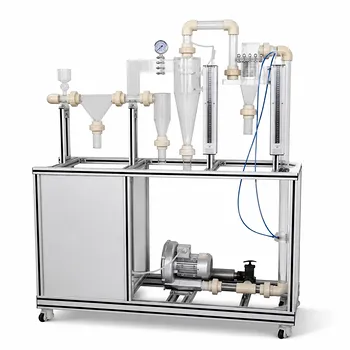
- Gas-Solid Heterogeneous Separation Demonstration Educational Unit Operations Pilot Plant
- Photocatalytic Membrane Separation and Degradation Unit Operations Pilot Plant
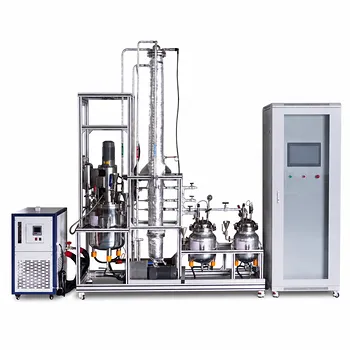
- Carbon Material Thermal Pretreatment Multiphase Separation Educational Pilot Plant
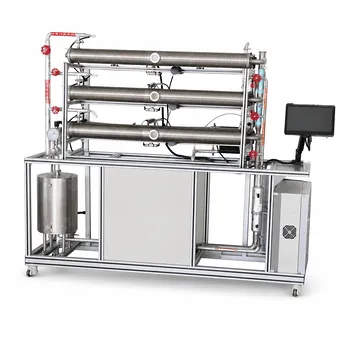
- Three-Tube Heat Transfer Educational Pilot Plant for Unit Operations Training
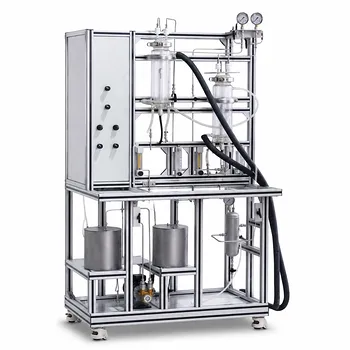
- Bench Scale Dual Column Gas Separation and Capture Educational Pilot Plant
People Also Ask
- Why is pressure drop characterization critical in separation pilot plants? Key operational insights.
- What are the key thermodynamic considerations for gas mixture modeling? Expert Guide
- What are the primary operational objectives and physical requirements when running heterogeneous separation pilot plants?
- What are the material limitations of gas separation pilot plants? Key factors to consider.
- What are the trade-offs in olefin-paraffin separation? Optimize Pilot Plant Performance