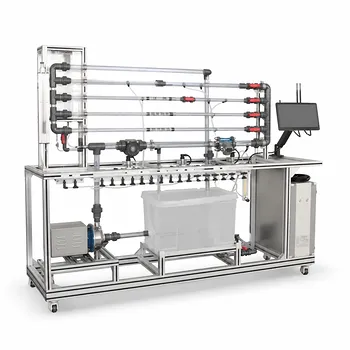
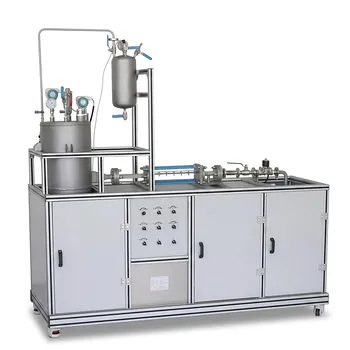
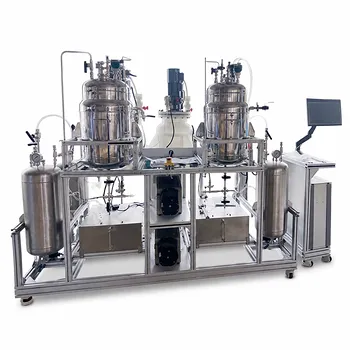
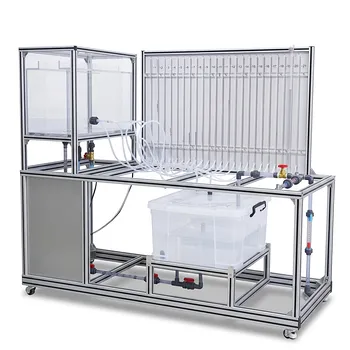
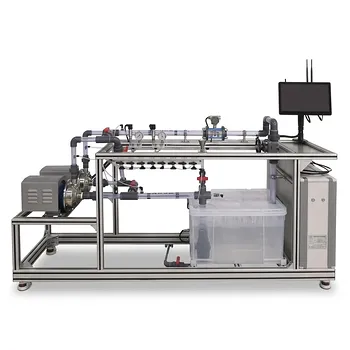
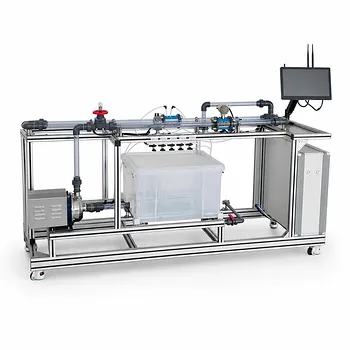
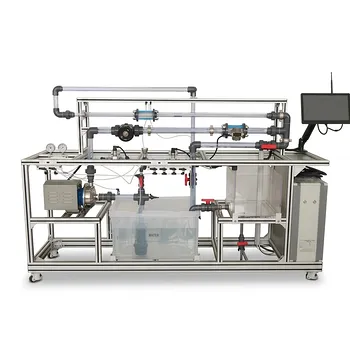
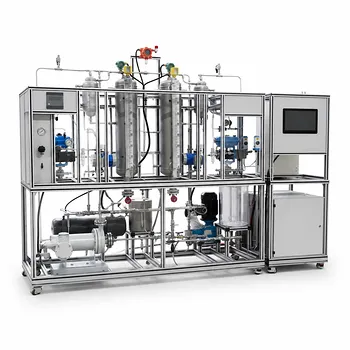
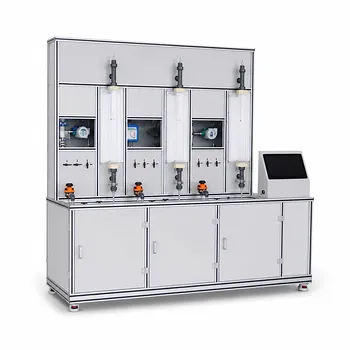
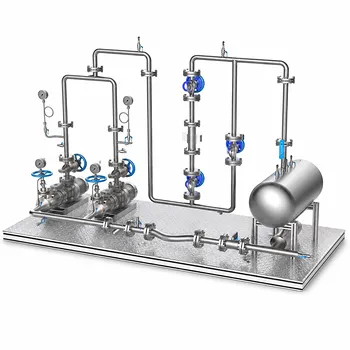
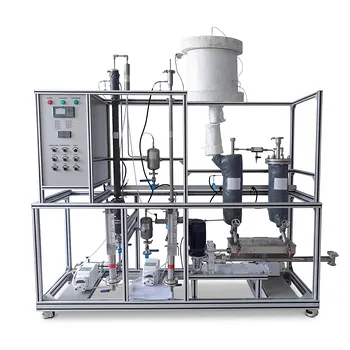
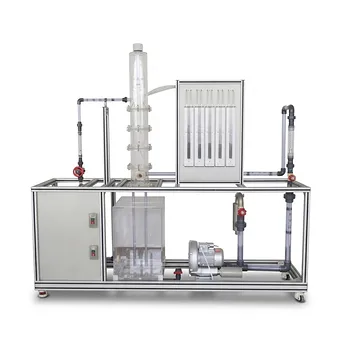
The three primary engineering methods to mitigate water hammer in pilot plants are surge chambers, air chambers, and bypass relief valves. These devices absorb the kinetic energy of a sudden flow stoppage, preventing destructive pressure spikes that can rupture piping, damage pumps, and destroy sensitive instrumentation. The specific choice depends on your plant’s flow dynamics, maintenance capabilities, and spatial constraints.
Water hammer is a transient pressure surge triggered by a rapid change in fluid velocity. In chemical and water treatment pilot plants—where valves close quickly, pumps trip, or multiphase flows demand precise control—mitigation is not optional. Surge chambers dissipate energy by raising a free water surface, air chambers cushion shocks by compressing trapped gas, and bypass relief valves redirect flow to gradually decelerate the fluid column. Each method trades off simplicity, reliability, and the need for ongoing maintenance.
Understanding Water Hammer in Pilot-Scale Operations
The Physics of the Shockwave
When a valve slams shut or a pump stops abruptly, the fluid’s momentum converts to a high-pressure wave that travels back through the piping at the speed of sound in the liquid.
The pressure spike is proportional to the fluid density, wave speed, and the sudden change in velocity (ΔV). Even in small-diameter pilot plant lines, a rapid ΔV can generate pressures well above the design rating of fittings, sensors, and fragile glassware.
Why Pilot Plants Are Especially Vulnerable
Pilot plants often run at elevated pressures, test aggressive chemicals, and use expensive inline analytical instruments. Their smaller pipe diameters and frequent start-stop cycles make them highly susceptible to water hammer.
Moreover, these systems frequently iterate on process conditions. A control valve that works perfectly at one flow rate may cause a damaging hammer when flow is halved or media changes from liquid to a gas-liquid mixture.
The Three Core Mitigation Methods
Surge Chambers: Kinetic Energy Absorption
A surge chamber is an open-topped (or vented) vertical vessel connected to the main flow line. When a pressure wave hits, water surges upward into the chamber, raising the local hydraulic grade line.
This rise absorbs the kinetic energy of the moving fluid, converting it into potential energy. The water then slowly drains back, providing a gentle deceleration that dissipates the shock without rebound. Because the chamber is open to atmosphere, it requires no external power or consumables—it is purely passive.
In pilot-scale water treatment and chemical engineering labs, surge chambers are often implemented as clear standpipes. Students and operators can visually observe the water level rise, making it an effective teaching tool for transient flow behavior.
Air Chambers: Compressible Cushioning
An air chamber is a sealed, partially water-filled vessel connected near the point of potential shock (e.g., downstream of a quick-closing valve). It works as a pneumatic spring: when a pressure surge arrives, the water compresses the trapped air, absorbing the energy.
The air cushion provides a nonlinear resistance that can snub the spike more compactly than a surge chamber. However, air chambers have a critical maintenance drawback: air is slowly dissolved into the water under pressure, gradually reducing the gas volume until the chamber becomes waterlogged and ineffective.
To remain functional, an air chamber must be periodically recharged with air, typically from a small compressor. In a pilot plant where conditions change daily, the operator must integrate this replenishment into a routine. If forgotten, the protection vanishes silently, leading to a false sense of security.
Bypass Relief Valves: Controlled Flow Diversion
Bypass relief valves tackle the root cause by preventing the sudden velocity change in the first place. A relief valve is installed in a bypass line around the fluid’s main flow obstruction—be it a turbine, pump, or control valve.
When the main valve begins to close, the bypass valve opens simultaneously, diverting flow elsewhere. The bypass valve is then closed slowly over a controlled period. This gradual closure reduces the effective ΔV, so the pressure wave never reaches destructive amplitude. The method is active and often powered, allowing it to handle very fast transients if the control system is responsive enough.
This approach is especially useful in multi-component pilot plants where several automated valves must coordinate to avoid hammer during batch transitions.
Understanding the Trade-offs
Maintenance Demands and Operational Risk
Air chambers carry the highest maintenance burden. The slow dissolution of trapped air means they can become saturated with water without any visible sign, leaving the system unprotected. You need either a scheduled recharge procedure or an automated air makeup system.
Surge chambers, by contrast, are nearly maintenance-free once installed, but they must be tall enough to contain the surge height. Bypass relief valves require functional actuators and controller logic; a power failure or sensor fault can disable them.
Physical Size and Scalability
Surge chambers need vertical height proportional to the anticipated pressure spike. In a crowded pilot plant skid, installing a tall standpipe may be impractical. Air chambers can be much more compact, making them easier to retrofit into tight spaces. Bypass relief systems add piping and valves, demanding extra footprint and control wiring.
Response Time and Repeatability
Bypass relief valves, when properly tuned, offer the fastest response and can handle repeated transients with high precision. Surge chambers have a slight delay as water rises, but they self-reset instantly. Air chambers respond quickly but their performance gradually degrades as air volume shrinks—so repeatability suffers unless air is maintained meticulously.
Not a Substitute for Pressure Relief Safety Devices
It’s crucial to separate water hammer mitigation from code-required overpressure protection. Surge chambers, air chambers, and bypass valves manage transient kinetic energy; they are not designed to relieve a continuous overpressure scenario like a blocked outlet or runaway reaction. Those scenarios require pressure safety valves (PSVs) or bursting discs sized per API RP 520 and ASME Section VIII. Your pilot plant must include both strategies—hammer mitigation for dynamic shocks and safety relief for static overpressure hazards.
Making the Right Choice for Your Pilot Plant
Your selection depends on the fluid characteristics, the plant’s automation level, maintenance culture, and the educational goals of the facility. Use the following guide to align the method with your primary focus.
- If your primary focus is lowest maintenance and mechanical simplicity: Choose a surge chamber. It needs no power or gas, and its open-top design makes water hammer visible—a huge advantage for training and debugging.
- If your primary focus is compact installation in a tight skid: An air chamber provides substantial energy absorption in a small footprint, but you must pair it with a reliable air recharge schedule or an automatic compressor.
- If your primary focus is handling rapid, repeated transients under automated control: A bypass relief valve system with a fast-acting actuator and controller will smoothly manage ΔV on every cycle, provided your control logic is robust.
- If your primary focus is a teaching plant to compare transient phenomena: Install both a surge chamber and an air chamber. Students can observe how surge height changes with flow rate, measure the degradation of the air cushion over time, and analyze the trade-offs firsthand.
Protect your instruments, your piping, and your data. By matching the mitigation method to the true demands of your operation, you turn a destructive force into a manageable, teachable engineering principle.
Summary Table:
| Mitigation Method | Working Principle | Key Advantage | Main Drawback |
|---|---|---|---|
| Surge Chambers | Vented vertical vessel absorbs kinetic energy by raising water level. | Passive, maintenance-free, excellent visual teaching tool. | Requires significant physical height. |
| Air Chambers | Sealed vessel cushions pressure waves using compressed air. | Compact footprint; easy to retrofit. | Air dissolves over time; requires regular recharging. |
| Bypass Relief Valves | Diverts flow around obstructions to slowly decelerate the fluid. | Fast response; highly effective for automated, repeated cycles. | Complex control system integration and piping required. |
Secure and Optimize Your Pilot Plant Operations with LABPARK
At LABPARK, we specialize in providing state-of-the-art Educational and Vocational Unit Operations Pilot Plants for chemical engineering, bioprocess & biotech, and environmental & water treatment. Designed specifically for universities, research institutes, and enterprises, our systems seamlessly integrate advanced safety features—like precise fluid transient mitigation—to protect your sensitive instrumentation and ensure safe, hands-on learning and research environments.
How LABPARK Delivers Value to Your Institution:
- Robust Engineering: Built-in safeguards against water hammer and overpressure to protect your capital equipment.
- Enhanced Learning & Research: Highly visual systems (like clear surge standpipes) that turn complex fluid mechanics into practical, observable lessons.
- Tailored Solutions: Custom-engineered skids to match your specific curriculum, space constraints, and research goals.
Don't let transient pressure surges compromise your research or teaching equipment. Contact LABPARK today to find the perfect pilot plant solution for your lab!
Related Products
- Constant Pressure Filtration Educational Unit Operations Pilot Plant
- Fluid Friction Resistance Determination Educational Unit Operations Pilot Plant
- Cavitation Phenomenon Demonstration and Analysis Educational Unit Operations Pilot Plant
- Water Electrolysis Hydrogen Production and Storage Educational Pilot Plant
- Bernoulli Equation Demonstration Unit Operations Pilot Plant
People Also Ask
- How do educational unit operations pilot plants bridge theory and design? Bridge the Engineering Gap
- How do educational unit operations pilot plants address safety and waste management when scaling up?
- Why splitting a filtration batch doesn't always reduce cycle time? Pilot Plant Insights
- Why Demo Constant-Rate to Constant-Pressure Filtration on a Pilot Plant? Key Practical Insights
- How can researchers identify and resolve filter medium blinding? Optimize Your Pilot Plant Runs