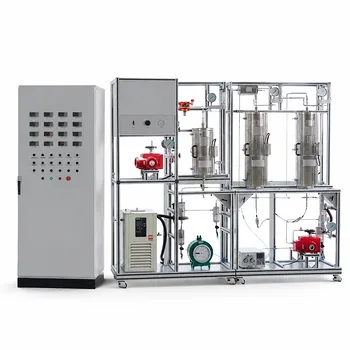
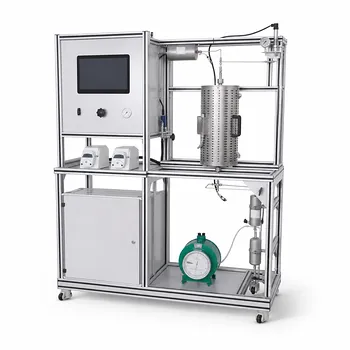
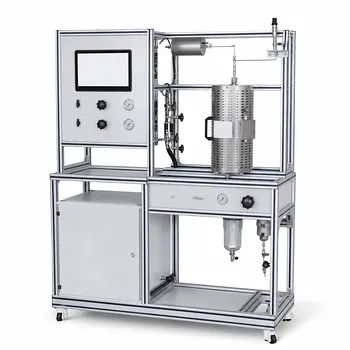
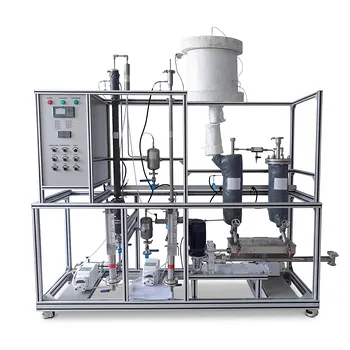
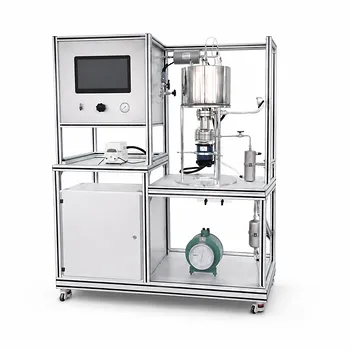
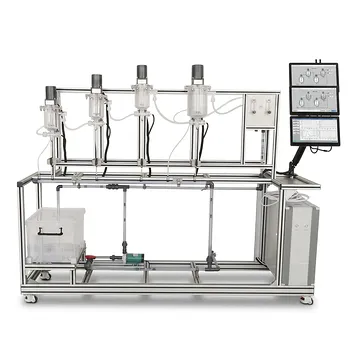
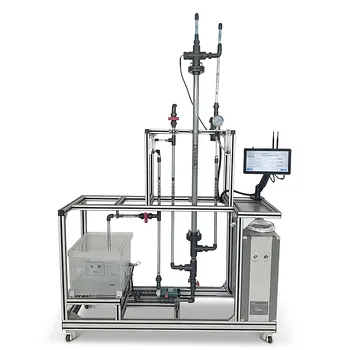
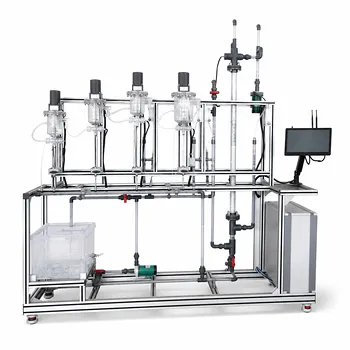
Sufficient agitation, robust gas-liquid dispersion, precise control, and reliable catalyst recovery – these are the non-negotiable starting points. A slurry reactor pilot plant built to study three-phase catalytic hydrogenation must, at minimum, keep fine catalyst particles uniformly suspended, deliver hydrogen gas efficiently to the liquid phase, tightly manage temperature and pressure, and provide a practical way to separate and recycle the solid catalyst from the product stream. Without these four core capabilities, the plant cannot generate meaningful kinetic or selectivity data.
These four features are the visible foundation, but a truly effective pilot plant goes much deeper. The real design challenge lies in managing the exothermic, high-pressure hydrogen environment safely, selecting materials that resist hydrogen attack, and building in the flexibility to empirically validate the hydrodynamics and mass transfer that no calculation can fully predict.
Beyond the Basics: The True Purpose of a Pilot Plant
A chemical engineering laboratory pilot plant does more than just repeat a reaction on a larger scale. It exists to bridge the gap between glassware and industrial reality. For three-phase hydrogenation, this means revealing how fluid dynamics, safety constraints, and mass transfer interplay in ways that bench-scale experiments often hide.
The fundamental goal is to generate data that allows a chemist or engineer to select the right catalyst, operating window, and reactor configuration before committing to a full-scale unit. Every critical design feature must serve this evidence-gathering mission.
Critical Design Features: A Deeper Dive
Mechanical Agitation That Does More Than Mix
Keeping catalyst particles under 1 mm uniformly suspended is a demanding hydraulic task. Agitation must be powerful enough to overcome settling, but its role extends far beyond mixing. The impeller design and speed directly control gas bubble breakup, which in turn determines the gas-liquid interfacial area—the highway on which hydrogen transfers into the liquid.
Insufficient agitation creates dead zones where catalyst accumulates, locally starving the reaction of hydrogen and forming hot spots that can destroy selectivity. Consequently, the agitator must be a high-torque system capable of handling slurry rheology, often coupled with a variable-speed drive so that researchers can probe the transition from mass-transfer-limited to kinetically controlled regimes.
High-Efficiency Gas-Liquid Dispersion
Hydrogen solubility in typical solvents is low, and the reaction rate is frequently gated by how fast gas dissolves. The reactor design must therefore maximize mass transfer. This goes beyond simply sparging gas through a dip tube.
In a stirred slurry reactor, the gas is drawn into the impeller zone and sheared into fine bubbles. The design must ensure the gas is recirculated, not simply vented, and that the liquid surface turbulence does not create a separate hydrogen-rich headspace that cannot be contacted with the liquid. Engineers often empirically determine the gas hold-up and the volumetric mass transfer coefficient (kLa) during commissioning because purely theoretical predictions carry high uncertainty.
Precise Temperature and Pressure Control Systems
Exothermic hydrogenations demand fast, robust heat removal to avoid runaway. The cooling strategy—whether through an internal coil or jacket—must handle peak heat generation rates without allowing local temperature spikes that degrade product quality or deactivate the catalyst. Pressure control is equally critical: the reactor must safely contain high hydrogen partial pressures while allowing accurate feeding to maintain a constant driving force for dissolution. The control loops must be fast enough to respond to the dynamics of a reaction where the rate can accelerate as fresh catalyst is activated.
Catalyst Separation Without Compromising Data
Unlike fixed-bed reactors, a slurry system must separate sub-millimeter catalyst particles from the liquid product after each run. A reliable filtration or sedimentation system is essential, but its design also affects experimental quality. If the separation unit holds a large liquid inventory, it can distort the residence time of the sample, making kinetic analysis unreliable. Pilot plants often incorporate an internal sintered metal filter or an external crossflow filtration loop that can be backwashed, allowing the catalyst to remain inside the reactor for multiple batch cycles—a critical capability for studying catalyst deactivation over time.
The Hidden Imperative: Safety and Materials of Construction
The Hydrogen Threat No Laboratory Can Ignore
Hydrogen’s wide explosion range (4% to 74% in air) and its ability to embrittle metals force design choices that go well beyond process performance. Standard carbon steel is chemically incompatible at high temperature because hydrogen diffuses into the metal, reacting with carbon to form methane, which creates voids and leads to decarbonization and failure. The plant must be fabricated from chromium-molybdenum alloy steels that resist this attack.
Equally important are the active safety systems: automatic nitrogen purging to inert the reactor before opening, pressure relief valves sized for deflagration scenarios, hydrogen leakage detectors, and explosion-proof electrical enclosures. In a teaching or research laboratory, these are not optional accessories—they are the features that enable safe, real-world experiments with hydrogen at elevated pressure and temperature.
Integrating Safety into the Experiment Itself
Safety design must not add so much dead volume or sampling complexity that it ruins the experiment. For example, the purging system must be designed so that it does not introduce oxygen that could poison the catalyst. The pressure relief path must be sized without creating large hold-up volumes that store unreacted hydrogen. This is where pilot-plant design becomes an integrated chemical engineering challenge rather than a simple assembly of components.
Managing Complexity: Heat Transfer and Solids Handling
When Solids Appear in Unexpected Places
Some three-phase hydrogenations form solid products or byproducts that crystallize inside the reactor. This introduces a new layer of complexity: the vessel must keep those solids suspended while simultaneously removing heat. One practical solution is to allow the solvent to boil, condensing the vapor in an overhead reflux condenser and returning the cold condensate to the reactor. This evaporative cooling can be extremely effective, but the condenser and return line must be sized to handle the slurry without plugging.
Bottom-discharge design becomes critical when solids can settle. The reactor must have a large-diameter, specialized bottom-drain valve and an internal profile that eliminates dead zones where sediment can accumulate, foul heat transfer surfaces, or clog lines. Shell-and-tube heat exchangers used in the slurry loop should feature removable tube bundles or tube sheets to permit mechanical cleaning—a practical necessity in a plant that will run many different chemistries and catalyst types.
The Uncertainty Principle of Slurry Hydrodynamics
Gas hold-up, liquid expansion due to bubble presence, and catalyst distribution profiles cannot be predicted with textbook correlations alone. The design must include pressure taps, sight glasses, and sampling ports at multiple axial positions to empirically measure these quantities. A pilot plant that forces you to rely solely on theoretical assumptions risks creating an unsafe or misleading facility. The facility itself becomes the measurement tool, designed to reveal whether your slurry pump is cavitating, whether your heat exchanger has a dead zone, or whether your agitator is truly suspending the fines at the bottom of the vessel.
Understanding the Trade-offs
Choosing a slurry reactor for three-phase hydrogenation is rarely a clear-cut decision. It always involves competing priorities, and the pilot plant must help you evaluate those trade-offs, not hide them.
Slurry Reactor vs. Fixed-Bed: The Catalyst Particle Size Divide
When catalyst particles are larger than roughly 1 mm, a fixed-bed or trickle-bed reactor often becomes more practical because it eliminates the need for downstream catalyst separation and handles larger particles with lower pressure drop. For fine particles below 1 mm—typical of Raney nickel or noble metal powders—a slurry reactor is almost mandatory to deliver the necessary mass transfer. A well-designed pilot plant may include modular components that allow students and researchers to operate both configurations, directly comparing hydrodynamic regimes, pressure drop, and catalyst effectiveness factors.
The Hidden Cost of Great Mass Transfer
Slurry reactors achieve excellent gas-liquid mass transfer, but the catalyst is harder to recover and more prone to attrition. If the catalyst particles break down into fines, they can blind filters and reduce separation efficiency. Additionally, the continuous filtration loop may cause oxygen pickup if not carefully inerted, degrading catalyst performance over multiple cycles. These are real constraints that a pilot plant must faithfully reproduce so that users can judge whether the benefits outweigh the operational headaches.
Predictability vs. Empirical Discovery
The very hydrodynamics that make a slurry reactor effective are also the source of greatest uncertainty. A high degree of agitation improves mass transfer but can introduce vortexing, gas bypassing, and unpredictable gas hold-up. The pilot plant must be instrumented enough to separate the effect of mixing from the intrinsic kinetics—a challenging exercise that teaches the critical skill of reaction engineering diagnostics.
Making the Right Choice for Your Laboratory Goal
The success of a slurry reactor pilot plant for catalytic hydrogenation depends on aligning the design features with the specific questions you need to answer. Here’s how to map your goals to the critical design priorities:
-
If your primary focus is studying intrinsic kinetics and catalyst screening: Prioritize agitation and gas-liquid dispersion that allow you to confirm the absence of mass transfer limitations. Your plant must deliver a wide and well-characterized operating window where you can vary impeller speed and hydrogen pressure independently to pinpoint the kinetic regime.
-
If your primary focus is demonstrating industrial-scale operability and safety: Elevate materials of construction, hydrogen safety systems, and catalyst separation reliability. The plant should mirror the alloy steels, automatic purging sequences, and filtration loops that would be specified in a production unit, giving you realistic data on catalyst lifetime, attrition, and maintenance cycles.
-
If your primary focus is education and hands-on training in unit operations: Seek a modular design that exposes the interdependence of hydrodynamics, heat transfer, and safety. The ability to reconfigure between slurry and trickle-bed modes, to measure gas hold-up, and to trace pressure drops across filters transforms the facility from a simple reactor into a teaching instrument for the complexities of three-phase reaction engineering.
Ultimately, a critical design feature is not just the hardware—it is the degree to which the pilot plant makes the invisible phenomena of three-phase hydrogenation visible, measurable, and safe enough to teach your team what no textbook ever can.
Summary Table:
| Critical Feature | Main Function / Impact | Design Solution |
|---|---|---|
| Mechanical Agitation | Ensures catalyst suspension & gas bubble breakup | High-torque, variable-speed impeller systems |
| Gas-Liquid Dispersion | Maximizes hydrogen mass transfer ($k_L a$) | Gas recirculation and surface gas-draw loops |
| Temp & Pressure Control | Manages high exotherms and hydrogen pressure | Fast-acting cooling jackets/coils & control loops |
| Catalyst Recovery | Separates sub-1mm catalyst without data distortion | Sintered metal filters or external crossflow loops |
| Hydrogen Safety | Prevents hydrogen embrittlement & explosion hazards | Chromium-molybdenum alloy steels & inert gas purging |
Elevate Your Chemical Engineering Lab with LABPARK
Are you looking to equip your university, research institute, or enterprise with high-performance pilot plants? LABPARK provides state-of-the-art Educational and Vocational Unit Operations Pilot Plants across chemical engineering, bioprocess & biotech, and environmental & water treatment.
We design safe, robust, and highly flexible pilot systems that bridge the gap between bench-scale experiments and industrial reality, ensuring your researchers and students get reliable, real-world data.
Contact LABPARK Today to discuss your project requirements with our technical experts!
Related Products
- Crude Benzene Hydrogenation Educational Unit Operations Pilot Plant
- Ethylbenzene Dehydrogenation Educational Unit Operations Pilot Plant
- 100L Continuous Loop Hydrogenation Educational Unit Operations Pilot Plant
- Methane Cracking Educational Unit Operations Pilot Plant
- Carbon Dioxide Hydrogenation Methanol Synthesis Educational Unit Operations Pilot Plant
People Also Ask
- What process control features are essential in a benzene hydrogenation pilot plant? Safe & Efficient Operation
- How can flow-NMR be integrated with pilot plant reactors to monitor kinetics? A Complete Guide
- How to design experiments when runs exceed reactor capacity? Master Statistical Blocking
- How do bulk and solution polymerization compare? Key pilot plant reactor design tips.
- How does gas flow configuration impact reactor pressure drop & catalyst efficiency? Axial-radial vs. axial flow.