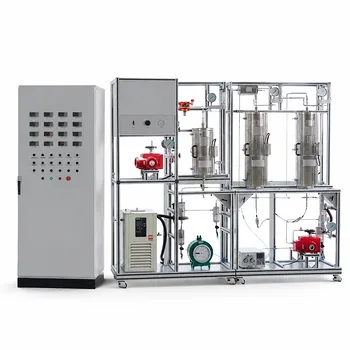
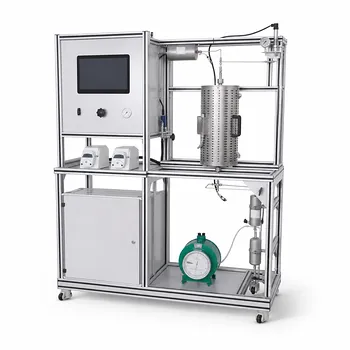
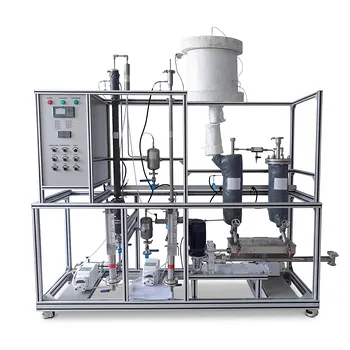
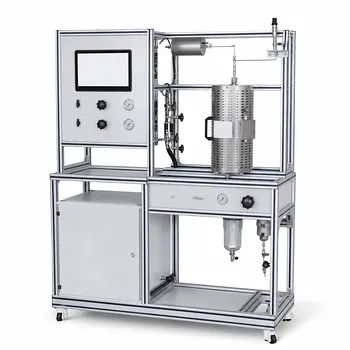
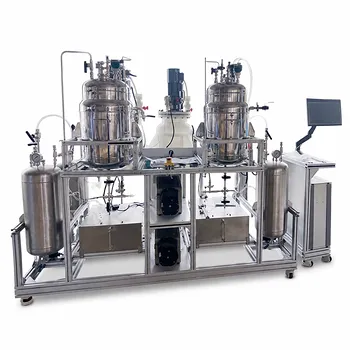
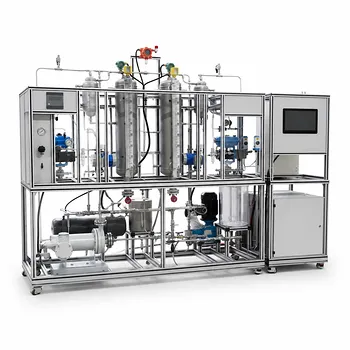
Preventing catalyst deactivation and ensuring safety in a benzene hydrogenation pilot plant hinges on three tightly interwoven process controls. The essential features are precise multi-point temperature measurement along the reactor axis and radius, an efficient heat dissipation system (typically tubular fixed-bed cooling), strict feed purification to keep carbon monoxide (CO) below 5 µL/L, and a controlled high hydrogen-to-benzene molar ratio (3.5–10:1). Together, these prevent hot spots, suppress catalyst poisoning, and avoid thermal runaway—a combination that is especially vital in a training or research setting where operator experience varies.
The cornerstone of a robust pilot plant is real-time, spatially resolved temperature control paired with ruthless feed contaminant management. Without these, the exothermic hydrogenation will rapidly generate hot spots above 260°C, leading to irreversible catalyst damage, side-reactions, and serious safety incidents.
The Critical Role of Temperature Control
Why Hot Spots Are the Enemy
The hydrogenation of benzene to cyclohexane is highly exothermic. If the released heat is not removed immediately, local temperatures can spike past 260°C, well above the normal 130–180°C operating window.
At these temperatures, catalytic cracking accelerates, forming carbon deposits that permanently deactivate the nickel catalyst. In a laboratory setting, such uncontrolled exotherms also pose a risk of pressure buildup, equipment failure, and even explosion if hydrogen is present.
Multi-Point Monitoring: Reactor Axis and Radius
A single thermocouple at the reactor outlet is not sufficient. You need thermocouple arrays placed both along the reactor length (axis) and across different radial positions to detect localized hot spots.
This spatial resolution lets you catch a temperature excursion before it propagates, teaching students how heat transfer limitations create radial gradients. Data from these sensors is the first line of defense for both safety and catalyst longevity.
Active Heat Dissipation: Tubular Fixed-Bed Cooling
The pilot reactor must be designed as a tubular fixed-bed with an active cooling jacket. This configuration gives a large heat-transfer surface area relative to the catalyst volume, removing reaction heat at the point of generation.
The cooling medium (often oil or a water/glycol mixture) must flow at a rate sufficient to maintain a narrow temperature window. A temperature controller that modulates cooling duty in response to the hottest bed measurement is non-negotiable.
Feed Purity: The Silent Catalyst Killer
Carbon Monoxide: A Poison at Parts-Per-Million Levels
Nickel hydrogenation catalysts are extremely sensitive to CO poisoning. Even trace amounts below 5 µL/L can adsorb irreversibly on active sites, blocking hydrogen chemisorption and quickly killing catalyst activity.
In a training environment, students must learn that apparently pure liquid benzene can still carry dissolved CO from previous processing steps. The pilot plant therefore needs an upstream purification section—a guard bed of adsorbent or a small pre‑hydrogenation unit—to strip CO before it reaches the main reactor.
Guard Beds and Purification Strategies
For research flexibility, integrate a sacrificial guard bed (e.g., a high‑surface‑area supported metal oxide) at the reactor inlet. This captures CO and other volatile poisons, protecting the expensive main catalyst charge.
If you expect variable feed quality, place an on‑line CO analyzer sampling the purified feed. This teaches the importance of feed characterization and allows immediate corrective action without risking the main bed.
Hydrogen-to-Benzene Ratio: More Than Just Stoichiometry
Diluting the Reaction Heat
A high H₂/benzene molar ratio (typically 3.5:1 to 10:1) acts as a thermal diluent. The excess hydrogen absorbs a large fraction of the reaction exotherm, slowing the temperature rise per unit volume of catalyst.
This mass‑based heat sink is a powerful safety feature. In a poorly instrumented system, it can buy precious minutes to detect a runaway and triggers students to think about how stoichiometric excess can be an engineering control, not just a chemical requirement.
Shifting Equilibrium and Reducing Coking
Beyond thermal management, the high hydrogen partial pressure drives the equilibrium toward cyclohexane and suppresses the formation of carbon‑rich deposits. Without it, side reactions become significant as soon as local hydrogen starvation occurs.
By actively controlling this ratio via mass flow controllers and online gas analysis, the pilot plant becomes a teaching tool for both thermodynamics and kinetics. The setpoint should be maintained automatically, with an interlock that cuts off benzene feed if the hydrogen flow drops below a safe threshold.
Safety Systems Designed for Training
Managing the Runaway Risk
Even with great temperature control, a cooling failure or a sudden feed perturbation can trigger a runaway. The pilot plant must include a hardwired overtemperature trip that first increases cooling flow to maximum, then quickly initiates an emergency shutdown sequence.
For training, this teaches the difference between process control and safety instrumented systems. The trip setpoint should be chosen well below the auto‑ignition temperature of the hydrogen‑benzene mixture, typically around 220°C.
Hydrogen Handling and Inerting
Hydrogen is flammable over a wide concentration range. Essential features include hydrogen‑specific gas detectors inside the enclosure, automatic ventilation, and a button‑operated nitrogen purge that can inert the entire reactor volume in seconds.
All pressure vessels must have rupture discs or safety relief valves sized for the worst‑case deflagration. Students must experience how engineering controls—not just operator vigilance—keep the system safe.
Interlocks and Emergency Shutdown
A single emergency stop button should trigger a defined sequence: shut benzene feed, isolate hydrogen supply, open reactor vent to a safe location, and flush with nitrogen.
Integrate this with a programmable logic controller (PLC) so that loss of cooling, loss of hydrogen, or high pressure immediately trips the reaction. In a research context, you can later analyse the event log to teach hazard analysis and root‑cause investigation.
Understanding the Trade-offs and Common Pitfalls
Over‑engineering can be counterproductive. Adding too many sensors or overly complex control loops can overwhelm novice operators and obscure the fundamental principles you want to teach.
Conversely, an undersized cooling system or a feed purification step that is too small forces students into constant “fire‑fighting” mode, leading to unsafe shortcuts. Balance protection with pedagogical clarity.
A common mistake is to omit the guard bed system in a teaching unit to save cost. The result is rapid poisoning that gives inconsistent data and frustrates learning, ultimately wasting more money than the hardware would have cost.
Making the Right Choice for Your Pilot Plant
Tailor the depth of these features to your primary objective. Start with the non‑negotiables—spatial temperature monitoring, active cooling, feed purification, and a high H₂ ratio—and then layer on the safety interlocks appropriate to your risk assessment.
- If your primary focus is catalyst research: Prioritize spatial temperature resolution, analytical‑grade flow control, and a replaceable guard bed to obtain clean kinetic data without catalyst poisoning.
- If your primary focus is process safety training: Emphasize overtemperature trips, hydrogen detection and inerting systems, and a transparent emergency shutdown sequence so students can observe and debrief every safety layer.
- If your primary focus is reaction kinetics study: Use high‑precision H₂/benzene ratio control and feed purification to isolate intrinsic kinetics, while keeping cooling capacity generous enough to eliminate temperature gradients.
A well‑designed benzene hydrogenation pilot plant is a living textbook. Every control feature, whether it prevents a hot spot or immediately trips the reactor, must serve both the integrity of the catalyst and the education of the researcher.
Summary Table:
| Control Feature | Main Function | Key Benefit |
|---|---|---|
| Multi-Point Temperature Sensors | Monitors axial & radial reactor temps | Detects localized hot spots early |
| Active Cooling Jacket | Dissipates exothermic reaction heat | Prevents thermal runaway & catalyst damage |
| Feed Guard Beds | Removes CO and feed impurities (< 5 µL/L) | Prevents irreversible catalyst poisoning |
| High H₂:Benzene Ratio | Maintains 3.5:1 to 10:1 molar ratio | Acts as a heat sink & reduces coking |
| PLC Safety Interlocks | Automates shutdown & nitrogen purge | Ensures operator & equipment safety |
Bring Industrial-Scale Safety and Precision to Your Lab
At LABPARK, we specialize in providing state-of-the-art Educational and Vocational Unit Operations Pilot Plants across chemical engineering, bioprocess & biotech, and environmental & water treatment.
Designed specifically for universities, research institutes, and enterprises, our pilot systems integrate the precise multi-point temperature controls, advanced feed purification, and automated safety interlocks necessary to protect your catalyst investments and ensure safe, hands-on learning and research.
Ready to upgrade your laboratory capabilities? Contact LABPARK today to discuss your pilot plant needs with our technical team!
Related Products
- Crude Benzene Hydrogenation Educational Unit Operations Pilot Plant
- Ethylbenzene Dehydrogenation Educational Unit Operations Pilot Plant
- 100L Continuous Loop Hydrogenation Educational Unit Operations Pilot Plant
- Steam Methane Reforming Hydrogen Production and Purification Educational Pilot Plant
- Carbon Dioxide Hydrogenation Methanol Synthesis Educational Unit Operations Pilot Plant
People Also Ask
- How can flow-NMR be integrated with pilot plant reactors to monitor kinetics? A Complete Guide
- How does gas flow configuration impact reactor pressure drop & catalyst efficiency? Axial-radial vs. axial flow.
- How to design experiments when runs exceed reactor capacity? Master Statistical Blocking
- How do bulk and solution polymerization compare? Key pilot plant reactor design tips.
- Why is hydrogenation crucial in upgrading synthetic fuels? Master scale-up with chemical pilot plants.