Knowledge Chemical Engineering Education How to design experiments when runs exceed reactor capacity? Master Statistical Blocking
Author avatar

Tech Team · LABPARK

Updated 1 month ago

How to design experiments when runs exceed reactor capacity? Master Statistical Blocking


When your experimental ambition outruns your physical reactor capacity, the solution isn't to run fewer tests—it's a statistical technique called blocking. The core strategy is to divide your complete experimental design into smaller, homogeneous blocks that fit within your available reactors per batch. By intentionally confounding (aliasing) higher-order interactions that are statistically unlikely to be significant with the batch-to-batch differences, you preserve the ability to estimate your critical main effects and two-factor interactions completely cleanly.

The true constraint isn't the number of reactors; it's the uncontrolled variability between batches. A four-reactor system required to run an eight-test factorial design isn't a limitation—it's a structural prompt to implement blocking, sacrificing low-value information on complex interactions to gain unbiased, high-precision data on the factors that truly drive your process.

The Constraint is Part of the Design

The deep problem you're facing is not logistical. It's the introduction of statistical bias if you naively split the experiment across multiple days or batches without a structured plan. If you run half the tests on Tuesday and half on Thursday, any shift in room humidity, raw material lot, or analyst technique becomes indistinguishable from a change in your process factors.

This is the hidden variability lurking in every pilot plant. Blocking doesn't just make the experiment fit; it builds a firewall around this nuisance variability, preventing it from contaminating your understanding of critical process parameters like temperature, catalyst load, or concentration.

How to Structure a Blocked Experiment

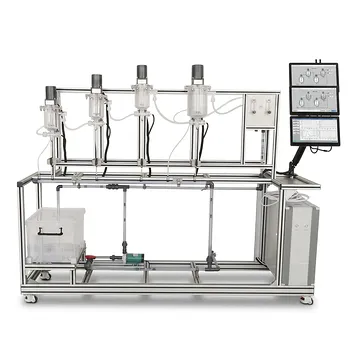
The primary reference highlights a classic scenario: a pilot plant workstation with only four reactors, but a design that demands eight unique runs. This is a perfect use case for a design built in two blocks of four.

The mechanics are straightforward. You treat each set of four simultaneous runs as a single block. The design matrix is then constructed so that the block effect—the shift in the baseline response from one batch to the next—is perfectly correlated with a specific statistical effect, typically the highest-order interaction.

The Principle of Sparsity: Choosing Your Sacrifice

This intentional confounding is the intellectual heart of the technique. You are making a calculated sacrifice.

The principle of effect sparsity tells us that in most chemical and physical systems, main effects dominate, two-factor interactions are occasionally important, and three-factor or higher-order interactions are exceptionally rare. In a 2^3 factorial design (factors A, B, and C), the three-way interaction (ABC) is the default candidate for confounding. By aliasing the ABC interaction with your block effect, any batch-to-batch shift will only distort an effect you were already prepared to chalk up as noise. The main effects (A, B, C) and the two-way interactions (AB, AC, BC) remain cleanly estimated.

Understanding the Trade-offs and Pitfalls

This is not a free lunch. The deliberate confounding of an interaction with a block effect creates a permanent blind spot that you must actively manage, with trust as the foundational currency. If you are wrong about your assumption of effect sparsity, your conclusions will be compromised.

The Hidden Risk of an Active Confounded Interaction

This is where the supplementary references provide a critical safety check. What if the variable you aliased with the block is actually a significant physical phenomenon, not statistical noise? The reference on identifying mixing limitations exposes this risk perfectly.

Imagine you confounded the temperature-stirrer speed (AB) interaction with a block effect. If your supplementary work—running 2-3 identical experiments at varying stirrer speeds—reveals the reaction is highly sensitive to agitation, then the AB interaction is likely real and critical. By confounding it with a block, you would have buried a vital process signal under an artificial batch effect, leading to a flawed scale-up strategy. Your pilot plant data would now be dangerously misleading.

The Pre-Screening Imperative

This pitfall turns a supplementary reference into a mandatory operational step. Before you lock in any confounded design, you must screen for physical sensitivity to factors like macromixing. Use screening experiments where only stirrer speed is varied to confirm the reaction is kinetically limited, not mixing-limited. Running the pilot plant in fed-batch mode with a low feed concentration, or at lower temperatures to slow kinetics, can help establish this safety margin.

Only once you confirm the system is robust against these hidden physical interactions can you confidently assume that your confounded statistical interactions are inactive and proceed with the blocked design.

Making the Right Choice for Your Goal

The application of blocking must align with your specific research objective. Your approach shifts depending on whether you are exploring early-stage chemistry or optimizing for robustness.

  • If your primary focus is early-stage screening: Use blocking to maximize the number of factors you can test with limited reactors. Confound the highest-order interactions without hesitation. Your goal is to quickly funnel down the list of critical process parameters, not to build a final high-fidelity model.
  • If your primary focus is defining a final control space: Combine blocking with an Analysis of Variance (ANOVA) on the estimated effects to achieve statistical rigor. Pair this with rigorous pre-screening for physical phenomena like mixing sensitivity. Before confounding any interaction, you must have evidence that it is physically inert in your system.
  • If your primary focus is scaling up a known, sensitive reaction: Use the same blocking principles not to test more variables, but to explicitly isolate and measure batch-to-batch variability itself. Use the block as a direct measurement of supply chain or environmental inconsistency.

The physical walls of your pilot plant do not have to define the boundaries of your experimental knowledge. By embedding the constraint directly into your statistical design, you convert a logistical weakness into a tool for isolating truth from noise.

Summary Table:

Research Goal Blocking Strategy Key Focus & Benefit
Early-Stage Screening Confound high-order interactions Maximizes the number of factors tested using limited physical reactors.
Control Space Optimization Combine blocking with ANOVA & pre-screening Builds high-fidelity models by isolating physical phenomena like mixing.
Scale-Up & Robustness Measure block/batch effects directly Quantifies raw material, environmental, and batch-to-batch variability.

Scale Up Your Chemical Engineering Research with LABPARK

Designing complex experimental matrices requires both statistical precision and reliable physical hardware. LABPARK helps universities, research institutes, and enterprises bridge the gap between lab-scale chemistry and industrial production.

We design and manufacture high-quality Educational and Vocational Unit Operations Pilot Plants in:

  • Chemical Engineering (workstations, distillation, and pilot reactors)
  • Bioprocess & Biotechnology (fermenters and bioreactor systems)
  • Environmental & Water Treatment (filtration and purification systems)

Equip your lab with the tools needed for precise, repeatable scale-up studies. Contact LABPARK today to request a quote or discuss custom pilot plant designs!

Related Products

People Also Ask

Related Products

Fixed-Bed Chemical Reaction and Gas Dust Tar Removal Unit Operations Pilot Plant

Fixed-Bed Chemical Reaction and Gas Dust Tar Removal Unit Operations Pilot Plant

Integrated educational pilot plant for studying catalytic gas-solid reactions and downstream gas purification. Features dual fixed-bed reactor, three-stage heating, and touchscreen control for hands-on engineering training. Ideal for chemical and environmental engineering curricula.

Fixed Bed Gas Solid Catalytic Reaction Educational Pilot Plant

Fixed Bed Gas Solid Catalytic Reaction Educational Pilot Plant

Fixed-bed gas-solid catalytic reaction unit operations pilot plant for chemical engineering education. Features split-furnace, mass flow controllers, PID control, safety interlocks. Ideal for heterogeneous catalysis, reactor dynamics, catalyst evaluation studies. Fully customizable configurations for university laboratories and academic research.

Fluidized Bed Gas Solid Catalytic Reaction Educational Pilot Plant

Fluidized Bed Gas Solid Catalytic Reaction Educational Pilot Plant

Our educational fluidized bed gas-solid catalytic reaction pilot plant is ideal for chemical engineering labs. Students study fluidization dynamics, catalyst evaluation, and process control hands-on. Features include a customizable reactor, touchscreen HMI, and safety interlocks for safe, curriculum-aligned experiments.

Crude Benzene Hydrogenation Educational Unit Operations Pilot Plant

Crude Benzene Hydrogenation Educational Unit Operations Pilot Plant

Advanced pilot plant for higher education, enabling hands-on study of crude benzene hydrogenation and gas-liquid catalytic reactions. Triple-stage reactor system with precision flow and temperature control, AI-driven PID, remote monitoring, and comprehensive safety interlocks. Customizable for curriculum integration.

100L Continuous Loop Hydrogenation Educational Unit Operations Pilot Plant

100L Continuous Loop Hydrogenation Educational Unit Operations Pilot Plant

This 100L continuous loop hydrogenation pilot plant is designed for chemical engineering education, featuring 316 stainless steel construction, advanced gas-liquid mass transfer components, explosion-proof safety systems, and a 15.6-inch touchscreen with 5G connectivity, cloud data logging, bridging theory and industry.

Multi-Reactor Educational Pilot Plant for Reaction Engineering Unit Operations

Multi-Reactor Educational Pilot Plant for Reaction Engineering Unit Operations

Integrated bench-scale educational pilot plant for chemical engineering teaching featuring fixed bed fluidized bed and stirred tank reactors with web-based digital twin controls and safety interlocks for hands-on unit operations and reaction engineering comparative studies in one compact system.

Internal Circulation Gradient Free Catalytic Reaction Educational Pilot Plant

Internal Circulation Gradient Free Catalytic Reaction Educational Pilot Plant

Internal circulation gradient free catalytic reaction educational pilot plant for chemical engineering unit operations. Provides isothermal gradient free operation and hands on study of heterogeneous catalysis kinetics and mass transfer with precise control. Ideal for academic labs.

Micro-Scale Gas-Solid Catalytic Reaction Educational Pilot Plant

Micro-Scale Gas-Solid Catalytic Reaction Educational Pilot Plant

Explore heterogeneous catalysis with this micro-scale gas-solid catalytic reaction educational pilot plant. Designed for university labs, it enables hands-on study of reaction kinetics and transport phenomena in a benchtop packed bed reactor with high-precision flow control and touchscreen automation.

Methane Cracking Educational Unit Operations Pilot Plant

Methane Cracking Educational Unit Operations Pilot Plant

This bench-scale methane cracking educational pilot plant provides hands-on catalytic conversion training with a 1000°C furnace, seven mass flow controllers, and real-time automation for safe, curriculum-aligned experiments. Designed for university teaching of unit operations and reaction engineering.

Methanol Synthesis and Catalyst Performance Evaluation Educational Unit Operations Pilot Plant

Methanol Synthesis and Catalyst Performance Evaluation Educational Unit Operations Pilot Plant

Bench-scale methanol synthesis and catalyst evaluation educational pilot plant for chemical engineering labs to study catalytic kinetics, high-pressure operations, process control, and unit operations under realistic conditions with industrial safety features, precision gas delivery, data acquisition, and intelligent monitoring.

Residence Time Distribution and Reactor Flow Characteristics Determination Educational Pilot Plant

Residence Time Distribution and Reactor Flow Characteristics Determination Educational Pilot Plant

This versatile educational pilot plant is designed for comprehensive study of residence time distribution and reactor flow characteristics, featuring multiple CSTRs in series, a tubular reactor, variable recycle loop, and automated real-time data acquisition, perfect for hands-on chemical engineering education.

Educational Unit Operations Pilot Plant for Intraparticle Diffusion Effective Factor Measurement

Educational Unit Operations Pilot Plant for Intraparticle Diffusion Effective Factor Measurement

Designed for chemical engineering university labs, this pilot plant allows hands-on determination of catalyst particle intraparticle diffusion effective factors and gas-solid reaction kinetics using a fixed-bed tubular reactor with industrial touchscreen control, bridging theory and practical reactor design.

Tubular Reactor Flow Characteristics Determination Educational Unit Operations Pilot Plant

Tubular Reactor Flow Characteristics Determination Educational Unit Operations Pilot Plant

Educational pilot plant for investigating tubular reactor flow characteristics and residence time distribution Features adjustable recycle for plug flow and backmixing studies industrial touchscreen interface and real-time data acquisition Ideal for chemical engineering unit operations laboratory training and education

Multi Functional Catalytic Reaction and Reactor Evaluation Educational Unit Operations Pilot Plant

Multi Functional Catalytic Reaction and Reactor Evaluation Educational Unit Operations Pilot Plant

Bench-scale educational pilot plant for catalytic reaction and reactor evaluation, integrating fixed bed, fluidized bed, and stirred tank reactors. Students compare reactor designs, evaluate catalysts, and study reaction kinetics and hydrodynamics. Perfect for unit operations labs in chemical engineering curricula.

Electrolytic Hydrogen Production Educational Unit Operations Pilot Plant

Electrolytic Hydrogen Production Educational Unit Operations Pilot Plant

Bench-scale electrolytic hydrogen production pilot plant designed for university engineering labs. Provides hands-on training in water electrolysis, gas-liquid separation, and process safety. Fully customizable system with digital PID control, corrosion-resistant components, and hydrogen gas detector. Ideal for chemical engineering curricula.

Multi-Stage Stirred Tanks in Series Residence Time Distribution and Mixing Performance Determination Educational Pilot Plant

Multi-Stage Stirred Tanks in Series Residence Time Distribution and Mixing Performance Determination Educational Pilot Plant

Explore residence time distribution and mixing performance in series stirred tanks with this educational pilot plant. Real-time conductivity sensors, interactive 3D simulation, and industrial-grade PC for chemical engineering lab training. Customizable to curricula.

Steam Methane Reforming Hydrogen Production and Purification Educational Pilot Plant

Steam Methane Reforming Hydrogen Production and Purification Educational Pilot Plant

This bench-scale educational pilot plant combines steam methane reforming with hydrogen purification, offering safe, hands-on unit operations training for university engineering laboratories. Its customizable design and high-precision monitoring enable real-time study of catalysis, phase separation, and process dynamics.

Ethyl Acetate Synthesis Unit Operations Pilot Plant for Practical Training

Ethyl Acetate Synthesis Unit Operations Pilot Plant for Practical Training

Modular and customizable pilot plant for ethyl acetate synthesis practical training. Integrates esterification reaction, liquid-liquid extraction, neutralization, and sieve-plate distillation unit operations. Bridging theory and real-world industrial processes. Designed for university chemical engineering labs

Natural Product Extraction Unit Operations Training Pilot Plant

Natural Product Extraction Unit Operations Training Pilot Plant

Integrated natural product extraction pilot plant for chemical engineering training bridges theory and industrial practice with modular extraction and evaporation/concentration units, hybrid touchscreen and manual control, realistic process simulation, and self-contained softened water and vacuum utilities.

Bio-fermentation Ethanol Production Practical Training Unit Operations Pilot Plant

Bio-fermentation Ethanol Production Practical Training Unit Operations Pilot Plant

Bio-fermentation ethanol production pilot plant for hands-on training in unit operations: fermentation, solid-liquid filtration, membrane separation, and distillation. Bridges theory with industrial practice using industrial-grade components, customizable for university labs. Hybrid automated and manual control for comprehensive learning.


Leave Your Message