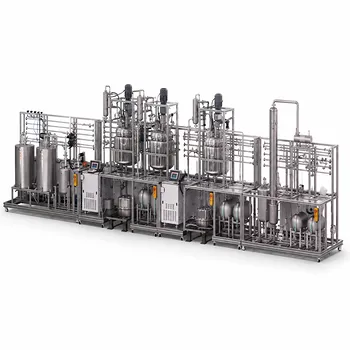
Controlling chemical leakage in educational and vocational pilot plants demands a two-pronged strategy that integrates physical safeguards with rigorous operational protocols. Effective measures start with designing out leak paths—favoring welded joints over flanges—and building in passive protections like secondary containment bunds and vent scrubbers. On the human side, mastering maintenance discipline, embedding hazard identification checklists into everyday routines, and fostering a culture of immediate error correction are equally critical for trapping leaks before they endanger students, equipment, or the learning environment.
The core takeaway: Physical containment—bunds, scrubbers, and sealed foundations—and a design philosophy that minimizes joint connections create a leak‑resistant plant. But true safety only emerges when those engineering controls are paired with meticulous operator training, proactive seal and gasket management, and a systematic hazard‑spotting workflow that treats every sampling valve and joint as a potential source of escape.
The Physical Fortress: Leak‑Prevention by Design
Minimizing Leak Paths with Welded Connections
Flange joints are the single most common physical weak point in pilot‑plant piping. Each flange introduces a gasket, bolts, and a mating surface that can misalign or degrade, especially when materials are incompatible with the chemicals flowing inside.
Welded connections eliminate that pathway altogether. By permanently fusing pipes, you remove the opportunity for a gasket to fail or a bolt to loosen over repeated thermal cycles. In educational settings, where students may overtighten flanges or use incorrect gaskets, the simplicity of a weld provides a bullet‑proof defense against novice error.
Secondary Containment Bunds: Catching What Escapes
Even the best designs cannot guarantee zero emissions, so secondary containment is non‑negotiable. Bunds—raised curbs or liquid‑tight trays around tanks, reactors, and pumps—capture spills before they reach the floor or drain.
In a vocational plant, bunds serve a dual purpose. They physically contain a catastrophic leaking chemical, and they act as a visible teaching tool, forcing students to consider the consequences of every operation. A well‑sized bund retains 110% of the largest vessel’s volume, ensuring no overflow even if a whole tank empties.
Scrubbing Vapors: Vent and Drain Management
Leaked liquids are obvious; leaked vapors are insidious. Vent scrubbers and organized drain headers direct toxic or flammable gases to a treatment system rather than letting them accumulate in the laboratory.
For educational pilot plants, a simple packed‑column scrubber or even a bubbler can neutralize acid vapors escaping from a pressure relief device. Running all drains to a sealed collection tank rather than a floor gully prevents unplanned reactions when different chemicals mix. This containment strategy not only protects breathing air but also teaches students that waste handling is an integral part of process design, not an afterthought.
Sealed Foundations: Protecting What’s Underneath
Concrete foundations with an impermeable coating act as the last line of defense for groundwater. Unlike bare soil or cracked tiles, a sealed concrete plinth keeps a persistent drip from migrating into the earth.
In many teaching labs, the floor itself is expected to serve as secondary containment. A dedicated, coated concrete pad under the pilot plant ensures that even a slow nighttime leak from an unclosed sampling valve remains visible and recoverable, not an invisible environmental liability.
The Human Shield: Operational Strategies That Prevent Leaks
Operator Training: Eliminating the “Unclosed Valve” Error
The primary reference flags operator error—particularly unclosed sampling valves—as a leading leakage cause. In educational environments, the risk is amplified because operators are learning.
Effective training means embedding a “close‑and‑verify” muscle memory. Every sampling procedure must end with a physical confirmation, often a second crew member visually checking that the valve is shut and capped. Transparent valve handles and position indicators make this check instantaneous. Routine low‑pressure leak tests after sample collection further cement the habit and catch errors before chemicals hit the floor.
Maintenance Discipline: Isolation and Purging Before the Wrench Turns
Poor maintenance practice—opening a joint without proper isolation and purging—is a direct path to a violent release. The solution is a written, never‑skipped lock‑out/tag‑out procedure that bleeds pressure and flushes lines with inert gas or water before any flange is cracked.
For vocational students, this becomes a core curriculum point. They learn to treat every joint as if it contains the most hazardous chemical in the plant until proven otherwise. Insist on double‑block‑and‑bleed configurations for isolation tasks, turning a potential leak into a controlled, zero‑energy activity.
Seal and Gasket Management: Degradation Is Predictable
Gaskets and mechanical seals degrade over time due to temperature swings, chemical attack, or simply compression set. Relying on a leak to appear before replacement is reactive and dangerous.
An operational strategy must shift to a planned, condition‑based replacement cycle. Use a simple log that records the service hours and chemical exposure of every gasket, and replace them at a conservative interval—typically 50–75% of the manufacturer’s expected life. In a teaching environment, this routine becomes an exercise in reliability engineering, where students witness the cost of deferred maintenance firsthand.
Systematic Hazard Identification: The Standing Pre‑Op Checklist
Leaks often arise because hazards were never fully spotted in the first place. Supplementary references outline a five‑step hazard identification process that, when implemented operationally, acts as a permanent leak‑prevention filter:
- Inventory and MSDS review: Know exactly what chemicals are on site and their toxicological profiles.
- Process analysis: Map where leaks could originate during normal, startup, and shutdown conditions.
- Storage inspection: Verify that containers and their secondary containments are compatible and intact.
- Ignition and atmosphere control: Identify vapor accumulation zones that could turn a minor leak into an explosion.
- Human factors and emergency preparedness: Assess training depth and fatigue management to reduce mistake‑prone shifts.
Embedding these steps into a pre‑startup safety review or a daily walkthrough ensures that leaking potential is evaluated before the chemical ever enters the line.
Understanding the Trade‑offs
Welded Connections vs. Flexibility for Teaching
Welds are leak‑proof but rigid. An all‑welded pilot plant cannot be easily reconfigured for different teaching modules. If the curriculum requires frequent unit operation changes, you may need to accept a limited number of high‑quality, correctly specified flanged connections.
In those cases, the trade‑off is managed by using proven gasket materials (e.g., PTFE envelope or spiral‑wound for aggressive chemicals) and by teaching students proper bolt‑torquing as a core skill. The risk rises, but it stays acceptable when combined with a zero‑tolerance posture on weep detection.
Secondary Containment Cost and Space
Bunds and coated concrete pads add upfront cost and floor space. A small educational facility may struggle to fit a bund that meets the 110% rule. The compromise is often to reduce chemical inventory sizes so that an existing lab tray or dike can hold the entire volume.
This strategy forces a conversation about chemical minimisation, which itself is a powerful leak‑control measure. Less hazardous material on site means a smaller potential release.
Operational Burdens: Time vs. Culture
Rigorous lock‑out and daily checklists consume time that could go toward hands‑on experimentation. The trade‑off is between a fast‑paced lab and a consistently safe one. For vocational schools, the answer is clear: the safety protocols become the learning objective.
When students graduate knowing that no joint is opened without an isolation blind and a purge log, they carry an industry‑grade habit into their careers. The time spent is an investment, not a waste.
Making the Right Choice for Your Educational Plant
Based on the strategies outlined, tailor your approach to your plant’s mission and constraints.
- If your primary focus is maximising student safety and environmental protection: Prioritise an all‑welded design with full secondary containment bunds and a centralised vent scrubber, even if it limits reconfiguration.
- If your primary focus is flexible unit‑operation training with manageable risk: Use welded headers but allow a minimal number of flanged spool pieces; pair each flange with premium, chemical‑compatible gaskets and a mandatory bolt‑torque log.
- If your primary focus is embedding an industrial safety culture in your curriculum: Implement the five‑step hazard identification process as a graded pre‑op assessment, and make lock‑out/tag‑out and seal replacement a formal part of every laboratory session.
Every drip captured and every valve verified shapes not only a safer pilot plant, but a generation of engineers who see leak prevention as a professional reflex.
Summary Table:
| Strategy Type | Control Measure | Key Benefit |
|---|---|---|
| Physical Design | Welded Connections | Eliminates flange leak paths and gasket wear |
| Secondary Containment Bunds | Captures liquid spills (retains 110% of largest vessel) | |
| Vent Scrubbers & Sealed Drains | Neutralizes escaping vapors and prevents mixed-chemical reactions | |
| Sealed Coated Foundations | Protects groundwater from persistent, slow drips | |
| Operational Protocols | "Close-and-Verify" Training | Minimizes operator errors like unclosed sampling valves |
| Lock-Out/Tag-Out & Purging | Ensures safe line isolation before maintenance | |
| Condition-Based Seal Replacement | Replaces degrading gaskets at 50-75% of expected life | |
| 5-Step Hazard Identification | Screens for potential leak pathways before startup |
Build a Safer, Leak-Resistant Learning Environment with LABPARK
At LABPARK, we design and supply state-of-the-art Educational and Vocational Unit Operations Pilot Plants in chemical engineering, bioprocess & biotech, and environmental & water treatment. We help universities, research institutes, and enterprises integrate industrial-grade physical safeguards and operational safety features into their teaching labs.
Ready to equip your institution with safe, reliable, and compliant pilot plants? Contact LABPARK today to consult with our technical specialists and receive a customized proposal.
Related Products
- Natural Product Extraction Unit Operations Training Pilot Plant
- Fixed-Bed Chemical Reaction and Gas Dust Tar Removal Unit Operations Pilot Plant
- Ethyl Acetate Synthesis Unit Operations Pilot Plant for Practical Training
- Methanol Synthesis and Catalyst Performance Evaluation Educational Unit Operations Pilot Plant
- Electrolytic Hydrogen Production Educational Unit Operations Pilot Plant
People Also Ask
- How to Demo Solubility Sensitivity in SFE Pilot Plants? Practical Thermodynamics
- How do pilot plants differentiate physical vs chemical extraction? Enhance Chemical Engineering Training
- How are HTU and NTU applied to determine extraction column height? Guide to Pilot Plant Scaling
- Why use step disturbance in pilot plants? Master process control dynamic response.
- Why use split-plot designs in pilot plants instead of CRD? Optimize process parameters effectively.