Choosing the wrong chemical desiccant for solvent drying isn’t just inefficient—it can trigger hazardous side reactions, destroy your product, or shut down your process line. The fundamental, non‑negotiable criterion is chemical inertness. You must ensure the desiccant will not react with the solvent itself, with minor impurities, or with itself under your operating conditions. In practice, this means avoiding acid‑base neutralization, base‑catalyzed condensations, hydrolysis reactions, and the formation of unwanted coordination complexes. The desiccant’s chemical nature must be painstakingly matched to the solvent’s functional groups.
The cardinal rule is absolute chemical inertness between the desiccant and the solvent. Acidic agents are incompatible with alkaline or amine‑containing streams, strong bases can degrade carbonyl compounds, and certain salts form complexes with alcohols, amines, and phenols—even if no obvious reaction occurs. For neutral organic solvents, high‑capacity neutral salts like anhydrous magnesium sulfate offer the safest, most broadly applicable path.
Beyond Simple Drying: Why Inertness Is the Core Requirement
A Reaction Is Worse Than Wet Solvent
A desiccant that reacts with your solvent doesn’t just fail to dry it—it introduces new contaminants, degrades the product, and can generate heat or pressure. In process engineering, such side reactions carry safety risks, ruin product specs, and create downstream purification burdens that far outweigh the cost of a gentler drying method.
The Hidden Drivers of Incompatibility
Solvent streams often contain trace acidic or basic impurities, dissolved CO₂, or reactive intermediates. A desiccant that is “inert” to the pure solvent might still catalyze hydrolysis or condensation when these impurities are present. Your compatibility analysis must therefore consider the entire chemical background of the stream, not just the headline solvent.
Decoding the Critical Compatibility Criteria
Acidic Desiccants: A Narrow Window of Use
Powerful acidic desiccants like phosphorus pentoxide (P₂O₅) are highly reactive. They cannot be used to dry alkaline compounds, amines, or even certain alcohols, because they will neutralize the base or cause dehydrogenation. Unless you are drying a rigorously neutral, acid‑tolerant hydrocarbon stream, acidic agents are generally too risky for routine process use.
Basic Desiccants: The Carbonyl Trap
Common basic desiccants—NaOH, KOH, CaO—are incompatible with acidic compounds, esters, aldehydes, and ketones. Their danger is not just neutralization; they can catalyze hydrolysis of esters or aldol condensation of aldehydes and ketones. Even a small amount of base can trigger a polymerization or solid‑forming reaction that fouls equipment and ruins the batch.
The Hidden Trap: Coordination Complex Formation
Some salts appear inert but bind chemically to certain compounds. Anhydrous calcium chloride (CaCl₂) is the classic example: it forms coordination complexes with alcohols, phenols, amides, and amines. This permanently traps the solvent molecule, reduces yield, and creates a sticky mess that can’t be regenerated easily. Always check for complexation, especially with any molecule that has a lone pair of electrons.
The Safe Harbor: High‑Capacity Neutral Salts
For general neutral solvents, industry default is anhydrous magnesium sulfate (MgSO₄) or sodium sulfate (Na₂SO₄). These are true desiccants, binding water only through hydration without covalently interacting with the solvent. They offer wide chemical tolerance, decent capacity, and rapid drying rates. When your solvent has no strongly coordinating or acidic/basic groups, start here.
Understanding the Trade-offs and Pitfalls
When High Capacity Lures You into Danger
A desiccant with enormous water‑holding power—like P₂O₅ or CaO—may seem attractive, but its reactivity often cancels that benefit. In process engineering, a slightly lower‑capacity neutral salt that avoids side reactions is almost always the safer and more economical choice because it preserves the product and simplifies downstream operations.
The Danger of Ignoring Trace Impurities
A solvent labeled “pure” may still carry traces of acid or base that chain‑react with a desiccant. This is particularly common with reused or recovered solvents. Before finalizing a desiccant, characterize the actual stream composition. A small reactivity risk, when amplified across thousands of liters, becomes a plant‑wide problem.
Selecting a Desiccant for Your Process Stream
Your desiccant selection must begin with a full chemical assessment of every functional group, impurity, and process condition. Then, match accordingly:
- If your primary focus is drying neutral, stable solvents like hydrocarbons or ethers: Start with anhydrous MgSO₄ or Na₂SO₄; their broad inertness and high water capacity make them the ideal workhorse.
- If your primary focus is alcohols, amines, or phenols: Avoid CaCl₂ and all acidic desiccants. Use neutral salts or physical adsorbents; verify that no unexpected coordination or acid‑base reaction occurs.
- If your primary focus is aldehydes, ketones, or esters: Never use basic desiccants (NaOH, KOH, CaO). They catalyze condensations and hydrolysis. Stick to rigorously neutral agents, and prefer those without any surface basicity.
- If your primary focus is acidic or alkaline streams: Match the desiccant’s nature to the stream—do not create an acid‑base couple that would neutralize the product or consume the desiccant. For strongly acidic streams, inert bases are sometimes needed, but only after exhaustive compatibility testing.
Make chemical inertness your first filter, and you’ll build a drying step that works not just in the lab, but reliably at scale.
Summary Table:
| Solvent / Stream Type | Incompatible Desiccants | Key Risk / Consequence | Safe Alternatives |
|---|---|---|---|
| Alcohols, Amines, Phenols | CaCl₂, Acidic Agents (P₂O₅) | Coordination complex formation, neutralization | Neutral salts (MgSO₄, Na₂SO₄) |
| Aldehydes, Ketones, Esters | Strong Bases (NaOH, KOH, CaO) | Aldol condensation, ester hydrolysis, polymerization | Rigorously neutral agents |
| Alkaline / Amine Streams | Acidic Desiccants (P₂O₅) | Rapid neutralization reaction, heat generation | Basic or neutral desiccants |
| Neutral Hydrocarbons & Ethers | None (Highly compatible) | Minimal risk | Anhydrous MgSO₄ or Na₂SO₄ |
Optimize Your Process Operations with LABPARK
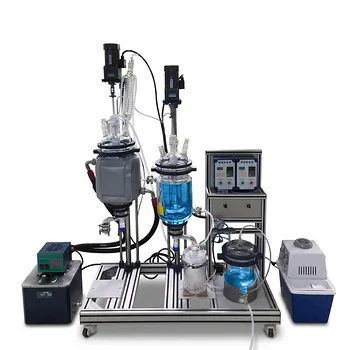
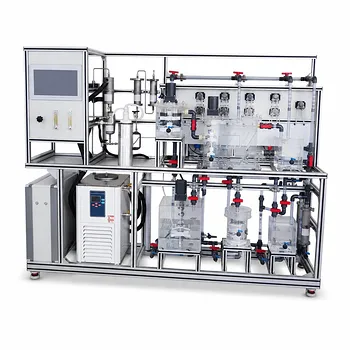
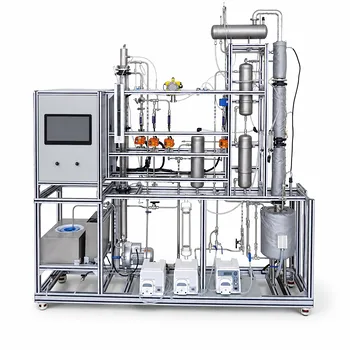
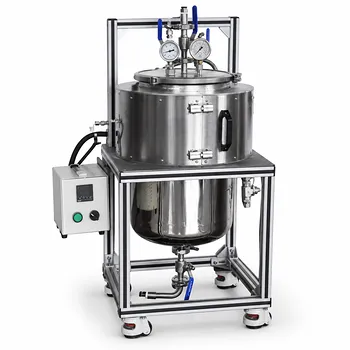
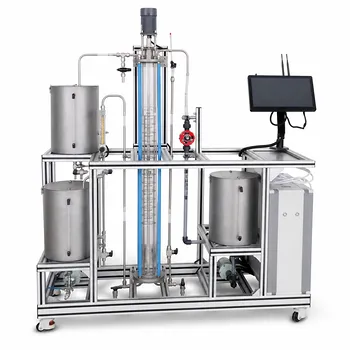
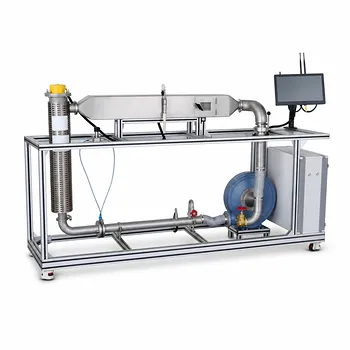
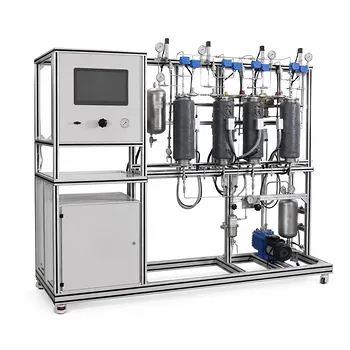
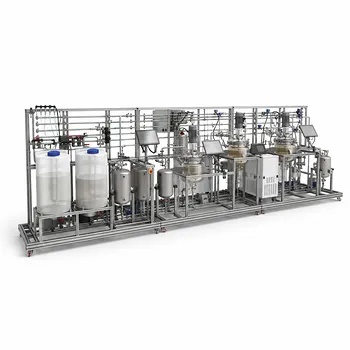
Translating chemical safety principles from theory to practice requires hands-on experience. LABPARK provides advanced Educational and Vocational Unit Operations Pilot Plants in chemical engineering, bioprocess & biotech, and environmental & water treatment.
Specially designed for universities, research institutes, and enterprises, our pilot plants allow students and researchers to safely study drying, separation, and reaction dynamics at scale.
Ready to elevate your engineering lab or research capabilities? Contact LABPARK today to discover our tailored pilot plant solutions!
Related Products
- Multi-Functional Drying Educational Unit Operations Pilot Plant
- Multi-Functional Special Distillation Educational Pilot Plant
- Potassium Salt Thermal Dissolution and Crystallization Separation Educational Unit Operations Pilot Plant
- Thermal Desorption Exhaust Gas and Tail Water Treatment Educational Pilot Plant
- Carbon Dioxide Absorption and Desorption Educational Pilot Plant for Carbon Capture Studies
People Also Ask
- How to study gasification in pilot plants? Compare exit gas composition & efficiency
- Why is the chemical plant startup schedule crucial? De-risk scale-up with pilot plants.
- How do deviations in estimating latent heat impact pilot plant thermal systems? Avoid hardware mis-sizing.
- Why Use PTFE & Hastelloy in Chemical Pilot Plants? Prevent Corrosion & Ensure Safety
- When to transition from PID to adaptive control in pilot plants? Key process indicators.