Knowledge Chemical Engineering Education What characterizes the transition to the falling rate drying period? Key scale-up insights.
Author avatar

Tech Team · LABPARK

Updated 1 month ago

What characterizes the transition to the falling rate drying period? Key scale-up insights.


The transition to the falling rate drying period is characterized by a single, critical physical event: the solid’s surface is no longer fully saturated with solvent. This specific moisture level is called the critical moisture content, and it represents the fundamental handoff in the drying mechanism. Before this point, evaporation occurs freely from a wet surface; after it, the process is choked by the slow diffusion of solvent from within the solid's pores to the surface.

While the immediate answer is the critical moisture content, the deeper engineering reality is about a shift in rate-limiting physics—from external heat transfer to internal mass transfer. For scale-up, this transition is critical because the point at which it occurs is not a fixed material constant; it is a function of cake thickness, particle size, and morphology that changes dramatically with equipment geometry.

The Physics of the Transition

To understand the significance of this turning point, we must first define the two regimes it separates.

Defining the Constant Rate Baseline

During the first stage, the solid’s surface behaves like an open pool of solvent. The drying rate is determined purely by how fast energy can be supplied to vaporize the liquid.

In this phase, heat transfer is the controlling mechanism. The process is driven by the temperature difference between the heating source (e.g., a jacket or hot air) and the solvent's boiling point at the operating pressure. As long as the surface is saturated, the cake temperature holds steady at that boiling point.

The Point of Switch: Critical Moisture Content

The constant rate period ends the instant the rate of internal moisture migration can no longer keep the surface completely wet. This is the critical moisture content.

At this precise moment, the drying rate begins to decline. The surface temperature, no longer held down by the cooling effect of concentrated evaporation, starts to rise toward the heating medium's temperature.

Why This Transition Defines Scale-Up Risk

Determining this transition point is the most critical output of pilot-plant work because its sensitivity to wet cake properties is the primary source of scale-up failure.

The Dependency on Cake Properties

The primary reference correctly notes that the critical moisture content depends on wet cake properties like thickness, particle size, and morphology. This fact is the bane of linear scale-up.

The distance a solvent molecule must travel to reach the surface changes drastically from a thin, well-mixed lab sample to a deep, compacted cake in a production dryer. A fine powder with small interstitial pores will have a very different internal mass transfer resistance than a bed of large, granular crystals.

The Laboratory-to-Production Trap

Batch failures often occur when a cycle designed in the lab encounters a completely different physical environment at scale. For example, supplementary references explain that lab-scale freeze-drying often occurs in environments with higher particulate loads.

These particulates provide nucleation sites. When the same formulation is processed in a sterile, low-particulate production environment, the solution experiences greater supercooling, forming smaller ice crystals. These smaller crystals create a cake with higher mass flow resistance for water vapor, directly delaying the falling rate period and extending drying times far beyond predictions.

Understanding the Scale-Up Pitfalls

Successfully navigating this transition requires acknowledging where standard operating logic must be inverted.

The Vanishing Return on Heat

In the constant rate period, more heat means a faster rate. This intuitive logic fails in the falling rate period. Applying excessive heat once the process is mass-transfer-limited yields diminishing returns.

The heat cannot be efficiently used for evaporation and instead merely raises the product temperature, risking degradation and forming a dry crust on the surface that further impedes vapor flow.

The Shift in Sensor Utility

Monitoring the transition informs process control strategies. In a pilot plant, the moment when cake temperature begins to rise is the direct empirical signal that the critical moisture content has been reached.

The operator can move from a single-minded focus on heat input to an acceptance that the cycle’s endgame is now governed by internal diffusion. The vacuum pump’s role shifts from handling massive vapor volumes to pulling a deep vacuum that can assist in "sucking" solvent through the porous matrix.

Predicting True Endpoint Times

The most expensive miscalculation is underestimating total drying time. Extended drying times in this period are the norm, not an anomaly.

A pilot plant that logs the drying rate curve allows engineers to calculate mass transfer proportionality constants and model the percentage of time spent in each regime. This data is essential for designing a production cycle that is not just short on paper, but achievable in practice.

Making the Right Choice for Your Scale-Up Goal

Pilot-plant studies must be tailored to extract the specific data needed to manage the transition point safely at scale.

  • If your primary focus is minimizing thermal degradation: Identify the exact critical moisture content and the corresponding rise in cake temperature. Reduce heat input the moment the transition is detected to prevent overheating the now-dry surface.
  • If your primary focus is reducing total cycle time: Focus on agitation and particle size distribution during the constant rate period to delay the onset of the critical point, but design the production vacuum system to handle the mass transfer bottleneck of the falling rate period.
  • If your primary focus is batch-to-batch consistency in sterile production: Do not rely solely on atmospherically contaminated lab data. Simulate production nucleation conditions in the pilot plant (e.g., via controlled ice nucleation) to reliably predict the cake's mass transfer resistance and its precise critical moisture content.

In scaling up a drying process, the true objective of a pilot plant is not to model what happens when all the solvent is freely available, but to accurately predict the exact moment it no longer is.

Summary Table:

Feature Constant Rate Period Falling Rate Period
Controlling Mechanism External Heat Transfer Internal Mass Transfer (Diffusion)
Surface State Fully saturated with solvent Unsaturated (dry spots forming)
Product Temperature Constant (solvent boiling point) Rising (approaches heating medium temp)
Operational Strategy Maximize heat input efficiency Optimize vacuum & manage product temp

Optimize Your Drying Scale-Up with LABPARK

Transitioning from lab scale to production comes with significant risks. LABPARK provides state-of-the-art Educational and Vocational Unit Operations Pilot Plants in chemical engineering, bioprocess & biotech, and environmental & water treatment for universities, research institutes, and enterprises.

Our systems help you gather precise empirical data to master critical transitions like drying rate periods, ensuring seamless process scale-up.

Ready to eliminate batch failures? Contact us today to explore our pilot plant solutions.

Related Products

People Also Ask

Related Products

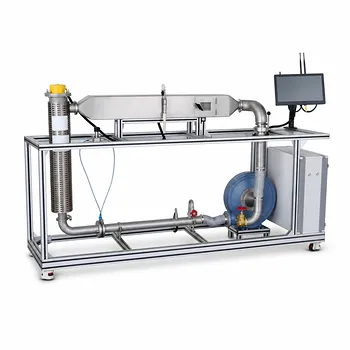
Circulating Wind Tunnel Drying and Convective Heat Transfer Coefficient Determination Educational Pilot Plant

Circulating Wind Tunnel Drying and Convective Heat Transfer Coefficient Determination Educational Pilot Plant

This educational pilot plant enables engineering students to study convective drying, air-water vapor systems, and heat transfer by determining drying curves, drying rate curves, and convective heat transfer coefficients under variable conditions.

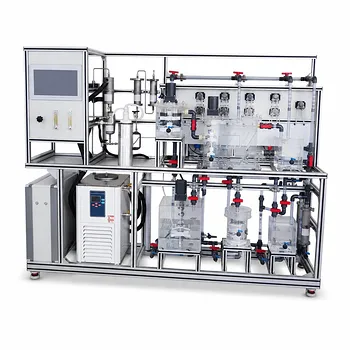
Thermal Desorption Exhaust Gas and Tail Water Treatment Educational Pilot Plant

Thermal Desorption Exhaust Gas and Tail Water Treatment Educational Pilot Plant

Bench-scale educational pilot plant for treating thermal desorption exhaust gas and tail water integrates condensation, Fenton oxidation, precipitation, filtration, and carbon adsorption. Ideal for chemical engineering and environmental labs, teaching unit operations, process control, and real-time data analysis.

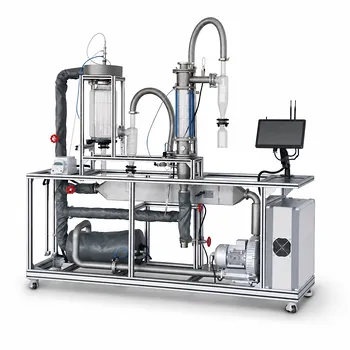
Multi-Functional Drying Educational Unit Operations Pilot Plant

Multi-Functional Drying Educational Unit Operations Pilot Plant

Versatile multi-functional drying educational unit operations pilot plant integrating tunnel, fluidized bed, and spray drying. Enables hands-on study of drying curves, psychrometry, and gas-solid separation for chemical engineering curriculum in higher education labs.

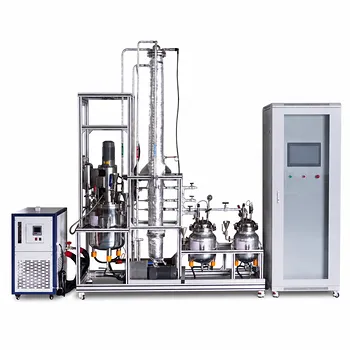
Carbon Material Thermal Pretreatment Multiphase Separation Educational Pilot Plant

Carbon Material Thermal Pretreatment Multiphase Separation Educational Pilot Plant

Educational pilot plant for carbon material thermal pretreatment and multiphase separation. Features jacketed agitated reactor, separation column, and modern controls for hands-on unit operations training in heat transfer, fluid flow, and process safety with industrial-grade materials and wireless data acquisition.

Potassium Salt Thermal Dissolution and Crystallization Separation Educational Unit Operations Pilot Plant

Potassium Salt Thermal Dissolution and Crystallization Separation Educational Unit Operations Pilot Plant

This educational pilot plant allows chemical engineering students to perform potassium salt thermal dissolution and cooling crystallization experiments, integrating solubility studies, supersaturation control, and solid-liquid separation in a safe, compact, and customizable laboratory system for hands-on unit operations learning.

Dual Mode Heat Transfer Pilot Plant for Unit Operations Training

Dual Mode Heat Transfer Pilot Plant for Unit Operations Training

Engineering-scale dual-mode heat transfer pilot plant for hands-on unit operations training in chemical engineering. Features real and simulated modes, multiple heat exchanger types, comprehensive coefficient determination, and advanced process control with data acquisition for engineering students and researchers.

Comprehensive Multi-Modal Heat Transfer Unit Operations Pilot Plant for Engineering Training

Comprehensive Multi-Modal Heat Transfer Unit Operations Pilot Plant for Engineering Training

Comprehensive multi-modal heat transfer unit operations pilot plant for engineering training. Features four heat exchanger types, multi-media switching, and three operating modes. Hands-on experience in safety, optimization, and process control. Industrial-grade design with real-time data acquisition for chemical engineering labs.

Hot Filtration Educational Unit Operations Pilot Plant Laboratory System

Hot Filtration Educational Unit Operations Pilot Plant Laboratory System

This integrated laboratory bench-scale hot filtration pilot plant enables students to study solid-liquid separation under thermal conditions, featuring a stainless steel vessel, removable heating jacket, and multi-layer filter plates for unit operations education, ideal for chemical engineering laboratory curriculum.

Three-Tube Heat Transfer Educational Pilot Plant for Unit Operations Training

Three-Tube Heat Transfer Educational Pilot Plant for Unit Operations Training

Three-tube heat transfer pilot plant for studying convective heat transfer enhancement and condensation. Allows comparison of smooth, corrugated, turbulent tubes, verifying empirical correlations. Ideal for chemical engineering education with safety and closed-loop steam recovery.

Comprehensive Heat Transfer Coefficient Determination Educational Unit Operations Pilot Plant

Comprehensive Heat Transfer Coefficient Determination Educational Unit Operations Pilot Plant

Advanced industrial-grade educational pilot plant for comprehensive heat transfer coefficient determination. Enables quantitative convective heat transfer analysis, evaluates double-pipe and shell-and-tube exchanger configurations, and includes digital data acquisition. Customizable for engineering curriculum. Ideal for engineering unit operations labs.

Throttling Effect Determination Educational Unit Operations Pilot Plant

Throttling Effect Determination Educational Unit Operations Pilot Plant

Investigate the Joule-Thomson throttling effect with this educational unit operations pilot plant. Designed for engineering students, it enables hands-on comparative analysis of adiabatic gas expansion using precise process control, interactive digital interface, and eco-friendly operation, ensuring safe repeatable thermodynamic experiments.

Natural Product Extraction Unit Operations Training Pilot Plant

Natural Product Extraction Unit Operations Training Pilot Plant

Integrated natural product extraction pilot plant for chemical engineering training bridges theory and industrial practice with modular extraction and evaporation/concentration units, hybrid touchscreen and manual control, realistic process simulation, and self-contained softened water and vacuum utilities.

Fixed-Bed Chemical Reaction and Gas Dust Tar Removal Unit Operations Pilot Plant

Fixed-Bed Chemical Reaction and Gas Dust Tar Removal Unit Operations Pilot Plant

Integrated educational pilot plant for studying catalytic gas-solid reactions and downstream gas purification. Features dual fixed-bed reactor, three-stage heating, and touchscreen control for hands-on engineering training. Ideal for chemical and environmental engineering curricula.

Continuous Batch Extractive Distillation Educational Pilot Plant

Continuous Batch Extractive Distillation Educational Pilot Plant

Versatile pilot plant for continuous, batch, and extractive distillation training. High-borosilicate glass column for visualizing hydraulics, 15.6-inch touchscreen with data logging, precise reflux ratio control 1-99, and durable corrosion-resistant frame. Ideal for chemical engineering education and process research.

Multi-Functional Special Distillation Educational Pilot Plant

Multi-Functional Special Distillation Educational Pilot Plant

Versatile multi-functional special distillation pilot plant for chemical engineering education. Supports continuous, vacuum, azeotropic, reactive, extractive distillation. Transparent glass columns enable real-time visual observation of hydrodynamics and separation processes.

Solid Waste Pyrolysis and Refining Educational Pilot Plant for Unit Operations

Solid Waste Pyrolysis and Refining Educational Pilot Plant for Unit Operations

This pilot plant for solid waste pyrolysis and refining integrates pyrolysis, separation, distillation, and catalytic hydrogenation into one educational unit. It provides visual process observation, smart data logging, and industrial safety for hands-on learning of engineering unit operations.

Green Anhydrous Ethanol Refining Practical Training Pilot Plant

Green Anhydrous Ethanol Refining Practical Training Pilot Plant

Advanced integrated pilot plant for university labs demonstrating extractive distillation to produce high-purity absolute ethanol from crude feedstock, featuring multi-column continuous operation, closed-loop solvent recycling, and customizable controls for hands-on engineering education, ideal for chemical engineering training and research.

Dual-Mode Rectification Pilot Plant for Practical Training Unit Operations

Dual-Mode Rectification Pilot Plant for Practical Training Unit Operations

Industrial-scale dual-mode rectification pilot plant for chemical engineering practical training. Features real-material and simulated-material operation modes, sieve-plate column with sight glasses for visual observation of hydrodynamics, and customizable SCADA control for safe, hands-on learning of unit operations and mass transfer.

Rising and Falling Film Evaporation Educational Unit Operations Pilot Plant

Rising and Falling Film Evaporation Educational Unit Operations Pilot Plant

Hands-on educational pilot plant for studying rising and falling film evaporation, flow regimes, and heat transfer. Customizable for university labs with industrial instrumentation and data acquisition. Enables comparative evaluation of evaporation modes and energy efficiency.

Multi Functional Membrane Crystallization Educational Unit Operations Pilot Plant

Multi Functional Membrane Crystallization Educational Unit Operations Pilot Plant

Integrated bench-scale membrane crystallization pilot plant for engineering education. Provides hands-on training in advanced separation technologies, combining membrane distillation crystallization and process intensification. Features variable scaling vessels, industrial-grade flow control, and interactive digital data acquisition. Customizable for university labs.


Leave Your Message