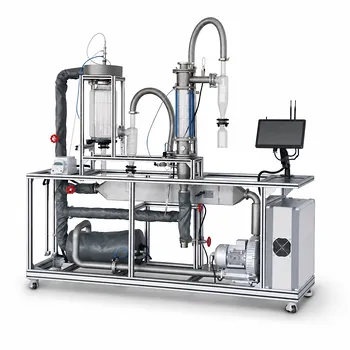
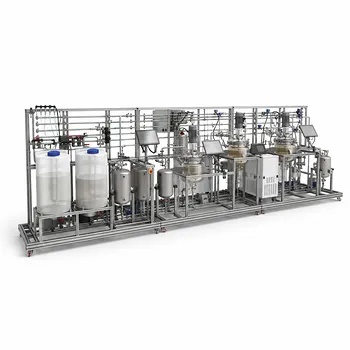
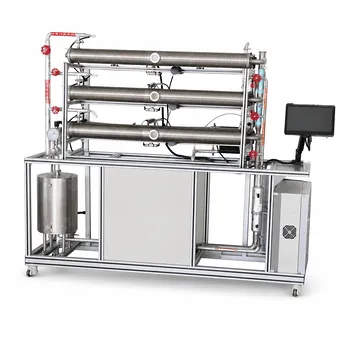
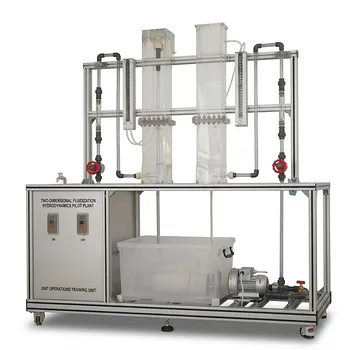
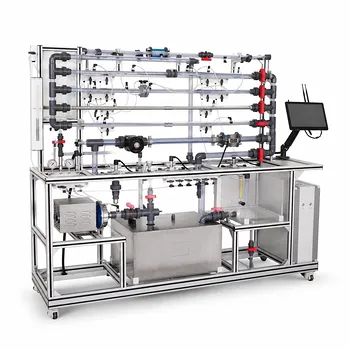
The true cost of an educational pilot plant is rarely the equipment price tag you see first.
To build a realistic budget for a customized unit operations pilot plant, you must move beyond the base fabrication cost. The critical, often overlooked line items are design fees—which can reach up to 30% of the combined inside- and outside-battery-limits investment for small-scale projects—and a flexible contingency reserve that starts at a minimum of 10% and can climb to 50% when the design involves high technical uncertainty. Add to that the expenses of installation labor, utility upgrades, instrumentation, and location-specific multipliers, and you have a complete financial picture that protects educational projects from costly surprises.
A realistic budget treats the pilot plant as an integrated learning system, not a catalog purchase. The most common planning mistake in universities is underestimating the soft costs—design, engineering, and contingencies—which can easily double the initial equipment quote, especially when customization and safety margins are non-negotiable.
The Full Cost Picture: More Than Hardware
The procurement price of the main vessels, columns, or reactors is only the starting point. Budgeting must account for both direct and indirect cost layers that turn a set of fabricated components into a functioning, safe, and pedagogically valuable teaching tool.
Beyond the Purchase Order: ISBL and OSBL
The physical core of the plant sits inside battery limits (ISBL)—the reactors, heat exchangers, and separation units. But to operate, the plant needs connection to utilities, structural supports, and site-specific drainage and ventilation. These outside battery limits (OSBL) expenditures typically run at around 40% of the ISBL cost. Ignoring them is a one-way ticket to a half-built plant that can’t run.
The Modular Factor: How Indirect Costs Add Up
Every piece of process equipment demands a web of additional components. For a representative process furnace, direct material additions alone include piping (17.7% of base cost), concrete (8.1%), instruments (3.9%), electrical (2.0%), and insulation (2.0%). Then you add labor (32%) and indirect costs—field-erection equipment, engineering, and offsite support—that typically contribute another 20% to 35% (with 25% as a solid industry average). The combined modular multiplier can push the total installed cost to over 200% of the base equipment price. For a teaching lab, that means planning for nearly half the final budget to reside in these hidden installation layers.
The Disproportionate Weight of Design Fees
Customization transforms a generic process unit into a pedagogical instrument. It also transforms the design fee line item from a minor footnote into a major budget driver.
Why Small Plants Pay a Premium
Design work does not scale with plant size. The intellectual effort required to specify a safe, functional distillation column, draw its piping and instrumentation diagram (P&ID), integrate control systems, and lay out utility connections is nearly the same whether the column is 6 inches or 6 feet in diameter. Consequently, for small-scale educational pilot plants, design fees can consume up to 30% of the combined ISBL+OSBL investment, compared to only about 10% for large industrial installations. This high percentage is not a sign of overcharging—it reflects the genuine engineering hours needed to ensure a safe, educational, and reliable system.
Factoring in the Educational Customization
When you require glass column sections for visualizing fluid dynamics, specialized student-safe pressure ratings, or a modular skid that can be reconfigured for different experiments, the design complexity increases. Each custom feature adds to the piping, control, and safety review scope, pushing design costs toward the upper end of that range. Budgeting for those fees upfront prevents the need to cut essential learning features later.
Planning for Uncertainty: Contingency Reserves
No pilot plant budget is complete without a contingency reserve that acknowledges the things you don’t yet know.
The 10% Floor and When to Go Higher
For well-understood processes built to fully defined specifications, a contingency of at least 10% of the combined ISBL and OSBL fixed capital is the minimum prudent allocation. Statistical analysis shows this level corresponds to a 98% confidence that the final investment won’t exceed the estimate by more than 6.5%. However, educational pilot plants often incorporate novel configurations or unproven teaching methodologies. When the process has not been verified at this scale, contingency must rise—reaching up to 50% in cases of high technical uncertainty. Industry guidelines separate this into a design allowance: a new, unproven process flow demands a 15% equipment design allowance, while a proven process requires only 3%.
Matching Contingency to Estimation Accuracy
Your reserve should also reflect the quality of your cost estimate. If you are in early-stage planning using a factored cost analysis (error margin of ±20% to ±25%), a contingency of 30% or more is essential to absorb the wide uncertainty. As you advance to a definitive estimate (±10% to ±15% accuracy) with vendor quotations and preliminary P&IDs, you can safely tighten the contingency to the 10–15% range. Aligning contingency with your estimation phase turns guesswork into risk-managed planning.
The Hidden Costs of Installation and Infrastructure
Even the best-designed pilot plant will fail to meet educational goals if the laboratory cannot supply its basic needs.
Utility Readiness: Electricity, Cooling Water, and More
Before placing an order, verify that your lab can deliver the required electricity (voltage, phase, and power capacity), cooling water (flow rate, pressure, temperature), process air, and steam—the latter being critical for any distillation or heating unit. In many campus buildings, the existing infrastructure is insufficient. Upgrading a power panel, installing a chiller, or adding a steam line is a direct OSBL cost that must appear in the budget. Failing to budget for these utility alignments results in a gorgeous but inoperable piece of equipment.
Indirect Field Costs and Labor
On-site assembly is not included in a typical equipment quotation. Piping, welding, instrument mounting, and electrical hookups require skilled labor—the 32% direct labor adder mentioned earlier—plus indirect site overhead. For a university, this might mean hiring contractors or dedicating in-house engineering staff time. Budget for field erection, piping materials, and wiring as separate line items right from the start.
Location and Sourcing: A Geographic Multiplier
Where you build and where you buy both have a direct impact on the numbers.
Regional Cost Factors and Import Considerations
Cost databases often use a baseline region (such as the US Gulf Coast). To adapt to your location, you must apply a location factor. Historically, these factors range from around 0.6 to 1.1 for China and about 1.26 for Japan, depending heavily on the ratio of imported to domestically manufactured components. Sourcing local materials and fabrication reduces the factor and can significantly lower capital costs. For an educational project, choosing a nearby equipment vendor with local supply chains can trim thousands from the budget.
Integrating Location into the Budget
A practical starting point for many academic projects is to estimate the ISBL cost from a vendor, calculate OSBL at roughly 40% of ISBL, then add roughly 10% for engineering and 15% for contingency on the combined total. However, for a highly customized teaching plant, be prepared to push that design line up to 20-30% and contingency higher, as detailed earlier. This modular approach keeps you from anchoring on the base quote alone.
The Special Demands of Educational Pilot Plants
Teaching laboratories impose requirements that industrial plants can sometimes sidestep.
Material Selection and Safety Margins
Chemical compatibility and student safety must drive material choices. While carbon steel is economical for non-corrosive training fluids, pilot plants that might see mild acids or operate in humid academic buildings need stainless steel (304 or 316). This upgrade prevents rust and extends system life. Pressure-rated systems require certified relief valves, burst discs, and robust instrumentation—all adding cost that is not optional when student safety is at stake. Transparent sections (glass columns, sight glasses) are invaluable for visualizing hydrodynamics but must be specified with safe design pressures, further raising the material and engineering budget.
Design Allowances for Unproven Processes
If your pilot plant is intended to demonstrate a novel separation sequence or a reactor type that hasn't been scaled down before, apply the 15% design allowance to ensure the equipment has adequate capacity and safety margins. This directly increases the size and cost of vessels, piping, and relief systems. Even if the process is well-known, a 3% allowance for uncertainties is wise. Failing to include it can lead to a plant that bottlenecks at the first unexpected process variation during a lab session.
Understanding the Trade-offs
Budgeting for a teaching pilot plant is an exercise in balancing pedagogical ambition with financial reality.
Precision vs. Early-Stage Flexibility: A detailed, high-accuracy estimate ((\pm 5%)) is expensive to produce and requires about half of the design engineering to already be complete. Most educational projects cannot afford that upfront. The trade-off is to use a factored estimate early on, accept the (\pm 25%) uncertainty, and compensate with a generous contingency. It’s better to ask for a realistic budget with a healthy reserve than to lowball and request emergency funds later.
Customization vs. Cost Control: Every glass section, every additional sensor, every modular connection point adds to the design and fabrication effort. Highly customized pilot plants deliver unmatched pedagogical value but come with higher design fees and a contingency that reflects their one-off nature. A pragmatic compromise is to use standard, pre-engineered modules for the core unit operations and limit customization to the transparent sections and the teaching-friendly control interface. This keeps the soft costs in check while preserving the educational experience.
Making the Right Choice for Your Goal
The optimal budget structure depends on where you are in the planning cycle and what you prioritize. Use these guides to frame your financial request:
- If your primary focus is preliminary budget approval: Use a factored cost analysis ((\pm 25%) accuracy) and apply a 30-50% contingency to cover the yet-unknown design, installation, and utility upgrade costs. This buffer will protect you as the technical details crystallize.
- If your primary focus is a detailed capital request: Invest in a definitive estimate backed by preliminary P&IDs and vendor quotations. With reduced uncertainty, a 10-15% contingency reserve is appropriate, provided the process technology is proven and the utility infrastructure is confirmed.
- If your primary focus is on long-term operational safety and pedagogy: Do not compromise on stainless steel wetted parts, safety-rated pressure envelopes, and transparent learning features. Recognize that these choices elevate the base cost and design fees, and build the budget with a dedicated line for safety compliance and a design allowance of at least 15% for any novel configuration.
A pilot plant that arrives on time, within a realistic budget, and fully capable of inspiring the next generation of engineers is never the result of a single equipment quote. It is the product of thoughtful, layered financial planning that respects the unseen costs of engineering, installation, and learning-driven customization.
Summary Table:
| Cost Category | Typical Budget Allocation | Key Considerations |
|---|---|---|
| OSBL (Outside Battery Limits) | ~40% of ISBL | Utilities, support structures, site-specific drainage & ventilation. |
| Design Fees | Up to 30% of ISBL+OSBL | High for small-scale/custom educational plants due to engineering hours. |
| Contingency Reserves | 10% to 50% | 10% minimum for proven designs; up to 50% for unproven/novel setups. |
| Installation & Labor | ~32% direct labor adder | Site preparation, piping, wiring, and local contractor fees. |
| Design Allowance | 3% to 15% | 3% for proven processes; 15% for novel configurations to ensure safety. |
Plan Your Pilot Plant with LABPARK
Building an educational or vocational pilot plant requires a precise balance of pedagogical goals, safety, and budget constraints. LABPARK provides customized Educational and Vocational Unit Operations Pilot Plants in chemical engineering, bioprocess & biotech, and environmental & water treatment for universities, research institutes, and enterprises.
Avoid costly budgeting surprises. Partner with our engineering team to design a cost-effective, high-safety, and visually engaging learning system.
Contact LABPARK today to discuss your project requirements and receive a detailed budget estimate!
Related Products
- Multi-Functional Drying Educational Unit Operations Pilot Plant
- General Purpose Cosmetics Production Unit Operations Training Pilot Plant
- Dual-Mode Rectification Pilot Plant for Practical Training Unit Operations
- Multi-Reactor Educational Pilot Plant for Reaction Engineering Unit Operations
- Multimodal Absorption and Desorption Pilot Plant for Unit Operations Training
People Also Ask
- How to study gasification in pilot plants? Compare exit gas composition & efficiency
- Why Use PTFE & Hastelloy in Chemical Pilot Plants? Prevent Corrosion & Ensure Safety
- How do deviations in estimating latent heat impact pilot plant thermal systems? Avoid hardware mis-sizing.
- Why is the chemical plant startup schedule crucial? De-risk scale-up with pilot plants.
- When to transition from PID to adaptive control in pilot plants? Key process indicators.