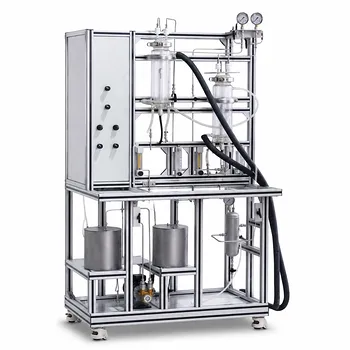
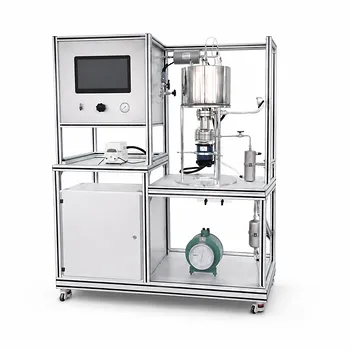
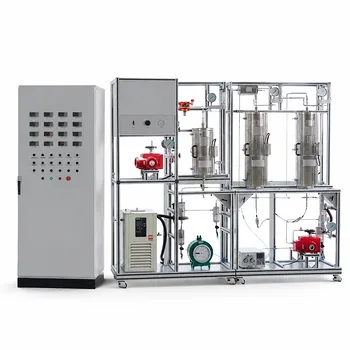
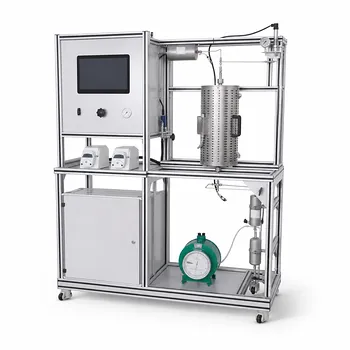
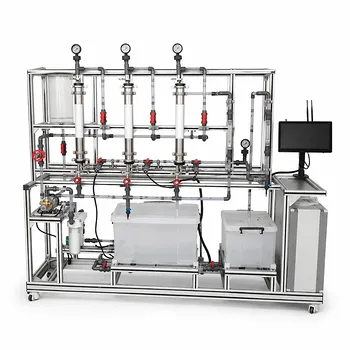
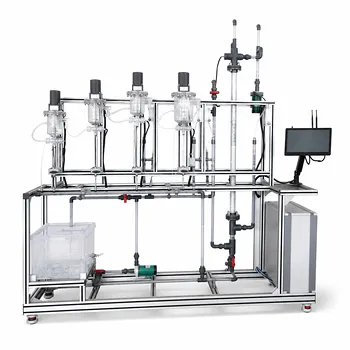
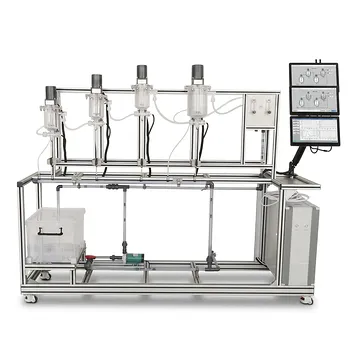
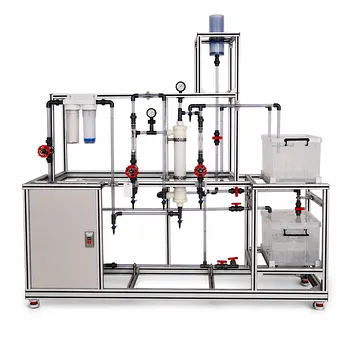
The shift from a dissolved molecule to a structured solid isn't just a material swap; it’s a fundamental architectural upgrade for your pilot plant. Integrating catalytic polymeric membranes directly addresses the core pain points of homogeneous catalysis by physically entrapping the active species. This instantly eliminates the downstream energy sink of catalyst recovery, locks the catalyst into a stable microenvironment to resist deactivation, and creates a reusable, flow-ready system that dramatically increases total catalytic output without changing the reactor footprint.
The core paradigm shift is moving from a transient, single-use chemical interaction to a durable, fixed-bed operation. You trade the complex, energy-intensive separation of a dissolved catalyst for a lean process where the product stream is inherently purified, and your catalyst becomes a long-term asset that can actually grow more selective with use.
The Core Intensification Advantages Explained
Radical Simplification of Downstream Processing
The most immediate benefit for a pilot-scale operation is the elimination of an entire unit operation. A homogeneous catalyst, dissolved at the molecular level, creates a separation nightmare, often requiring energy-intensive distillation, extraction, or quenching steps that can damage the product.
With a catalytic polymeric membrane, the reactive component is permanently fixed within a solid matrix. The process stream leaving the reactor is intrinsically catalyst-free. This collapse of the reaction and separation steps into a single unit perfectly embodies process intensification, slashing capital and operational complexity at the pilot scale.
Engineering Enhanced Catalyst Stability and Lifetime
A dissolved organometallic catalyst is vulnerable to its environment—solvent molecules and reactants can easily trigger deactivation through secondary hydrolysis or dimerization. The polymeric membrane acts as a protective exoskeleton for the active site.
The hydrophobic or specifically engineered microenvironment within polymers like PVDF shields the catalyst from water and other deactivating species. By minimizing these side reactions, the membrane preserves the catalyst’s active structure, directly leading to a significantly longer operational lifetime. For a pilot plant manager, this means less downtime for catalyst replacement and more consistent performance over long-duration runs.
Boosting Efficiency Through Reusability and Self-Optimization
Homogeneous catalysts are typically lost during product workup, making their single-use Turnover Number (TON) a hard ceiling on efficiency. A catalytic membrane is an inherently reusable solid unit that you can simply wash and redeploy for the next batch or continue using in a continuous flow process.
Remarkably, this reusability doesn't just maintain performance—it can enhance it. The physical entrapment prevents aggregation and phase-transfer limitations. The system can therefore maintain absolute selectivity while catalytic activity improves over multiple runs, causing the total process TON to skyrocket far beyond what its homogeneous counterpart could ever achieve.
The True Driver of Intensification: Merging Reaction with Separation
This technology isn't merely a better way to hold a catalyst. It fundamentally upgrades your pilot plant from a sequential to an integrated, reactive-separation system. This architectural change unlocks thermodynamic and kinetic advantages that a simple homogeneous system cannot access.
Pulling Equilibrium-Limited Reactions to Completion
In a traditional tank reactor with a dissolved catalyst, you're often trapped by chemical equilibrium. A polymeric membrane reactor continuously removes the product as it forms, creating a permanent driving force for the forward reaction.
This in situ product removal shifts the equilibrium, enabling near-total conversion in a single pass. The same effect actively concentrates intermediates, reducing unwanted side reactions and the resulting byproduct formation. You’re no longer just mixing; you’re curating the reacting environment for peak selectivity and yield.
Collapsing Energy and Spatial Footprints
The energy logic of a sequential process is brutally additive: you heat the reactor, then you heat the distillation column. Integrating a selective membrane eliminates the need for thermal separation entirely, drastically cutting the overall energy demand.
This replaced equipment also defines a far smaller physical footprint. A single skid-mounted membrane reactor can replace two or three standalone units, demonstrating compactness and flexibility. For a pilot plant designed to prove the viability of a green chemical process, this tangible reduction in size and energy use is the very definition of a more sustainable manufacturing setup.
Understanding the Trade-offs: Polymer Limitations
Your choice of membrane material is a critical decision, and polymers are not a universal solution. You must be ruthlessly objective about the operating window to avoid catastrophic failure.
- Thermal Fragility vs. Inorganic Stability: The primary vulnerability of a polymeric membrane is temperature. A ceramic membrane can comfortably operate in high-temperature reactions like dehydrogenation, where a polymer would melt or deform. The polymeric advantage in flexibility and cost disappears instantly if your reaction is exothermic and exceeds the glass transition temperature of the support.
- Chemical Compatibility: While the membrane protects the catalyst, the polymer matrix itself is susceptible to aggressive solvents and pH extremes. A process that uses a solvent like tetrahydrofuran or operates under highly acidic conditions can swell or degrade the membrane, leading to a loss of mechanical integrity and catastrophic release of the entrapped catalyst. In these harsh chemical environments, the superior resistance of a ceramic support, despite its higher cost, makes it the only viable option.
Making the Right Choice for Your Pilot Plant Goal
Your decision should be driven by the primary objective of your pilot-scale project. The intensification potential is immense, but only when applied to the right problem.
- If your primary focus is proving long-duration process reliability and minimizing operating costs: The catalytic polymeric membrane is your ideal candidate to demonstrate how catalyst reusability and elimination of downstream separation create a simplified, inherently more profitable continuous process.
- If your primary focus is pushing the boundaries of high-temperature or harsh-solvent chemistry: Do not choose a polymeric membrane. You must immediately default to an inorganic solution like ceramic to ensure thermochemical stability and operational safety, even though it sacrifices flexibility.
- If your primary focus is an educational demonstration of thermodynamic intensification: A polymeric membrane reactor offers a safe, flexible, and visually compelling platform to teach real-time equilibrium displacement and integrated process design in a compact unit.
The goal is not simply to replace a homogeneous catalyst but to enable a process architecture that a dissolved molecule can never provide, creating a step-change in efficiency, sustainability, and process wisdom that you can demonstrate at the pilot scale.
Summary Table:
| Feature | Homogeneous Catalysts | Catalytic Polymeric Membranes |
|---|---|---|
| Separation | Complex, energy-intensive recovery steps | Built-in filtration; catalyst-free product stream |
| Stability | Vulnerable to deactivation and aggregation | Protected microenvironment; longer active lifetime |
| Process Design | Sequential (reaction followed by separation) | Integrated reaction and separation in one unit |
| Footprint | Large physical space due to multiple units | Compact, energy-efficient, skid-mounted setup |
Ready to Intensify Your Chemical Engineering Processes?
At LABPARK, we empower universities, research institutes, and enterprises with state-of-the-art Educational and Vocational Unit Operations Pilot Plants spanning chemical engineering, bioprocess & biotech, and environmental & water treatment. Whether you are demonstrating advanced reactive-separation techniques or scaling up green chemistry applications, we provide the flexible, high-performance equipment you need to succeed.
Contact LABPARK today to discuss your pilot plant requirements and get a custom quote!
Related Products
- Photocatalytic Membrane Separation and Degradation Unit Operations Pilot Plant
- Multi Functional Catalytic Reaction and Reactor Evaluation Educational Unit Operations Pilot Plant
- Micro-Scale Gas-Solid Catalytic Reaction Educational Pilot Plant
- Internal Circulation Gradient Free Catalytic Reaction Educational Pilot Plant
- Fixed-Bed Chemical Reaction and Gas Dust Tar Removal Unit Operations Pilot Plant
People Also Ask
- What are the key differences in membrane configurations? Choose the Right Unit Operations Pilot Plant
- How Do Pervaporation, Vapor, and Gas Permeation Differ in Pilot Plants? Key Comparison
- What are the structural & performance trade-offs of flat-sheet, spiral-wound, & hollow-fiber membrane modules?
- How do PEI, PVDF, and PSU membranes compare in pilot plants? Find the best fit.
- Pervaporation vs. Vapor Permeation: Handling Suspended Solids in Membrane Pilot Plants