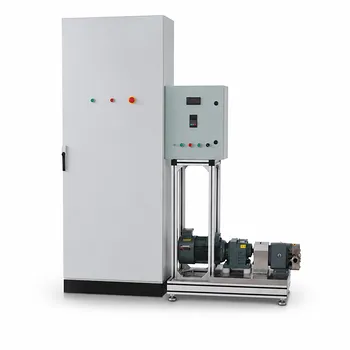
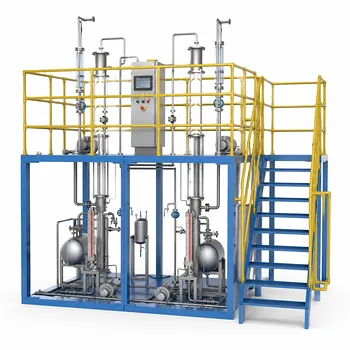
The choice between teaching sequential modular and equation-oriented simulation directly shapes a student's ability to translate physical pilot plant behavior into actionable digital knowledge. Sequential modular simulates units one by one, mirroring the physical flow through a pilot plant and giving an intuitive, step‑by‑step feel. Equation‑oriented methods, by solving all process equations simultaneously, excel at dynamic behavior like startup, shutdown, and fault diagnostics – the messy realities students will face in industry. The practical implication is that exposing trainees to both approaches builds the mental flexibility needed to diagnose convergence issues, design control loops, and truly understand the connection between a bench‑scale column and its digital twin.
The key to effective unit‑operations training is not choosing one simulation method over the other but strategically combining them. A sequential‑first approach builds flow‑sheet intuition, while introducing equation‑oriented tools later unlocks the ability to simulate dynamics, optimize performance, and handle recycle loops with confidence.
Aligning Simulation Methods with Physical Unit Operations
The Step‑by‑Step Appeal of Sequential Modular
Sequential modular calculation follows the exact order of a process flow diagram. For a student tracing fluid from a preheater into a distillation column, this one‑unit‑at‑a‑time logic maps perfectly onto the pilot plant’s physical layout.
The transparency of this method lets novices see immediately how changing an upstream temperature ripples through downstream equipment. It transforms the simulation into a virtual walk‑through of the real hardware, reinforcing a core engineering skill: thinking in terms of unit operations chained together.
Why Recycle Loops Expose Critical Gaps
The same step‑by‑step nature becomes a liability the moment a recycle stream is introduced. Sequential simulators must guess tear‑stream values and iterate, often struggling to converge without manual intervention.
For a student, this is not just a software frustration—it is a hidden blind spot. If they never see how a small recycle can destabilize a column’s heat balance, they lose the opportunity to build intuition about process interdependency, a concept that governs real‑world systems.
Embracing Complexity with Equation‑Oriented Approaches
Simulating Startup, Shutdown, and Fault Diagnostics
Equation‑oriented methods treat the entire plant as one immense system of equations solved together. That global view is essential for modeling dynamic behaviors that sequential simulators simply cannot capture well—ramping up a reboiler, inducing a feed upset, or triggering a safety interlock.
Trainees using an equation‑oriented tool can watch a distillation column drift from a stable steady state into flooding, observe the pressure spike propagate, and then test a corrective action. This time‑dependent, hands‑on exploration builds diagnostic reasoning and a deeper appreciation for process dynamics.
Building a Foundation for Dynamic Process Control
By solving all unit equations simultaneously, the method also naturally supports control‑structure design. Students can manipulate valve openings and see immediate, system‑wide responses—something that mirrors the actual coupling between control loops in a pilot plant.
Exposing them to this interplay early demystifies why poor controller tuning can make a seemingly stable column oscillate. It connects the dots between the mathematics and the physical plant behavior they will eventually manage.
Bridging the Gap between the Lab Bench and the Digital Model
Using Both Methods to Teach Model‑Plant Mismatch
The real power emerges when students compare the two approaches on the same pilot‑plant unit. A sequential simulation might predict a steady‑state separation that the equation‑oriented model refines dramatically once recycle loops are closed—and both may differ from the lab result.
That discrepancy is the fertile ground for teaching model‑plant mismatch. Students learn to ask: “Does the error come from a missing physical detail, a convergence assumption, or the way equations were structured?” Such questioning turns a routine lab exercise into an engineering investigation.
Introducing Optimization as a Natural Extension
Equation‑oriented frameworks inherently include all process equations as constraints, making them ideal platforms for introducing optimization. When teaching a single‑equipment unit like a distillation column, instructors can set flow rates or temperature profiles as decision variables and let students directly solve for maximum purity or minimum energy.
This mirrors the use of algorithms like Sequential Quadratic Programming (SQP) that converge quickly on these low‑variable problems. It shows students that simulation is not just about “What will happen?” but also about “What should happen?” – a mindset shift toward process design and operational excellence.
Understanding the Trade‑offs
The Ease of Intuition vs. Mathematical Maturity Required
Sequential modular’s greatest strength is its low barrier to entry; students need only understand the unit operation, not the entire system’s equation structure. Equation‑oriented methods demand comfort with simultaneous solvers and mathematical abstraction.
For a course that meets for only a few laboratory sessions, starting entirely with the equation‑oriented approach can overwhelm students and distract from core unit‑operation concepts. The challenge is to introduce the more advanced method without sacrificing the physical intuition that the lab is meant to build.
When Simplicity Limits Diagnostic Capability
A purely sequential curriculum, on the other hand, risks leaving students unable to analyze or troubleshoot a process that is not “nice.” In an integrated pilot plant, a recycle‑driven oscillation or a startup transient is not an exception—it is often the most instructive event of the day.
Limiting training to sequential simulation denies students the chance to build the diagnostic reflexes that separate a junior operator from a troubleshooting engineer. The practical outcome is a graduate who can describe a flowsheet but cannot anticipate how it will misbehave.
Making the Right Choice for Your Training Curriculum
A balanced curriculum is not about equal time; it is about sequencing for maximum cognitive development. Use the following guidelines to align your lab sessions with your primary learning outcomes.
- If your primary focus is building foundational flow‑sheet intuition and equipment‑level understanding: Start with sequential modular simulation so students can physically map every calculation step. Introduce equation‑oriented tools only after they can confidently trace a stream through multiple units.
- If your primary focus is preparing students for dynamic startup, shutdown, and control‑room tasks: Dedicate the majority of lab time to equation‑oriented methods, using the sequential view as a pre‑lab orientation that clarifies the basic flowsheet before exploring transients and recycles.
- If your primary focus is integrating process optimization into the unit‑operations lab: Leverage the equation‑oriented environment to pose well‑scoped optimization problems on single equipment units. Use the immediate gradient‑based solution capability to make “optimal operation” a tangible, measurable goal rather than a theoretical abstraction.
By deliberately pairing these methods, you transform the unit‑operations lab from a simple verification step into a powerful sandbox for the digital‑minded chemical engineer.
Summary Table:
| Feature | Sequential Modular (SM) | Equation-Oriented (EO) |
|---|---|---|
| Calculation Logic | Unit-by-unit, sequential flow | Solves all equations simultaneously |
| Key Strengths | Intuitive, maps physical layout | Excels at dynamics & optimization |
| Limitations | Struggles with recycle loops | Requires high mathematical maturity |
| Best For | Foundational flow-sheet intuition | Startup, shutdown, & control design |
Ready to bridge the gap between digital models and physical pilot plants? LABPARK provides state-of-the-art Educational and Vocational Unit Operations Pilot Plants in chemical engineering, bioprocess & biotech, and environmental & water treatment. Empower your students and researchers at universities, research institutes, or enterprises with hands-on training. Contact us today to find the perfect pilot plant solution for your curriculum!
Related Products
- Natural Product Extraction Unit Operations Training Pilot Plant
- Chemical Pipeline Assembly and Fluid Transport Practical Training Unit Operations Pilot Plant
- Multi-Modal Distillation Unit Operations Training Pilot Plant
- Carbon Dioxide Hydrogen Methanol Synthesis Educational Unit Operations Pilot Plant
- Multi Pump Fluid Transport Process Piping Unit Operations Training Pilot Plant
People Also Ask
- How to Demo Solubility Sensitivity in SFE Pilot Plants? Practical Thermodynamics
- How do pilot plants differentiate physical vs chemical extraction? Enhance Chemical Engineering Training
- How are HTU and NTU applied to determine extraction column height? Guide to Pilot Plant Scaling
- How can Hotelling's T² & Q statistics detect pilot plant abnormalities? Optimize Safety
- Why use split-plot designs in pilot plants instead of CRD? Optimize process parameters effectively.