Let’s cut through the confusion: traditional routine titration calculations for spent caustic fail in pilot-plant water treatment because they rely on three chemically impossible assumptions about sulfide and mercaptide species. The pH‑based correction method resolves this by anchoring the hydrogen sulfide dissociation equations to a measured pH, neutralizing the buffering interference from carbonates and mercaptides and delivering the accurate sulfide distribution that precise process control demands.
The core problem is that classic titration routines treat spent caustic as a simple system of hydroxide, carbonate, and sulfide, ignoring the reality that sulfides and mercaptans buffer the solution in ways that mask the true alkalinity. By feeding an independent pH reading into the H₂S dissociation model, the corrected method sidesteps those false assumptions and gives you a reliable mass balance the first time.
The Flawed Foundation of Traditional Titration Methods
When you run a pilot plant, every gram of sulfide in the spent caustic feed matters. Traditional wet-chemistry shortcuts were never designed for the complex soup of NaOH, NaSH, Na₂S, Na₂CO₃, and organic mercaptides that real refinery spent caustic contains.
Assumption 1: Mutual Exclusivity of Hydroxide and Hydrosulfide
The old method treats hydroxide (OH⁻) and hydrosulfide (HS⁻) as if they cannot coexist under typical titration conditions.
In reality, the equilibrium H₂S + OH⁻ ⇌ HS⁻ + H₂O is not an irreversible, all‑or‑nothing reaction. Significant concentrations of both OH⁻ and HS⁻ can and do exist together, particularly in the pH 9–12 window. By ignoring this overlap, the traditional calculation misassigns the alkalinity fractions and distorts the entire species breakdown.
Assumption 2: Coexistence of Sulfide and Hydrosulfide Without Hydroxide
The same routine assumes that sulfide (S²⁻) and hydrosulfide (HS⁻) can share the solution without any free hydroxide present.
This contravenes basic acid‑base chemistry: S²⁻ is a strong base that reacts vigorously with water to form HS⁻ and OH⁻. A solution cannot hold appreciable S²⁻ without a substantial OH⁻ background. When you force a titration model that allows S²⁻ and HS⁻ but zero OH⁻, you create a fictitious speciation that never occurs in the real stream.
Assumption 3: Complete Mercaptan Conversion to Mercaptides
The traditional approach treats all mercaptans (RSH) as fully deprotonated mercaptides (RS⁻) over the entire titration range.
Because mercaptans are weak acids (pKₐ ~10–11), they are only partially ionized at pH 9–12. Treating them as completely dissociated leads to the absurd prediction that hydrogen sulfide (H₂S) gas is present at these pH values—a physical impossibility given the near‑complete conversion of H₂S to HS⁻ above pH 9. This phantom H₂S then feeds directly into a flawed mass balance, throwing off your dosing calculations and, ultimately, your pilot‑plant performance data.
The Cumulative Impact on Pilot Plant Mass Balances
Each error compounds the next. You end up with an alkalinity split that misidentifies which species are consuming acid during titration.
For a pilot plant operator trying to optimize a wet air oxidation unit or a sulfide precipitation step, those inaccuracies translate into incorrect chemical feeds, unexpected pH swings, and an inability to validate kinetic models—precisely the problems a pilot study is meant to solve.
The pH‑Based Correction: A Thermodynamic Rethink
The fix is to abandon the old set of arbitrary rules and let the solution tell you its own chemistry through a directly measured pH.
Using Measured pH to Anchor the Sulfide Speciation
The corrected method takes the hydrogen sulfide dissociation equations and plugs in the actual pH reading.
H₂S has two deprotonation steps: H₂S ⇌ HS⁻ + H⁺ (pKₐ₁ ≈ 7.0) and HS⁻ ⇌ S²⁻ + H⁺ (pKₐ₂ ≈ 12.9). With a single reliable pH measurement, you can solve for the exact distribution of [H₂S], [HS⁻], and [S²⁻] at the sample’s temperature. No assumptions about mutual coexistence are needed—thermodynamics decides the outcome.
Eliminating Carbonate and Mercaptide Interference
Carbonate (CO₃²⁻) and mercaptide (RS⁻) ions are the hidden buffer tigers in spent caustic. They consume titrant acid but do not follow the same stoichiometric pattern as hydroxide or sulfide.
The pH‑based approach treats these species as non‑participatory background in the sulfide speciation itself. You titrate for total alkalinity, then use the pH‑anchored H₂S model to back‑out the true sulfide contribution. The remainder is correctly assigned to carbonate, mercaptide, and any other weak bases—without ever forcing the false speciation rules of the old method.
From Approximations to Precise Distribution
The output is no longer a rough “P‑alkalinity and M‑alkalinity” split with a fudge factor. It is a thermodynamically consistent set of concentrations that respects the actual equilibrium of the system.
This level of accuracy lets you track sulfur conversion rates with confidence, making it possible to fine‑tune reactor residence times, oxidizer stoichiometry, and caustic recycle loops based on hard numbers rather than titration artifacts.
Understanding the Trade‑offs
No measurement technique is perfect. The pH‑based correction method has its own set of boundary conditions you must respect.
Sensitivity to pH Measurement Accuracy
The sulfide distribution pivots on the pH. In the pH 11–13 range, where S²⁻ becomes dominant, a 0.05‑unit error can shift the calculated S²⁻/HS⁻ ratio by several percent.
You need a high‑quality pH probe, maintained and calibrated immediately before each measurement. Drifting electrodes or slow equilibration in high‑sulfide, high‑ionic‑strength samples will undermine the correction’s advantage.
Temperature Dependence of Dissociation Constants
The pKₐ values change with temperature, and the sample’s temperature during pH measurement matters.
If you measure pH at 25 °C but your pilot plant runs at 60 °C, you must apply the correct temperature‑compensated constants—otherwise you reintroduce systematic error. This adds a layer of thermodynamic bookkeeping that the traditional method ignores.
Complexity vs. Real‑World Practicality
The corrected method requires a dissolved‑sulfide‑specific titration (e.g., iodometric or potentiometric with a silver/sulfide electrode) alongside the pH reading, plus a spreadsheet or model to solve the equilibria.
It is more involved than a two‑endpoint alkalinity test. In a field pilot where a quick, approximate answer is acceptable, this complexity may feel like overkill. But when pilot‑plant data will be used to design a full‑scale facility, the extra effort is non‑negotiable.
Making the Right Choice for Your Pilot Plant
The method you choose should match the role your pilot study plays. Here is how to align your approach with your operational goals.
- If your primary focus is generating high‑fidelity kinetic data for scale‑up: Adopt the pH‑based correction without compromise. The accurate sulfide speciation is essential for validating reaction models that will later govern a multi‑million‑dollar plant design.
- If your primary focus is day‑to‑day process stability and you have a well‑characterized feed: You can use a carefully benchmarked traditional method after correlating it against the pH‑corrected values. But recalibrate that correlation whenever the feed composition changes.
- If your primary focus is field‑ready simplicity and you lack laboratory‑grade pH meters: Strengthen your traditional titration with a parallel sulfide‑specific measurement (e.g., a sulfide ion selective electrode) and apply corrective factors, but accept that mass‑balance errors may still exceed 5–10%.
Your pilot plant is a truth‑finding mission—the pH‑based correction method simply lets you ask the right questions and trust the answers you get.
Summary Table:
| Feature / Method | Traditional Titration Method | pH-Based Correction Method |
|---|---|---|
| Key Assumptions | Assumes mutual exclusivity of species & ignores buffer overlap | Anchored to real-time thermodynamic H₂S dissociation equations |
| Sulfide Speciation | Distorts species breakdown (e.g., phantom H₂S at high pH) | Calculates exact [H₂S]/[HS⁻]/[S²⁻] based on measured pH |
| Interference Control | Carbonates and mercaptides distort alkalinity results | Treats buffer species as non-participating background |
| Key Limitations | Systematic mass-balance errors up to 10% or more | High sensitivity to pH electrode drift & temperature changes |
| Best For | Quick, approximate routine field testing | High-fidelity kinetic data for process scale-up designs |
Optimize Your Water Treatment Pilot Studies with LABPARK
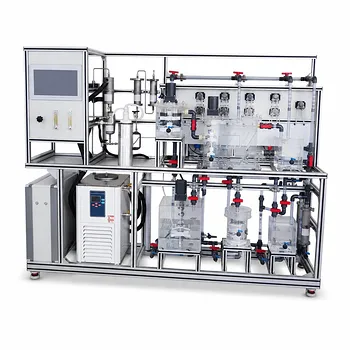
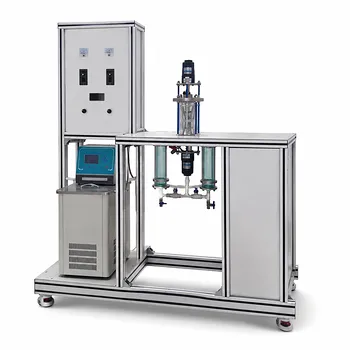
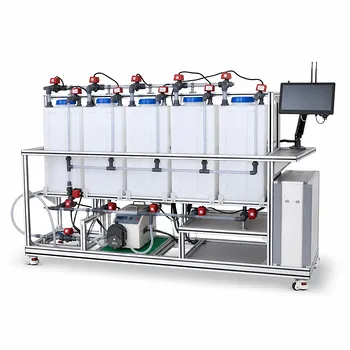
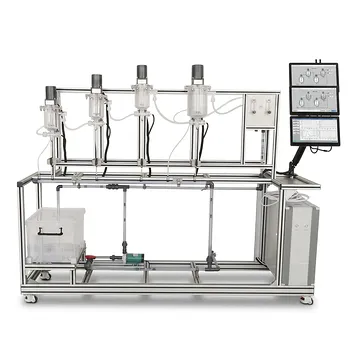
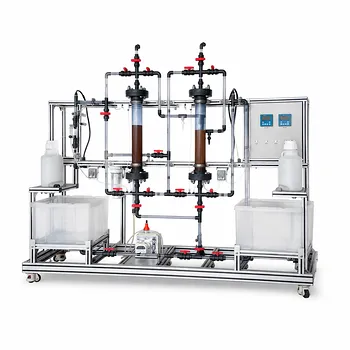
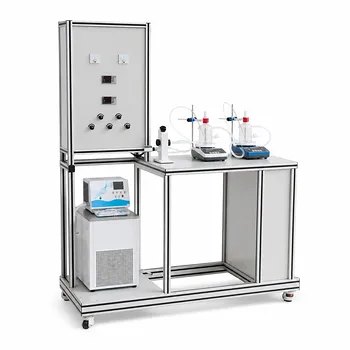
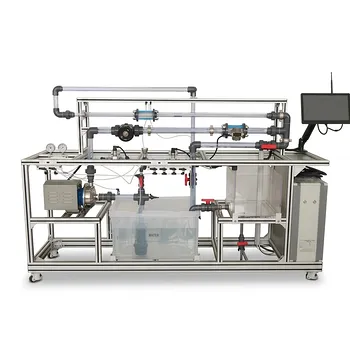
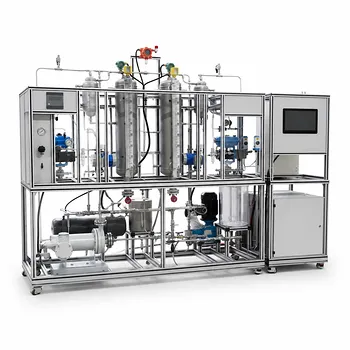
Accurate chemical analysis is only half the battle; having the right physical systems to test and scale your processes is critical. LABPARK provides state-of-the-art Educational and Vocational Unit Operations Pilot Plants in chemical engineering, bioprocess & biotech, and environmental & water treatment for universities, research institutes, and enterprises.
Our advanced pilot plant systems enable you to validate kinetic models, simulate real-world conditions, and ensure flawless chemical dosing with confidence.
Ready to elevate your research and process engineering? Contact LABPARK today to discuss your pilot plant requirements!
Related Products
- Thermal Desorption Exhaust Gas and Tail Water Treatment Educational Pilot Plant
- Liquid-Liquid Mass Transfer Coefficient Determination Educational Pilot Plant
- Electrochemical Water Treatment Educational Unit Operations Pilot Plant
- Multi-Stage Stirred Tanks in Series Residence Time Distribution and Mixing Performance Determination Educational Pilot Plant
- Ion Exchange Water Purification Educational Pilot Plant for Engineering Unit Operations
People Also Ask
- How do anodic & cathodic inhibitors protect heat exchangers? Optimize Your Water Treatment Pilot Plant
- What are inline fluorescence sensor risks, and how can they be managed? Key Strategies
- How is iron concentration monitored to evaluate corrosion and filtration efficiency in water treatment pilot plants?
- Lime-Soda vs. Cation Exchange Softening: How Do Effluent Characteristics Compare in Pilot Plants?
- How is P, M, and B alkalinity applied in pilot plants? Prevent Boiler Scaling & Corrosion