NMR linearity is the cornerstone advantage. In chemical engineering pilot plants processing varied hydrocarbon streams like diesel, naphtha, or kerosene, process NMR delivers a highly linear response across all hydrocarbon types. This means a single chemometric model can accurately predict key properties for multiple product grades without the need for constant recalibration or model localization—a persistent headache with NIR-based property models.
Pilot plants demand flexibility and speed. Process NMR’s inherently linear, matrix-insensitive signal enables one robust model to span diverse feedstocks and operating extremes. This eliminates the frequent model updates required by NIR and provides trustworthy data even when the process drifts far from its original design point.
How NMR Delivers Superior Model Robustness
The Linearity Advantage: One Model, Many Products
NIR spectroscopy relies on overtones and combination bands of X-H vibrations. These signals are highly non-linear and strongly affected by the sample matrix, requiring complex chemometrics that are valid only over a narrow calibration space. When the matrix changes—for example, switching from kerosene to diesel—the NIR model often fails or needs extensive re-calibration.
Process NMR, built on the fundamental magnetic resonance of hydrogen nuclei, produces a signal directly proportional to the number of each type of hydrogen atom. This proportionality holds regardless of the hydrocarbon mixture, making the calibration curve inherently linear. Consequently, a single quantitative model trained on a few representative samples can accurately predict properties across multiple product types, eliminating the administrative and experimental burden of managing many local models.
Unwavering Accuracy Beyond the Calibration Envelope
Pilot plants frequently push unit operations into extreme conditions—high-severity runs, novel feedstocks, or off-spec product blends. Under these conditions, NIR spectral features can become distorted or non-linear, causing prediction errors to balloon.
NMR model predictions remain linear and accurate even when process conditions stray far from the initial calibration range. Because the relationship between spectral response and property is fundamental rather than empirical, you can trust the numbers even during unplanned excursions. This early, reliable detection of off-target performance is what makes real-time process control truly effective.
Immune to Real-World Stream Variability
Pilot-plant streams are rarely pristine. They can be dark, full of particulates, or optically turbid—all of which wreak havoc on optical NIR measurements.
- Color and turbidity independence: NMR probes the entire sample volume using radiofrequency pulses; color or suspended solids do not attenuate or scatter the signal the way they do with NIR light.
- No optics fouling: Without windows or optical paths, there’s no gradual signal drift from coatings or deposits. The analyzer keeps working consistently over weeks-long campaigns without frequent cleaning or recalibration.
- Whole-sample analysis: Unlike NIR, which often only interrogates a thin layer of the stream, NMR captures the bulk composition, reducing sampling error and improving model transferability.
Putting the Advantage to Work in a Pilot Plant
Faster Method Development and Less Maintenance
Teaching- and research-oriented pilot plants operate with high turnover of experiments and product targets. Building a new NIR model for each campaign can eat up days of instrument time and chemometric expertise. With NMR, a single, broadly trained property model can be used as an analytical platform, requiring only a quick performance check rather than a full recalibration.
This “model-once, apply-many-times” philosophy frees researchers to focus on the science rather than the measurement. Operators spend less time maintaining the analyzer and more time optimizing unit operations like distillation, blending, or reactor kinetics.
Seamless Integration with Advanced Process Control
Real-time property measurements fuel dynamic optimization. When a distillation column feed composition suddenly changes, a fast, accurate NMR prediction of, say, cetane number or aromatic content can immediately trigger a feedforward control action.
Because the NMR model remains valid across the entire expected operating envelope, the control system can safely handle transitions without manually switching models or losing accuracy at the edge of the calibration space. This enables true autonomous operation, product changeover on-the-fly, and significant yield improvements.
Understanding the Trade-offs: Where NMR Gives Ground to NIR
No technology is universally superior. While NMR excels in linearity and model robustness, a balanced view acknowledges its practical limitations in pilot-plant environments.
- Cost and infrastructure: NMR instruments carry a higher capital cost and typically require a temperature-controlled environment and magnetic shielding, whereas NIR probes can be installed almost anywhere with simple fiber-optic cables.
- Sampling speed and simplicity: NIR can measure a passing stream in seconds with a non-contact reflectance probe; process NMR requires a bypass loop to bring the sample into the magnet, adding a few minutes of lag time.
- Applicability to solids and powders: NIR’s ability to directly analyze bulk powders and wet mixtures without sample preparation makes it the go‑to choice for drying, milling, and granulation unit operations—applications where NMR struggles or requires specialized hardware.
- Skill level for method development: While routine operation is automated, creating new high-resolution NMR methods or interpreting structural information demands more expertise than typical NIR calibration work.
These trade-offs mean the decision is never about “which is better” in isolation, but rather which instrument aligns with the specific modeling goals and logistical realities of your pilot plant.
Making the Right Choice for Your Property-Modeling Goal
Selecting the proper spectroscopy should be driven by the nature of the samples you run and the flexibility you need.
- If your primary focus is long, varied hydrocarbon campaigns: Process NMR’s linear, multi-product models and immunity to sample opacity provide an unmatched reduction in method maintenance and risk of model failure.
- If your primary focus is rapid, cost-sensitive screening of solids or slurries: NIR’s speed, ruggedness, and ability to handle bulk powders without sample prep make it the pragmatic, hands‑on choice.
- If your primary focus is teaching process analytical technology (PAT): Process NMR serves as the definitive platform to demonstrate true “universal” calibration and the value of fundamental signal linearity, while NIR teaches essential chemometric practices and the importance of sampling technique.
Your pilot plant’s mission determines which spectroscopy will become the most reliable, instructive tool on the bench. Choose the one that turns data into decisions with the least friction for your unique research landscape.
Summary Table:
| Feature | Process NMR Spectroscopy | Near-Infrared (NIR) Spectroscopy |
|---|---|---|
| Signal Linearity | High (inherent, matrix-insensitive) | Non-linear (matrix-sensitive) |
| Model Robustness | One model spans diverse feedstocks | Requires frequent recalibration |
| Stream Interference | Immune to turbidity, color, & fouling | Susceptible to optical fouling |
| Capital Cost | Higher investment & infrastructure | Lower cost; simple fiber-optics |
| Best Suited For | Liquid hydrocarbons & complex mixtures | Solids, powders, & rapid screening |
Optimize Your Unit Operations with LABPARK
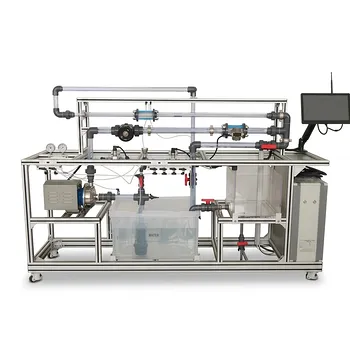
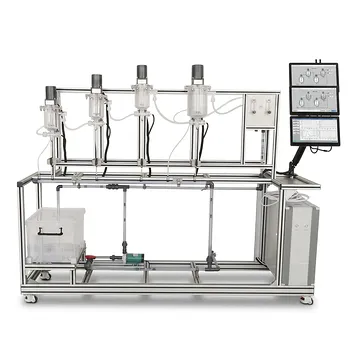
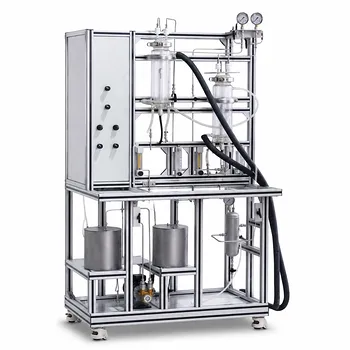
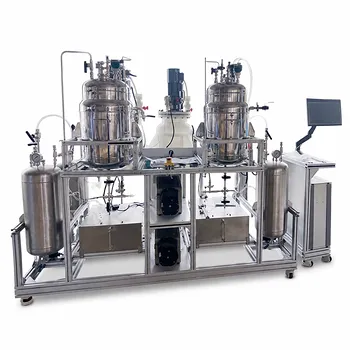
Are you looking to enhance your research and teaching capabilities? LABPARK provides state-of-the-art Educational and Vocational Unit Operations Pilot Plants across chemical engineering, bioprocess & biotech, and environmental & water treatment.
Designed specifically for universities, research institutes, and enterprises, our pilot plants allow you to easily integrate advanced analytical technologies like process NMR and NIR for real-time property modeling and process control.
Contact LABPARK today to discover how our customizable pilot plant solutions can elevate your engineering programs and research efficiency!
Related Products
- Multifunctional Membrane Separation Educational Pilot Plant with Ultrafiltration, Nanofiltration, Reverse Osmosis
- Multi-Functional Membrane Separation Educational Pilot Plant for Unit Operations Lab
- Electrolyte Distillation Purification and Formulation Educational Pilot Plant
- Continuous Batch Extractive Distillation Educational Pilot Plant
- Multi-Functional Special Distillation Educational Pilot Plant
People Also Ask
- How do PEI, PVDF, and PSU membranes compare in pilot plants? Find the best fit.
- Pervaporation vs. Vapor Permeation: Handling Suspended Solids in Membrane Pilot Plants
- What are the trade-offs of polymer vs inorganic membranes in teaching pilot plants? Key laboratory comparison.
- How can operators optimize operating conditions and cleaning protocols in membrane separation pilot plants to mitigate fouling?
- What are the advantages of membrane separation in pilot plants? Efficient Organic Vapor Recovery