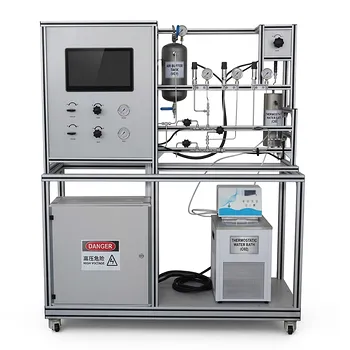
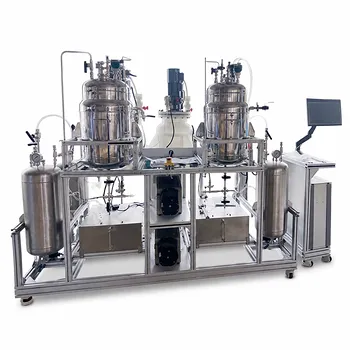
The straightforward answer is that ASME Section VIII Division 1 should be chosen over Division 2 when your pilot plant operates at the lower pressures typical of standard laboratory and educational settings. Division 1 is the pragmatic, cost-driven default for these vessels. You switch to Division 2 only when the process requires high pressure or enormous scale to the point where the material savings from thinner walls outweigh the significantly higher engineering, material quality, and inspection costs.
Standard pilot plant pressure vessels rarely justify the strictness of Division 2. Choose Division 1 to minimize engineering overhead and manufacturing cost, reserving Division 2 for high-pressure or very large-scale vessels where the economics of material savings flip the equation.
The Fundamental Distinction Between the Divisions
Division 1: Broad Applicability, Simpler Engineering
Division 1 is the workhorse code for general pressure vessels. It relies on conservative design margins and simpler, formula-based calculations, which drastically reduces engineering time. It does not inherently mandate the level of fatigue analysis or non-destructive examination that Division 2 does. For most unit operations pilot plants, this provides an adequate and efficient safety net. The thicker walls required by Division 1's lower allowable stresses are not a cost penalty on the small, carbon-steel vessels typical of these facilities.
Division 2: Precision at a Price
Division 2 offers higher allowable design stresses, enabling thinner walls and reduced material weight. This benefit, however, comes with far stricter rules on materials, design-by-analysis requirements, and mandatory, more extensive inspection and testing. The saved steel often costs more in engineering hours and quality control than it saves on the balance sheet. Division 2 is a specialized tool, not a general-purpose upgrade.
Key Decision Drivers for Pilot Plant Vessels
Pressure Ranges Typical of Unit Operations
Standard pilot plants for distillation, absorption, extraction, and mild reactions almost always operate below a threshold where Division 1's thicker walls become impractical. In these pressure regimes, the absolute material cost of the vessel is low, and the premium for Division 2's engineering would be an unnecessary burden. The cost advantage stays firmly with the simpler Division 1 route.
Vessel Scale and Material Economics
The break-even point for Division 2 shifts when vessels become very large in diameter or use expensive, high-alloy materials. At that scale, the weight reduction from thinner walls can save a substantial sum in raw material. However, most pilot plant vessels are relatively small—often a few feet in diameter. For these vessels, the material savings are minimal and will never offset the added design and inspection costs.
Engineering and Inspection Overhead
Division 2 demands a formal user’s design specification, mandatory fatigue analysis for cyclic service, and more advanced weld inspection techniques like extensive radiography or ultrasonic testing. In a pilot plant that runs multiple experimental campaigns with varying chemical exposures, this overhead delays projects and inflates budgets without delivering a proportionate safety advantage. Division 1's administrative simplicity is a real asset when speed and budget are critical.
Understanding the Trade-offs
Choosing Division 1 by default is wise, but a blind rule breaks in specific edge cases. The decision pivots on three points where Division 2 can become unavoidable.
- Pressure Extremes: If your pilot plant specifically targets high-pressure chemistry, such as hydrogenation at several thousand psi, Division 1's allowable stresses may force an impractically thick, unweldable vessel wall. At this threshold, the code itself forces your hand toward Division 2 simply for fabrication feasibility.
- Cyclic Service: Pilot plants often endure frequent start-stop cycles. Division 2 explicitly addresses fatigue design, providing a clear, validated methodology. Division 1 does not forbid fatigue analysis, but the user carries more interpretive burden. If your plant will see thousands of high-stress cycles, Division 2’s explicit rules are safer and may be mandated by an owner’s internal engineering standards.
- Weight Sensitivity for Modular Skids: In modular or portable pilot plants, vessel weight is critical for structural support and transportation. Even at moderate pressures, Division 2’s thinner walls can reduce the overall skid weight enough to justify the extra engineering cost, simplifying logistics and structural steel requirements.
Making the Right Choice for Your Goal
The selection follows a clear cost-benefit logic tied directly to your project’s constraints.
- If your primary focus is minimizing upfront cost and engineering simplicity: Choose Division 1. It is the default for the vast majority of low-to-moderate pressure pilot plant vessels and will keep your design and fabrication overhead low.
- If your primary focus is operating at sustained high pressures where wall thickness under Division 1 becomes unreasonable: Switch to Division 2. The material feasibility will dictate the choice, and the extra cost becomes a necessity, not a luxury.
- If your primary focus is building very large or exotic-alloy vessels where material costs dominate the budget: Evaluate Division 2. The weight savings can finally surpass the added engineering and inspection costs for large, expensive-metal vessels.
- If your primary focus is achieving regulatory or engineering clarity for a highly cyclic operation: Consult both codes. Division 2’s explicit fatigue design rules may provide a smoother, lower-risk path to compliance, even with the higher initial engineering investment.
A standard unit operations pilot plant is an experimental platform, not a production workhorse. Unless it ventures into true high-pressure territory or extreme physical dimensions, Division 1 will almost always be the faster, more economical, and perfectly safe choice.
Summary Table:
| Feature | ASME Section VIII Division 1 | ASME Section VIII Division 2 |
|---|---|---|
| Primary Focus | Simplicity & low upfront cost | Material weight savings & high-pressure feasibility |
| Design Approach | Formula-based calculations | Advanced Design-by-Analysis (FEA) |
| Wall Thickness | Thicker (lower design stresses) | Thinner (higher design stresses) |
| Inspection/Testing | Standard NDE requirements | Extensive testing (radiography, ultrasonic, fatigue) |
| Best For | Low-to-moderate pressure pilot plants | High-pressure, cyclic service, or large/exotic vessels |
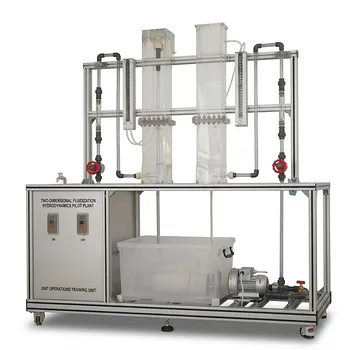
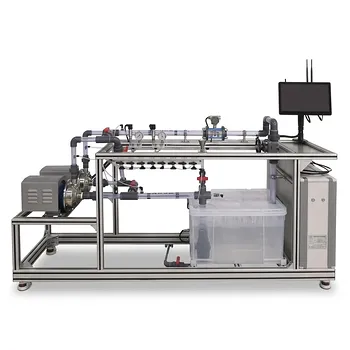
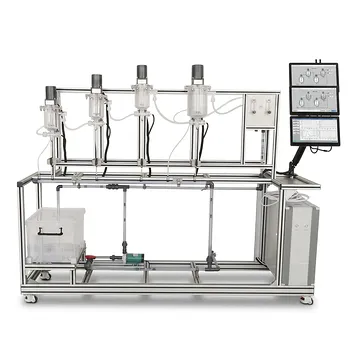
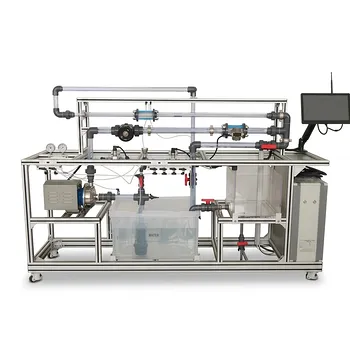
Are you designing a new pilot plant? LABPARK provides high-quality Educational and Vocational Unit Operations Pilot Plants in chemical engineering, bioprocess & biotech, and environmental & water treatment for universities, research institutes, and enterprises. We help you choose the right ASME specifications to balance safety, regulatory compliance, and budget.
Contact LABPARK today to discuss your custom pilot plant vessel requirements!
Related Products
- Cavitation Phenomenon Demonstration and Analysis Educational Unit Operations Pilot Plant
- Bernoulli Equation Demonstration Unit Operations Pilot Plant
- Orifice and Venturi Flowmeter Calibration Educational Pilot Plant for Fluid Mechanics Laboratory
- Multi-Functional Special Distillation Educational Pilot Plant
- Carbon Dioxide PVT Curve Determination Educational Unit Operations Pilot Plant
People Also Ask
- How do pilot plants teach U-tube manometers? Master Differential Pressure Calculations
- How to teach pump cavitation vs. gas binding? Interactive pilot plant teaching guide.
- What factors should be considered when selecting float valve types? F1 vs. V-4 vs. T-type Guide
- How does an FIA biosensor improve fermentation monitoring compared to HPLC? Speed & automation.
- What are key parameters for stable biosensor FIA in bioprocess training? Achieve optimal performance.