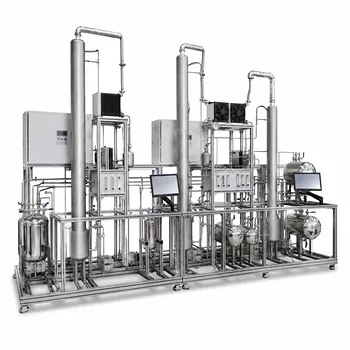
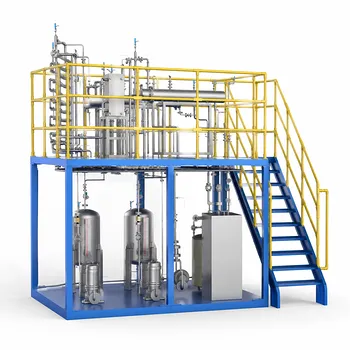
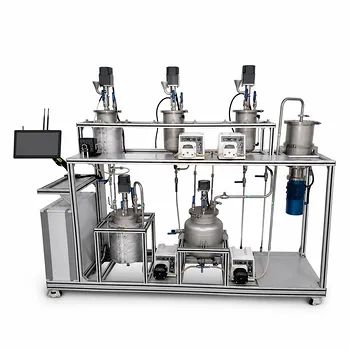
Modular pilot plants are the critical bridge between classroom theory and the flexible, high-mix reality of fine chemical production. They support vocational training by letting students physically configure, clean, and switch a single assembly of industrial-style unit operations to run vastly different batch processes. In this environment, trainees practice batch recipe management, compounding, and the rapid changeover procedures that define real-world fine chemical manufacturing—all inside a safe, controlled learning space.
The core need in fine chemical training is not just understanding the chemistry, but mastering the art of frequent changeover. Modular pilot plants solve this by compressing a full-scale multipurpose plant into a reconfigurable skid, giving operators the muscle memory and diagnostic skill to manage small-batch, multi-product operations before they ever step onto a production floor.
The Real Demands of Fine Chemical Manufacturing
Fine chemical products—such as active pharmaceutical ingredients, vitamins, and advanced intermediates—are produced in low volumes (often well under 100 tons per year) with high product variety. This creates a manufacturing environment unlike continuous commodity chemical plants.
Why Flexibility Defines the Operation
The same equipment must produce Product A one week, Product B the next, and switch back with zero cross‑contamination. Batch operations, compounding, and flexible production layouts are not optional—they are the operating model.
The Vocational Gap
Academic curricula often focus on steady‑state design and single‑product scenarios. This leaves a dangerous blind spot: operators who cannot handle the context switching required by fine chemicals. Pilot plants close that gap by forcing trainees to manage the entire product‑change cycle.
How Modular Pilot Plants Replicate Industrial Reality
Modular pilot plants are built from discrete, interchangeable modules—gas feed, liquid feed, manifold, reactor, heater, effluent, and analytical modules. This architecture directly mirrors the Multipurpose Plant (MPP) philosophy that dominates fine chemical manufacturing.
Configuring Multi‑Process Workflows
Students physically reconnect flow paths, select different feed vessels, and set independent control loops for pressure, temperature, and composition. By dividing a reactor matrix into independent subsections, one training system can simulate six different production protocols simultaneously, teaching operators how to partition and manage shared utilities.
Hands‑On Recipe Management
Unlike static simulations, a modular pilot plant forces the trainee to:
- Load and validate batch recipes
- Sequence addition steps and hold times
- Adjust setpoints for different product grades
- Document every action for audit trails
This builds the procedural discipline that prevents costly batch failures.
The Key Training Functions a Modular Plant Delivers
A single, well‑designed pilot plant can demonstrate an enormous range of unit operations, directly reflecting the multi‑functional capability demanded in fine chemical reactors.
Multi‑Purpose Reactor Training
Industrial batch reactors often serve beyond mixing and reacting. On a modular pilot plant, trainees learn to configure the same vessel as:
- A heater or cooler for raw material conditioning
- A decanter for phase separation after liquid‑liquid reactions
- An extractor‑settler by adding solvents
- A crystallizer/precipitator through controlled cooling
- A batch distillation kettle
This capability compresses a full factory floor into one training skid, optimizing both budget and lab space while delivering comprehensive process engineering education.
Safe Handling and Hazard Management
Fine chemical operations frequently involve hazardous compounds. Modular pilot plants act as a live, low‑risk sandbox where operators:
- Monitor system pressure and temperature limits
- Practice managing flammable or toxic process fluids
- Execute emergency shutdowns and leak containment
- Learn to respond to sensor failures without real‑world consequences
Integrating environmental and water treatment modules also allows trainees to practice pollution control and remediation, building skills crucial for sustainability compliance.
Changeover and Cleaning Protocols
The single most critical vocational skill is the clean, validated switch between product campaigns. In a modular plant, students physically dismantle, clean, and reassemble sections of the process line, then perform verification tests. They learn the trade‑offs between solvent flushing, steaming, and mechanical cleaning—all within the constraints of a tightly scheduled production calendar.
Understanding the Trade‑offs of a Modular Training System
While modular construction brings undeniable flexibility, every design choice involves compromise. A truly objective training program acknowledges these limitations.
The Hidden Engineering Cost
Modular pilot plants require higher initial engineering design costs than a fixed, single‑purpose rig. They also demand more structural steel and an increased number of flange connections to allow reconfiguration. This must be balanced against the operational benefit: high‑quality factory fabrication and dramatically lower on‑site installation costs.
The Spatial and Safety Constraints
Extra flanges and flexible connections increase the potential for leaks if not regularly torqued and inspected. The skid design must therefore fit within tight university lab spaces while staying absolutely leak‑free. Trainees must learn that flexibility creates a maintenance burden—an invaluable lesson for their future roles.
Making the Right Choice for Your Training Goal
The most effective vocational program aligns the pilot plant’s capability with the specific workforce outcome it seeks to produce.
- If your primary focus is mastering product changeover speed: Choose a modular system that can be halved into two independent trains, allowing one group to practice the switch while the other runs a reference batch.
- If your primary focus is safety and compliance in high‑hazard fine chemicals: Prioritize a plant with integrated pressure handling, containment modules, and environmental treatment loops, even at the cost of a smaller reactor volume.
- If your primary focus is demonstrating the widest possible unit operations on a tight budget: Select a compact multi‑functional reactor system that can demonstrate heating, decanting, extraction, crystallization, and distillation—all in one vessel—without requiring multiple separate pilot setups.
- If your primary focus is building sustainability skills: Ensure the plant includes water treatment or solvent recycle modules, so trainees learn resource optimization as an inseparable part of fine chemical operations, not an afterthought.
The modular pilot plant is not merely a teaching tool; it is a risk‑free replica of the flexible, multi‑product reality that fine chemical operators will face. When chosen thoughtfully, it transforms vocational training from a theoretical exercise into the deliberate practice of industrial resilience.
Summary Table:
Key Training Functions of Modular Pilot Plants
| Training Focus | Key Hands-On Skills | Industrial Relevance |
|---|---|---|
| Multi-Purpose Reactors | Decanting, extraction, crystallization, batch distillation | Simulates multipurpose plant (MPP) layouts |
| Recipe Management | Sequencing addition steps, hold times, setpoint adjustments | Builds procedural discipline for batch runs |
| Changeover & Cleaning | Line dismantling, cleaning verification, sanitization | Prevents batch cross-contamination |
| Hazard Management | Pressure control, leak containment, shutdown protocols | Teaches risk management in a safe sandbox |
Bridge the Gap from Classroom to Industry with LABPARK
Equip your trainees with the practical skills needed to navigate the complexities of flexible, multi-product chemical operations. LABPARK provides premium Educational and Vocational Unit Operations Pilot Plants in chemical engineering, bioprocess & biotech, and environmental & water treatment.
Whether you are a university, research institute, or enterprise, our modular skids are engineered to deliver realistic, hands-on experience in batch processes, changeovers, and process safety.
Ready to elevate your training curriculum? Contact LABPARK today to discuss your custom pilot plant configuration!
Related Products
- Ethyl Acetate Synthesis Unit Operations Pilot Plant for Practical Training
- Natural Product Extraction Unit Operations Training Pilot Plant
- Green Anhydrous Ethanol Purification Extractive Distillation Unit Operations Training Pilot Plant
- Multi-Modal Distillation Unit Operations Training Pilot Plant
- Comprehensive Multi-Modal Heat Transfer Unit Operations Pilot Plant for Engineering Training
People Also Ask
- How do pilot plants demonstrate esterification? Visualizing Chemical Engineering Equilibrium
- When to transition from PID to adaptive control in pilot plants? Key process indicators.
- Why is the chemical plant startup schedule crucial? De-risk scale-up with pilot plants.
- Why Use PTFE & Hastelloy in Chemical Pilot Plants? Prevent Corrosion & Ensure Safety
- Why Compare Predicted and Experimental Excess Enthalpy? Key to Accurate Pilot Plant Scale-up