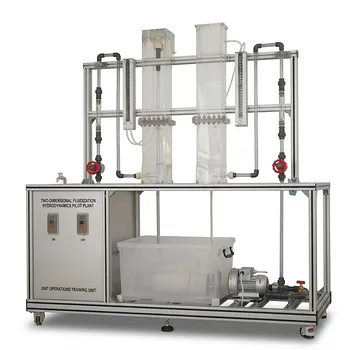
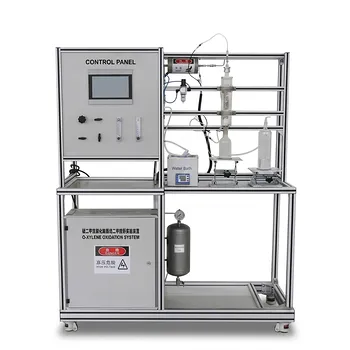
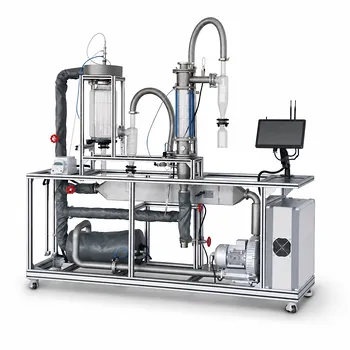
The moment you select a reactor type for your hydrocarbon synthesis pilot plant, you lock in a fundamentally different philosophy for managing catalyst deactivation. For fluidized-bed and slurry-phase reactors, you can add and withdraw catalyst continuously without ever stopping production. For multitubular fixed-bed reactors, however, online replacement is impossible; you must either periodically regenerate the catalyst in place using hydrogen to gasify carbon deposits, or shut down to replace the entire inventory with fresh catalyst. This operational divergence is the single most important factor in pilot plant scheduling, cost modeling, and experimental reproducibility.
Core Takeaway: Fluidized‑bed and slurry‑phase reactors treat catalyst as a steady‑state consumable you actively manage during operation; fixed‑bed reactors demand a batch‑wise maintenance philosophy where carbon burn‑off or complete catalyst changeout happens during a shutdown window. Your choice of reactor dictates whether you plan for continuous runtime or for periodic, carefully timed regeneration campaigns.
Why Reactor Type Defines Your Catalyst Management Strategy
In any high‑temperature hydrocarbon synthesis — Fischer‑Tropsch, residue hydroprocessing, or benzene oxidation — carbon deposition progressively coats and plugs active sites. The physical way the catalyst is held in the reactor determines whether you can intervene while the reaction runs or must wait for a stoppage.
Fluidized‑Bed and Slurry‑Phase Reactors: Continuous Catalyst Replacement
In fluidized‑bed (ebullated) and slurry‑phase configurations, catalyst particles move freely. This mobility is the key to online catalyst management.
You can continuously bleed off a slipstream of deactivated catalyst and inject fresh material into the reactor while it stays in a steady state. In a fluidized bed, gas and liquid flow upward to suspend the particles; a dedicated cyclone or external withdrawal system lets you remove spent catalyst without interrupting the reaction. Slurry reactors go a step further — the fine catalyst powder acts as a homogeneous phase with the liquid, enabling a controlled continuous‑sacrifice approach where the catalyst is sometimes discarded outright rather than recovered.
This continuous replacement strategy gives you three major advantages:
- Steady‑state performance: Conversion and selectivity remain flat over months of operation, which is ideal for accurate kinetic data collection.
- No thermal‑cycle stress: The reactor never cools down for maintenance, eliminating start‑up/shutdown transients that could skew research results.
- Capability with heavy feeds: When processing metal‑rich residues that foul fixed beds rapidly, online catalyst withdrawal prevents choking and maintains flow.
However, the same mobility creates process challenges you must manage. Constant particle‑to‑particle collision causes catalyst attrition, generating fines that must be separated from the product stream, typically with cyclones or filters. In slurry systems, the sub‑150 μm particles make product‑catalyst separation the hardest step; often the entire slurry phase is purged and replaced rather than trying to recover the ultra‑fine solids. These trade‑offs are a central part of the learning experience when operating a pilot plant.
Fixed‑Bed Reactors: Periodic Regeneration and Batch Replacement
Multitubular fixed‑bed reactors hold catalyst granules in a stationary packed arrangement. This simple geometry brings a hard constraint: you cannot add or remove catalyst while the pilot plant is online.
When carbon deposits cause activity to drop below an acceptable threshold (tracked by falling conversion or rising pressure drop), you must shift to a maintenance window. The primary option is in‑situ regeneration with hydrogen. High‑purity hydrogen is passed through the hot bed, gasifying the carbon into methane via the reaction (C + 2H_2 \rightarrow CH_4). This burns the coke off the catalyst surface without unloading it, often extending the total catalyst life across multiple cycles. The regeneration is done during a scheduled pilot plant shutdown, and its duration must be carefully timed — the same hydrogen‑rich atmosphere can slowly sinter metal crystallites if parameters are not tightly controlled.
If regeneration is no longer effective or if the catalyst has been permanently poisoned (e.g., by nickel, vanadium, or other metals in the feed), the bed must be unloaded and completely replaced with fresh catalyst. This is a labor‑intensive offline operation. The cleaned reactor is then reloaded, brought back to temperature, and restarted — a sequence that introduces significant downtime and makes reproducibility in long‑term research trials more demanding.
Two operational nuances are especially relevant for pilot plants:
- Heat transfer limitations: Poor radial heat removal in fixed beds can create local hot spots that accelerate coking. This forces a tighter regeneration schedule than you might predict from average bed temperature alone.
- Plug‑flow behavior: The near‑ideal plug‑flow pattern makes kinetic modeling straightforward, so researchers often accept the maintenance headache because the data quality from a fresh or regenerated bed is superior for mechanistic studies.
Understanding the Trade-Offs and Operational Pitfalls
Objectively, no single reactor type is universally “better.” Each option translates into specific limitations you must work around in a pilot‑plant environment.
Catalyst Wear and Cost
Fluidized‑bed reactors grind the catalyst through constant friction. You compensate by using mechanically hard, spray‑dried microspheres and by continuously topping up the inventory, but the catalyst cost per barrel of product is higher. Slurry‑phase reactors save on catalyst strength but often require a once‑through catalyst philosophy; the spent fines are too difficult to separate economically and are sent to disposal, which directly impacts mass‑balance calculations.
Regeneration vs. Replacement Frequency
In a fixed‑bed pilot plant, a single regeneration can double the active run length, but you are still bound to a stop‑start cadence. If the experiment demands a non‑interrupted 500‑hour run to capture long‑term deactivation kinetics, only a fluidized or slurry system can deliver that because they handle deactivation while running. Conversely, if your research goal is to study regeneration cycles themselves, the fixed bed is your only realistic option.
Complexity of Scale‑Up
Fixed beds scale reliably in a single step because the near‑plug‑flow hydrodynamics don’t change dramatically from a 30 mm pilot tube to a 3 m industrial reactor. Fluidized beds, however, shift their fluidization regime with size; you can only scale up by one or two orders of magnitude per pilot stage, making online catalyst management a valuable hands‑on teaching tool for advanced students.
Heat Transfer and Hot Spot Control
For strongly exothermic reactions like Fischer‑Tropsch or benzene oxidation, fluidized and slurry systems virtually eliminate thermal runaway because the intense mixing equalizes temperature. Fixed beds require a heat exchange area up to 10 times larger for the same duty, and even then you must carefully monitor hot spot formation, as a localized carbon build‑up will reinforce further coking in a dangerous positive feedback loop.
Making the Right Choice for Your Pilot Plant Goals
Your reactor selection directly shapes how you teach industrial process economics and how you collect catalytic data. Align your strategy with your primary objective:
- If your primary focus is studying catalyst deactivation mechanisms or regeneration cycles: Use a fixed‑bed reactor. It forces you to measure deactivation offline and execute regenerations, giving you a complete picture of catalyst aging and hydrogen‑burn dynamics.
- If your primary focus is demonstrating continuous, steady‑state operation with heavy or dirty feeds: Choose a fluidized or slurry‑phase reactor. Online catalyst replacement keeps the process running while you track steady‑state kinetics, exactly as industrial ebullated‑bed units do.
- If your primary focus is foundational reaction engineering education (plug‑flow modeling, scale‑up simplicity): A fixed‑bed pilot plant minimizes hydrodynamic noise, making it the clearest tool for linking laboratory data to industrial design.
- If your primary focus is exploring the limits of mass transfer and particle‑fluid dynamics: Operate both a fluidized‑bed and a slurry‑phase reactor so students can measure attrition rates, separation efficiencies, and backmixing effects side by side.
Ultimately, the most effective pilot plant is the one that matches your research question — whether that means planning for periodic hydrogen regenerations or running continuously with a live catalyst management loop.
Summary Table:
| Reactor Type | Catalyst Management | Plant Downtime | Key Advantage | Main Challenge |
|---|---|---|---|---|
| Fixed-Bed | Batch-wise (In-situ $H_2$ regeneration / offline replace) | High (Requires shutdown) | Simple kinetics & scale-up | Hot spots & thermal runaways |
| Fluidized-Bed | Continuous (Online slipstream bleed & feed) | None (Steady-state) | Constant conversion rate | Catalyst attrition & fines |
| Slurry-Phase | Continuous (Liquid-catalyst slurry purge/replace) | None (Steady-state) | Excellent heat control | Product-catalyst separation |
Ready to equip your institution with advanced reaction systems? LABPARK provides state-of-the-art Educational and Vocational Unit Operations Pilot Plants in chemical engineering, bioprocess & biotech, and environmental & water treatment designed for universities, research institutes, and enterprises.
Whether you need customizable fixed-bed, fluidized-bed, or slurry-phase configurations to teach industrial process dynamics or conduct cutting-edge research, we deliver robust systems tailored to your exact specifications.
Contact LABPARK today to discuss your project requirements with our engineering team!
Related Products
- Multi Functional Catalytic Reaction and Reactor Evaluation Educational Unit Operations Pilot Plant
- Multi-Reactor Educational Pilot Plant for Reaction Engineering Unit Operations
- Carbon Dioxide Hydrogenation Methanol Synthesis Educational Unit Operations Pilot Plant
- Fixed Bed Gas Solid Catalytic Reaction Educational Pilot Plant
- Fluidized Bed Gas Solid Catalytic Reaction Educational Pilot Plant
People Also Ask
- What reaction engineering principles are shown in a catalytic reactor pilot plant? SO2 Oxidation Guide
- Why is FTIR integration in catalytic pilot plants important? Real-Time Student Insights
- How to analyze active metal distribution & identify catalyst poisoning in pilot plants? Expert Diagnostic Guide
- How do temperature limits and WHSV influence catalytic reactor optimization? Scale-Up Guide
- Why is XPS Critical for Catalytic Reactor Pilot Plants? Optimize Catalyst Performance