Knowledge Chemical Engineering Education How does a pilot plant represent ethylene oxide separation? Master key unit operations.
Author avatar

Tech Team · LABPARK

Updated 1 month ago

How does a pilot plant represent ethylene oxide separation? Master key unit operations.


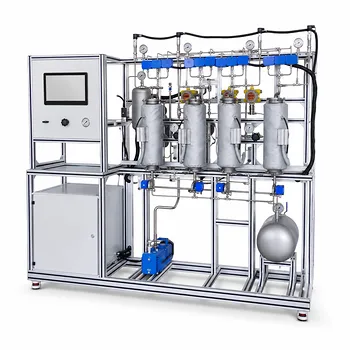
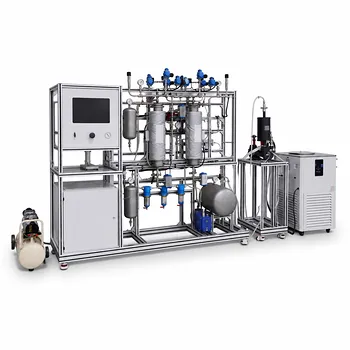
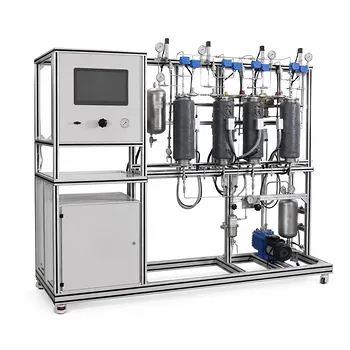
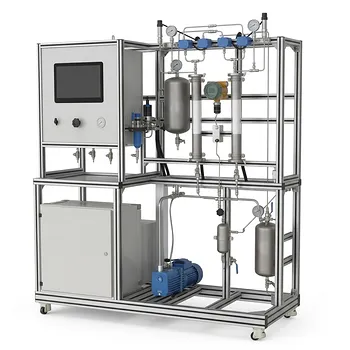
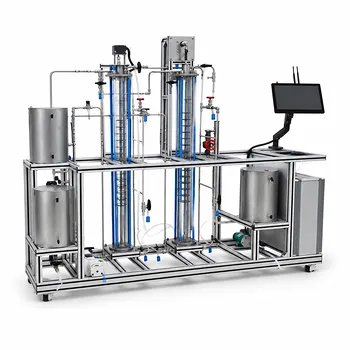
Here’s how: A chemical engineering pilot plant represents the downstream separation of ethylene oxide (EO) as an integrated train of three core unit operations. First, a water-based absorption tower captures EO from the reactor outlet gas, holding its concentration below 3% to stop dangerous polymerization. Next, a chemical absorption/desorption loop strips out carbon dioxide from the recycle gas, often using a potassium carbonate system. Finally, a series of desorption and distillation columns recovers the EO from the water, removes light ends, and delivers purified EO above 99.99% purity, while separating byproducts like ethylene glycol. This full flowsheet lets students see how absorption, solvent regeneration, and distillation work together under one roof.

While each unit operation can be studied in isolation, the pilot plant’s real power is in showing their interdependence—how absorption tower efficiency, CO₂ removal capacity, and distillation purity are all linked by recycle loops, heat integration, and tight mass balances. This hands-on experience transforms textbook equilibrium stage diagrams into an industrial reality.

The Pilot Plant as a Living Flowsheet for Ethylene Oxide Purification

The pilot plant doesn’t just demonstrate separate pieces of equipment. It models the sequential logic of a real EO recovery train, where each step solves a specific separation problem created by the reaction step.

Water Absorption: The Frontline Separation Step

Directly after the reactor, the gas stream contains EO, unreacted feed, CO₂, and inerts. The absorption tower uses water as the solvent to scrub EO out of the gas phase.

This unit teaches gas-liquid mass transfer fundamentals with a safety-critical twist. EO concentration in the rich water must stay below 3% to avoid highly exothermic polymerization reactions. Students learn to balance absorption efficiency against this reactive hazard, manipulating liquid-to-gas ratios and column temperature.

CO₂ Removal: Preventing Gas Build-up and Catalyst Poisoning

A side stream of gas is sent to a carbon dioxide removal system—a chemical absorption/desorption loop. Typically a hot potassium carbonate solution reacts with CO₂, freeing the recycle gas of this acid component that would otherwise accumulate and harm reactor catalyst.

Here, students explore reactive absorption kinetics and solvent regeneration energy. The loop mimics industrial acid gas sweetening units, giving them direct experience with packed bed absorber and regenerator column interactions, lean/rich loading, and thermal swing parameters.

Desorption and Distillation: From Dilute Stream to High-Purity Product

The water rich in EO must be stripped. In the desorption column, steam or inert gas releases the EO, producing a crude EO vapor. This then enters a distillation sequence.

Students operate fractionation columns to:

  • Knock out light ends like dissolved CO₂ and methane
  • Separate water from EO
  • Achieve final high-purity ethylene oxide (>99.99%)
  • Divert heavier byproducts—mainly ethylene glycol—to a side draw or bottoms

This section is a masterclass in vapor-liquid equilibrium, reflux ratio control, and column pressure profiling. The purity target demands precise operation, mirroring the exacting specs of commercial EO plants.

The Pedagogical Power of a Fully Integrated Train

What makes the pilot plant such an effective teaching tool is not the individual columns, but how they work as one system.

Mastering Recycle Loops and Mass Balance

The CO₂ removal loop and the recycle gas returning to the reactor create classic closed‑loop mass balances. Students discover how small changes in absorption efficiency cascade through the whole plant, forcing them to think in terms of overall unit material balances, not just single columns.

Understanding Heat Integration

In real EO plants, hot streams from desorption can preheat feeds to distillation, cutting energy use. A well-designed pilot plant includes basic heat exchange networks that demonstrate how energy is conserved across unit operations—a vital concept for sustainable process design.

Safe Handling of Reactive Intermediates

Because the pilot plant actually circulates a dilute EO‑water mixture, students face genuine process safety constraints. They learn to respect maximum EO concentrations, inert purge protocols, and temperature limits, internalizing the safety culture that is non‑negotiable in EO production.

Limitations and Trade-offs in Pilot-Scale Modeling

Even the best pilot plant is a compromise. Being honest about its limitations helps students separate educational models from industrial reality.

Scale-Down Realities

Reactors are often simulated with pre‑mixed feed gases, so students miss the catalyst behavior and heat management of a real EO reactor. Also, some columns may operate at lower pressure or use surrogate components for safety, which can shift equilibrium behavior from real plant data.

Complexity vs. Learning Objectives

Running a fully integrated EO train can overwhelm beginners. The risk is that students get lost in operational troubleshooting rather than grasping the separation principles. Successful programs often staged exercises, starting with single‑column runs before connecting everything.

Maintenance and Safety Overhead

Handling even diluted EO and hot carbonate solutions demands robust material compatibility and rigorous safety protocols. This can limit the time students spend on hands‑on troubleshooting, directing effort toward procedural compliance.

Tailoring the Pilot Plant Experience to Your Educational Goals

How you use the pilot plant will depend on what you want your students to internalize.

  • If your primary focus is unit operations fundamentals: Zero in on individual column hydrodynamics, flooding points, and simple absorption/stripping efficiency curves. Keep the plant in open‑loop mode.
  • If your primary focus is process control and dynamics: Use the integrated loops to investigate interactions—how a bump in solvent flow to the absorber changes CO₂ loading, which then shifts desorber reboiler duty, which affects distillation feed temperature. Tune controllers under real recycle disturbances.
  • If your primary focus is industrial process understanding: Emphasize the full mass balance closure, the economic trade‑offs of EO yield vs. purity, and the heat integration map. Run the plant as a continuous, interconnected system to mimic a commercial unit’s operational challenges.

By mapping the pilot plant experience to your learning objectives, you turn a collection of glass columns into a vivid laboratory that bridges separation theory and plant‑floor reality.

Summary Table:

Unit Operation Role in EO Separation Key Educational Value
Water Absorption Scrubs EO from reactor gas using water solvent Gas-liquid mass transfer & safety limits (EO < 3%)
CO2 Removal Strips carbon dioxide via chemical absorption loop Reactive absorption kinetics & solvent regeneration
Desorption & Distillation Recovers EO from water; removes light & heavy ends Vapor-liquid equilibrium & high-purity (99.99%+) control

Bring Industrial Reality to Your Lab with LABPARK

Looking to bridge the gap between textbook separation theory and industrial practice? LABPARK provides state-of-the-art Educational and Vocational Unit Operations Pilot Plants in chemical engineering, bioprocess & biotech, and environmental & water treatment.

Designed specifically for universities, research institutes, and enterprises, our pilot plants empower students and researchers to master complex mass balances, heat integration, and safety protocols in real time.

Contact LABPARK today to customize your pilot plant solutions and elevate your hands-on training programs!

Related Products

People Also Ask

Related Products

Packed Bed Absorption Educational Unit Operations Pilot Plant

Packed Bed Absorption Educational Unit Operations Pilot Plant

Study gas-liquid absorption, pressure drop, flooding, and mass transfer coefficients with this pilot plant. Transparent packed column, industrial touchscreen, real-time sensor data, automated analysis. Investigate two-phase flow, loading points, column efficiency. Comprehensive data logging and assessment software included.

Dual-Mode Gas Absorption and Desorption Unit Operations Training Pilot Plant

Dual-Mode Gas Absorption and Desorption Unit Operations Training Pilot Plant

Industrial-scale pilot plant for gas absorption and desorption training in chemical engineering. Features dual-mode operation with real and simulated materials, transparent columns for flow visualization, and customizable design. Supports independent or combined loops for hands-on unit operations experiments.

Absorption and Desorption Educational Unit Operations Pilot Plant

Absorption and Desorption Educational Unit Operations Pilot Plant

Dual packed column absorption and desorption pilot plant for chemical engineering education, offering real-time mass transfer coefficient measurement, durable mobile frame, industrial touch-screen interface, and customizable design for varied laboratory curricula, enabling hands-on study of gas absorption and stripping.

Carbon Dioxide Absorption and Desorption Educational Pilot Plant for Carbon Capture Studies

Carbon Dioxide Absorption and Desorption Educational Pilot Plant for Carbon Capture Studies

Explore carbon dioxide absorption and desorption with this educational pilot plant. Transparent columns visualize mass transfer; electric heating simulates industrial solvent regeneration; touchscreen interface enables data monitoring. Ideal for chemical engineering, bridging theory and practice.

Multi-Component Gas Pressure Swing Adsorption Pilot Plant for Unit Operations Education

Multi-Component Gas Pressure Swing Adsorption Pilot Plant for Unit Operations Education

Multi-component gas pressure swing adsorption pilot plant designed for unit operations education. Features four-tower configuration, IoT touchscreen control, dual regeneration, and real-time breakthrough curve analysis for engineering training with safety interlocks and mobile frame simulates industrial PSA processes.

Carbon Dioxide Adsorption and Capture Educational Unit Operations Pilot Plant

Carbon Dioxide Adsorption and Capture Educational Unit Operations Pilot Plant

Advanced laboratory pilot plant for teaching carbon dioxide adsorption and capture unit operations. Features four-tower adsorption system with 400°C heating jackets, high-precision CO2 and O2 sensors, and 15.6-inch touchscreen with wireless data logging. Ideal for chemical engineering education.

Bench Scale Dual Column Gas Separation and Capture Educational Pilot Plant

Bench Scale Dual Column Gas Separation and Capture Educational Pilot Plant

This dual-column educational pilot plant provides hands-on teaching of gas adsorption, separation, and capture processes. It features stainless steel columns, regeneration up to 400°C, and a 15.6-inch touchscreen PLC for TSA and PSA studies in chemical engineering curricula, process simulation.

Bench Scale Carbon Dioxide Capture Educational Unit Operations Pilot Plant

Bench Scale Carbon Dioxide Capture Educational Unit Operations Pilot Plant

This bench-scale educational pilot plant simulates industrial CO₂ separation using a multi-tower adsorption system for hands-on engineering training. Students achieve ≥90% CO₂ purity while studying pressure swing adsorption, desorption kinetics, and process control in gas purification experiments.

Pressure Swing Adsorption Educational Unit Operations Pilot Plant

Pressure Swing Adsorption Educational Unit Operations Pilot Plant

Integrated bench-scale pressure swing adsorption pilot plant for hands-on teaching of gas-solid separation, mass transfer, and process optimization using nitrogen-oxygen model, featuring dual-column design, industrial touchscreen control, digital assessment suite, and customizable hardware and software configurations for educational laboratories.

Educational Pressure Swing Adsorption Ethylene Capture Unit Operations Pilot Plant

Educational Pressure Swing Adsorption Ethylene Capture Unit Operations Pilot Plant

Advanced educational pilot plant for pressure swing adsorption ethylene capture provides comprehensive hands-on training in industrial gas separation processes, featuring an eight-column PSA system, real-time data acquisition, and fully customizable design for chemical engineering unit operations laboratories and research.

Gallium and Indium Selective Extraction Educational Pilot Plant

Gallium and Indium Selective Extraction Educational Pilot Plant

Integrated pilot-scale laboratory system for engineering education bridging theoretical concepts with industrial practice enabling hands-on study of liquid liquid extraction reaction kinetics and mass transfer for selective gallium and indium separation featuring real-time IoT connectivity with integrated safety

Two-Dimensional Fluidization Hydrodynamics Educational Pilot Plant for Unit Operations Training

Two-Dimensional Fluidization Hydrodynamics Educational Pilot Plant for Unit Operations Training

Explore gas-solid and liquid-solid fluidization hydrodynamics with our transparent 2D educational pilot plant. Ideal for chemical engineering unit operations labs, it demonstrates fixed to fluidized bed regimes, measures pressure drop, and integrates QR-code digital learning for enhanced student training.

Two Phase Flow Pattern Velocity Resistance Measurement Educational Pilot Plant

Two Phase Flow Pattern Velocity Resistance Measurement Educational Pilot Plant

Benchtop educational pilot plant for university labs studying gas-liquid two-phase flow patterns, velocity, and resistance across circular, square, and rectangular conduits. Features 15.6-inch touchscreen, 5G connectivity, differential pressure sensors, safe water-air operation. Supports chemical engineering curricula.

Multimodal Absorption and Desorption Pilot Plant for Unit Operations Training

Multimodal Absorption and Desorption Pilot Plant for Unit Operations Training

Multimodal absorption and desorption pilot plant for higher education labs. Bridges theory and industrial practice with transparent packed columns, three operational modes (real-material, simulated, semi-physical), and SCADA control. Students explore mass transfer, column hydraulics, and process control. Customizable.

Comprehensive Liquid-Liquid Extraction Pilot Plant for Engineering Education

Comprehensive Liquid-Liquid Extraction Pilot Plant for Engineering Education

Comprehensive liquid-liquid extraction pilot plant for engineering education, integrating rotary and vibratory columns for hands-on observation of phase behavior, flooding limits, and mass transfer efficiency, enabling precise HTU and mass transfer coefficient calculations.

Low Concentration Carbon Dioxide Capture Pressure Swing Adsorption Educational Pilot Plant

Low Concentration Carbon Dioxide Capture Pressure Swing Adsorption Educational Pilot Plant

Low-concentration CO2 capture pilot plant using Pressure Swing Adsorption for engineering education. Students gain practical experience in breakthrough curve measurement, adsorption dynamics, and variable analysis in a hands-on lab setting. Ideal for unit operations, mass transfer, and chemical engineering labs.

Fixed-Bed Chemical Reaction and Gas Dust Tar Removal Unit Operations Pilot Plant

Fixed-Bed Chemical Reaction and Gas Dust Tar Removal Unit Operations Pilot Plant

Integrated educational pilot plant for studying catalytic gas-solid reactions and downstream gas purification. Features dual fixed-bed reactor, three-stage heating, and touchscreen control for hands-on engineering training. Ideal for chemical and environmental engineering curricula.

Liquid-Liquid Mass Transfer Coefficient Determination Educational Pilot Plant

Liquid-Liquid Mass Transfer Coefficient Determination Educational Pilot Plant

This bench-scale educational pilot plant for liquid-liquid mass transfer coefficient determination offers precise control of phase boundary, temperature, and agitation, enabling hands-on study of transport phenomena and unit operations in chemical engineering labs for teaching.

Fluidized Bed Gas Solid Catalytic Reaction Educational Pilot Plant

Fluidized Bed Gas Solid Catalytic Reaction Educational Pilot Plant

Our educational fluidized bed gas-solid catalytic reaction pilot plant is ideal for chemical engineering labs. Students study fluidization dynamics, catalyst evaluation, and process control hands-on. Features include a customizable reactor, touchscreen HMI, and safety interlocks for safe, curriculum-aligned experiments.

Gas-Solid Heterogeneous Separation Demonstration Educational Unit Operations Pilot Plant

Gas-Solid Heterogeneous Separation Demonstration Educational Unit Operations Pilot Plant

Comprehensive visual transparent gas-solid separation pilot plant for chemical engineering labs. Demonstrates gravity settling inertial settling cyclone and bag filter technologies. Enables real-time analysis of fluid-particle mechanics pressure drop and collection efficiency. Ideal for undergraduate unit operations courses.


Leave Your Message