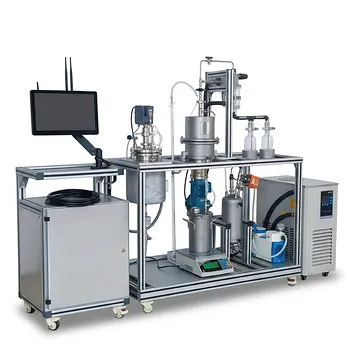
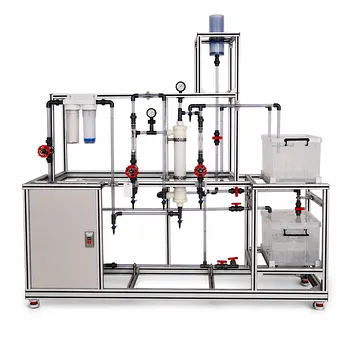
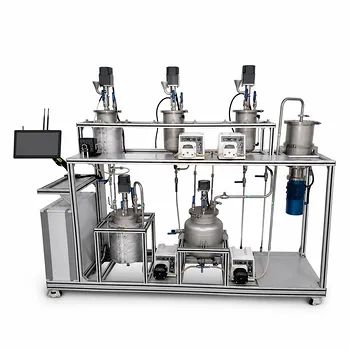
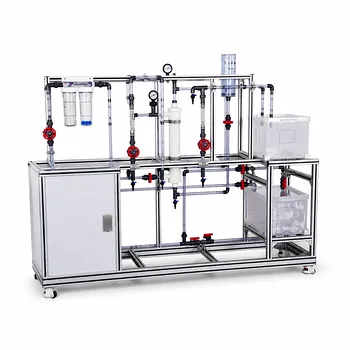
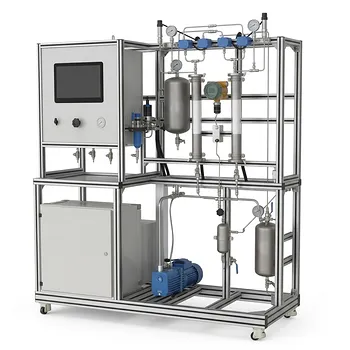
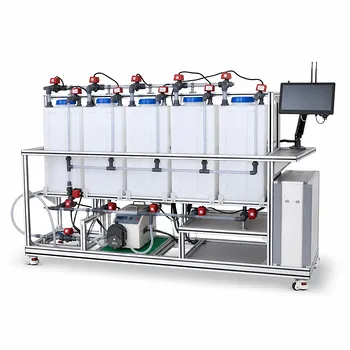
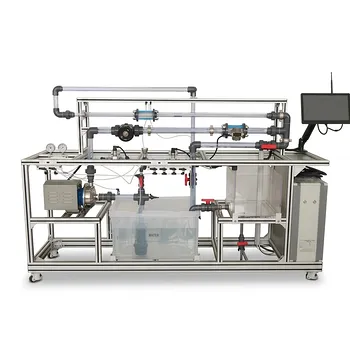
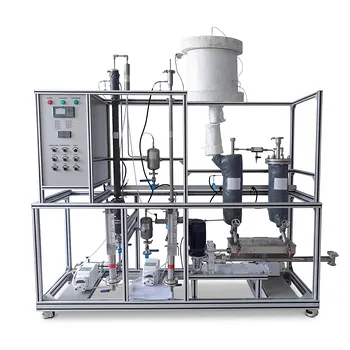
The principle of reverse osmosis in pilot-scale water treatment is applied by using a mechanical pressure greater than a solution’s natural osmotic pressure to force water through a semi-permeable membrane. In a desalination pilot plant, this means pressurizing saline feed water on the high-concentration side so that pure water molecules pass through the membrane, leaving dissolved salts and ions behind. The single most critical component determining the efficiency of this entire separation is the semi-permeable membrane itself.
The semi-permeable membrane is the defining element of a reverse osmosis system. Its structural stability under high pressure, its ability to reject salts while allowing water to pass, and its long-term durability directly control energy consumption, water recovery, and operational cost in any desalination pilot plant.
The Principle of Reverse Osmosis in Pilot Plants
Reverse osmosis (RO) takes the natural phenomenon of osmosis and reverses it. In a pilot unit, you’re not simply filtering water through a physical sieve; you’re overcoming an energetic barrier.
Overcoming Osmotic Pressure
Osmotic pressure is a colligative property—it depends only on the concentration of dissolved particles in a solution. In a saline feed, water naturally wants to move toward the saltier side to dilute it.
To reverse this flow, the RO pilot pump must apply a hydraulic pressure that exceeds the solution’s osmotic pressure. For brackish water, that may be 2–4 MPa; for seawater, it can rise to 6–10 MPa. The moment feed pressure rises above the osmotic threshold, fresh water permeates through the membrane against the natural concentration gradient.
Separation at the Molecular Level
RO membranes are dense, effectively non-porous structures with a selective barrier layer just 0.1–1 nm thick. They don’t work by size exclusion alone (like a kitchen strainer). Instead, water dissolves into the polyamide skin layer and diffuses through it, while hydrated salt ions are largely excluded.
This means pilot-plant students see a true liquid-liquid separation that blocks monovalent ions, low-molecular-weight organics, and even some dissolved gases. It’s why a single RO pass can achieve salt rejection rates above 99%.
The Heart of the System: Why the Semi‑Permeable Membrane Dictates Efficiency
Efficiency in a desalination pilot plant isn’t just about salt removal. It’s a balance of water output, energy demand, and long-term reliability. The membrane is the nexus where all three meet.
Structural Stability Under Extreme Conditions
A membrane that compacts or deforms under high pressure loses flux and never recovers. The primary reference correctly identifies pressure resistance and durability as non-negotiable traits. In a pilot plant running at 5–7 MPa for weeks, the membrane’s supporting layers must resist physical collapse while its ultra-thin active layer remains intact.
Rejection Rate and Permeate Quality
The membrane’s selective surface chemistry determines how completely it rejects salts. Advanced polyamide composite membranes routinely exceed 99.5% salt rejection. However, that performance is fragile—exposure to free chlorine or excessive fouling can chemically damage the active layer, causing an irreversible loss in salt retention.
Balancing Permeability and Selectivity
There is an inherent trade-off: a membrane with extremely high permeability produces more water for less energy, but it often sacrifices a small degree of salt rejection. The most efficient pilot-plant membranes are those that achieve high flux at moderate pressure while maintaining the required permeate quality. A cost-effective membrane must deliver this balance without requiring impossible pre-treatment or frequent replacement.
Energy Efficiency vs. Phase-Change Methods
Unlike distillation, which must vaporize water, RO operates without a phase change. All the energy goes into pressurizing the liquid. This fundamental advantage means RO uses significantly less energy, but only if the membrane itself performs well. A fouled or degraded membrane forces operators to raise pressure to maintain flow, eroding that efficiency edge.
Understanding the Trade‑offs in Pilot-Scale RO Operations
No membrane is a simple plug-and-play solution. Running a pilot plant reveals the operational realities that determine whether a system succeeds.
Fouling and Pre‑Treatment Dependency
Polyamide RO membranes are highly sensitive to organic fouling, biofilms, and chlorine degradation. A pilot plant quickly demonstrates that membrane life depends on rigorous pre-treatment: coagulation, filtration, activated carbon for dechlorination, and pH adjustment. Skimping on the pre-treatment train means membrane replacement and downtime, destroying process economics.
Pressure and Energy Costs
Higher driving pressures push more water through the membrane, but they also increase energy consumption and the risk of membrane compaction. Pilot-plant students learn that there is an optimum pressure for a given feed salinity—pushing beyond it yields diminishing returns and can damage the very membrane that makes separation possible.
Single-Pass vs. Multi-Stage Configurations
A single RO stage may not produce the desired permeate quality or water recovery. Many educational pilot plants use a two-stage design, where the second stage polishes the first stage’s permeate. The reject from the second stage—still low enough in salinity—can be recycled to the front of the first stage, boosting overall recovery to 75% or higher. Each configuration places different demands on membrane durability and brine-channeling inside the module.
How to Apply This to Your Pilot-Plant Goals
The core principle of RO is now clear: apply pressure beyond the osmotic point to force water through a highly selective membrane. The membrane’s quality and care decide everything else. Your next step depends on what you’re trying to achieve.
- If your primary focus is demonstrating energy-efficient desalination: Choose a high-flux, low-energy thin-film composite membrane, and carefully log how pressure, flux, and salt rejection shift with feed temperature and recovery rate.
- If your primary focus is producing high-purity water: Invest in a two-stage RO configuration with targeted pre-treatment. Monitor the second-stage membrane’s stability, because any failure there contaminates the entire product stream.
- If your primary focus is long-term operational reliability: Build a robust pre-treatment train (depth filtration, carbon, dechlorination) and run the plant long enough to observe membrane fouling patterns and cleaning protocols.
- If your primary focus is comparing separation technologies: Run identical feed through an RO module and an electrodialysis or distillation unit, measuring energy input per liter of permeate. The pressure-versus-phase-change contrast is the lesson.
A well-run reverse osmosis pilot plant transforms an abstract principle into an observable fact: the semi-permeable membrane is the heartbeat of the process, and its health completely defines the system’s success.
Summary Table:
| Key Aspect | Description | Critical Role in Desalination |
|---|---|---|
| RO Principle | Exceeding natural osmotic pressure using hydraulic pressure (2–10 MPa) | Reverses natural water flow to separate pure water from salts |
| Key Component | Semi-permeable membrane (0.1–1 nm selective polyamide barrier) | Controls salt rejection rate (>99%), water flux, and energy cost |
| Trade-offs | Balancing high permeability with chemical durability & fouling | Requires strict pre-treatment to prevent fouling and compaction |
Elevate Your Water Treatment & Chemical Engineering Labs with LABPARK
Are you looking to provide hands-on, industry-ready training or scale up your research? LABPARK designs and manufactures high-performance Educational and Vocational Unit Operations Pilot Plants tailored for universities, research institutes, and enterprises.
Whether your focus is on environmental & water treatment (including reverse osmosis and filtration), chemical engineering, or bioprocess & biotech, our systems offer:
- Real-World Experience: Accurate replication of industrial processes at a pilot scale.
- Robust Engineering: High-pressure resistant setups with advanced membrane technologies.
- Curriculum-Aligned Designs: Ready-to-use units to teach mass transfer, separation, and system optimization.
Contact LABPARK today to request a customized quote or consult with our engineering experts on your laboratory requirements!
Related Products
- Multifunctional Membrane Separation Educational Pilot Plant with Ultrafiltration, Nanofiltration, Reverse Osmosis
- Multi-Functional Membrane Separation Educational Pilot Plant for Unit Operations Lab
- Rising and Falling Film Evaporation Educational Unit Operations Pilot Plant
- Dual-Mode Rectification Pilot Plant for Practical Training Unit Operations
- Ion Exchange Water Purification Educational Pilot Plant for Engineering Unit Operations
People Also Ask
- Pervaporation vs. Vapor Permeation: Handling Suspended Solids in Membrane Pilot Plants
- How do PEI, PVDF, and PSU membranes compare in pilot plants? Find the best fit.
- What are the trade-offs of polymer vs inorganic membranes in teaching pilot plants? Key laboratory comparison.
- How can operators optimize operating conditions and cleaning protocols in membrane separation pilot plants to mitigate fouling?
- What are the advantages of membrane separation in pilot plants? Efficient Organic Vapor Recovery