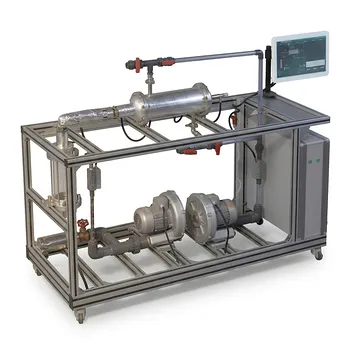
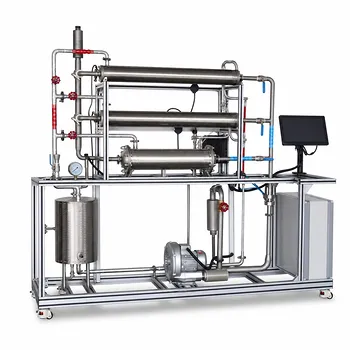
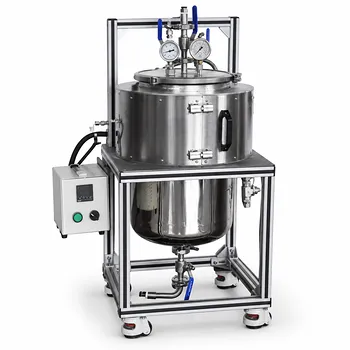
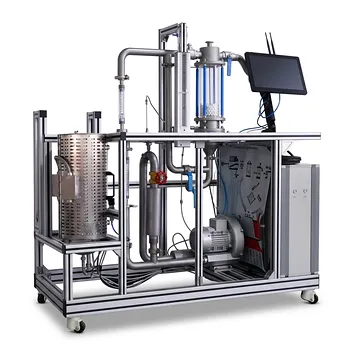
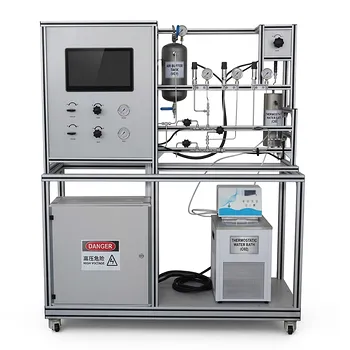
The pinch point is a fundamental thermodynamic barrier, and the CP matching rule is the single most critical design constraint to cross it without wasting energy. Students use unit operations pilot plants to physically manipulate hot and cold streams, measure their inlet and outlet temperatures and flow rates, and calculate the heat capacity flow rates (CP). By deliberately configuring stream pairings that obey CPh ≤ CPc above the pinch and CPh ≥ CPc below the pinch, they can observe directly that the minimum temperature approach (ΔT_min) is maintained, zero utility heating is needed above the pinch, and zero utility cooling is needed below it—turning an abstract formula into an intuitive, visual proof.
The pilot plant transforms CP matching from a textbook rule into a visceral experience. Students see that when the CP inequality is violated, the temperature profiles converge dangerously, forcing the system to demand extra hot and cold utilities—and how respecting the rule unlocks maximum energy recovery by partitioning the process at its most constrained point.
The Pinch Point as a Thermodynamic Boundary
The pinch point divides any heat recovery problem into two thermodynamically distinct regions. Above the pinch, the system is a net heat sink; below, a net heat source. In an optimally integrated design, no heat should ever cross this boundary.
On a pilot plant, students locate the pinch by constructing composite curves from measured temperature and duty data. This hands-on activity cements the concept: the pinch is not a fixed property of a piece of equipment, but an emergent bottleneck created by the most constrained pair of process streams.
Above the Pinch: A Region That Only Receives Heat
Above the pinch, the overall energy balance demands that heat be supplied externally (by steam or a hot utility) because no heat can be removed to cold utilities without lowering the temperature of streams that are already too cold to donate heat.
In pilot plant exercises, students observe that if they try to use a cooler above the pinch, the overall hot utility demand instantly rises—exactly by the amount of heat removed—proving that such a move is thermodynamically wasteful.
Below the Pinch: A Region That Only Rejects Heat
Conversely, below the pinch the process can only reject heat to cooling water or another cold utility. Any attempt to introduce external heating below the pinch simply forces an equal increase in cold utility load.
By physically switching on a steam heater below the pinch and measuring the cooling water temperature rise, students quantify the double penalty: both hot and cold utility consumption increase in lockstep.
The CP Matching Rules That Keep the Pinch Intact
The CP matching constraints are not arbitrary—they are geometric necessities that prevent the hot and cold composite curves from touching closer than ΔT_min right at the pinch.
Why the CP Ratio Matters
The heat capacity flow rate (CP) is the product of mass flow rate and specific heat. It dictates the slope of a stream’s temperature-enthalpy line: a smaller CP means a steeper temperature change for the same duty. At the pinch, the temperature difference is already at its minimum, so any mismatch that causes the temperature profiles to converge will immediately violate ΔT_min.
The Rule Above the Pinch: CPh ≤ CPc
Above the pinch, the hot stream must have a CP smaller than or equal to that of the cold stream it is matched with. If the hot stream’s CP were larger, its temperature would drop more slowly per unit of heat transferred, and the cold stream’s temperature would rise more quickly—their profiles would move toward each other and ultimately cross the ΔT_min boundary.
On a pilot plant, students can set up a match where CPh > CPc above the pinch and watch the temperature difference shrink to less than the design minimum. The re-circulation heater then kicks in automatically, or a manual calculation instantly shows a new utility demand, making the thermodynamic violation starkly evident.
The Rule Below the Pinch: CPh ≥ CPc
Below the pinch, the roles reverse. The hot stream must now have a CP greater than or equal to the cold stream’s CP. A smaller CP on the hot side would cause the hot stream’s temperature to fall too fast, compressing the temperature approach from the other direction.
Students test this by swapping pumps or adjusting valves to alter flow rates. When they deliberately lower the hot stream CP below the pinch, the immediate result is a temperature cross—the hot outlet temperature drops below the cold inlet temperature—which violates the second law and is impossible in a real exchanger. The pilot plant’s sensors reveal the impossible condition, and students must correct their network design.
The Educational Power of Unit Operations Pilot Plants
A pilot plant turns a mental model into a physical diagnostic tool. Instead of merely plotting on paper, students become active participants in the heat integration logic.
Instrumentation and Data Collection
Modern pilot plants are equipped with thermocouples at every inlet and outlet, flow meters on each line, and often online calculators that display CP values in real time. Students record these values, compute duties via Q = m_dot * Cp * (Tin - Tout), and immediately see whether their chosen pairing is feasible.
This immediate feedback loop teaches them that thermodynamics is ruthless: you cannot negotiate with the temperature-composition-enthalpy relationships. If you break the CP rule, the plant’s instrumentation will show an impossible condition or automatically compensate by opening a utility valve.
Manual Configuration and Stream Splitting
Using flexible piping and diverter valves, students physically build the heat exchanger network. They split streams to adjust CP ratios—for instance, sending a portion of a hot stream to bypass an exchanger to lower its effective CP. This tangible action cements the understanding that CP is a tunable design variable, not a fixed property.
Comparing Experimental and Theoretical Results
After running the plant, students compare utility consumption and temperature profiles with predictions from pinch analysis software or spreadsheet models. The pilot plant’s inefficiencies—fouling, imperfect insulation, pressure drops—cause discrepancies that launch deeper discussions about real-world performance versus the ideal thermodynamic target. This bridges the gap between theory and practice.
Visual Reinforcement Through Composite Curves
Many labs ask students to manually construct the hot and cold composite curves from pilot data and overlay the grand composite curve. When the CP matching rules are followed, the composite curves touch exactly at the pinch with a vertical gap of ΔT_min, and no heat demand appears in the pocket above the pinch. When the rule is broken, the composite curves overlap, and the utility demands balloon—a picture that stays with the learner far longer than a textbook paragraph.
The Direct Link to Heat Exchanger Network Design
CP matching is not an isolated exercise; it is the cornerstone of the pinch design method. The pilot plant experience directly trains students to partition the network at the pinch and treat each side independently.
Partitioning the Network
On the pilot plant, students physically isolate the sections above and below the pinch by not allowing any heat transfer stream to cross the pinch temperature. They design separate subnetworks, each obeying its own CP rule. This teaches a critical design principle: start at the pinch and work outward, never crossing it with a single exchanger.
Avoiding Cross-Pinch Heat Transfer
The pilot plant shows that a cross-pinch match—an exchanger that transfers heat from above the pinch to below—forces an equal increase in both hot and cold utility. Students can measure this directly: if they deliberately connect a hot stream from above the pinch to a cold stream below, the steam valve opens and the cooling water flow increases. This quantitative penalty (the “heat cascade” violation) is a memorable lesson in process integration.
Minimum Utility Targeting
By first setting up a network that respects the CP rules and the pinch division, students determine the minimum possible hot and cold utility requirements. They then modify the network (e.g., by violating a CP rule) and watch the utility meters climb. This experimental proof that the thermodynamic minimum is indeed the lowest possible reinforces the value of pinch analysis and the CP matching criteria as a design tool rather than an academic abstraction.
Understanding the Trade‑Offs and Real-World Complications
While the CP matching rule is thermodynamically immutable at the pinch, pilot plants also expose why real designs may deviate from the pure pinch-optimal structure.
The Cost of Strict CP Adherence
A perfectly matched CP ratio may require impractical flow splits, excessive heat exchanger area, or low velocities that lead to fouling and poor heat transfer coefficients. On a pilot plant, students witness how an exchanger designed with an extreme CP ratio can suffer from low tube-side velocity, resulting in a lower overall heat transfer coefficient and a much larger required surface area. This prompts a discussion of life-cycle cost versus energy cost.
Pressure Drop and Pumping Power
Strict stream splitting to meet CP rules can increase pressure drop and pumping energy. In a pilot plant, students measure pressure drops and calculate fan or pump power consumption. They learn that an “optimal” energy recovery solution might be less economically optimal if the auxiliary power consumption offsets the utility savings.
Non-Ideal Mixing and Control
In a real plant, streams split for CP adjustment may not mix perfectly or may be difficult to control under transient conditions. By manually throttling valves and observing temperature fluctuations, students grasp that operability and controllability are as important as static thermodynamic targets.
The Pinch May Shift
As heat exchanger duties change with operating conditions, the pinch point can move. Students can vary feed rates or inlet temperatures on the pilot plant and re-map the pinch, discovering that a CP rule that works at one condition may fail at another—compelling them to design for a range, not a single point.
These practical limitations do not invalidate the CP rule; they rather illuminate that thermodynamic purity is a starting point, not the final word. A well-designed curriculum leverages the pilot plant to show both the ideal and the compromise.
Designing Pilot Plant Exercises to Teach CP Matching Effectively
How should an instructor or researcher structure a hands-on session to maximize this learning?
-
If your primary focus is teaching the core thermodynamic principle: Start with a simple two-stream case and a fixed pinch. Have students deliberately violate the CP rule, measure the resulting temperature cross or utility increase, and then restore the correct ratio to see the pinch maintained and utility demand vanish. The contrast imprints the rule.
-
If your primary focus is on translating theory to real-world constraints: Introduce multiple hot and cold streams, allow stream splitting, and require students to calculate the CP of each branch. Add fouling factors or pressure drop limits, forcing them to find the best compromise between thermodynamic targets and equipment performance.
-
If your primary focus is on reinforcing the iterative design process: Use configurable shell-and-tube exchangers with multiple tube passes. Ask students to iterate between CP matching rules and heat transfer calculations (LMTD, U values), adjusting flow rates and pass arrangements until both the pinch criteria and the heat transfer area are satisfied. The pilot plant’s real data replaces hypothetical coefficients.
-
If your primary focus is on industrial-scale system integration: Employ a fully instrumented network with heaters, coolers, and multiple exchangers. Use a digital twin and compare its predictions to live data. This showcases how automation and advanced control systems rely on the same fundamental CP matching logic to maintain optimal setpoints.
The pilot plant becomes a living textbook where every incorrect valve position is a teachable moment, and every successful match reinforces the elegant simplicity of pinch analysis. In the end, the student leaves with a physical intuition for the CP matching rule: a hot stream above the pinch must not be too “slow” in giving up heat, and below the pinch it must not be too “fast,” because the pinch point allows no room for error.
Summary Table:
| Region | CP Matching Rule | Thermodynamic State | Violation Consequence |
|---|---|---|---|
| Above the Pinch | $CP_h \le CP_c$ | Net heat sink (no cooling) | Profiles converge; increases hot utility demand |
| Below the Pinch | $CP_h \ge CP_c$ | Net heat source (no heating) | Temperature cross; increases cold utility demand |
Bring Thermodynamics to Life with LABPARK
Bridge the gap between textbook theory and physical intuition. LABPARK provides premium Educational and Vocational Unit Operations Pilot Plants in chemical engineering, bioprocess & biotech, and environmental & water treatment. Specifically designed for universities, research institutes, and enterprises, our modular plants help students master complex concepts like pinch analysis, stream splitting, and process integration through safe, hands-on experimentation.
Ready to transform your engineering curriculum? Contact LABPARK today to find the perfect pilot plant solution for your lab.
Related Products
- Three-Tube Heat Transfer Educational Pilot Plant for Unit Operations Training
- Comprehensive Multi-Modal Heat Transfer Unit Operations Pilot Plant for Engineering Training
- Shell and Tube Heat Exchanger Heat Transfer Coefficient Determination Educational Pilot Plant
- Dual Mode Heat Transfer Pilot Plant for Unit Operations Training
- Comprehensive Heat Transfer Coefficient Determination Educational Unit Operations Pilot Plant
People Also Ask
- When is ε-NTU preferred over LMTD in pilot plants? Predict heat exchanger performance without iteration.
- How does thermal conductivity affect pilot plant performance? Optimize heat transfer & accuracy
- How does cascade control achieve superior disturbance rejection in heat transfer pilot plants?
- What engineering trade-offs must students analyze in a heat transfer pilot plant? Balance performance & cost.
- How to configure heat transfer pilot plants for pinch analysis? Teach energy recovery.