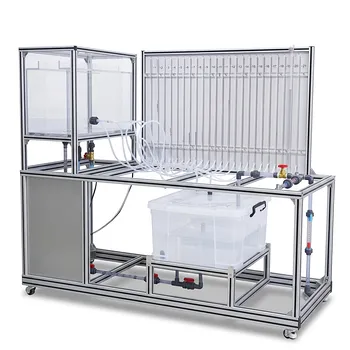
For operators in chemical engineering and environmental pilot plants, getting complex glassware truly clean—from condenser coils to custom-made dead-leg flasks—is a persistent challenge. Ultrasonic cleaning directly addresses this by using high-frequency sound waves to generate microscopic cavitation bubbles that implode and dislodge contaminants from even the most inaccessible geometries. The primary advantages are thorough, non-abrasive cleaning without manual scrubbing, while the key operational precautions revolve around never running the unit dry, using protective baskets, strictly controlling the cleaning chemistry, managing heat build-up, and tuning the system to prevent glass fracture.
Ultrasonic cleaning delivers unparalleled access to the hidden recesses of pilot plant glassware, but its safe and effective use depends on respecting a few non-negotiable rules. The core insight: treat the glassware as a delicate scientific instrument, not a generic part, and you will eliminate one of the most common sources of cross-contamination and equipment damage.
The Science Behind Ultrasonic Cleaning in Pilot Plants
The Cavitation Phenomenon
An ultrasonic bath works by transmitting high-frequency sound waves through a liquid medium. These waves create alternating high- and low-pressure cycles that generate millions of microscopic cavitation bubbles.
When these bubbles reach a critical size and collapse asymmetrically near a solid surface, they produce intense micro-jets of liquid. This implosive energy is what scrubs the glassware, dislodging particles, residues, and films with a force that no brush can match.
Why It Matters for Complex Pilot Plant Glassware
Pilot plants often use specialized glassware with deep holes, narrow necks, and convoluted internal paths—think jacketed reactors, helical condenser tubes, or custom-designed sampling flasks. These geometries create dead zones where chemical residues, catalysts, or biological films can stubbornly cling.
Manual cleaning simply cannot reach these areas reliably. Cavitation, however, propagates everywhere the liquid can go, turning the entire wetted surface into a cleaning zone. This makes ultrasonic cleaning a powerful tool for maintaining reproducible experimental conditions and preventing cross-batch contamination.
The Tangible Advantages for Pilot Plant Operations
Eliminating Manual Scrubbing and Its Risks
Manual scrubbing introduces variability, the potential for scratching, and concerns around operator safety when dealing with hazardous residues. Ultrasonic cleaning removes the human variable.
The process is consistent and repeatable, ensuring that every piece—from a simple beaker to a complex gas-washing bottle—is exposed to the same cleaning action. It also minimizes direct contact with chemical residues, reducing a significant exposure risk for your team.
Unmatched Reach into Complex Geometries
The primary advantage, as highlighted by plant engineers, is the ability to clean deep holes, crevices, and hard-to-reach dead zones without disassembly or impractical manual intervention. A typical condenser tube, for example, becomes entirely accessible as the cavitation fluid fills and surges through its length, stripping away adsorbed compounds that would otherwise require aggressive solvents or heated acid baths.
Operational Precautions: Non-Negotiables for Safety and Glass Integrity
Never Activate Without a Liquid Load
This is rule number one. Running an ultrasonic generator dry will quickly destroy the transducers, as they are designed to be mechanically loaded by the liquid. Without that load, the energy has no medium to couple into, causing rapid overheating and catastrophic failure of the hardware.
Furthermore, the intent is to clean a surface immersed in liquid; operating in air produces no useful cavitation and simply damages your equipment.
Use a Dedicated Basket or Fixture
Place glassware inside a cleaning basket or on a dedicated rack, never directly on the tank bottom. Direct contact with the tank floor can transmit excessive vibrational energy to the glass, causing it to rattle, chip, or crack.
A basket also prevents heavy glass components from scratching the stainless steel tank, and it makes retrieving small parts safe and simple. Think of it as a shock-absorbing suspension system for your fragile labware.
Chemistry Matters: Avoid Highly Corrosive Acids and Flammable Solvents
The cleaning solution is as critical as the sound. Never use highly corrosive acids (like hydrofluoric or high-concentration hydrochloric) directly in the tank, as they can attack the stainless steel basin and damage the transducers’ bonding.
Flammable solvents are an explosion hazard. The ultrasonic action can generate fine mists and, in some cases, localized heating that could push a volatile solvent above its flash point. For pilot plants, water-based enzymatic or mild alkaline detergents are almost always the safe and effective choice. If you must use an aggressive chemical, place it in an isolated beaker inside the tank with water as the coupling fluid.
Monitor Heat: The 8-Hour and Temperature Limits
Prolonged ultrasonic operation transfers energy into the bath, causing the liquid temperature to rise steadily. The primary reference states that continuous operation should not exceed 8 hours, and during that time you must actively monitor the temperature.
Excessive heat can weaken glass, particularly if the piece has internal stresses from previous thermal cycling. It can also accelerate chemical attack from your cleaning solution, turning a gentle clean into an etching process. A simple thermocouple and a periodic cooling-down cycle are essential safeguards.
Tune Frequency and Power to Prevent Glass Fracture
Not all glass is created equal, and your ultrasonic system isn't a blunt instrument. Excessive power or the wrong frequency can induce resonant vibrations in the glassware, leading to stress fractures or complete breakage.
Lower frequencies (around 20–40 kHz) produce larger, more energetic cavitation bubbles for heavy-duty cleaning, but they can be more aggressive on delicate thin-walled glass. Higher frequencies create a gentler, finer cleaning action better suited for sensitive components. Always start at a low power setting and gradually increase, watching for any signs of chattering or stress lines.
Understanding the Trade-offs and Limitations
When Cavitation Can Be the Enemy: Erosion and Pitting
The same implosive force that cleans can also, over time and with extreme exposure, erode the glass surface. Prolonged ultrasonic treatment at very high power levels can cause micro-pitting, especially on soft or already-etched glass.
This is a trade-off: you get deep cleaning, but you must balance time and intensity to avoid permanent damage to expensive, custom-blown pilot plant components.
It Is Not a Silver Bullet for All Contaminants
Ultrasonic cleaning excels at removing particulate matter, weakly adsorbed films, and biological fouling. However, stubborn polymerized tars or heavily calcined deposits may still require a pre-soak in an appropriate solvent or a thermal shock cycle before the cavitation can be truly effective.
You should view ultrasonic cleaning as a finishing or precision process, not necessarily a single-step solution for the most extreme fouling scenarios.
Making the Right Choice for Your Pilot Plant
Your decision to implement ultrasonic cleaning should be guided by your specific operational pain points. Use the following priorities to frame your protocol.
- If your primary focus is achieving the highest possible cleanliness in complex glassware: Invest in a dual-frequency ultrasonic bath and use a validated basket system. This pairing gives you the maximum reach and process consistency while minimizing the risk of glass damage.
- If your primary focus is operator safety and reducing chemical exposure: Opt for water-based detergent cleaning in the ultrasonic unit and strictly enforce the no-flammable-solvent rule. The closed, automated action removes the human from the scrub-and-rinse hazard.
- If your primary focus is turnaround speed and uptime: Implement a disciplined cleaning schedule that never exceeds the 8-hour continuous run limit and includes active temperature monitoring. Shorter, more frequent cycles with cooling periods will actually give you more reliable, damage-free throughput than a single marathon session.
Treat your ultrasonic cleaner as a critical utility, not a convenience, and it will reliably protect the analytical integrity of your pilot plant for years.
Summary Table:
| Key Advantages | Key Operational Precautions |
|---|---|
| Thorough reach into complex geometries (coils, deep holes) | Never run dry to protect transducers from damage |
| Consistent, repeatable automated cleaning | Use dedicated baskets to avoid glass-on-metal contact |
| Eliminates manual scrubbing & exposure risks | Avoid corrosive acids & volatile, flammable solvents |
| High efficiency for removing residues & films | Monitor temperature & limit continuous run time to 8 hours |
Looking to optimize your pilot plant workflows and ensure pristine equipment performance? LABPARK provides state-of-the-art Educational and Vocational Unit Operations Pilot Plants in chemical engineering, bioprocess & biotech, and environmental & water treatment. Designed specifically for universities, research institutes, and enterprises, our advanced systems help you achieve reliable, reproducible results with maximum safety.
Contact our experts today to find the perfect pilot plant solution for your lab!
Related Products
- Multi-Functional Special Distillation Educational Pilot Plant
- Multi-Functional Membrane Separation Educational Pilot Plant for Unit Operations Lab
- Constant Pressure Filtration Educational Unit Operations Pilot Plant
- Multifunctional Membrane Separation Educational Pilot Plant with Ultrafiltration, Nanofiltration, Reverse Osmosis
- Ion Exchange Water Purification Educational Pilot Plant for Engineering Unit Operations
People Also Ask
- Why does simple distillation yield higher efficiency than flash distillation? Key thermodynamic differences.
- How does double temperature difference control improve distillation pilot plants? Stabilize purity.
- How to Integrate Spectroscopy in Distillation Pilot Plants for Advanced Process Control
- How to Verify Distillation Boundary Lines & Composition Regions with Pilot Plants
- Why is the acentric factor important in pilot plants? Fluid property prediction.