Solvent purification is a high-stakes task—not a routine step.
In bioprocess and chemical engineering unit operations, the three non‑negotiable safety pillars are: testing and removing peroxides from ethers before distillation, maintaining an inert atmosphere and clear vent paths when using active metal drying agents, and never combining halogenated solvents with alkali metals. These technical precautions must be wrapped in a comprehensive safety layer: pre‑lab training, knowledge of emergency equipment, and proper personal protective equipment. Every student must treat solvent preparation as a deliberate, risk‑informed operation.
Eliminating peroxide explosives before heating, preventing hydrogen accumulation during metal drying, and respecting deadly reactive incompatibilities are the core precautions. But lasting safety depends on building a culture where pre‑lab preparation, emergency familiarity, and disciplined PPE use are as automatic as the purification steps themselves.
The Three Pillars of Chemical Safety in Solvent Drying
The explicit precautions in your primary reference form the backbone of any safe lab session. Each pillar addresses a specific, well‑documented hazard that can escalate in seconds.
Destroy Peroxides Before You Distill
Ethers such as diethyl ether can form shock‑sensitive peroxides upon storage or exposure to air. If you distill a peroxide‑laden ether, the concentrating effect can trigger a devastating explosion.
- Test with acidified ferrous sulfate before any distillation step. A positive test indicates the presence of oxidizers that must be chemically destroyed.
- Remove the peroxides completely using a reductive wash—commonly acidified ferrous sulfate—until a fresh test shows no peroxides remain.
- Only then proceed with distillation. This simple sequence turns a latent bomb into an inert liquid.
Safely Taming Reactive Metal Drying Agents
Sodium, potassium, and other active metals are powerful drying agents for solvents like tetrahydrofuran or absolute ethanol, but they react violently with water to produce hydrogen gas and heat.
- Always work under an inert atmosphere such as nitrogen. This excludes moisture and prevents uncontrolled reactions with ambient humidity.
- Maintain clear gas release pathways that can never become blocked. A sealed system under pressure risks a violent burst or explosive over‑pressurization if gas formation outpaces venting capacity.
- The process requires constant vigilance—both for the reaction’s intensity and for any obstruction in the gas‑escape route.
The Deadly Pairing: Halogenated Solvents and Alkali Metals
You must never, under any circumstances, dry halogenated solvents—such as carbon tetrachloride or chloroform—with sodium, potassium, or other alkali metals.
- The combination can initiate an instant, violent explosion, even at ambient temperature.
- The explosive potential stems from radical‑driven side reactions that generate highly unstable intermediates.
- This rule is absolute; it is not a “be careful” warning but a hard stop. Always verify solvent identity before reaching for a drying agent.
The Supporting Frame: Preparation and Personal Protection
Chemical‑specific safety measures are only effective when they sit within a wider lab‑safety infrastructure. Your supplementary references fill this gap, outlining the human‑centered precautions that make technical protocols truly actionable.
Know Your Emergency Environment
Before a student enters the lab, they must internalize the layout of critical safety equipment. This includes the location and operation of:
- Master shut‑off valves for water, electricity, and gas.
- Fire extinguishers, fire blankets, and fire alarm pull stations.
- Eyewash stations and emergency showers.
- First‑aid kits and designated escape routes.
A person in a burning glove cannot afford to search for the nearest shower.
Pre‑Lab Reports: Your Safety Intellect
The pre‑lab report is not a paperwork exercise—it is a mental rehearsal for hazard recognition.
- Students must review the experiment’s principles, step‑by‑step operations, and specific precautions before they touch any equipment.
- This report should force them to answer: What can go wrong in this specific purification, and what will I do immediately to stop it?
- Completion of a safety exam and signing a safety commitment form formalize the expectation that safety is a measurable, accountable competency.
PPE: The Last Line of Defense
Personal protective equipment cannot prevent an incident, but it can drastically reduce the severity of an injury when engineering controls are breached.
- Safety goggles (not just glasses) protect against liquid splashes, flying solids, and vapor exposure.
- A laboratory coat provides a sacrificial barrier against spills and minor fires.
- Chemical‑resistant gloves are essential when handling corrosive or oxidizing agents; cut‑resistant or heat‑resistant gloves must be selected when working with sharp fragments or hot glassware.
Ensure students understand that PPE is purpose‑specific and that the wrong glove type can be as dangerous as no glove.
Understanding the Trade‑offs
Safety measures always compete with time, convenience, and sometimes performance. Acknowledging these tensions helps trainees make informed decisions under pressure.
The Hidden Cost of Cutting Corners
Skipping the peroxide test or ignoring the inert atmosphere requirement saves a few minutes but trades a controllable risk for a catastrophic one. In training environments, the cost of an accident is measured not only in injury but also in the erosion of a safety‑first ethos that will define an entire career.
When Safer Alternatives Aren’t Available
Some solvent‑drying methods are intrinsically less hazardous—for example, using molecular sieves or pre‑dried solvents—but unit operations curricula often demand hands‑on experience with reactive metals. When you cannot replace the hazardous step, you must invest the extra time and resources to execute it flawlessly. That means rigorous nitrogen purging, verified vent paths, and full PPE ensemble without shortcuts.
How to Apply This to Your Unit Operations Training
To embed these precautions in student practice, tailor your safety protocol to the dominant learning objectives of each lab session.
- If your primary focus is eliminating the most common explosion hazard in ether protocols: Build the acidified ferrous sulfate peroxide test into every procedure as a mandatory, signed‑off gate. Train students to visually confirm a negative test before lighting the still.
- If your primary focus is safely handling reactive metal drying agents: Ingrain the “inert atmosphere and vent” mantra through supervised drill. Have students demonstrate proper nitrogen flow, bubbler monitoring, and the reaction of clearing a blocked gas tube before they are permitted to work independently.
- If your primary focus is building a comprehensive safety culture from day one: Integrate the technical precautions with administrative controls. Require a named pre‑lab safety checklist that maps emergency equipment, verifies PPE compatibility, and confirms that a safety commitment is signed—no checklist, no lab entry.
By treating every solvent purification step as a deliberate, risk‑informed operation, you transform a potentially dangerous task into a cornerstone of professional engineering competence.
Summary Table:
| Hazard / Operation | Key Safety Precaution | Rationale / Benefit |
|---|---|---|
| Ether Distillation | Test and destroy peroxides with acidified ferrous sulfate before heating. | Prevents devastating explosions of shock-sensitive peroxides. |
| Active Metal Drying | Work under an inert atmosphere (nitrogen) with clear gas release vent paths. | Prevents water-reactive hydrogen gas accumulation and system over-pressurization. |
| Halogenated Solvents | Never pair halogenated solvents (e.g., chloroform) with alkali metals. | Avoids highly unstable, radical-driven instant explosions. |
| Emergency & PPE Prep | Map emergency equipment layout and wear task-specific PPE (goggles, lab coat, correct gloves). | Minimizes injury severity and ensures rapid response during an incident. |
Elevate Lab Safety and Hands-On Training with LABPARK
Are you looking to equip your students and researchers with hands-on unit operations experience without compromising on safety?
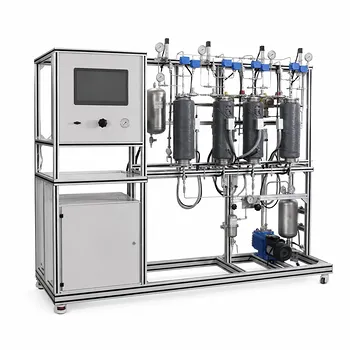
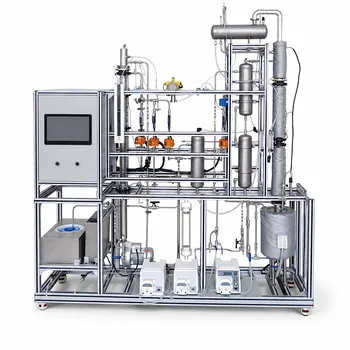
LABPARK provides state-of-the-art Educational and Vocational Unit Operations Pilot Plants in chemical engineering, bioprocess & biotech, and environmental & water treatment. Designed specifically for universities, research institutes, and enterprises, our pilot plants feature built-in, industry-grade safety controls and robust designs that make complex training steps—like solvent purification and chemical reactions—safe, repeatable, and highly effective.
Help your students bridge the gap between theory and safe industrial practice. Contact LABPARK today to explore our pilot plant systems and request a customized solution for your facility!
Related Products
- Fixed-Bed Chemical Reaction and Gas Dust Tar Removal Unit Operations Pilot Plant
- Green Anhydrous Ethanol Purification Extractive Distillation Unit Operations Training Pilot Plant
- Ion Exchange Water Purification Educational Pilot Plant for Engineering Unit Operations
- Solid Waste Pyrolysis and Refining Educational Pilot Plant for Unit Operations
- Bench Scale Carbon Dioxide Capture Educational Unit Operations Pilot Plant
People Also Ask
- When to transition from PID to adaptive control in pilot plants? Key process indicators.
- How do deviations in estimating latent heat impact pilot plant thermal systems? Avoid hardware mis-sizing.
- Why Compare Predicted and Experimental Excess Enthalpy? Key to Accurate Pilot Plant Scale-up
- Why Use PTFE & Hastelloy in Chemical Pilot Plants? Prevent Corrosion & Ensure Safety
- Why are particle density, bulk density & voidage critical in pilot plants? Master Bed Fluid Dynamics