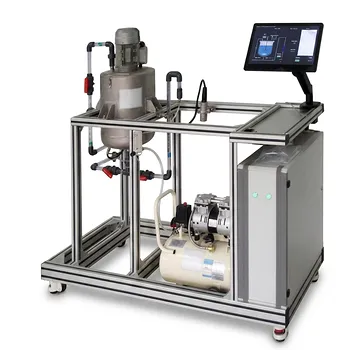
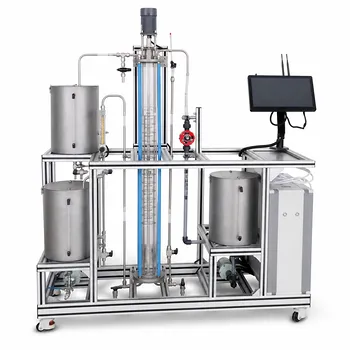
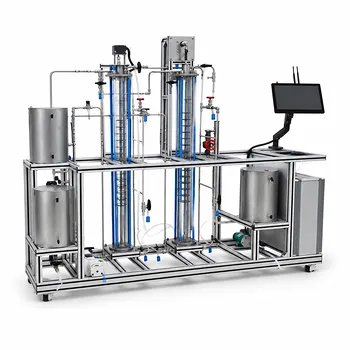
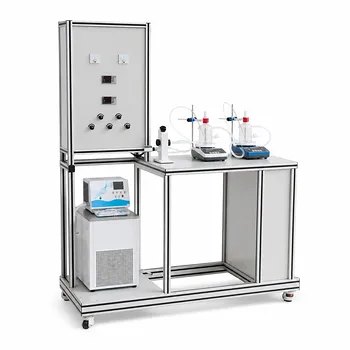
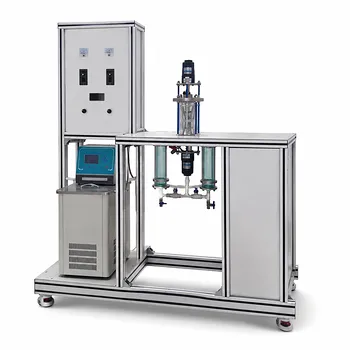
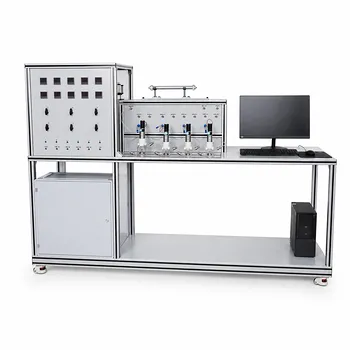
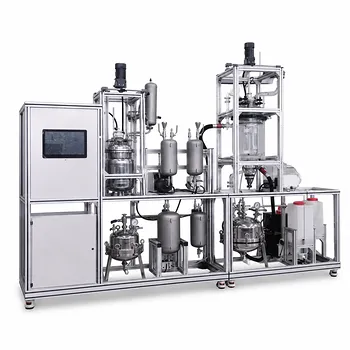
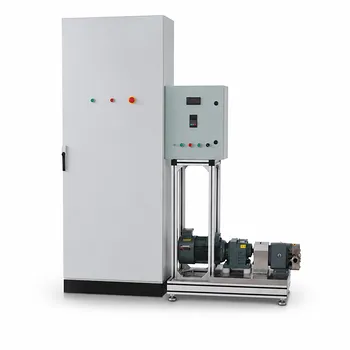
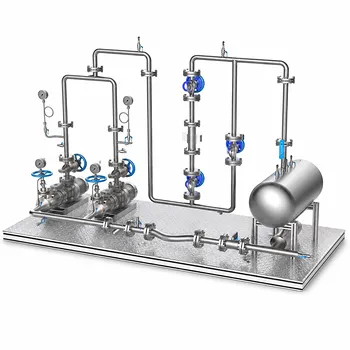
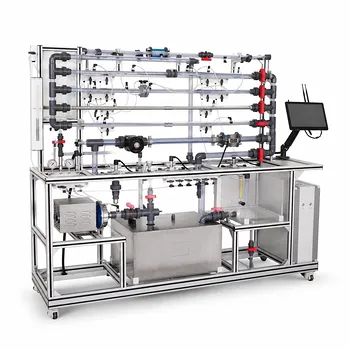
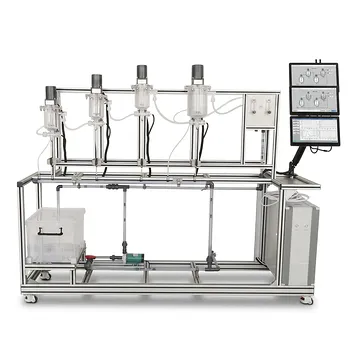
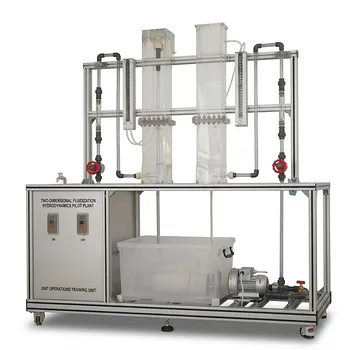
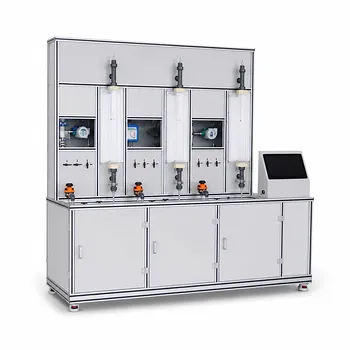
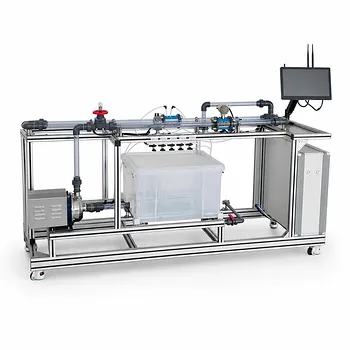
The heart of an educational pilot plant isn’t just to show that mixing happens—it’s to teach when to choose one technology over another. For liquid‑liquid mixing, an effective pilot plant demonstrates the selection between inline static mixers and agitated vessels by letting students change viscosity, flow regimes, and operation modes while measuring pressure drop, mixing quality, and energy use. This side‑by‑side, data‑rich comparison makes the selection criteria tangible, moving beyond textbook rules of thumb to observable, quantitative trade‑offs.
The fundamental decision hinges on fluid viscosity and process continuity. Inline static mixers are the economical choice for continuous, low‑viscosity (<50 mPa·s) streams, relying on turbulent energy dissipation. Agitated vessels become necessary when viscosity climbs, the process is batch, or solids are involved. A well‑designed pilot plant makes this transition window visible and measurable.
Why Educational Pilot Plants Are Crucial for Mixing Selection
Bridging the Gap Between Theory and Industrial Reality
Classroom theory tells us static mixers exploit turbulence, but students need to see the breakpoint where laminar flow defeats them.
Pilot plants provide that hands‑on experience, letting future engineers develop intuition about the real‑world limits of each mixing method.
Teaching a Systematic Decision‑Making Process
A pilot plant isn’t just a demonstration—it’s a problem‑solving lab.
Students learn to define process needs (flow rate, residence time, viscosity) and then map those to equipment capabilities, building the analytical framework they will use throughout their careers.
The Critical Parameters That Drive the Choice
Fluid Viscosity: The 50 mPa·s Threshold
Inline static mixers work beautifully for water‑like fluids.
As the primary reference highlights, liquids with viscosities below 50 mPa·s can be blended in 10 to 80 pipe diameters using elements like T‑junctions or Kenics mixers.
Above this, turbulence dampens; mixing relies on laminar stretching, requiring much longer lengths and higher pressure drops, making agitated vessels far more economical.
Operation Mode: Continuous Flow vs. Batch Processing
Static mixers are inherently continuous devices.
If the process requires batch handling, holding tanks, or frequent recipe changes, an agitated vessel is the only practical choice.
Pilot plants can show the operational simplicity of inline units for steady production and the flexibility of stirred tanks for multi‑product campaigns.
Flow Rate Ratios and Turndown Capability
Static mixers perform best when the streams have similar flow rates.
A pilot plant can demonstrate what happens when one flow is an order of magnitude smaller—poor distribution and extended mixing lengths result.
Agitated vessels handle extreme flow ratios more gracefully because the impeller zone provides intense local mixing regardless of the inlet balance.
Energy Footprint: Pressure Drop vs. Impeller Power
Education must include energy economics.
Inline static mixers trade pressure drop for mixing, whereas agitated vessels consume mechanical power (0.2–2 kW/m³).
A pilot plant equipped with pressure transducers and agitator power meters lets students directly compare the energy cost of achieving the same blend uniformity under different conditions.
Designing the Pilot Plant for Maximum Learning
Side‑by‑Side Configuration on a Common Skid
Mount both a static mixer setup (with interchangeable elements) and a small stirred vessel on the same mobile skid.
Use the same feed tanks and pumping system so students can switch configurations without changing the fluid, ensuring a fair, controlled comparison every time.
Instrumentation That Makes the Invisible Visible
Essential sensors include an inline pressure drop measurement across the static mixer, flow meters on each feed, a torque or power meter on the agitator drive, and sampling ports for dye tracer studies.
Data logging lets students correlate mixing quality (e.g., coefficient of variation) with energy input in real time, turning abstract concepts into concrete learning.
Understanding the Trade‑offs: A True Learning Opportunity
The Hidden Cost of Simplicity: Static Mixer Limitations
The simplicity of a motionless inline unit is seductive, but it comes with constraints.
Static mixers cannot handle solid dissolution, high viscosity ratios, or significant density differences without risking stratification.
They also demand a fixed geometry—if flow rates change, mixing quality changes, a sensitivity students must witness firsthand.
The Complexity and Care of Agitated Vessels
Mechanical agitators offer flexibility, but at a price.
They require seals, bearings, and regular maintenance, and they introduce shear that can damage sensitive emulsions.
Scale‑up from a lab agitator to a production tank is notoriously difficult unless geometric similarity is maintained—a challenge a pilot plant can vividly illustrate.
Structuring the Lesson for Lasting Impact
After running the experiments, students can draw evidence‑based conclusions tailored to different operational priorities.
- If your primary focus is demonstrating the viscosity limit: Arrange a workshop where the same static mixer is tested with water, a 50 mPa·s oil, and a 100 mPa·s syrup, tracking pressure drop and mixing length. The break in performance crystallizes the selection rule.
- If your primary focus is comparing continuous vs. batch economics: Simulate a 24‑hour production run with both configurations, tallying energy, downtime, and product consistency. The static mixer will show superior throughput for low‑viscosity fluids, while the agitated vessel proves unavoidable for batch flexibility.
- If your primary focus is teaching energy optimization: Task students with finding the minimum pressure drop (static) or impeller speed (agitated) that achieves a target blend uniformity. The resulting cost curves make the theory of mixing power per unit volume concrete and memorable.
A well‑designed educational pilot plant transforms an abstract selection guide into an unforgettable, evidence‑based decision‑making skill that prepares students for the real challenges of industrial mixing.
Summary Table:
| Parameter | Inline Static Mixers | Agitated Vessel Mixers |
|---|---|---|
| Viscosity Limit | Low (< 50 mPa·s) | High (> 50 mPa·s) |
| Operation Mode | Continuous flow | Batch or continuous |
| Energy Source | Pressure drop | Mechanical power (0.2–2 kW/m³) |
| Flow Ratio | Best for similar ratios | Handles extreme ratios |
| Solids Handling | Not suitable | Suitable |
Bring Industrial Reality to Your Laboratory with LABPARK
Equip your students and researchers with the hands-on tools they need to master complex process engineering decisions. LABPARK designs and manufactures advanced Educational and Vocational Unit Operations Pilot Plants in chemical engineering, bioprocess & biotech, and environmental & water treatment.
We help universities, research institutes, and enterprises build highly instrumented, data-rich training systems that make abstract chemical engineering concepts tangible.
Ready to upgrade your laboratory? Contact LABPARK today to discuss your pilot plant requirements!
Related Products
- Agitation and Mixing Educational Unit Operations Pilot Plant
- Educational Rotary Disc Liquid-Liquid Extraction Pilot Plant
- Comprehensive Liquid-Liquid Extraction Pilot Plant for Engineering Education
- Ternary Liquid-Liquid Equilibrium Educational Pilot Plant
- Liquid-Liquid Mass Transfer Coefficient Determination Educational Pilot Plant
People Also Ask
- How do cost-capacity exponents vary across chemical equipment? Scaling insights.
- What are the primary considerations when managing and scaling up shear rates in pilot plant mixing operations? Guide
- What are the differences between set-point, servo, and program control? Master unit operations training.
- Evaluate Tablet Compaction: Force, Density & Porosity in Unit Operations Pilot Plants
- Why is mixing equipment symbol selection critical in pilot plants? Avoid costly scale-up errors.