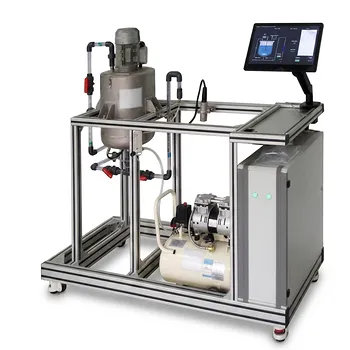
Post-implementation performance evaluation and gap analysis are critical because they show whether an educational unit operations pilot plant is delivering the learning, safety, and technical outcomes it was designed to achieve. By comparing actual performance with historical baselines and original project objectives, institutions can identify improvements, deficiencies, and unexpected deviations. Simulation tools, operational data, and user feedback then help determine whether each gap comes from equipment design, operating practices, or insufficient training.
A pilot plant is not fully successful merely because it has been commissioned. Its success must be demonstrated through measured educational and operational performance, followed by corrective action when actual results differ from the original design or objectives.
Why Evaluation Matters After Commissioning
Commissioning Does Not Prove Educational Effectiveness
Commissioning confirms that equipment has been installed and can be operated, but it does not prove that students or trainees are achieving the intended learning outcomes.
Post-implementation evaluation examines whether the plant supports effective instruction, practical understanding, and realistic exposure to industrial operating conditions.
Performance Must Be Compared With Clear Objectives
The original project goals provide the reference point for judging success. These may include target learning outcomes, expected process behavior, operational efficiency, or specific training capabilities.
Comparing current results with historical baseline metrics reveals whether the new pilot plant has produced a meaningful improvement rather than simply becoming operational.
Actual Use Can Reveal Problems Design Documents Miss
A plant may perform acceptably in design calculations yet create difficulties during real instruction. Students may encounter confusing controls, unsuitable operating sequences, unclear procedures, or process behavior that does not match the teaching objectives.
Evaluation captures these practical issues and connects plant performance with the experience of instructors, students, and operators.
How Gap Analysis Identifies the Root Cause
Compare the Blueprint With Empirical Results
Gap analysis begins by comparing the initial design assumptions with observed operating data. Simulation tools can establish expected process behavior, while empirical data shows how the commissioned plant performs under actual conditions.
The difference between these two sources identifies where investigation is required.
Separate Equipment Problems From Operating Problems
A performance gap does not automatically indicate an equipment design flaw. The cause may instead be an operational mismatch, such as procedures that do not fit the equipment configuration or an operating sequence that is unsuitable for training.
This distinction prevents institutions from modifying or replacing equipment when the real issue is procedural or instructional.
Identify Training and Documentation Gaps
If users cannot consistently achieve the expected results, the problem may involve insufficient training or unclear operating guidance. Comprehensive operation manuals help establish formal procedures for startup, normal operation, shutdown, and emergency shutdown.
These manuals are particularly important for inexperienced students and trainees because they convert operational expectations into repeatable instructions.
Use Safety Performance as Part of the Evaluation
Evaluation should consider whether users can operate the plant safely and consistently. Clear procedures can reduce operational errors and help prevent damage to equipment such as pumps or reactors.
This also ensures that training reflects the discipline required in real-world industrial plants, where correct shutdown and emergency response are as important as normal operation.
How Evaluation Supports Continuous Improvement
Refine the Equipment
When data shows that the plant cannot reliably support its intended process or educational objectives, the equipment design may require refinement. The evaluation provides evidence for deciding which changes are technically justified.
This creates a structured improvement process instead of relying on assumptions or isolated complaints.
Improve the Instructional Process
The plant and the teaching method must work together. If the equipment performs as intended but students do not achieve the expected outcomes, instructors may need to revise demonstrations, exercises, assessment methods, or training sequences.
The evaluation therefore treats the pilot plant as both a technical system and an educational tool.
Strengthen Future Deployments
Documented findings create a knowledge base for future pilot plant projects. Institutions can use the results to improve specifications, operating manuals, training plans, and commissioning criteria for later deployments.
This reduces the risk of repeating the same design, operational, or instructional shortcomings.
Understanding the Trade-offs
Evaluation Requires Time and Resources
Post-implementation evaluation requires data collection, comparison against objectives, analysis, and follow-up action. These activities consume staff time and may temporarily reduce the availability of the plant for normal teaching.
That cost is justified when it prevents prolonged inefficiency, unsafe operation, or ineffective training.
Baselines May Be Incomplete
Historical performance metrics may not exist in a consistent form, particularly when a new plant replaces informal or less structured training methods. In that situation, institutions must interpret comparisons carefully and avoid treating incomplete baseline data as definitive proof.
The original project objectives and observed user performance become especially important reference points.
Not Every Deviation Requires Redesign
Operational results may differ from the blueprint for valid reasons, including differences in users, teaching conditions, or operating practices. A deviation should be investigated before corrective action is selected.
The purpose of gap analysis is to locate the cause accurately, not to assume that the equipment is always at fault.
Manuals Are Necessary but Not Sufficient
Operation manuals provide essential guidance, but documents alone cannot guarantee competence. Students and trainees still require instruction, supervised practice, and opportunities to apply procedures in realistic operating scenarios.
Manuals are most effective when they are integrated into the wider instructional process and updated when evaluation identifies recurring difficulties.
Making the Right Choice for Your Goal
Post-implementation evaluation should connect measured plant performance with educational outcomes, operational reliability, safety, and the original project goals.
- If your primary focus is learning outcomes: Compare student and trainee performance with the intended educational objectives, then revise exercises or instruction where gaps appear.
- If your primary focus is process performance: Compare empirical operating data with historical baselines, design expectations, and simulation results to identify meaningful deviations.
- If your primary focus is equipment reliability: Use gap analysis to distinguish design flaws from operational mismatches before making technical modifications.
- If your primary focus is safety: Review startup, shutdown, emergency shutdown, and other documented procedures to determine whether users can follow them consistently.
- If your primary focus is long-term improvement: Record findings and apply them to equipment refinement, operation manuals, training processes, and future pilot plant deployments.
A pilot plant becomes a dependable educational and technical asset when evaluation turns its operating experience into measurable, continuous improvement.
Summary Table:
| Evaluation Area | What to Compare or Review | Result |
|---|---|---|
| Learning outcomes | Student performance against intended objectives | More effective instruction and assessments |
| Process performance | Operating data, design expectations, simulations, and baselines | Clear evidence of deviations |
| Equipment reliability | Actual plant behavior versus technical requirements | Better-targeted equipment improvements |
| Operations and training | Procedures, user feedback, and operating sequences | Fewer operational errors and training gaps |
| Safety | Startup, shutdown, and emergency shutdown performance | Safer, more consistent plant operation |
| Continuous improvement | Documented findings and corrective actions | Stronger future deployments and manuals |
Need a pilot plant that delivers measurable educational and technical results? Contact LABPARK to discuss Educational and Vocational Unit Operations Pilot Plants tailored to your needs. LABPARK supports universities, research institutes, and enterprises with pilot plants for chemical engineering, bioprocess and biotechnology, and environmental and water treatment. Our solutions help you connect realistic process training with reliable equipment, clear operating procedures, safer instruction, and continuous performance improvement.
Related Products
- Multi-Reactor Educational Pilot Plant for Reaction Engineering Unit Operations
- Multi-Functional Membrane Separation Educational Pilot Plant for Unit Operations Lab
- Electrolytic Hydrogen Production Educational Unit Operations Pilot Plant
- Comprehensive Fluid Mechanics Educational Unit Operations Pilot Plant
- Multi-Functional Drying Educational Unit Operations Pilot Plant
People Also Ask
- How do reactor pilot plants define QbD design space? Master chemical process scale-up.
- When configuring a reactor unit operations pilot plant for highly exothermic reactions, how to prevent thermal runaway?
- How do metal ion-catalyzed reaction mechanisms inform chemical engineering pilot plant design? From kinetics to scale-up
- What are the barriers to process intensification & how do pilot plants help?
- What role do educational pilot plants play in scaling green chemistry? Bridging the Lab-to-Industry Gap