Knowledge Chemical Engineering Education How is Zeroth Law applied to pilot plant temperature control? Precision Guide
Author avatar

Tech Team · LABPARK

Updated 2 months ago

How is Zeroth Law applied to pilot plant temperature control? Precision Guide


The Zeroth Law in practice means that every temperature reading in a pilot plant is born from a moment of perfect thermal balance. In thermal and bioprocess pilot plants, this law is applied by deliberately engineering conditions so that temperature sensors (like PT100 RTDs or thermocouples) reach thermal equilibrium with the process fluid. Only then does the sensor’s measured value accurately represent the true process temperature, enabling reliable control of reactors, heat exchangers, and fermentation vessels.

The Zeroth Law is not just a theoretical statement—it’s the functional guarantee of your instrument’s accuracy. Its practical application hinges on managing contact, lag, and insulation so the sensor and the process become one thermal system, free from external distortion.

The Sensor as a Third System: Engineering for Equilibrium

The Principle of Indirect Measurement

A pilot plant’s temperature sensor never “feels” the process directly. It acts as a neutral third system introduced into the fluid. According to the Zeroth Law, if the sensor and the fluid are each in equilibrium with a shared thermal junction, they are in equilibrium with each other. This is why a thermocouple’s mV signal or an RTD’s resistance change reliably correlates with process temperature.

Why This Foundation Matters for Control

All feedback loops—opening a steam valve on a heat exchanger or chilling a bioreactor jacket—depend on this equivalence being true. If the sensor hasn’t reached equilibrium, the controller makes decisions on a phantom temperature. That leads to overshoot, biological stress in bioprocesses, or off-spec product quality.

The Practical Implications of Thermal Lag

What Sensor Lag Actually Is

Thermal lag is the time it takes for a sensor to reach the same temperature as the fluid. In pilot plants, this is not a minor delay—it’s the physical manifestation of the Zeroth Law in transition. A sensor inside a thick thermowell has a different thermal mass and conductive path than the fluid, so it equilibrates on a slower timeline.

How Lag Corrupts Control Data

During heating or cooling ramps, a lagging sensor underreports the true process temperature. An operator might see a steady rise and assume the culture is safe, while the actual fluid spike already stresses the cells. Understanding that the displayed value is only valid after equilibrium is restored is a direct application of Zeroth Law thinking.

The Critical Role of Thermowell Design

Thermowells as Controlled Interfaces

A thermowell is a compromise that puts the Zeroth Law into engineered reality. It enables sensor replacement without breaching sterility, but it also inserts a barrier between the fluid and the sensing element. To ensure the sensor and fluid still become a unified thermal system, thermowells must be designed to minimize the temperature drop across their wall.

Best Practices for Rapid Equilibrium

Use thermowells with spring-loaded sensors that press the tip firmly into the bottom, eliminating an insulating air gap. Choose materials with high thermal conductivity, and size the diameter to balance strength with low mass. In bioprocess plants, this design directly determines how quickly a sensor detects a metabolic heat spike, making the difference between proactive cooling and a failed batch.

System Boundaries and Insulation: Protecting the Equilibrium

The Unseen Enemy: Heat Loss to Environment

A sensor that is physically in the pipe has not truly reached equilibrium with the fluid if its external portion acts as a heat sink. The Zeroth Law is broken when the sensor’s body leaks heat to ambient air. The sensor then reads a hybrid temperature—part fluid, part room air—destroying accuracy.

Insulation as a Boundary Condition

Proper insulation ensures the sensor’s local environment remains adiabatic. This means the only heat exchange is between the fluid and the sensing tip. In a pilot distillation column, for instance, insulating the probe insertion point prevents drafts from creating a cold junction. The result is a reading that fulfills the Zeroth Law promise: the sensor’s temperature is now solely that of the process.

Understanding the Trade-offs

Accuracy vs. Response Time

A massive, rugged thermowell protects the sensor in an abrasive slurry but slows equilibrium. A bare-bead thermocouple responds in milliseconds but may fail quickly or contaminate a sterile process. Applying the Zeroth Law wisely means choosing a design where the equilibrium time constant is acceptable for the process dynamics.

Sterility vs. Direct Contact

In a bioprocess pilot plant, a sterilizable, steam-traced thermowell is non-negotiable. But this introduces a lag. The trade-off is managed by using predictive control algorithms that compensate for the known lag, effectively inferring the true fluid temperature before full equilibrium is reached. This is an advanced application of the law, not a violation of it.

Maintenance vs. Measurement Integrity

Thermowells can foul or corrode, creating an insulating scale that acts as a thermal barrier. Even a perfectly calibrated sensor will give a false reading because it’s now in equilibrium with the scale, not the fluid. The practical lesson is that physical inspection is a Zeroth Law duty—you are validating that the thermal bridge remains intact.

Actionable Advice for Reliable Pilot Plant Measurements

The path to leveraging the Zeroth Law is different depending on your primary objective.

  • If your primary focus is bioprocess sterility and cell viability: Prioritize hygienic thermowell designs with a snug sensor fit and document the thermal lag time constant. Use this known lag in your PID controller to anticipate temperature changes before they stress the culture.
  • If your primary focus is thermal process intensification (e.g., heat exchanger testing): Minimize thermowell mass and use direct-immersion sensors where possible. Insulate the entire exposed probe body aggressively to eliminate ambient heat drain, ensuring the flux measurement is based on true inlet/outlet temperatures.
  • If your primary focus is educational clarity for students: Deliberately demonstrate sensor lag by moving a thermowell-protected probe between hot and cold baths. Plot the exponential equilibration curve to visually prove that the sensor’s temperature becomes the fluid’s temperature only after relaxation—a living demonstration of the Zeroth Law.

Your pilot plant’s sophisticated control system is only as truthful as the thermal bridge between sensor and process. Designing and maintaining that bridge with the Zeroth Law in mind transforms a philosophical statement into repeatable, high-quality experimental reality.

Summary Table:

Key Factor Practical Challenge Engineering Solution
Sensor Equilibrium Thermal lag and delayed response times Spring-loaded sensors & low-mass thermowells
Ambient Heat Loss Environmental temperature interference High-efficiency insulation at probe insertion points
Bioprocess Control Maintaining sterility vs. direct fluid contact Predictive control algorithms & hygienic thermowells

Need to bridge the gap between thermodynamic theory and practical process engineering? LABPARK provides state-of-the-art Educational and Vocational Unit Operations Pilot Plants in chemical engineering, bioprocess & biotech, and environmental & water treatment.

Designed specifically for universities, research institutes, and enterprises, our systems offer the precise instrumentation and thermal stability required for advanced training and process optimization.

Contact LABPARK Today to find the perfect pilot plant solution for your facility!

Related Products

People Also Ask

Related Products

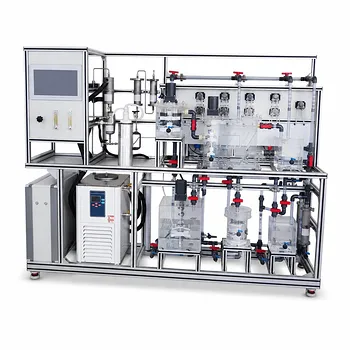
Thermal Desorption Exhaust Gas and Tail Water Treatment Educational Pilot Plant

Thermal Desorption Exhaust Gas and Tail Water Treatment Educational Pilot Plant

Bench-scale educational pilot plant for treating thermal desorption exhaust gas and tail water integrates condensation, Fenton oxidation, precipitation, filtration, and carbon adsorption. Ideal for chemical engineering and environmental labs, teaching unit operations, process control, and real-time data analysis.

Dual Mode Heat Transfer Pilot Plant for Unit Operations Training

Dual Mode Heat Transfer Pilot Plant for Unit Operations Training

Engineering-scale dual-mode heat transfer pilot plant for hands-on unit operations training in chemical engineering. Features real and simulated modes, multiple heat exchanger types, comprehensive coefficient determination, and advanced process control with data acquisition for engineering students and researchers.

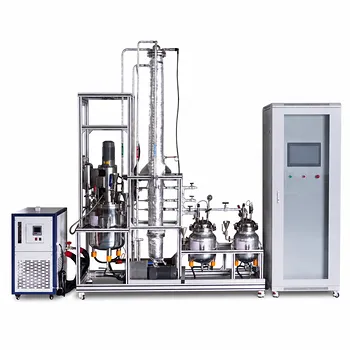
Carbon Material Thermal Pretreatment Multiphase Separation Educational Pilot Plant

Carbon Material Thermal Pretreatment Multiphase Separation Educational Pilot Plant

Educational pilot plant for carbon material thermal pretreatment and multiphase separation. Features jacketed agitated reactor, separation column, and modern controls for hands-on unit operations training in heat transfer, fluid flow, and process safety with industrial-grade materials and wireless data acquisition.

Potassium Salt Thermal Dissolution and Crystallization Separation Educational Unit Operations Pilot Plant

Potassium Salt Thermal Dissolution and Crystallization Separation Educational Unit Operations Pilot Plant

This educational pilot plant allows chemical engineering students to perform potassium salt thermal dissolution and cooling crystallization experiments, integrating solubility studies, supersaturation control, and solid-liquid separation in a safe, compact, and customizable laboratory system for hands-on unit operations learning.

Comprehensive Multi-Modal Heat Transfer Unit Operations Pilot Plant for Engineering Training

Comprehensive Multi-Modal Heat Transfer Unit Operations Pilot Plant for Engineering Training

Comprehensive multi-modal heat transfer unit operations pilot plant for engineering training. Features four heat exchanger types, multi-media switching, and three operating modes. Hands-on experience in safety, optimization, and process control. Industrial-grade design with real-time data acquisition for chemical engineering labs.

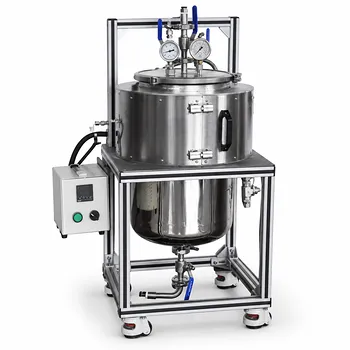
Hot Filtration Educational Unit Operations Pilot Plant Laboratory System

Hot Filtration Educational Unit Operations Pilot Plant Laboratory System

This integrated laboratory bench-scale hot filtration pilot plant enables students to study solid-liquid separation under thermal conditions, featuring a stainless steel vessel, removable heating jacket, and multi-layer filter plates for unit operations education, ideal for chemical engineering laboratory curriculum.

Three-Tube Heat Transfer Educational Pilot Plant for Unit Operations Training

Three-Tube Heat Transfer Educational Pilot Plant for Unit Operations Training

Three-tube heat transfer pilot plant for studying convective heat transfer enhancement and condensation. Allows comparison of smooth, corrugated, turbulent tubes, verifying empirical correlations. Ideal for chemical engineering education with safety and closed-loop steam recovery.

Comprehensive Heat Transfer Coefficient Determination Educational Unit Operations Pilot Plant

Comprehensive Heat Transfer Coefficient Determination Educational Unit Operations Pilot Plant

Advanced industrial-grade educational pilot plant for comprehensive heat transfer coefficient determination. Enables quantitative convective heat transfer analysis, evaluates double-pipe and shell-and-tube exchanger configurations, and includes digital data acquisition. Customizable for engineering curriculum. Ideal for engineering unit operations labs.

Throttling Effect Determination Educational Unit Operations Pilot Plant

Throttling Effect Determination Educational Unit Operations Pilot Plant

Investigate the Joule-Thomson throttling effect with this educational unit operations pilot plant. Designed for engineering students, it enables hands-on comparative analysis of adiabatic gas expansion using precise process control, interactive digital interface, and eco-friendly operation, ensuring safe repeatable thermodynamic experiments.

Steam Methane Reforming Hydrogen Production and Purification Educational Pilot Plant

Steam Methane Reforming Hydrogen Production and Purification Educational Pilot Plant

This bench-scale educational pilot plant combines steam methane reforming with hydrogen purification, offering safe, hands-on unit operations training for university engineering laboratories. Its customizable design and high-precision monitoring enable real-time study of catalysis, phase separation, and process dynamics.

Multi-Reactor Educational Pilot Plant for Reaction Engineering Unit Operations

Multi-Reactor Educational Pilot Plant for Reaction Engineering Unit Operations

Integrated bench-scale educational pilot plant for chemical engineering teaching featuring fixed bed fluidized bed and stirred tank reactors with web-based digital twin controls and safety interlocks for hands-on unit operations and reaction engineering comparative studies in one compact system.

Fixed-Bed Chemical Reaction and Gas Dust Tar Removal Unit Operations Pilot Plant

Fixed-Bed Chemical Reaction and Gas Dust Tar Removal Unit Operations Pilot Plant

Integrated educational pilot plant for studying catalytic gas-solid reactions and downstream gas purification. Features dual fixed-bed reactor, three-stage heating, and touchscreen control for hands-on engineering training. Ideal for chemical and environmental engineering curricula.

100L Continuous Loop Hydrogenation Educational Unit Operations Pilot Plant

100L Continuous Loop Hydrogenation Educational Unit Operations Pilot Plant

This 100L continuous loop hydrogenation pilot plant is designed for chemical engineering education, featuring 316 stainless steel construction, advanced gas-liquid mass transfer components, explosion-proof safety systems, and a 15.6-inch touchscreen with 5G connectivity, cloud data logging, bridging theory and industry.

Electrolytic Hydrogen Production Educational Unit Operations Pilot Plant

Electrolytic Hydrogen Production Educational Unit Operations Pilot Plant

Bench-scale electrolytic hydrogen production pilot plant designed for university engineering labs. Provides hands-on training in water electrolysis, gas-liquid separation, and process safety. Fully customizable system with digital PID control, corrosion-resistant components, and hydrogen gas detector. Ideal for chemical engineering curricula.

Multi-Functional Drying Educational Unit Operations Pilot Plant

Multi-Functional Drying Educational Unit Operations Pilot Plant

Versatile multi-functional drying educational unit operations pilot plant integrating tunnel, fluidized bed, and spray drying. Enables hands-on study of drying curves, psychrometry, and gas-solid separation for chemical engineering curriculum in higher education labs.

Natural Product Extraction Unit Operations Training Pilot Plant

Natural Product Extraction Unit Operations Training Pilot Plant

Integrated natural product extraction pilot plant for chemical engineering training bridges theory and industrial practice with modular extraction and evaporation/concentration units, hybrid touchscreen and manual control, realistic process simulation, and self-contained softened water and vacuum utilities.

Rising and Falling Film Evaporation Educational Unit Operations Pilot Plant

Rising and Falling Film Evaporation Educational Unit Operations Pilot Plant

Hands-on educational pilot plant for studying rising and falling film evaporation, flow regimes, and heat transfer. Customizable for university labs with industrial instrumentation and data acquisition. Enables comparative evaluation of evaporation modes and energy efficiency.

Educational Unit Operations Pilot Plant for Intraparticle Diffusion Effective Factor Measurement

Educational Unit Operations Pilot Plant for Intraparticle Diffusion Effective Factor Measurement

Designed for chemical engineering university labs, this pilot plant allows hands-on determination of catalyst particle intraparticle diffusion effective factors and gas-solid reaction kinetics using a fixed-bed tubular reactor with industrial touchscreen control, bridging theory and practical reactor design.

Supercritical High-Gravity Flash Evaporation Educational Unit Operations Pilot Plant

Supercritical High-Gravity Flash Evaporation Educational Unit Operations Pilot Plant

Bench-scale integrated teaching system for advanced separation and mass transfer, combining supercritical high-gravity flash evaporation with heating, chemical reaction, and material collection, featuring modular design, Stainless Steel 316L construction, transparent visualization, touchscreen control, and safety systems for chemical engineering education.

Multi-Functional Special Distillation Educational Pilot Plant

Multi-Functional Special Distillation Educational Pilot Plant

Versatile multi-functional special distillation pilot plant for chemical engineering education. Supports continuous, vacuum, azeotropic, reactive, extractive distillation. Transparent glass columns enable real-time visual observation of hydrodynamics and separation processes.


Leave Your Message