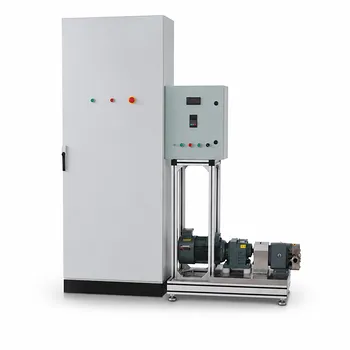
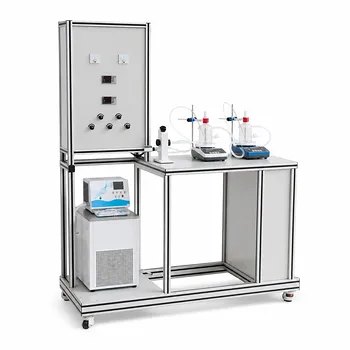
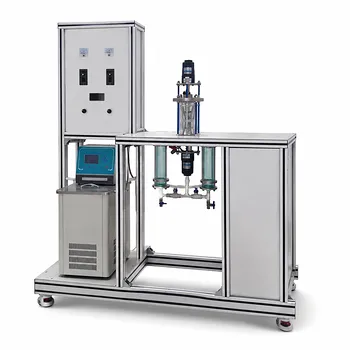
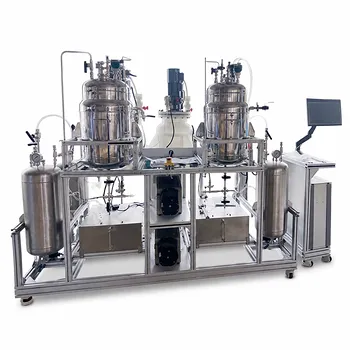
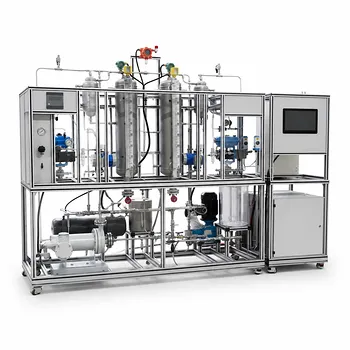
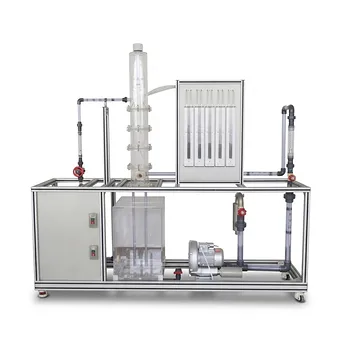
At its core, pH regulation in a fermentation pilot plant is a continuous feedback loop that keeps microbial activity alive and productive. The system works by using an in-situ pH electrode to monitor the broth in real time, feeding that signal to a controller, and then dosing acid or alkali solutions to neutralize metabolic shifts. The two dosing strategies most commonly trained on are continuous dosing (modulating a control valve) and pulse dosing (using a PID controller to trigger solenoid valves or metering pumps in short bursts).
The key to successful pilot‑plant pH control isn’t just choosing a dosing method—it’s understanding the system’s mixing lag and knowing how to tune the controller so you hit the setpoint without violent overshoot. Training operators on that dynamic is what turns pH management from a guessing game into a reliable engineering discipline.
Why pH Control is Non‑Negotiable in Fermentation
The Microbial Metabolism Effect
As cells consume sugars and produce organic acids, the broth’s pH naturally drifts into a range that can inhibit growth or even kill the culture. Without active neutralization, the pH would quickly crash and cause batch failure. The objective in the pilot plant is to hold the environment within a narrow, strain‑specific window that maximizes productivity.
The Window of Opportunity (Yeast as an Example)
In a typical yeast fermentation, the optimal starting pH sits between 4.0 and 4.5. This range suppresses bacterial contaminants while still promoting robust biomass formation. Toward the end of the run, operators may intentionally raise the pH up to 5.0—for instance in bakers’ yeast production—to prevent product discoloration and ensure downstream quality.
The Role of Temperature in pH Dynamics
It’s not just about the acid or base. The fermentation is strongly exothermic, and temperature shifts directly influence pH electrode readings and the solubility of CO₂ (which forms carbonic acid). A reliable cooling jacket and tight temperature control at 298–303 K are therefore prerequisites for any pH regulation strategy to work.
The Closed‑Loop Feedback: From Sensor to Actuator
How the Electrode Sees the Broth
A pH electrode sits directly in the turbulent fermenter, sending a voltage signal proportional to the hydrogen ion activity. That signal is processed by a transmitter and fed to a PID controller, which compares the measured value against the setpoint. Any deviation triggers a corrective dosing action.
The PID Controller’s Decision
The controller continuously calculates the error and applies proportional, integral, and derivative gains to determine how much and how fast to dose. In a pilot plant, tuning these three parameters is a core training objective, because the same PID values that work in a perfectly mixed lab flask can fail in a larger vessel with longer mixing times.
Dosing Methods: Continuous vs. Pulse‑Based Control
Continuous Dosing: A Steady Hand
In continuous dosing, a control valve modulates the flow of a neutralizer (acid or ammonia solution) directly into the broth. The PID adjusts the valve’s opening degree in response to the error. This method provides smooth, uninterrupted correction, but it demands precise actuator resolution and can struggle with lag‑time oscillations if the valve moves too slowly.
Pulse Dosing: Bursts of Precision
Pulse dosing takes a different approach. The PID determines a cycle—say, every 30 seconds—and opens a solenoid valve or triggers a metering pump for a calculated “on‑time” within that cycle. The shorter the on‑time, the less base or acid is delivered. This technique is often preferred in pilot plants because it limits the volume injected per decision cycle, reducing the risk of large overshoots while still being straightforward to implement with simple on/off hardware.
What Operators Actually Train On
Pilot‑plant training focuses on the hands‑on execution of both methods. Trainees learn to:
- Configure the PID’s output cycle time for pulse dosing.
- Set alarm limits for ramp‑rate and absolute pH to prevent runaway over‑correction.
- Recognize the lag times between injection and electrode response, which dictate how aggressive the integral term can be.
Understanding the Hidden Challenge: Lag Time and Overshoot
Why Mixing Changes Everything
The neutralizer is injected at one point, but the pH electrode is often in a recirculation loop or at a different location. The travel time from the injection point to the sensor creates a dead time, and the larger the vessel, the longer that delay. If the controller doesn’t account for this, it will keep adding chemical long after the pH has already swung, causing a classic overshoot‑then‑undershoot oscillation.
Tuning the PID to Beat the Lag
Training specifically targets the integral gain and derivative damping. Operators adjust the integral time to be at least twice the measured dead time, and they often use a gentle derivative kick to anticipate the rate of change. In pulse‑based systems, they also set the cycle time to a fraction of the dead time—if the dead time is 60 seconds, a 10–15 second cycle allows the controller to react before the last dose has fully registered.
Ammonia as a Multi‑Purpose Agent
In many processes, the dosing chemical is ammonia, which doubles as a nitrogen source for the cells. This is efficient but adds another layer of complexity: the demand for ammonia is not purely pH‑driven; it’s also metabolic. Operators must learn to differentiate between a pH dip that needs base and a nitrogen starvation signal that may require a different feeding strategy.
Trade‑offs and Pitfalls to Avoid
Actuator Wear and Valve Hysteresis
Continuous valve control can cause seat erosion from constant modulation, especially with corrosive chemicals. Pulse dosing reduces wear on valves by keeping them closed most of the time, but the repeated shocks of on/off operation can fatigue solenoid coils. The correct choice often depends on the total number of cycles per batch.
Local pH Extremes
When a concentrated base hits the broth, the area around the injection port can briefly spike to pH 9 or higher before being diluted by mixing. This can shock the cells locally, even when the bulk reading looks perfect. Good pilot‑plant design places injection points directly into the mixing zone, and training reinforces never injecting into stagnant zones.
Sensor Fouling and Drift
Protein, biomass, and trub can coat the electrode, creating a diffusion barrier that makes the reading lag behind the real pH. Training includes regular calibration checks and techniques like automatic washing or mechanical wipers. A slow‑responding electrode will fool any PID controller into over‑correcting.
Making the Right Choice for Your Pilot Plant Goal
- If your primary focus is robust biomass growth with minimal contamination risk: Favor pulse dosing of ammonia with a start‑up pH around 4.2 – 4.5. The short injection bursts prevent local spikes that could stress the culture, while the ammonia supports nitrogen demand.
- If your primary focus is precise pH profiles for metabolic studies: Use continuous dosing with a high‑resolution valve and a fast‑responding electrode. Tune the PID with modest integral gain and sufficient derivative to follow a changing setpoint without overshoot.
- If your primary focus is training operators for scale‑up: Force practice on both methods, but spend most time on pulse dosing with long dead times. Teach them to measure lag by performing a step‑test and to adjust the cycle time and integral term accordingly—this instinct translates directly to production reactors.
Mastering pH regulation in a pilot plant means seeing past the setpoint and understanding the hidden dance of mixing, delay, and controller timing. Once you tune that dynamic, you turn a finicky batch variable into a steady, predictable process.
Summary Table:
| Dosing Method | Operation Mechanism | Key Advantage | Target Application |
|---|---|---|---|
| Continuous Dosing | Modulates control valve flow continuously | Smooth, uninterrupted correction | Precise metabolic studies |
| Pulse Dosing | Triggers short on/off bursts | Lowers overshoot risk; simpler hardware | Operator training & biomass growth |
Master bioprocess scale-up with LABPARK! We design and deliver premium Educational and Vocational Unit Operations Pilot Plants in chemical engineering, bioprocess & biotech, and environmental & water treatment. Tailored for universities, research institutes, and enterprises, our pilot plants enable hands-on training for PID tuning, pH control dynamics, and automated dosing. Contact our technical team today to find the ideal pilot plant solution for your facility!
Related Products
- Quantitative Dosing and Liquid Flow Control Educational Unit Operations Pilot Plant
- Dual-Mode Rectification Pilot Plant for Practical Training Unit Operations
- Bio-fermentation Ethanol Production Practical Training Unit Operations Pilot Plant
- Continuous Sieve-Plate Distillation Pilot Plant for Unit Operations Laboratory Education
- Multi-Functional Special Distillation Educational Pilot Plant
People Also Ask
- How do educational unit operations pilot plants bridge theory and design? Bridge the Engineering Gap
- How do educational unit operations pilot plants address safety and waste management when scaling up?
- Why is the attenuation path length (lA) critical when positioning pressure sensors in a fluid flow unit operations pilot plant?
- How do conservation equations guide fluid flow pilot plants? Key Scale-Up Principles
- What are the key differences in process analytics requirements from R&D to production?