Getting reliable molybdenum data from a vanadium-rich stream feels like a chemical tug-of-war—but with the right reduction step, you can separate them cleanly. The separation relies on the selective precipitation of molybdenum with alpha-benzoinoxime in acidic solution. Before the reagent is added, however, vanadium must first be reduced to its quadrivalent state (+4) using a mild reducing agent such as sulfurous acid. If vanadium is left in its pentavalent (+5) form, it co-precipitates with molybdenum and destroys the selectivity of the analysis.
The exclusive precipitation of molybdenum by alpha-benzoinoxime hinges entirely on vanadium being in the +4 oxidation state; leave it as V(V), and you’ll get a messy co-precipitate that renders your molybdenum determination useless.
Understanding the Separation Chemistry
In pilot-plant process streams—whether they originate from hydrometallurgical leaching, environmental cleanup, or catalyst manufacturing—molybdenum and vanadium often appear together. Their similar chemical behavior makes it difficult to quantify one without interference from the other. This method solves that problem by exploiting a difference in precipitation behavior tied to the oxidation state of vanadium.
The Role of Alpha-Benzoinoxime
Alpha-benzoinoxime is a selective chelating agent that forms insoluble complexes with certain metal ions under acidic conditions. It is particularly effective at grabbing molybdenum(VI) from solution, yielding a precipitate that can be filtered, washed, and quantified.
Vanadium, however, can mimic this behavior when it is present as the pentavalent vanadate ion, V(V). The V(V) species interacts with the reagent and produces its own precipitate, which contaminates the molybdenum fraction. Without intervention, the result is a mixed solid that gives falsely high molybdenum readings.
Why the Oxidation State of Vanadium is Critical
The core insight is that the precipitation chemistry of vanadium is redox-dependent. In acidic media:
- V(V) (vanadate, ( \text{VO}_2^+ ) or similar) forms a precipitate with alpha-benzoinoxime.
- V(IV) (vanadyl, ( \text{VO}^{2+} )) does not precipitate under the same conditions.
Because molybdenum is almost always present as Mo(VI) in these process streams, the separation strategy becomes clear: reduce all vanadium to the +4 state before adding the precipitating reagent. That single electron shift—from V(V) to V(IV)—is what unlocks the selectivity.
The Reduction Step: Sulfurous Acid in Action
In practice, the reduction is performed by adding sulfurous acid (or a stream of sulfur dioxide) to the acidified sample. Heat is often applied to speed up the reaction and drive off excess SO₂ once the reduction is complete. The resulting solution contains Mo(VI) and V(IV), with any remaining V(V) pushed entirely into the non-interfering +4 form.
Only after the reduction step is verified does the analyst introduce alpha-benzoinoxime. The precipitate that then forms is purely molybdenum-based, enabling an accurate gravimetric or spectrophotometric finish.
Common Pitfalls and Trade‑offs
While the method is elegant in concept, real-world execution demands attention to detail. Neglect these points, and you will lose the very selectivity you are after.
Incomplete Reduction
The single greatest source of error is residual V(V). If the reduction is too short, the sulfurous acid concentration is too low, or the solution is not properly acidified, some vanadium stays in the +5 state. This residual V(V) will co‑precipitate, leading to an overestimation of molybdenum. Always validate the reduction—for instance, by spot‑testing with a redox indicator or by analysing the supernatant after precipitation.
Re‑oxidation by Air
Vanadium(IV) is not infinitely stable in contact with atmospheric oxygen. Let the reduced solution sit too long before adding the precipitant, and a portion of V(IV) will slowly re‑oxidize back to V(V). Work needs to proceed in a timely manner, and in some cases a blanket of inert gas may be warranted for highly sensitive measurements.
Interference from Other Metals
Alpha-benzoinoxime is famously selective for molybdenum under the described conditions, but it can also react with tungsten, chromium, or palladium if they are present. In a pilot‑plant setting where the feed composition is variable, the analyst must confirm that no other precipitating species survive the pre‑treatment. A prior separation step, such as ion‑exchange, may be required for very complex matrices.
Handling of Sulfurous Acid
Sulfurous acid is a convenient reductant, but it is corrosive and releases SO₂ gas. Good fume extraction and personal protective equipment are essential. Additionally, residual sulfite can sometimes interfere with subsequent detection steps; allowing the solution to sit until the SO₂ evolves completely is a standard precaution.
Making the Right Choice for Your Analytical Goal
The alpha-benzoinoxime route with V(V) reduction is a powerful tool, but its suitability depends on what you are trying to achieve. Use the following guidelines to decide how tightly to control the procedure.
- If your primary focus is absolute accuracy for molybdenum: Invest heavily in the reduction step. Confirm complete conversion of V(V) to V(IV) with a redox probe, perform the precipitation under an inert atmosphere, and run a blank with a known vanadium spike to quantify any residual interference.
- If your primary focus is a rapid yes/no indication of molybdenum levels: A streamlined reduction with a slight excess of sulfurous acid may suffice, but you must still verify that no vanadium-rich solids contaminate the precipitate. A visible color change (from yellow V(V) to blue V(IV)) can serve as a simple process check.
- If your primary focus is robustness in a highly variable sample matrix: Pair the selective precipitation with a confirmatory technique, such as ICP‑OES analysis of the dissolved precipitate, so that any co‑precipitated vanadium can be identified after the fact.
Once you master the oxidation‑state control that stops vanadium in its tracks, a straightforward alpha-benzoinoxime precipitation gives you the clean molybdenum data you need to evaluate metal recovery and separation processes with confidence.
Summary Table:
| Species & Oxidation State | Reagent | Precipitation Behavior | Impact on Analysis |
|---|---|---|---|
| Molybdenum - Mo(VI) | Alpha-benzoinoxime | Precipitates under acidic conditions | Target analyte collected for measurement |
| Vanadium - V(V) | Alpha-benzoinoxime | Co-precipitates with molybdenum | Causes interference and false-high results |
| Vanadium - V(IV) | Alpha-benzoinoxime | Remains soluble (does not precipitate) | Enables clean, selective separation |
Optimize Your Process Analysis with LABPARK
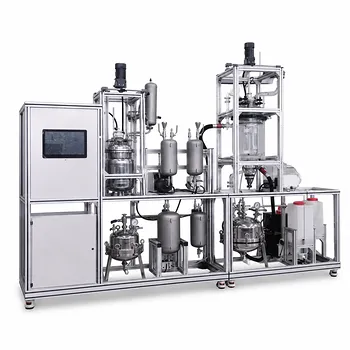
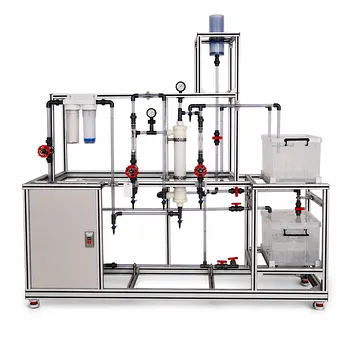
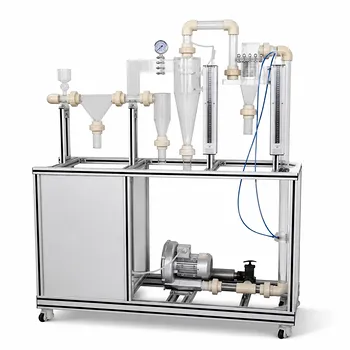
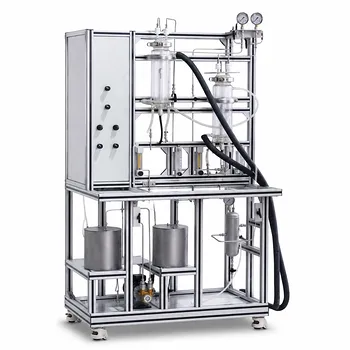
Accurate chemical separation is critical for successful pilot plant operations and research. LABPARK provides state-of-the-art Educational and Vocational Unit Operations Pilot Plants in chemical engineering, bioprocess & biotech, and environmental & water treatment. Designed specifically for universities, research institutes, and enterprises, our systems help you master hands-on chemical engineering and analytical processes.
Ready to elevate your training or research capabilities? Contact LABPARK today to discuss your pilot plant requirements!
Related Products
- Multifunctional Membrane Separation Educational Pilot Plant with Ultrafiltration, Nanofiltration, Reverse Osmosis
- Multi-Functional Membrane Separation Educational Pilot Plant for Unit Operations Lab
- Gallium and Indium Selective Extraction Educational Pilot Plant
- Ultrafiltration Membrane Separation Educational Pilot Plant
- Gas-Solid Heterogeneous Separation Demonstration Educational Unit Operations Pilot Plant
People Also Ask
- Pervaporation vs. Vapor Permeation: Handling Suspended Solids in Membrane Pilot Plants
- How do PEI, PVDF, and PSU membranes compare in pilot plants? Find the best fit.
- What are the trade-offs of polymer vs inorganic membranes in teaching pilot plants? Key laboratory comparison.
- What are the advantages of membrane separation in pilot plants? Efficient Organic Vapor Recovery
- How can operators optimize operating conditions and cleaning protocols in membrane separation pilot plants to mitigate fouling?