Liquid level control in a pilot-scale bioreactor relies on a multi-layered strategy that separates true liquid volume measurement from the chaotic interference of foam. The system uses a differential pressure sensor to calculate the hydrostatic head at the vessel bottom, translating that into inferred volume. In parallel, one or more conductivity-based foam probes mounted above the liquid surface act as sentinels, automatically triggering the precise addition of chemical anti-foam agents the moment foam rises to a critical height.
The core challenge is that foam acts like a “liquid liar”—it creates false signals for level sensors and threatens to carry product into the exhaust. A robust pilot-scale solution therefore must combine a primary level measurement that sees through gas bubbles (differential pressure) with a fast, automated reaction loop (foam detection + defoamer dosing) that eliminates foam before it corrupts the reading or leaves the vessel.
The Measurement Challenge: Seeing Past the Bubbles
Measuring liquid height in a fermenter is not like reading a sight glass. You are looking at a turbulent, aerated broth where gas holdup can account for 10–30% of the apparent volume. That is why simple float switches or ultrasonic sensors often fail—they cannot discriminate between the true liquid interface and a thick blanket of foam.
How Differential Pressure Translates to Liquid Volume
A differential pressure (DP) transmitter measures the weight of the liquid column above it. One side of the sensor connects to the bottom of the tank; the other side connects to the headspace. The difference in pressure is directly proportional to the height and density of the fluid. Even when foam sits on top, the hydrostatic pressure at the bottom is still dominated by the dense liquid phase, making this the most reliable primary signal in pilot-scale vessels.
The controller converts the raw pressure signal into volume using a pre-loaded vessel geometry and fluid density value. This works especially well in stainless steel bioreactors where the DP cell can be mounted via a flush diaphragm, minimizing dead legs and contamination risks.
Dealing with Gas Holdup and Foam-Induced Errors
The DP signal is not immune to foam. A thick foam layer can slightly reduce the effective density seen by the sensor because foam contains far less mass per unit height than liquid. The result is a small negative bias in the calculated volume—the system will slightly underestimate the true broth volume. This error becomes more pronounced in high-foaming fermentations (like filamentous fungi or protein-rich media) where foam density fluctuates.
This is where the second system becomes essential. Rather than trying to build a perfect level sensor that fights foam, you pair the DP measurement with a foam suppression loop that keeps the headspace clear. Once the foam is knocked down, the DP signal reflects the real liquid inventory once again.
The Foam Defense System: Automated Anti-Foam Dosing
A foam probe is not a level device—it’s a Boolean alarm. It answers one simple question: “Is conductive foam touching me right now?” That binary simplicity makes it incredibly fast and reliable.
The Conductivity Probe as a Foam Sentinel
The probe consists of an exposed electrode mounted at a set height in the bioreactor headspace, typically a few centimeters above the target liquid level. The bioreactor wall (or a second electrode) completes the circuit. When foam—which is electrically conductive due to the nutrient salts and cells it carries—bridges the gap, the system detects a drop in resistance and immediately trips the foam event.
That event triggers a defoaming controller, which activates a peristaltic dosing pump or a solenoid-driven valve. A metered dose of anti-foam agent (silicone-based or polyglycol, depending on the process) is injected into the vessel, often through a top port that distributes the agent across the surface.
Smart Dosing: Timed Pulses and Volume Tracking
The system does not just dump anti-foam continuously. It uses a pulse-pause logic: when the probe senses foam, it doses for a pre-set time (e.g., 2–5 seconds), then waits for a defined interval to allow the agent to act. If the probe is still wet after the wait, it doses again. This periodic addition continues until the foam collapses and the electrode is no longer in contact, at which point the dosing stops automatically.
Modern pilot-scale controllers also log the cumulative volume of anti-foam dispensed. This is critical data—too much defoamer can inhibit oxygen transfer, stress the cells, or complicate downstream purification. The logged volume becomes a process analytical tool, helping scientists relate anti-foam usage to product titer and cell viability.
Understanding the Trade-offs and Common Pitfalls
No system is perfect. Ignoring the limitations of these sensors and the anti-foam agent itself can silently sabotage a run.
The Over-Dosing Trap
Anti-foam is a double-edged sword. While it knocks down foam, it reduces the surface tension of the broth, which can lead to smaller gas bubbles and slower gas-liquid mass transfer. If the dosing interval is too aggressive or the agent is extremely potent, you can rapidly suppress oxygen transfer and starve the culture. The best practice is to use the minimum effective dose, defined during scale-down studies.
Sensor Fouling and False Negatives
Conductivity probes can become coated with biomass, oil, or denatured proteins. A non-conductive film can insulate the electrode, causing it to stop detecting foam even as the vessel fills with it. This leads to foam carryover into the exhaust filter and potential sterility breaches. Scheduled cleaning (or choosing a capacitance-based probe for oily processes) and a backup high-level foam switch are common countermeasures.
The Density Assumption
The DP level calculation assumes a constant broth density. In reality, density changes with cell mass, product accumulation, and substrate consumption. If you don’t periodically recalibrate against a known weight or a trusted off-line sample, the inferred volume can drift. For critical volume-dependent calculations (like fed-batch feeding rates), it’s wise to cross-check with load cells underneath the vessel when possible.
How to Apply This to Your Pilot-Scale Setup
Your choice of configuration should match your risk profile and the sensitivity of your cell line.
- If your primary focus is accurate inventory control for fed-batch strategies: Calibrate the DP sensor against the vessel’s tare weight before inoculation, and use a narrow upper/lower alarm window. Supplement with periodic manual volume checks to correct for density drift.
- If your primary focus is preventing foam escape in a high-foaming process: Install the conductivity foam probe at a height that gives you enough headspace to react, and set conservative dosing pulses. Use the logged anti-foam volume as a soft alarm—if it exceeds your historical trend, pause and investigate before the culture is harmed.
- If your primary focus is maintaining sterility and avoiding exhaust line contamination: Combine the DP level and foam probe with a hydrophobic exhaust filter heater. Ensure the anti-foam dosing line is steam-sterilizable and dead-leg-free.
A well-controlled bioreactor never fights foam at the level of the level sensor. It measures what matters (the liquid), and it ruthlessly eliminates what doesn’t (the foam). When you let a DP transmitter see the liquid truth and let a foam probe act as the rapid-response team, you create a stable, data-rich environment where the biology—not the foam—drives the outcome.
Summary Table:
| System Component | Primary Function | Measurement Principle | Key Risk / Challenge |
|---|---|---|---|
| Differential Pressure (DP) | Measures true liquid volume | Hydrostatic head weight | Density drift & slight negative bias from foam |
| Conductivity Foam Probe | Detects foam presence | Electrical resistance drop | Sensor fouling & potential anti-foam over-dosing |
Optimize Your Bioprocess Scale-Up with LABPARK
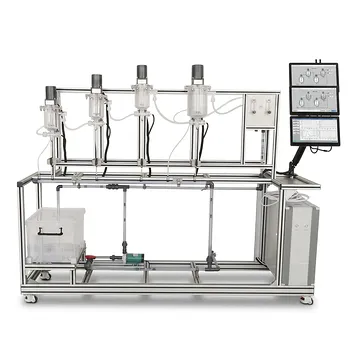
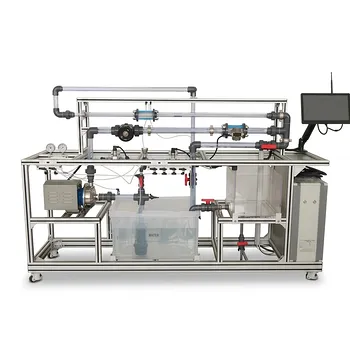
Transitioning from lab to pilot scale requires robust, reliable process control. LABPARK provides state-of-the-art Educational and Vocational Unit Operations Pilot Plants in chemical engineering, bioprocess & biotech, and environmental & water treatment.
Designed specifically for universities, research institutes, and enterprises, our pilot plants integrate advanced control systems to manage foam and liquid levels seamlessly.
Ready to elevate your research or training capabilities? Contact LABPARK today to find the perfect custom pilot-scale solution for your facility!
Related Products
- Quantitative Dosing and Liquid Flow Control Educational Unit Operations Pilot Plant
- Ternary Liquid-Liquid Equilibrium Educational Pilot Plant
- Liquid-Liquid Mass Transfer Coefficient Determination Educational Pilot Plant
- Comprehensive Liquid-Liquid Extraction Pilot Plant for Engineering Education
- Hot Filtration Educational Unit Operations Pilot Plant Laboratory System
People Also Ask
- How do educational unit operations pilot plants bridge theory and design? Bridge the Engineering Gap
- How do educational unit operations pilot plants address safety and waste management when scaling up?
- Why is the attenuation path length (lA) critical when positioning pressure sensors in a fluid flow unit operations pilot plant?
- How do conservation equations guide fluid flow pilot plants? Key Scale-Up Principles
- What are the key differences in process analytics requirements from R&D to production?