NIR model accuracy isn’t about chemistry alone – it’s about process physics.
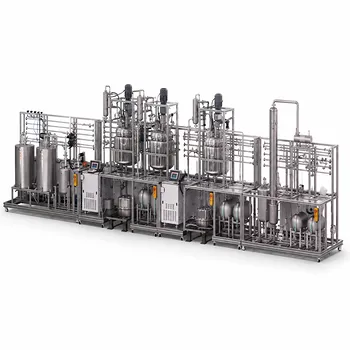
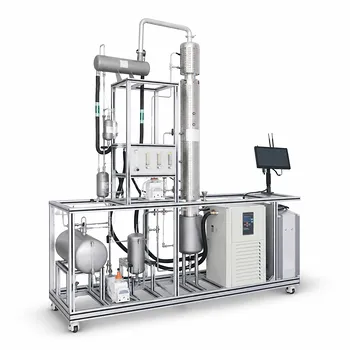
Using a chemical engineering unit operations pilot plant to prepare calibration samples physically subjects materials to the same milling, granulation, compaction, and drying steps they'll experience in full-scale manufacturing. Synthetic laboratory blends, while faster to make, skip these process-induced transformations. The result: lab-blended standards lack the real-world particle size distribution, density, and surface texture that NIR light actually “sees,” leading to significant prediction errors when the model is deployed on the production line.
The core problem isn’t chemical – it’s physical. Synthetic blends perfectly match the recipe but miss the process fingerprint. A pilot plant embeds that fingerprint into every calibration sample, creating a model that works where it matters: in the plant.
The Fundamental Flaw in Synthetic Calibration Samples
When the Lab Doesn’t Mimic the Plant Floor
Laboratory-prepared calibration sets are typically made by weighing and mixing pure components in a beaker. This perfectly controls chemical composition, but ignores how the material actually exists in production.
NIR spectra are sensitive to both chemical bonds and the physical scattering of light. A granulated particle scatters light differently than a loose powder, even if the chemistry is identical. So a model trained only on loose powders will misinterpret the spectrum of a densified granule.
The Physical Properties That Synthetic Blends Miss
Real unit operations imprint irreversible physical characteristics. Milling creates a specific particle size distribution and fresh surface energies. Roller compaction introduces a density profile and hardness that affect light penetration.
These process-induced traits alter the effective path length and scatter coefficient, shifting baseline absorbance and peak shapes. Synthetic blends, lacking a process history, present a false physical baseline that the model then treats as representative – a systematic error that only appears later under real conditions.
How a Unit Operations Pilot Plant Closes the Gap
Replicating Real Process Histories
A pilot plant runs the exact sequence of unit operations the material will see at scale. The calibration samples are collected after granulation, drying, milling, and blending – not before.
This means every sample carries the cumulative physical memory of the process. The NIR model learns to correlate spectral variations caused by both chemistry and the natural drift in particle size, moisture, and porosity that inevitably occur between batches.
Capturing Correlated Physical and Chemical Variability
In production, a change in moisture often couples with a change in density or granule strength. Synthetic designs rarely capture these multivariate linkages.
Pilot-plant experiments can intentionally vary critical process parameters – spray rate, mill speed, compaction force – to generate samples with realistic, correlated patterns of physical and chemical variability. This builds a calibration set that spans the true multi-dimensional process space, making the model robust to the natural fluctuations of routine manufacturing.
Laying the Groundwork for Robust Model Transfer
Calibration samples born from real unit operations also simplify downstream tasks like transferring models between NIR instruments. The spectral artifacts caused by physical properties are already embedded, so standardization methods – such as using a ceramic reference tile to correct minor instrument differences – have a stable, representative spectral shape to work with.
When models are trained on synthetic blends, those physical spectral features are absent. Transfer algorithms then attempt to correct spectral differences based on an incomplete picture, leading to fragile, instrument-dependent models.
Understanding the Trade-offs
The Cost of Realism
Pilot-plant sample generation is resource-intensive. It demands raw material volumes, energy, and time that synthetic blending simply doesn't. This can extend project timelines and increase upfront costs, especially during early-stage exploration.
Complexity and Infrastructure Demands
Running a unit operations pilot plant requires utilities like steam, chilled water, process air, and proper ventilation – not just a fume hood. Staff need operational training to maintain safety and consistency. This is not a “plug-and-play” calibration method.
When Synthetic Blends Are Still Valuable
For initial feasibility studies or provisional models, synthetic blends can provide a fast, low-cost starting point. They help identify primary chemical absorption bands and build a rough spectral library. The danger only comes when a synthetic-based model is assumed to be production-ready without pilot-plant augmentation.
Translating This Into a Practical Calibration Strategy
Start with Synthetic, Then Fortify with Process Samples
Create a small, synthetic design to rapidly map out how key chemical constituents affect the NIR spectrum. Then generate a pilot-plant campaign that covers the same composition range under representative process conditions.
Combine these two datasets, giving higher leverage to the process samples. This hybrid approach balances speed with ultimate model robustness without discarding early exploratory work.
Use Provisional Models to Guide Sampling
During the pilot-plant run, build a simple trend-tracking model using characteristic absorbance wavelengths (e.g., 1590 nm for carboxyl groups, 1416 nm for hydroxyl groups). Although not highly accurate, it reveals process oscillations in real time.
This lets you intelligently select calibration samples at the peaks and troughs of process variation, capturing maximum physical and chemical diversity with fewer samples.
Validate Before You Commit
Test the pilot-plant-based model on a completely independent set of production-like samples. Confirm it predicts both chemical composition and can tolerate normal physical property swings. Only then should it be locked for routine use.
Making the Right Choice for Your NIR Model Integrity
- If your primary focus is speed and early-stage feasibility: Use synthetic laboratory blends to build a provisional, trend-tracking model. Accept that quantitative accuracy will be limited until process samples become available.
- If your primary focus is a production-ready, regulatory-grade calibration: Invest in a unit operations pilot plant campaign. Prioritize samples that span the actual physical property range of the full-scale process, not just chemical composition.
- If your primary focus is teaching PAT and process engineering: Let students experience the direct impact of unit operations on NIR spectra. Have them compare synthetic and pilot-plant samples to internalize why physics matters as much as chemistry in spectral modeling.
- If your primary focus is scaling up from lab to plant: Use the pilot plant to deliberately introduce process upsets, collecting spectral data that maps failure modes. This builds a model that not only monitors, but actively de-risks commercial production.
The choice is never just about “accuracy” in the abstract – it’s about building a model whose world view matches exactly the physical reality your process will deliver.
Summary Table:
| Feature | Synthetic Lab Blends | Pilot Plant Samples |
|---|---|---|
| Chemical Composition | Highly precise | Representative of process |
| Physical Properties | Misses process history (density, particle size) | Captures real-world physical transformations |
| Resource & Cost | Low cost, rapid setup | High resource and time investment |
| Model Robustness | Fragile, high prediction errors at scale | Highly robust and production-ready |
Bridge the Gap from Lab to Production with LABPARK
Building reliable NIR calibration models requires equipment that accurately replicates real-world process physics. LABPARK provides state-of-the-art Educational and Vocational Unit Operations Pilot Plants across chemical engineering, bioprocess & biotech, and environmental & water treatment.
Designed specifically for universities, research institutes, and enterprises, our pilot plants help you transition seamlessly from laboratory synthesis to industrial-scale manufacturing. Elevate your research, training, and process development with reliable physical baseline testing.
Contact LABPARK today to find the perfect pilot plant solution for your facility!
Related Products
- Carbon Dioxide Hydrogen Methanol Synthesis Educational Unit Operations Pilot Plant
- Multi-Reactor Educational Pilot Plant for Reaction Engineering Unit Operations
- Ethyl Acetate Synthesis Unit Operations Pilot Plant for Practical Training
- Multi Pump Fluid Transport Process Piping Unit Operations Training Pilot Plant
- Multi-Modal Distillation Unit Operations Training Pilot Plant
People Also Ask
- How do temp & pressure affect methanol synthesis pilot plants? Optimize equilibrium and catalyst performance.
- Why is a purge system necessary when operating a gas recirculation loop in a methanol synthesis pilot plant? (Guide)
- Why do modern methanol pilot plants operate at lower pressures? Catalyst & Feed Requirements Explained
- What are the operational requirements for catalyst activation? Safe Methanol Pilot Plant Operation
- Why is the chemical plant startup schedule crucial? De-risk scale-up with pilot plants.