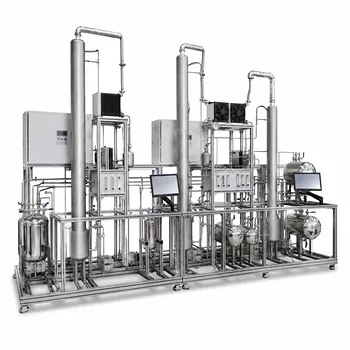
Supercooling is not a failure of physics—it's a measurable window of opportunity. In a chemical engineering pilot plant, this phenomenon directly determines whether your crystallization process yields uniform, pure crystals or a sudden, unmanageable solid mass. At its core, supercooling is a metastable state where a solution remains liquid below its equilibrium freezing point, and the moment it collapses into uncontrolled nucleation, your product's particle size distribution and purity suffer. The key to management is operating within the metastable zone using precisely controlled seeding, cooling rates, and agitation to trigger crystallization at the exact moment you choose.
While supercooling initially appears as a barrier, it is actually the driving force of crystallization. The entire challenge—and skill—of pilot-plant operation lies in harnessing that force through deliberate engineering: by mapping the metastable zone, adding seed crystals, and maintaining gentle thermal gradients, you transform a potential runaway process into a reproducible, high-quality crystal product.
Unpacking the Supercooling Phenomenon
The Metastable State Beneath the Freezing Point
A perfectly pure liquid will not simply freeze the instant it reaches its theoretical freezing temperature. To form the first stable crystal nuclei, molecules must spontaneously organize into an ordered lattice, an event that requires a significant energy fluctuation. Supercooling is the temperature deficit ($\Delta T$) that provides this driving force.
In a pilot-plant crystallizer, the liquid exists in a delicate balance. It is below the saturation temperature but still fully liquid because the energy barrier for nucleation has not been overcome. The wider this gap, the greater the thermodynamic potential for phase change—and the more volatile the system becomes.
Why Supercooling Destabilizes Product Quality
Uncontrolled supercooling breaks the process in two distinct ways, both traceable to a single root cause: massive, simultaneous nucleation.
- Crystal Size Chaos: When a deeply supercooled solution finally triggers, it does so all at once. Countless tiny nuclei form in an instant, competing for the remaining solute. This yields a mass of fine, poorly grown crystals instead of the uniform, larger particles a well-designed process demands.
- Purity Degradation: Rapid, dendritic growth can trap mother liquor and impurities within crystal lattices or between agglomerated fragments. The resulting product looks solid but fails downstream washing and purity specifications, a direct consequence of the uncontrolled solidification.
The Cooling Curve as a Diagnostic
Pilot-plant operators and students use cooling curves to visualize this behavior. A typical curve shows temperature falling linearly, then suddenly spiking upward as the latent heat of crystallization is released. The depth of the dip before the spike is a direct measurement of supercooling. By analyzing these curves under varying conditions, you experimentally map the boundary of the metastable zone—the safe operating window where the solution can be held without spontaneous nucleation.
Engineering Control Inside the Metastable Zone
The Principle of Controlled Nucleation
The only reliable way to manage supercooling is to terminate it on your terms before it terminates itself. This means forcing nucleation just inside the metastable limit, at a modest $\Delta T$ that favors growth over nucleation. The supplementary data for magnesium sulfate heptahydrate illustrates this perfectly: at $\Delta T < 4^\circ\text{C}$, crystal growth dominates; push beyond $8^\circ\text{C}$ and needle-like, fragile crystals become inevitable.
Seeding: The Primary Defense
Introducing a precise mass of seed crystals is the most direct intervention. Seeds provide the structured nucleation centers that a pure liquid lacks. When you add well-characterized seeds at the right temperature, you immediately collapse supercooling and direct all subsequent solute deposition onto those existing surfaces. This decouples nucleation from growth, giving you independent control over crystal number and final size. In pilot plants, this is essential for producing a reproducible size distribution.
Cooling Rate and Agitation
Two physical parameters reinforce seeding.
- Cooling Rate: A slow, controlled cooling profile keeps the solution within the metastable zone, allowing the dissolved solute to deposit onto seeds or pre-existing crystals without pushing the bulk into deep supercooling. Rapid cooling creates steep gradients, risking local pockets that exceed the metastable limit.
- Agitation: Gentle mixing normalizes temperature and concentration throughout the vessel, erasing cold spots that might act as spontaneous nucleation sites. More importantly, agitation increases the collision frequency between molecules and seeds, promoting surface integration and preventing the build-up of concentration gradients around growing crystals.
Temperature Precision and the Induction Period Method
Pilot-plant operation demands knowing exactly where your metastable zone ends. The induction period method offers a quantitative mapping tool. By measuring the time $t_i$ for nuclei to appear at different degrees of supercooling, and extrapolating $1/t_i$ to zero (infinite induction time), you identify $\Delta T_{max}$—the supercooling limit for your specific solution. Armed with that boundary, you can then design a cooling profile that never crosses it, and inject seeds at a $\Delta T$ safely within the zone.
Understanding the Trade-offs
The Scale-Up Dilemma: Wall Temperature and Localized Supercooling
What works in a small laboratory beaker fails when you move to a pilot-scale vessel. During batch cooling, the heat transfer area-to-volume ratio decreases significantly. To maintain a production-relevant cooling rate, you must apply a larger temperature differential between the jacket and the bulk solution. That makes the vessel wall much colder than the liquid center.
Prior to seeding, this cold wall creates a thin layer of highly supersaturated solution that may exceed the metastable limit. The result is uncontrolled nucleation at the wall, not in the bulk—a failure invisible to bulk sensors until fouling and product variability appear. The alternative, limiting the jacket differential to stay safe, extends the cooling time so much that spontaneous nucleation can still occur through prolonged holding. This is a core trade-off: cooling speed versus local supercooling risk.
Morphological Sensitivity and Downstream Consequences
The crystal shape you get is a direct readout of the supercooling and solution environment. Sodium chloride grown in pure water forms cubes; add urea and you get octahedrons. In a plant, excessive supercooling often produces dendrites or needles that filter poorly, trap moisture, and break during drying. Managing supercooling therefore isn't just about purity and size—it's about engineering a morphology that simplifies filtration and washing, reducing overall cycle times.
Polymorph Control Under Metastable Conditions
Different crystal structures (polymorphs) of the same molecule have vastly different solubilities and mechanical properties. Solvent choice and supercooling kinetics together determine which polymorph you nucleate. A deep supercooling spike can selectively precipitate a metastable polymorph that later transforms, cracking particles and altering bioavailability. A well-managed metastable zone, supported by solvent thermodynamic data and gentle cooling, favors the stable form and ensures repeatable solid-state properties.
Making the Right Choice for Your Goal
The management of supercooling is not a single recipe—it is a strategy aligned with what you aim to achieve during your pilot-plant campaign.
- If your primary focus is producing uniform, large crystals: Operate at the lowest practical supercooling. Add a precise seed slurry just after you cross the saturation line, and use a temperature ramp that barely exceeds $2–3^\circ\text{C}$ of supercooling. Let growth kinetics dominate.
- If your primary focus is preventing scaling and fouling on heat transfer surfaces: Use the induction period method to map $\Delta T_{max}$ and then limit the jacket-coolant temperature to keep the wall-side solution inside the metastable zone, even if this means a longer batch time.
- If your primary focus is studying crystallization kinetics or teaching the unit operation: Run a series of unseeded cooling curve experiments. Vary the cooling rate and agitation speed to demonstrate how supercooling depth and release shape the final crystal population, and then show how seeding collapses that variability.
- If your primary focus is scaling up to production: Characterize the metastable limit at pilot scale under your actual mixing and heat transfer conditions. Use that data to design a cooling profile that avoids localized high supersaturation, and test seed-addition strategies at the earliest safe point to decouple nucleation from wall temperature.
Mastering supercooling means transforming an inherently unstable state into a controlled, predictable tool. Every crystal’s size, shape, and purity testifies to how well you read the hidden boundary of the metastable zone.
Summary Table:
| Strategy | Core Mechanism | Impact on Crystal Product |
|---|---|---|
| Seeding | Introduces structured nucleation centers | Decouples nucleation from growth; yields uniform sizes |
| Controlled Cooling | Keeps temperature within metastable zone | Prevents spontaneous nucleation and localized wall fouling |
| Gentle Agitation | Equalizes temperature and concentration | Eliminates cold spots; promotes uniform surface integration |
Optimize Your Crystallization Operations with LABPARK
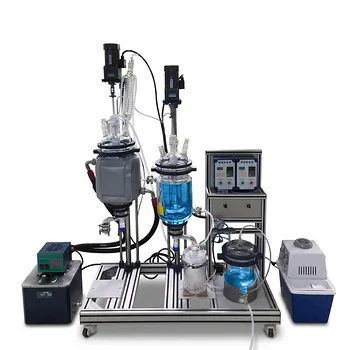
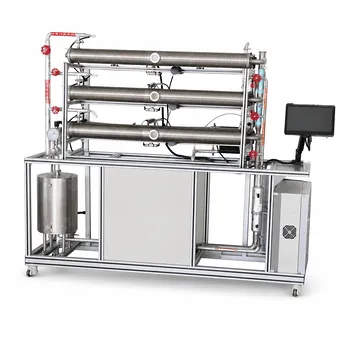
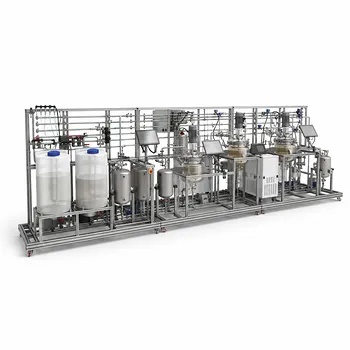
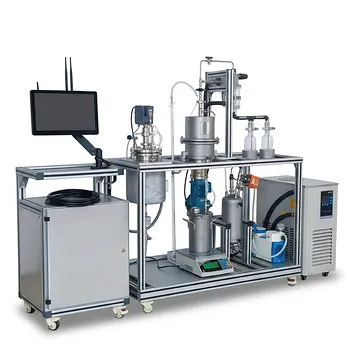
Mastering complex thermodynamic phenomena like supercooling requires precise, reliable equipment. LABPARK provides state-of-the-art Educational and Vocational Unit Operations Pilot Plants in chemical engineering, bioprocess & biotech, and environmental & water treatment.
Engineered specifically for universities, research institutes, and enterprises, our pilot plants feature advanced thermal regulation and agitation controls to help you achieve reproducible, high-quality crystallization outcomes and scale-up success.
Ready to elevate your engineering lab? Contact LABPARK today to request a quote and explore our tailored pilot plant solutions!
Related Products
- Multi Functional Membrane Crystallization Educational Unit Operations Pilot Plant
- Potassium Salt Thermal Dissolution and Crystallization Separation Educational Unit Operations Pilot Plant
- Multi-Modal Distillation Unit Operations Training Pilot Plant
- Multi-Reactor Educational Pilot Plant for Reaction Engineering Unit Operations
- Dual-Mode Rectification Pilot Plant for Practical Training Unit Operations
People Also Ask
- Control Crystallization Pilot Plant Secondary Nucleation: 4 Key Adjustments
- Why is precise temperature control critical in crystallization pilot plants? Key to Scale-Up Success
- What key factors should be considered when configuring a crystallization unit operations pilot plant?
- What are the benefits of integrating online PAT tools like ATR-FTIR into crystallization unit operations pilot plants?
- How to use crystallization pilot plant agitation speed to identify diffusion vs reaction growth?