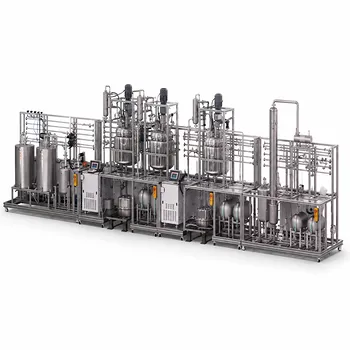
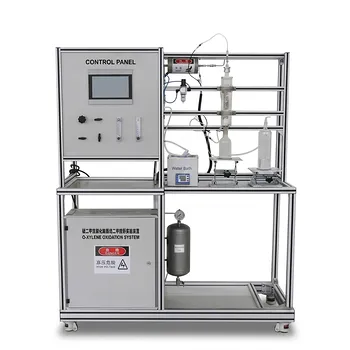
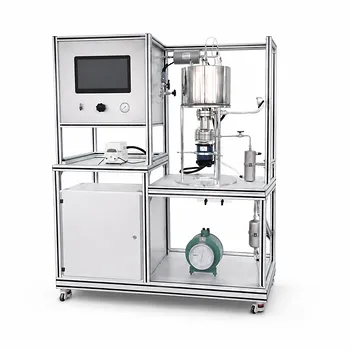
The answer hinges on the attenuation coefficient. In a perfectly transparent, homogeneous (diactinic) medium, the specific radiation intensity remains constant no matter how far the light travels. However, in a real chemical engineering photoreactor pilot plant—where the fluid absorbs, scatters, or refracts light—the intensity decays along its path. This decay is captured by the linear differential equation ( \frac{dI_\nu}{d\rho} = -\mu_\nu I_\nu ), where ( \mu_\nu ) is the attenuation coefficient. When the medium is also nonhomogeneous (e.g., containing bubbles or particles), scattering and reflections further distort the field, making the simple exponential law insufficient and requiring empirical correlations or full radiative transfer solutions to predict the energy distribution.
Understanding how the specific radiation intensity attenuates is the bedrock of photoreactor design. If you ignore absorption and nonhomogeneity, you will miscalculate light penetration, create dark, inactive zones, and fail to predict the true reaction rate. The core modeling insight is that you cannot separate the radiation balance from the changing chemistry—they are tightly coupled and must be solved together.
The Physics of Light Attenuation in Pilot-Scale Reactors
The way light behaves inside your pilot plant determines everything from reaction yield to scale-up feasibility. Moving from an ideal, non-absorbing medium to a real fluid fundamentally changes the engineering calculations.
From Ideal to Real Media
In a diactinic medium, ( I_\nu ) is constant and independent of distance. This is a textbook convenience. In any pilot plant treating real wastewater or running a bioprocess, the medium contains absorbing molecules. The moment you introduce these, the radiation field becomes a function of position, and you must account for the energy lost along every light path.
The Attenuation Coefficient and Intensity Gradient
The spatial gradient of the specific intensity quantifies this loss. The relationship ( \frac{dI_\nu}{d\rho} = -\mu_\nu I_\nu ) tells you that the fractional decrease in intensity per unit distance is equal to the attenuation coefficient ( \mu_\nu ). For a purely absorbing, homogeneous medium, this integrates to the familiar exponential decay. A high ( \mu_\nu ) means radiation is absorbed almost entirely near the lamp, creating a steep gradient and leaving the bulk of the reactor dark. Calculating this gradient correctly is the first step to avoiding dark zones where no photochemical activation occurs.
The Modeling Challenge: Coupling Radiation and Mass Balances
The real complexity in a unit operations pilot plant is that the light field and the reaction chemistry are locked in a feedback loop. You cannot solve one without the other.
The LVREA and Reaction Kinetics
The reaction rate of the light-initiated step is directly proportional to the Local Volumetric Rate of Energy Absorption (LVREA). The LVREA is itself a function of the local specific radiation intensity. Since that intensity is attenuated by the absorbing species, and the concentration of those species changes as the reaction proceeds, the LVREA is a moving target.
Why You Must Solve Both Balances Simultaneously
This makes modeling a photochemical reactor an integro-differential mathematical problem. The mass balance depends on the LVREA, which depends on the radiation intensity, which depends on the concentration of absorbers along the entire light path. A change in concentration at one point alters the attenuation everywhere downstream. Therefore, the mass balance and the radiation energy balance must be simulated simultaneously. Decoupling them leads to significant errors in predicting conversion and selectivity.
Accounting for Nonhomogeneous and Heterogeneous Systems
When your pilot plant involves more than a single, clear liquid phase—such as a gas-liquid dispersion—the model must also handle physical interactions beyond simple absorption.
Scattering, Refraction, and Reflection
In heterogeneous systems, like gas bubbles dispersed in a liquid, the radiation field is distorted by scattering, refraction, and reflection. Photons change direction, which redirects energy and can locally enhance or reduce the intensity in ways a simple absorption model cannot capture. Assuming a homogeneous medium would grossly over- or underestimate the energy available in different reactor regions.
Effective Attenuation Coefficients via Empirical Correlations
To avoid solving the full radiative transfer equation, engineers can use an effective attenuation coefficient that lumps all these effects into a single, measurable parameter. Two common approaches are the Otake correlation, which describes the effective coefficient as a function of the liquid-phase attenuation coefficient, gas holdup, and specific bubble surface area, and the Yokota correlation, which incorporates bubble diameter and holdup directly. These empirical methods let you calculate radiant energy absorption with good approximation, speeding up the design and analysis of multiphase photoreactors in a pilot-plant setting.
Understanding the Trade-offs in Model Selection
Every modeling choice carries inherent limitations that can impact the reliability of your pilot plant data.
Simplicity versus accuracy. The one-parameter exponential decay model is easy to implement but ignores scattering, which can dominate in bubbly flows or particle-laden streams. Using it for a highly scattering system will yield an incorrect light distribution profile.
Lamp emission assumptions. The model for the lamp itself is equally critical. An isotropic emission model assumes uniform intensity in all directions, while a diffuse emission model assumes a cosine-law angular distribution. Selecting the wrong model based on your actual lamp’s physical properties introduces systematic errors in predicting the attenuation and energy distribution across the fluid, undermining the precision of the entire reactor design.
Validity of empirical correlations. Correlations like Otake and Yokota are derived from specific experimental ranges. Extrapolating them to significantly different bubble sizes, holdups, or fluid properties can lead to substantial error. They are powerful shortcuts, not universal truths.
Making the Right Choice for Your Pilot Plant Goal
Your specific engineering objective should dictate the level of modeling complexity you adopt. Match your tool to your problem.
- If your primary focus is rapid feasibility screening: Use a homogeneous absorption model with a measured effective attenuation coefficient for your fluid. This gives you a first-order estimate of optical path length and can quickly identify non-viable reactor geometries.
- If your primary focus is designing for uniform radiation exposure: You must simulate the coupled radiation and mass balances. Map the LVREA distribution across the reactor volume. Adjust path length, lamp placement, and mixing intensity to flatten the gradient and eliminate dark zones.
- If your primary focus is scaling up a multiphase reactor: Begin with an empirical correlation like Otake or Yokota to approximate the effective attenuation. Validate this against local light measurements in your pilot plant. Transition to a full radiative transfer model only if the correlations fail to predict performance at a larger scale.
Your reactor’s quantum efficiency is born from the details of light transport. When you treat attenuation not as a nuisance but as a design variable, you transform the pilot plant from a black box into a scalable, predictable process.
Summary Table:
| Medium Type | Key Phenomena | Modeling Approach |
|---|---|---|
| Ideal (Diactinic) | Constant intensity | No attenuation model needed |
| Absorbing (Homogeneous) | Exponential decay | Linear attenuation equation & LVREA |
| Heterogeneous (Multiphase) | Scattering, refraction, reflection | Otake/Yokota correlations or full RTE |
Optimize Your Photoreactor Scaling with LABPARK
Accurate light attenuation modeling is critical to avoiding inactive "dark zones" and ensuring efficient chemical processes. LABPARK provides premium Educational and Vocational Unit Operations Pilot Plants in chemical engineering, bioprocess & biotech, and environmental & water treatment designed specifically for universities, research institutes, and enterprises.
Our pilot systems enable you to accurately analyze light penetration, validate mathematical models, and scale up your processes with confidence. Contact our expert team today to discuss your pilot plant requirements!
Related Products
- Natural Product Extraction Unit Operations Training Pilot Plant
- Multi-Reactor Educational Pilot Plant for Reaction Engineering Unit Operations
- Residence Time Distribution and Reactor Flow Characteristics Determination Educational Pilot Plant
- Tubular Reactor Flow Characteristics Determination Educational Unit Operations Pilot Plant
- Ethyl Acetate Synthesis Unit Operations Pilot Plant for Practical Training
People Also Ask
- How to Demo Solubility Sensitivity in SFE Pilot Plants? Practical Thermodynamics
- How do pilot plants differentiate physical vs chemical extraction? Enhance Chemical Engineering Training
- How are HTU and NTU applied to determine extraction column height? Guide to Pilot Plant Scaling
- Why use step disturbance in pilot plants? Master process control dynamic response.
- How do fluid transport principles apply to pilot plant configuration? Optimize your unit operations.