Facilitated transport in pervaporation is a highly selective separation mechanism that leverages reactive carriers to shuttle a target molecule across the membrane. Unlike passive solution-diffusion, which separates based purely on solubility and diffusivity, facilitated transport uses a reversible chemical reaction—such as π-complexation or host-guest complexation—to form a temporary carrier-solute complex. This complex diffuses down its own concentration gradient, dramatically boosting selectivity for the target species, before the solute is released on the vacuum side as vapor while the carrier remains ready for the next cycle.
The heart of facilitated transport in pervaporation is a carrier-mediated shuttle: a reactive site in the membrane captures the desired molecule from the liquid feed, carries it across, and releases it into the vapor permeate. This creates a separation factor far beyond what simple solubility-diffusivity differences can achieve, but the carriers must remain stable and anchored to avoid leaching.
How Facilitated Transport Operates Step by Step
The Carrier-Solute Complexation Reaction
The process begins at the feed-membrane interface. Specialized reactive carriers—which can be free-moving liquid carriers, semi-mobile groups tethered to the polymer backbone, or fixed-site functional groups—specifically bind the target molecule. This is a reversible chemical reaction, not mere physical dissolution. The binding is often based on π-complexation with metal ions (like silver for olefins) or host-guest supramolecular interactions.
Crucially, this reaction is highly selective. The carrier’s chemical structure is designed to recognize only the target molecule, effectively ignoring other feed components. This is what gives facilitated transport its steep selectivity advantage over passive membranes.
Diffusion of the Carrier-Solute Complex
Once the complex forms, it diffuses across the membrane thickness. The driving force is the concentration gradient of the complex itself: high at the feed side (where complexation occurs) and low at the permeate side (where the solute is released). Carriers that are mobile can physically migrate; fixed-site carriers pass the solute molecule from one site to the next via a hopping mechanism.
The diffusion step is only efficient if the complex has adequate mobility and if the concentration gradient is maintained. Because the permeate side is under vacuum (or low pressure), the reverse reaction is favored thermodynamically.
Release and Regeneration at the Permeate Side
When the complex reaches the downstream interface, the low partial pressure of the target molecule triggers the reverse chemical reaction. The solute desorbs into the vapor phase and is swept away for condensation. The carrier returns to its original active form, ready to cycle back—or, in the case of fixed-site carriers, to accept the next molecule.
This continuous regeneration without carrier loss is the ideal, but real systems must contend with carrier deactivation or leaching over time.
The Underlying Driving Forces in Pervaporation
The Chemical Potential Gradient as the Master Driver
In any pervaporation operation, mass transport is driven by a gradient in chemical potential, which manifests as a difference in partial vapor pressure between the liquid feed and the vacuum permeate. The feed is kept under sufficient pressure to remain liquid at operating temperature, while the permeate side is evacuated to a few millibars.
For facilitated transport, this same gradient drives the complexation/decomplexation equilibrium. The high concentration of the target molecule on the feed side pushes the binding reaction forward, while the near-zero concentration on the permeate side forces the release.
Why the Vacuum Side Is Essential for Facilitated Transport
Without a low-pressure permeate, the carrier would remain saturated and the transport would stall. The vacuum not only provides the ultimate driving force but also ensures that the released solute instantly vaporizes, preventing any back-reaction that could hinder flux.
In practice, the permeate vapor is condensed and collected, completing the separation cycle.
Understanding the Trade-offs and Limitations
Carrier Stability and Leaching
The most significant challenge is keeping the carrier inside the membrane. Mobile carriers can slowly wash out into the feed or permeate, causing a gradual decline in selectivity and flux. Even fixed-site carriers can degrade chemically or become fouled by impurities. Long-term stability often dictates whether a facilitated transport membrane is commercially viable.
Reaction Kinetics vs. Diffusion Rates
The overall transport rate is governed by both the chemical reaction kinetics and the physical diffusion of the complex. If the reaction is slow compared to diffusion, the flux becomes reaction-limited, reducing productivity. Conversely, if diffusion is too fast, the complex may not fully dissociate at the permeate side, leading to incomplete regeneration and wasted capacity.
Limited Application Scope
Facilitated transport is only beneficial when there is a specific, chemically tractable target molecule. It’s not a universal separation tool. The need for a tailored carrier means each application (e.g., olefin/paraffin, aromatic/aliphatic, or desulfurization) requires its own membrane chemistry, raising development costs.
Complexity vs. Passive Solution-Diffusion Membranes
Standard pervaporation relies on the solution-diffusion mechanism—the inherent solubility and diffusivity differences of each component in the polymer matrix. Facilitated transport adds a reactive layer of complexity, requiring careful control of carrier loading, membrane fabrication, and operating conditions. For applications where solubility-diffusivity selectivity is already sufficient, adding a carrier would only increase cost and risk without proportional benefit.
Making the Right Choice for Your Separation Goal
The decision to use facilitated transport pervaporation depends on what you prioritize: ultimate selectivity for a hard-to-separate molecule or simplicity and robustness.
- If your primary focus is unmatched selectivity for a target compound: Facilitated transport is the superior choice. It can break azeotropes and achieve purity levels impossible with passive membranes by exploiting specific chemical recognition.
- If your primary focus is long-term operational stability and low maintenance: Stick with passive solution-diffusion membranes. They avoid carrier leaching and deactivation, and they handle a wider range of feed conditions without sudden performance loss.
- If your primary focus is a scalable, cost-effective process for bulk separations: Facilitated transport is often too expensive and specialized. Only pursue it when the higher purification cost is offset by the value of the recovered product or when no other separation method works.
Facilitated transport transforms pervaporation from a simple solubility-diffusion sieve into a chemically selective shuttle, delivering extraordinary separation factors when carefully engineered—but that power demands a meticulous balance of chemistry, membrane design, and process control.
Summary Table:
| Feature / Aspect | Facilitated Transport Mechanism | Passive Solution-Diffusion |
|---|---|---|
| Separation Driver | Reversible chemical reaction + potential gradient | Diffusivity & solubility differences |
| Selectivity Level | Exceptionally high (target-specific) | Moderate to high |
| Key Limitations | Carrier leaching & reaction kinetics limits | Lower selectivity for similar molecules |
| Best Application | Hard-to-separate mixtures & azeotropes | Robust, stable, and bulk separations |
Bring Advanced Separation Processes to Life with LABPARK
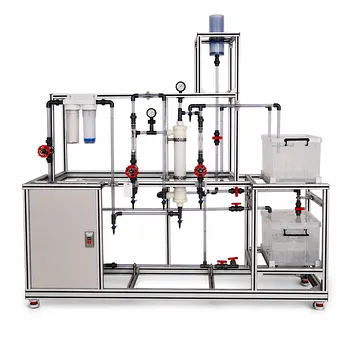
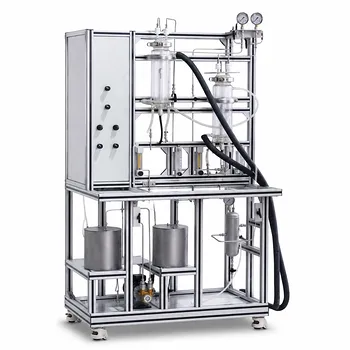
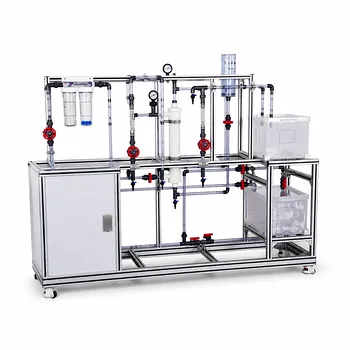
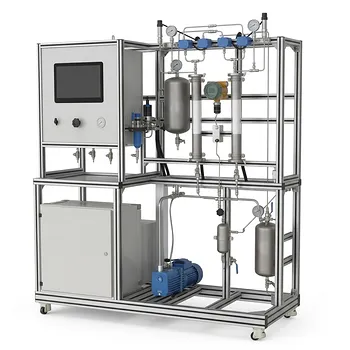
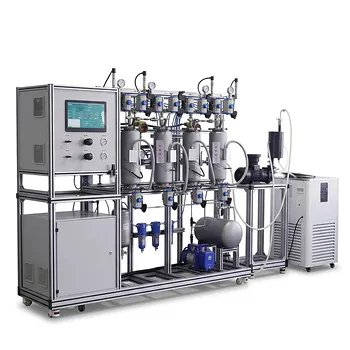
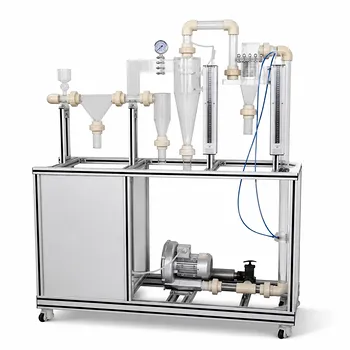
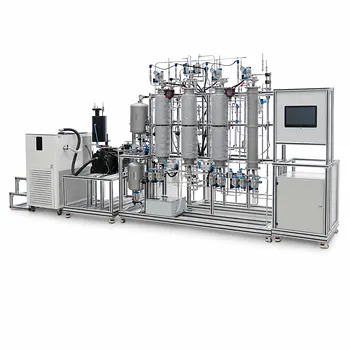
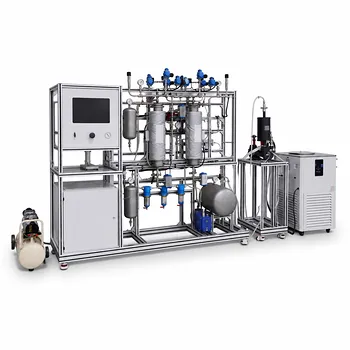
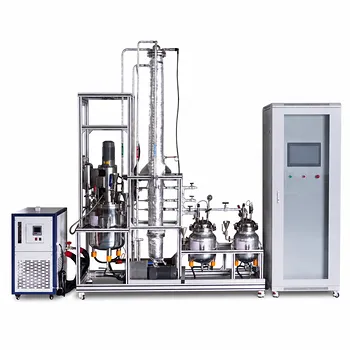
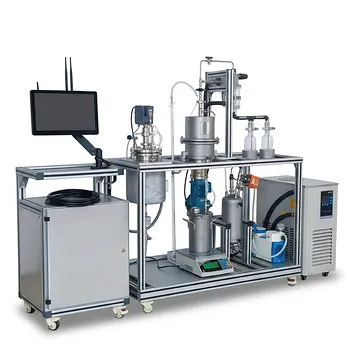
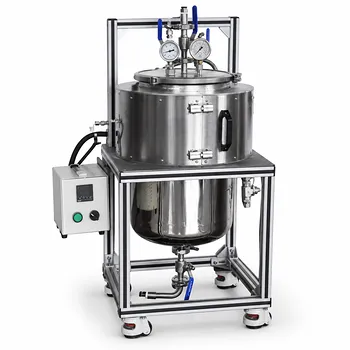
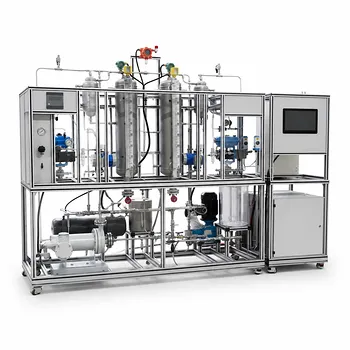
Understanding complex mechanisms like facilitated transport requires high-quality, practical training and research tools. LABPARK provides state-of-the-art Educational and Vocational Unit Operations Pilot Plants in chemical engineering, bioprocess & biotech, and environmental & water treatment. Designed specifically for universities, research institutes, and enterprises, our pilot plants bridge the gap between theoretical transport phenomena and real-world industrial operations.
Ready to upgrade your lab or training facility? Contact LABPARK today to find the perfect pilot plant solution for your institution.
Related Products
- Ultrafiltration Membrane Separation Educational Pilot Plant
- Photocatalytic Membrane Separation and Degradation Unit Operations Pilot Plant
- Multifunctional Membrane Separation Educational Pilot Plant with Ultrafiltration, Nanofiltration, Reverse Osmosis
- Multi-Functional Membrane Separation Educational Pilot Plant for Unit Operations Lab
- Hollow Fiber Ultrafiltration Membrane Separation Educational Pilot Plant
People Also Ask
- How do PEI, PVDF, and PSU membranes compare in pilot plants? Find the best fit.
- Pervaporation vs. Vapor Permeation: Handling Suspended Solids in Membrane Pilot Plants
- Why Use a Membrane Separation Pilot Plant vs. Lab Testing? Avoid Costly Scale-Up Failures
- Isotropic vs. Anisotropic Membranes: How to Choose the Best Pilot Plant Modules
- How do membrane pilot plants demonstrate synthetic vs biological membrane advantages?