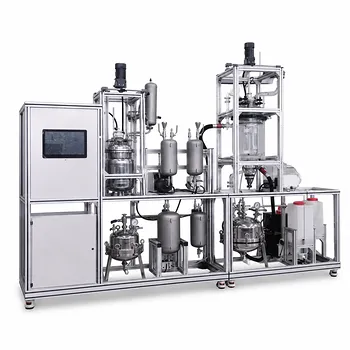
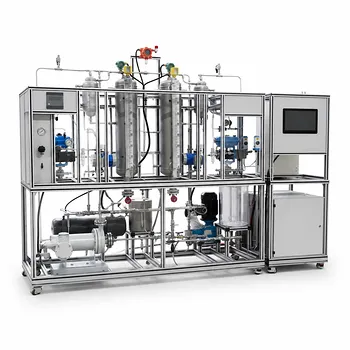
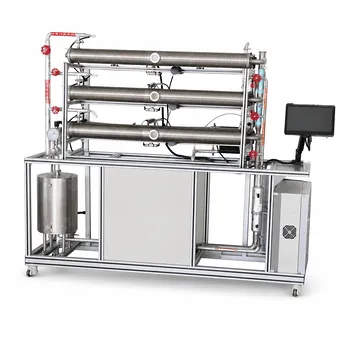
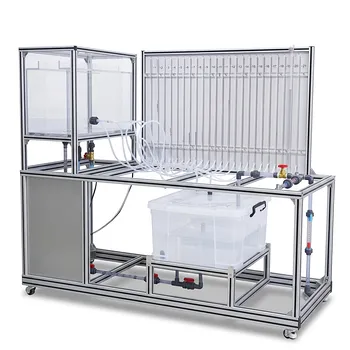
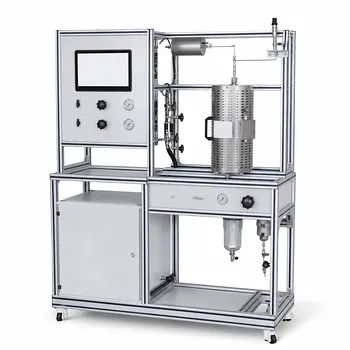
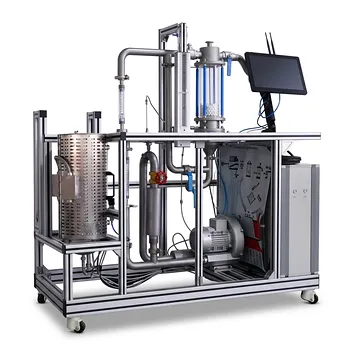
Corrosion resistance is the primary safety barrier in a pilot plant. Alloys like Monel metal directly dictate which materials you can safely use for wetted components, and they form the backbone of the hands-on safety training that teaches engineers how to predict, observe, and prevent material failure. Their exceptional stability in aggressive environments eliminates a class of catastrophic risks while turning the plant itself into a living laboratory for materials education.
The true value of a corrosion-resistant alloy in a unit operations pilot plant isn’t just its longevity—it’s the way its predictable, passive behavior under stress becomes a foundation for both inherently safer design and a rigorous, materials-focused safety training curriculum.
How Corrosion Resistance Guides Material Selection
A pilot plant’s material choices are dictated by the chemicals it will touch. Corrosion resistance is the single most influential property because a failure here is not a performance issue—it’s a process safety incident.
Why Alloys Like Monel Are Chosen for Critical Components
Monel metal, a nickel-copper-iron alloy, exhibits near-immunity to a wide range of corrosive chemicals, including saltwater, sulfuric acid, and alkaline solutions.
This makes it an immediate, logical choice for pump cylinders, valves, and piston rods where a leak or structural failure would immediately expose operators to hazardous fluids.
In a university or research pilot plant, the material selection decision is doubly important.
You are not just protecting a single experiment—you are protecting students, researchers, and an environment where the unexpected is a daily part of learning.
The primary reference makes this explicit: using corrosion-resistant materials like Monel ensures process safety when handling aggressive chemicals.
It also transforms the equipment into an educational platform, letting students study real-world material science in an operating plant.
Beyond Monel – A Spectrum of Corrosion-Resistant Solutions
No single alloy solves every problem. Pilot plant design must match the material to the specific corrosion mechanism.
For example, standard stainless steel is catastrophically attacked by sodium hypochlorite solutions—the active agent in many disinfection loops. Here, PTFE, PVDF, titanium, or specialized glass become mandatory.
This spectrum-thinking is critical for safety.
Supplemental references highlight that corrosion risk assessment must account for expected corrosion rates, stress corrosion cracking, and environmental factors like oxygen availability and pH.
In aqueous environments with abundant oxygen, iron-based materials rust predictably.
In anaerobic or acidic conditions, the mechanism shifts to a hydrogen-producing acid attack, which can lead to hydrogen embrittlement or pressure build-up. Selecting a resistant alloy like Monel directly neutralizes these risks at the source.
Embedding Corrosion Knowledge into Safety Training
The alloy’s influence on training is as profound as its influence on design. A pilot plant built with high-performance materials becomes a safe, tangible case study for teaching the principles that prevent industrial disasters.
From Theory to Practice – Hands-on Learning with Resistant Materials
When students operate a pilot plant containing Monel valves and piston rods, they are not just learning to turn a handle.
They are observing first-hand how a material’s microstructure and composition determine its invisible, life-saving passivity.
The primary reference frames this perfectly: corrosion-resistant alloys provide an educational platform for students to study material science, piping and instrumentation design (P&ID), and the long-term effects of chemical exposure.
This turns abstract lectures on Pourbaix diagrams or galvanic series into memorable, operational knowledge.
Integrating Corrosion Risk Assessment into Safety Protocols
Safety training built around alloy selection goes beyond just “use the right metal.”
It teaches a systematic risk-assessment mindset: identify the chemical, predict the corrosion mechanism, select the compatible material, and then verify with inspection.
Supplemental references stress that prevention protocols must include correct structural design and a ban on glass equipment unless no other suitable material exists.
This kind of rule is taught, debated, and internalized when a student sees a Monel component survive a reaction that would have shattered a glass vessel. The alloy’s presence directly reinforces the “why” behind the safety rule.
The training also covers what to do when corrosion is inevitable—applying a corrosion allowance, neutralizing acids, removing dissolved electrolytes, or using protective coatings.
These are not theoretical checklists; they are operational habits built around the plant’s existing material strategy.
Understanding the Trade-offs
Even the best alloy has limits. Trusting a single property without understanding its boundaries is a recipe for failure, especially in a pilot plant where process conditions change frequently.
The Limits of a Single Alloy
Monel is superb against many chemicals, but it is not universal.
At extremely high temperatures, its resistance breaks down. In methane steam reforming environments (>800°C), steam and hydrogen diffuse along grain boundaries—rapid “short-circuit” pathways—and metallic cations migrate outward, causing severe, fast corrosion.
This reveals a hidden educational truth: a material that is safe at 50°C can become a liability at 800°C.
Safety training must address this cliff-edge, and a pilot plant that runs only low-temperature experiments cannot teach it. That’s why curriculum design must supplement hands-on experience with case studies on high-temperature coating systems, like the dual-layer TiO₂/α-Al₂O₃ CVD coatings mentioned in the supplementary references.
The Trap of Forgetting the Whole System
Corrosion is never just about the base alloy.
Piping, gaskets, and sensor housings can create galvanic couples that accelerate attack. Safety training derived from alloy-centric design must therefore expand to cover full P&ID material compatibility and the dangers of mixed-metal systems, even when each part is individually “resistant.”
Making the Right Choice for Your Pilot Plant’s Goal
Your approach must align your material selection strategy and your safety training objectives with the plant’s mission—be it education, process development, or both.
- If your primary focus is undergraduate education: Lean heavily on iconic, visibly robust alloys like Monel for key components, and build your entire safety module around “show, don’t tell” lessons where students can touch and trace the material’s success story.
- If your primary focus is advanced process research with aggressive and variable chemistries: Use Monel and similar alloys as a starting point but build a dynamic material compatibility matrix that includes niche solutions like titanium or CVD-coated foams, and train researchers to re-assess corrosion risks every time a new reagent is introduced.
- If your primary focus is bridging classroom theory with industrial practice: Design the pilot plant with deliberate material contrasts—install a Monel pump next to a section of standard stainless steel piping (safely isolated) to let students measure, model, and discuss the difference, turning the plant into a permanent experiment on corrosion management.
Your material selection is the first, silent teacher in any unit operations pilot plant; choose it to protect your people and to illustrate the principles that will protect their future designs.
Summary Table:
| Material | Key Applications | Ideal Environments | Safety Limitations |
|---|---|---|---|
| Monel Metal | Pumps, valves, piston rods | Saltwater, acids, alkalines | Fails in high-temp (>800°C) steam/hydrogen |
| Stainless Steel | Standard piping & structural parts | General aqueous environments | Vulnerable to sodium hypochlorite & chlorides |
| PTFE / PVDF / Titanium | Disinfection loops, aggressive acids | Sodium hypochlorite, highly corrosive acids | Temperature and structural strength limits |
| CVD-Coated Alloys | High-temperature reactors | Extreme heat (>800°C), hydrogen/steam | High cost, complex coating integrity inspection |
Build a Safer, More Educational Pilot Plant with LABPARK
Equipping your lab with the right materials is crucial for both operational safety and student learning. LABPARK provides state-of-the-art Educational and Vocational Unit Operations Pilot Plants in chemical engineering, bioprocess & biotech, and environmental & water treatment for universities, research institutes, and enterprises.
Whether you need robust Monel components for hazardous chemical handling or advanced training setups for materials science, we deliver tailored, safe, and reliable solutions.
Contact LABPARK today to discuss your pilot plant requirements!
Related Products
- Multi Functional Catalytic Reaction and Reactor Evaluation Educational Unit Operations Pilot Plant
- Rising and Falling Film Evaporation Educational Unit Operations Pilot Plant
- Shell and Tube Heat Exchanger Heat Transfer Coefficient Determination Educational Pilot Plant
- Orifice and Venturi Flowmeter Calibration Educational Pilot Plant for Fluid Mechanics Laboratory
- Educational Compression Refrigeration Performance Determination Unit Operations Pilot Plant
People Also Ask
- What reaction engineering principles are shown in a catalytic reactor pilot plant? SO2 Oxidation Guide
- Why is FTIR integration in catalytic pilot plants important? Real-Time Student Insights
- How to analyze active metal distribution & identify catalyst poisoning in pilot plants? Expert Diagnostic Guide
- How do temperature limits and WHSV influence catalytic reactor optimization? Scale-Up Guide
- What operational insights do catalyst pellet concentration profiles provide? Optimize Reactor Yield