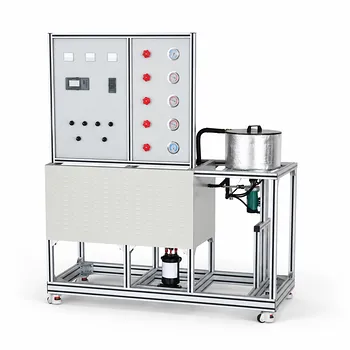
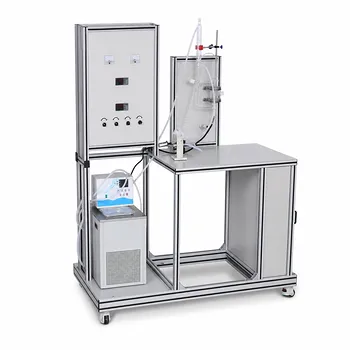
The standard electrode potential ($E^\theta$) provides an instant, quantitative prediction of redox spontaneity. In chemical engineering and environmental pilot plants, researchers and students use these tabulated values to determine if a target reaction—like oxidizing a pollutant or recovering a metal—will proceed without external energy. By comparing the $E^\theta$ of two half-cells, they calculate the cell potential: a positive value signals a thermodynamically feasible reaction, while a negative value reveals the need for an electrolytic cell.
The true power of $E^\theta$ lies not in textbook calculations, but in its ability to short-circuit trial-and-error. It predicts reaction direction, the required driving force, and the impact of pH—all from a simple voltage difference. This transforms pilot plant design from guesswork into a rational, scalable strategy.
The Thermodynamic Compass for Pilot Plant Reactions
Standard electrode potentials serve as your pilot plant's first screening tool. They answer the fundamental question: “Will this electron transfer happen on its own?”
Ranking the Players: Oxidizing vs. Reducing Strength
Each half-cell reaction has a fixed $E^\theta$ value, measured against the standard hydrogen electrode. This creates an unambiguous league table of chemical strength.
Species with more positive $E^\theta$ values (like fluorine, $MnO_4^-$, or dissolved oxygen) are voracious electron acceptors. They act as the strongest oxidizing agents. Species with more negative $E^\theta$ values (lithium, sodium, zinc) readily give up electrons—they are the strongest reducing agents. In a pilot-scale electrochemical oxidation unit, you immediately know that an oxidant with a higher $E^\theta$ can strip electrons from a target pollutant with a lower $E^\theta$.
Predicting Spontaneity Through Cell Potential
The real utility emerges when you pair two half-cells. The standard cell potential ($E_{cell}^\theta = E_{cathode}^\theta - E_{anode}^\theta$) is the net driving force.
If $E_{cell}^\theta > 0$, the associated Gibbs free energy change is negative ($\Delta G < 0$). The reaction is thermodynamically spontaneous. In a heavy metal recovery pilot plant, this means cementation of copper onto iron filings will occur naturally. For thorough conversion in real flow systems, researchers often look for a margin of +0.2 V to +0.4 V, ensuring the equilibrium lies far to the right. If $E_{cell}^\theta < 0$, the process is non-spontaneous. You must integrate a DC power supply to drive electrolysis—instantly informing your equipment and energy budget.
The Critical Role of pH and Pourbaix Diagrams
Standard potentials are measured under idealized conditions (1 M concentration, 25 °C). Real pilot plants deviate wildly, and pH is the most powerful variable.
Beyond the Standard State: When pH Rewrites the Rules
Many redox reactions in water treatment consume or release protons. Changing the pH alters the effective electrode potential, often shifting $E_{cell}$ from positive to negative—or vice versa. Relying on $E^\theta$ alone can lead to a falsely optimistic feasibility prediction.
Educational pilot plants dedicated to chemical oxidation allow students to construct E-pH (Pourbaix) diagrams. By adjusting the pH and measuring the oxidation-reduction potential (ORP) of solutions containing multivalent ions like copper or iodine, they physically trace the stability boundaries. They observe the exact point where $Cu^{2+}$ precipitates as $Cu(OH)_2$ or where a dissolved pollutant becomes thermodynamically oxidizable. This hands-on correlation between theory and observation internalizes a design principle: pH control is often the master switch for reaction feasibility.
Using ORP as Your Real-Time Window
Oxidation-reduction potential probes measure the net $E_{cell}$ of a real, non-ideal solution. In a pilot plant, this live signal tells you how far the system is from equilibrium. A sudden drop in ORP can flag that the primary oxidant is consumed, enabling automatic chemical dosing. It transforms the static $E^\theta$ concept into a dynamic process control parameter.
Understanding the Trade-offs and Hidden Pitfalls
Thermodynamic feasibility is not the same as practical viability. Ignoring this gap is the fastest way to overdesign a reactor or misdiagnose a failed pilot run.
The Kinetics Blind Spot
$E^\theta$ says a reaction can happen—not how fast it will. The oxidation of ammonia by oxygen has a large positive $E_{cell}$, yet it proceeds imperceptibly without a catalyst or elevated temperature. In a pilot plant, a positive $E_{cell}^\theta$ is merely the starting pistol; you still must investigate reaction kinetics, electrode materials, and mass transfer.
Overpotential and the Hidden Energy Tax
The $E_{cell}^\theta$ you calculate is the minimum thermodynamic requirement. Real electrolytic cells demand an extra voltage—overpotential—to drive the reaction at a practical rate. This overpotential compensates for activation barriers and resistance. The “non-spontaneous” reaction might need far more energy than the simple $E_{cell}^\theta$ suggests, blowing up your power supply sizing if ignored.
Side Reactions and Selectivity
Wastewater contains a soup of species. The species with the highest $E^\theta$ is not always the one that reacts. If kinetic barriers favor a competing reaction or an intermediate, your target pollutant may remain untouched. Selectivity, not just raw feasibility, governs success. Researchers use $E^\theta$ to identify potential competing pathways and design electrode coatings or solution conditions that suppress them.
Making the Right Choice for Your Pilot Plant Goal
Apply $E^\theta$ as your strategic guide, but always validate it against the realities of your pilot system.
- If your primary focus is selecting a sustainable redox pair for spontaneous treatment: Use $E^\theta$ tables to shortlist oxidizing or reducing agents. Look for a cell potential above +0.3 V to overcome equilibrium limitations and ensure the reaction will proceed with a meaningful driving force.
- If your primary focus is designing an electrolytic cell for a non-spontaneous process: Calculate the minimum $E_{cell}^\theta$ required, then add a realistic buffer for overpotential and ohmic losses when specifying your DC rectifier. This prevents an underpowered pilot build.
- If your pilot plant handles pH-sensitive wastewater: Never trust $E^\theta$ alone. Map the experimental Pourbaix diagram under your specific concentration range to identify the operating window where your target species is both soluble and thermodynamically unstable.
- If you need to monitor and control the process in real time: Instrument your pilot plant with ORP probes. Use the measured potential—not just a pre-calculated $E^\theta$—to trigger chemical dosing or adjust current, reflecting the true instantaneous state of your system.
Standard electrode potentials are your north star, but the terrain of a real pilot plant demands you navigate with kinetics, pH mapping, and live measurement.
Summary Table:
| Parameter | Thermodynamic Value | Pilot Plant Implication |
|---|---|---|
| Spontaneous Redox | $E_{cell}^\theta > 0$ ($\Delta G < 0$) | Occurs naturally; target +0.2 V to +0.4 V margin for flow systems. |
| Non-Spontaneous Redox | $E_{cell}^\theta < 0$ ($\Delta G > 0$) | Requires DC power supply; add voltage buffer for overpotential. |
| pH Dependency | Shifts with proton activity | Map Pourbaix diagrams to find the exact solubility & stability window. |
| Process Control | Real-time ORP measurement | Monitors deviation from equilibrium to trigger automatic dosing. |
Bring Redox Thermodynamics to Life in Your Lab
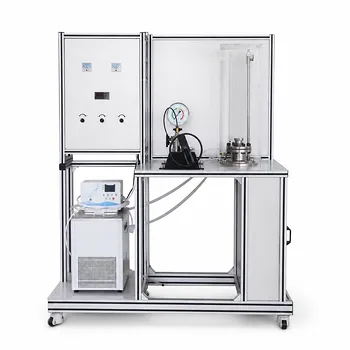
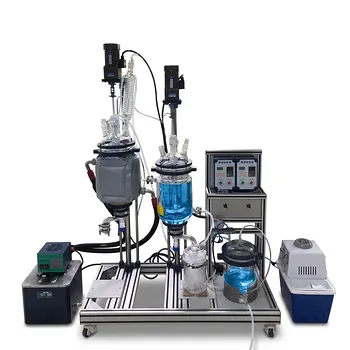
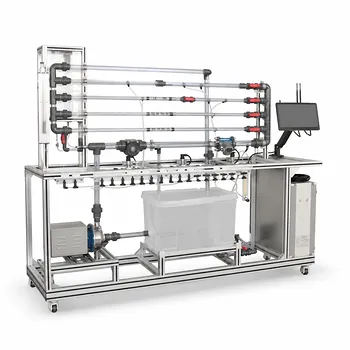
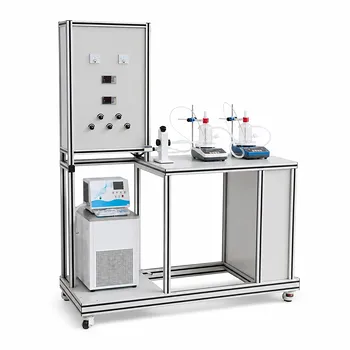
Bridge the gap between textbook formulas and real-world chemical processes. LABPARK provides premium Educational and Vocational Unit Operations Pilot Plants in chemical engineering, bioprocess & biotech, and environmental & water treatment for universities, research institutes, and enterprises.
Equip your lab with advanced pilot systems featuring real-time ORP monitoring, pH control, and modular electrolysis units to give students and researchers hands-on experience. Contact LABPARK today to discuss your custom pilot plant configuration!
Related Products
- Electrolyte Distillation Purification and Formulation Educational Pilot Plant
- Water Electrolysis Hydrogen Production and Storage Educational Pilot Plant
- Electrolytic Hydrogen Production Educational Unit Operations Pilot Plant
- Electrochemical Water Treatment Educational Unit Operations Pilot Plant
- Alkaline Membrane Water Electrolysis Educational Pilot Plant Unit Operations Training System
People Also Ask
- Why does simple distillation yield higher efficiency than flash distillation? Key thermodynamic differences.
- How to Integrate Spectroscopy in Distillation Pilot Plants for Advanced Process Control
- How do batch and continuous distillation pilot plants differ? Master their dynamic behavior
- How does operating pressure influence Methylal/Methanol VLE? Discover its impact on distillation
- Why is the acentric factor important in pilot plants? Fluid property prediction.