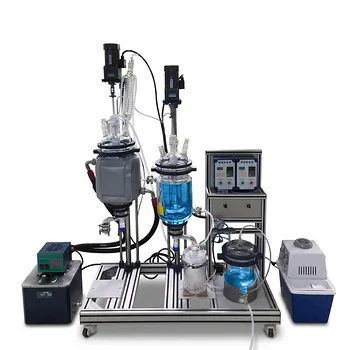
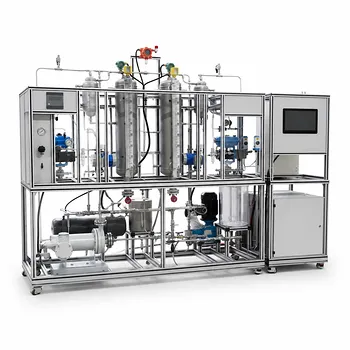
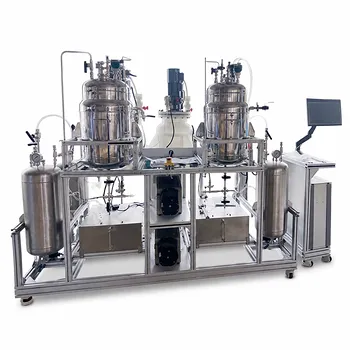
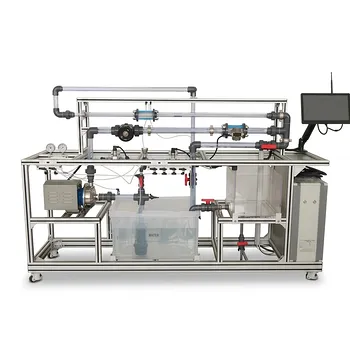
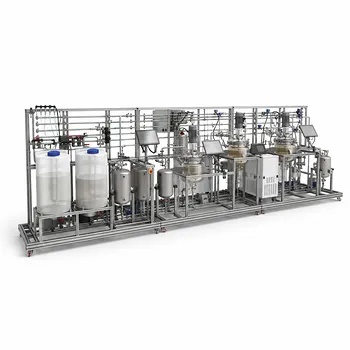
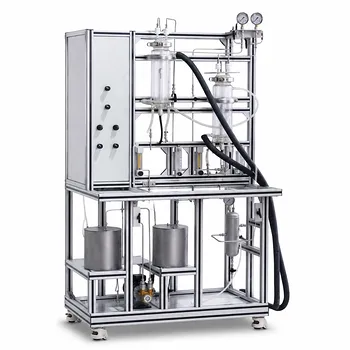
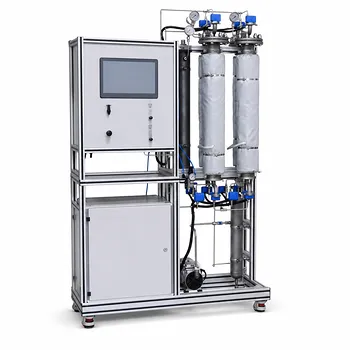
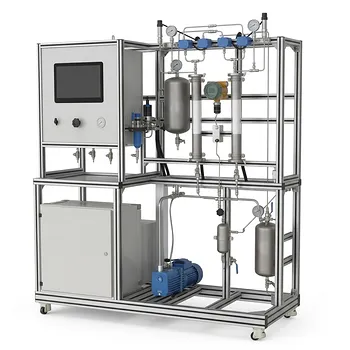
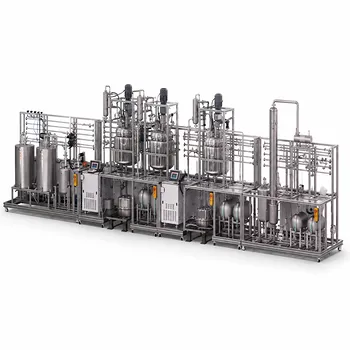
Sodium hexametaphosphate is a powerful scale inhibitor that works by sequestering hardness ions and disrupting crystal formation. It binds with calcium and magnesium to form stable, soluble complexes, keeping them in solution even after primary softening processes. In addition to preventing new scale, SHMP can actively dissolve existing deposits, restoring heat transfer surfaces. Pilot plants replicate boiler feedwater conditions, allowing you to dose SHMP under controlled temperatures and flow rates, monitor inhibition efficiency, and fine-tune chemical parameters for real-world application.
The key to preventing boiler scale is keeping calcium and magnesium in solution. Sodium hexametaphosphate does this by forming highly stable complexes at sub‑stoichiometric doses, effectively starving scale-forming reactions. Studying this mechanism in a scaled-down pilot plant lets you quantify inhibition, assess thermal reversion, and optimize injection strategies before committing to a full-scale boiler system.
How SHMP Prevents Scale: A Dual-Action Mechanism
Sequestration: Locking Up the Hardness Ions
SHMP is a glassy polyphosphate that dissociates in water into long-chain metaphosphate anions.
These chains carry numerous negatively charged phosphate groups that act like molecular claws.
Each chain wraps around a calcium or magnesium ion, forming a stable, soluble complex that cannot crystallize into scale.
Threshold Inhibition: More Than a 1:1 Reaction
What makes SHMP exceptionally efficient is its sub‑stoichiometric action — just a few parts per million can hold a much larger concentration of hardness in solution.
The chains adsorb onto nascent crystal nuclei, distorting their growth and preventing them from reaching the critical size needed for precipitation.
This threshold effect means scale formation is halted entirely, not just delayed, making SHMP a cost-effective treatment.
Dissolving Existing Scale
Unlike many inhibitors, SHMP can also attack existing deposits.
It slowly complexes with calcium ions on the surface of boiler scale, pulling them back into solution.
This property makes it useful for removing light scale without mechanical cleaning, helping to restore thermal conductivity.
How Pilot Plants Bring This Chemistry to Life
Environmental and water treatment pilot plants act as miniaturized boiler feed loops that let you study SHMP under tightly controlled, realistic conditions.
Simulating Real Boiler Feed Water
A pilot plant starts with synthetic hard water containing known concentrations of calcium and magnesium salts, mimicking the residual after lime-soda softening.
You then dose this stream with SHMP while varying temperature, pressure, and flow rate to emulate different boiler sections.
Monitoring Inhibition Efficiency with Chemical Analysis
To quantify performance, you need to measure what stays dissolved versus what deposits.
Samples of treated water can be analyzed for residual hardness, while any formed scale can be digested and analyzed.
A proven wet‑chemical method — digesting scale in nitric acid, oxidizing organics, and precipitating phosphate as ammonium phosphomolybdate — reveals how much phosphate has gone into the deposit versus remaining as active inhibitor.
This data directly shows whether SHMP is working as a sequestrant or if it has reverted and formed sludge.
Optimizing the Injection Point and Dosing
Where you inject the chemical is as critical as the dose.
Pilot plants let you test injection into the feedwater line versus direct injection into the boiler drum near downcomer tubes.
This helps prevent feedwater heater plugging while ensuring the inhibitor reaches the zones most prone to scaling.
By varying dosing rates and monitoring phosphate residuals, you can pinpoint the minimum effective concentration for your specific water chemistry.
Studying Thermal Conductivity and Energy Efficiency
Scale’s insulating effect is dramatic — carbon steel conducts heat about 50 times better than typical calcium carbonate scale.
Pilot plants equipped with heat exchangers and temperature probes let you correlate SHMP dosing with thermal conductivity changes.
You can directly measure how well inhibition preserves heat transfer, teaching operators the real cost of scale and the value of proper pretreatment.
Understanding the Trade-offs
SHMP is a powerful tool, but its behavior under boiler conditions has limits that a pilot plant can clarify.
Thermal Reversion: The Hidden Risk
At the high temperatures in a boiler, SHMP can slowly hydrolyze back into orthophosphate.
Orthophosphate then reacts with calcium to form a soft sludge instead of a hard scale.
While sludge is easier to remove, uncontrolled reversion consumes the inhibitor and can create deposits in low‑flow areas.
Pilot plant runs let you track phosphate speciation over time and set appropriate blowdown schedules.
Overdosing and Chemical Costs
Adding more SHMP than needed does not improve inhibition — it only raises operating expenses and increases sludge handling.
A pilot study identifies the true minimum effective dose, saving money in full‑scale operation.
Compatibility with Chelants and Other Programs
If your system also uses chelating agents like EDTA, SHMP can compete for the same hardness ions.
Pilot trials help determine the right sequence of additions and whether a combined approach is beneficial or wasteful.
Making the Right Choice for Your Goal
The way you use a pilot plant depends on the problem you need to solve.
- If your primary focus is understanding SHMP inhibition kinetics: Vary dose and temperature systematically, measure residual hardness and phosphate levels, and build a predictive model for full‑scale dosing.
- If your primary focus is comparing treatment programs: Run parallel tests with SHMP, orthophosphate, and EDTA, monitoring scale mass on coupons and thermal conductivity drop to select the most economical and reliable option.
- If your primary focus is preventing pre‑heater fouling: Test different injection locations and doses while analyzing deposits at the feedwater heater, ensuring SHMP stays in solution until it reaches the boiler drum.
- If your primary focus is evaluating SHMP for scale removal: Circulate the inhibitor through pre‑fouled test sections and measure the release of calcium into solution, while verifying that dislodged particles are effectively removed by blowdown.
A well‑executed pilot plant study transforms chemical theory into operational certainty, giving you the data you need to protect heat transfer surfaces with confidence and precision.
Summary Table:
| Parameter | SHMP Scale Prevention Mechanism | Pilot Plant Application |
|---|---|---|
| Prevention Mechanism | Sequestration & threshold inhibition | Simulates hard water to test chemical dosing limits |
| Existing Scale | Dissolves calcium deposits chemically | Evaluates dissolution rates and blowdown effectiveness |
| Thermal Reversion | Hydrolyzes to orthophosphate (sludge) | Tracks phosphate speciation at elevated temperatures |
| Heat Efficiency | Prevents insulating scale build-up | Correlates chemical dosage with heat transfer rates |
Scale Up Your Water Treatment Research with LABPARK
Bridge the gap between chemical theory and industrial application. LABPARK provides premium Educational and Vocational Unit Operations Pilot Plants in chemical engineering, bioprocess & biotech, and environmental & water treatment for universities, research institutes, and enterprises. Our customizable pilot loops allow students and researchers to safely simulate industrial boiler environments, analyze chemical kinetics, and optimize dosing strategies.
Contact LABPARK today to explore how our pilot plants can enhance your training and research capabilities!
Related Products
- Potassium Salt Thermal Dissolution and Crystallization Separation Educational Unit Operations Pilot Plant
- Ion Exchange Water Purification Educational Pilot Plant for Engineering Unit Operations
- Electrolyte Distillation Purification and Formulation Educational Pilot Plant
- Alkaline Membrane Water Electrolysis Educational Pilot Plant Unit Operations Training System
- Multifunctional Membrane Separation Educational Pilot Plant with Ultrafiltration, Nanofiltration, Reverse Osmosis
People Also Ask
- What are the benefits of integrating online PAT tools like ATR-FTIR into crystallization unit operations pilot plants?
- How do crystallization pilot plants improve student learning? Shift from manual observation to process control.
- Control Crystallization Pilot Plant Secondary Nucleation: 4 Key Adjustments
- Why is precise temperature control critical in crystallization pilot plants? Key to Scale-Up Success
- What key factors should be considered when configuring a crystallization unit operations pilot plant?