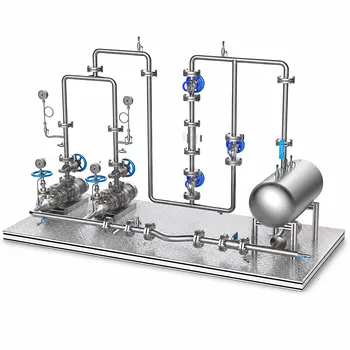
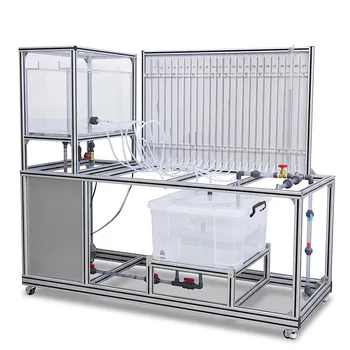
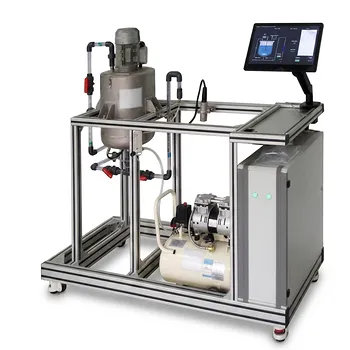
High hydrostatic pressure (HPP) equipment facilitates non-thermal cell disruption by transmitting uniform pressure through a biological matrix, opening membranes and weakening cell-wall structures during compression and decompression. Pilot-scale systems typically operate across approximately 100–600 MPa, allowing researchers to improve intracellular mass transfer and extract heat-sensitive compounds without exposing the material to severe thermal loads. The same pressure-temperature control enables selective or controlled protein unfolding, so researchers can modify protein structure while monitoring the boundary between functional alteration and irreversible damage.
HPP is a pressure-driven unit operation that combines cell permeabilization, enhanced extraction, and pressure-dependent protein structural modification. Its value in pilot laboratories lies in controllability: pressure, temperature, hold time, and decompression conditions can be varied and measured before scale-up.
How HPP Disrupts Biological Cells
Uniform Pressure Transmission
An HPP vessel contains the sample in a pressure-transmitting medium, commonly water. A pump raises the pressure throughout the vessel, applying compression relatively uniformly rather than relying on a localized mechanical cutting force.
This makes HPP suitable for studying biological matrices whose intracellular compounds would be damaged by extended heating or aggressive mechanical treatment.
Membrane Permeabilization and Cell-Wall Opening
High pressure alters the weak interactions that maintain membrane and cell-envelope structure. Pressure treatment can increase membrane permeability and weaken cell-wall organization, while decompression can magnify the resulting structural disruption.
The effect is better described as pressure-induced permeabilization and cell-envelope disruption than as universal mechanical rupture. The outcome depends on organism, matrix composition, pressure level, temperature, exposure time, and decompression rate.
Improved Mass Transfer
Once cellular barriers become more permeable, intracellular compounds can move more readily into the surrounding liquid phase. This accelerates extraction and recovery of heat-sensitive secondary metabolites, sugars, enzymes, and other valuable compounds.
Pilot units allow researchers to measure extraction yield and kinetics against pressure conditions, treatment time, and conventional thermal or mechanical alternatives.
How Pilot Equipment Enables Controlled Protein Unfolding
Pressure-Dependent Structural Rearrangement
Protein conformation is maintained by non-covalent interactions, including hydrogen bonding, ionic interactions, and hydrophobic effects. HPP changes the thermodynamic environment around these interactions, potentially causing structural rearrangement or partial unfolding.
The response is protein-specific. Pressure may unfold some proteins, alter quaternary structures, dissociate aggregates, or change enzyme activity, while other proteins may remain stable within the selected operating range.
Pressure and Temperature Must Be Controlled Together
Protein stability cannot be predicted from pressure alone. Temperature, pH, ionic strength, residence time, and the surrounding formulation all influence whether a protein remains native, unfolds reversibly, aggregates, or loses activity.
Pressure-rated reactors with temperature sensors, automated controls, and defined hold times allow pilot researchers to map these responses systematically. This is essential when the objective is to alter functionality without destroying biological activity.
Functional Modification Rather Than Complete Denaturation
HPP can be used to target intermediate structural states rather than simply maximize denaturation. For example, researchers may investigate changes in whey-protein functionality, casein-micelle organization, enzyme activity, or protein solubility.
The desired endpoint may be improved gelation, emulsification, digestibility, or processability. A successful process therefore balances structural change with preservation of the properties that the final product requires.
Studying Reversibility and Refolding
After pressure release, some proteins can recover part of their native conformation, while others remain unfolded or form aggregates. Pilot-scale experiments can compare pressure-release conditions, hold times, temperatures, and buffer compositions to determine whether unfolding is reversible.
This supports research into protein refolding and formulation stability, although HPP alone is not a complete refolding process for complex recombinant proteins. Inclusion-body processing may still require chaotropes, redox control, mixing, and buffer exchange.
What the HPP Pilot Plant Measures
Process Kinetics
Pilot systems enable researchers to record pressure ramp-up, hold time, decompression, and temperature history. These measurements help connect operating conditions with cell disruption, extraction yield, protein unfolding, enzyme activity, or microbial inactivation.
This is more useful than treating HPP as a single fixed treatment because the biological response depends on the full pressure-time-temperature profile.
Structural and Functional Changes
Laboratories can evaluate changes in particle structure, membrane integrity, protein conformation, solubility, gel strength, enzyme activity, and downstream recovery. These measurements distinguish a useful structural modification from excessive degradation.
For food and bioprocess applications, researchers may also assess sensory quality, clean-label potential, and retention of heat-sensitive compounds.
Scale-Up Behavior
Pilot equipment provides a controlled environment for testing vessel loading, product geometry, pressure uniformity, temperature management, and throughput constraints. These factors influence whether laboratory observations remain valid at manufacturing scale.
The resulting data support process capability studies and operating-window definition before full-scale implementation.
Applications in Bioprocess and Food Laboratories
Heat-Sensitive Compound Extraction
HPP can open cellular barriers while reducing dependence on high-temperature extraction. This is useful when the target compound is susceptible to thermal degradation or when product quality depends on retaining native characteristics.
Protein and Dairy Structure Modification
Pressure can alter whey proteins, casein micelles, and other protein systems. Researchers can use these changes to study gelation, aggregation, solubility, and texture without applying the thermal load associated with conventional processing.
Starch Setting and Gelation
HPP can promote starch structural changes and gelation under non-thermal or reduced-thermal conditions. Pilot studies help determine how pressure, water content, temperature, and treatment time affect the resulting material.
Enzyme and Microbial Processing
Depending on the organism, enzyme, pressure range, and temperature, HPP may inactivate or activate enzymes and may contribute to microbial inactivation. These effects must be measured experimentally because pressure sensitivity varies substantially among biological systems.
Understanding the Trade-offs
Pressure Does Not Guarantee Complete Disruption
HPP may permeabilize or weaken cells without producing complete lysis. Resistant cell walls, spores, dense tissues, and viscous matrices may require pressure combinations, pretreatment, repeated cycles, or a different disruption technology.
Protein Unfolding Can Become Irreversible
Partial unfolding may improve functionality, but excessive treatment can cause aggregation, precipitation, or permanent loss of activity. The operating point must therefore be selected from measured structure-function data rather than from pressure magnitude alone.
Thermodynamic Interpretation Requires Care
The relationship between pressure and protein stability is not universal. Pressure-induced unfolding depends on the protein's volume changes, hydration, internal cavities, solvent conditions, and temperature; simplified statements that pressure always stabilizes or always unfolds proteins are unreliable.
Capital and Process Complexity Matter
HPP requires pressure-rated vessels, pumps, seals, safety systems, instrumentation, and careful maintenance. Batch operation, vessel filling, pressure ramp time, and decompression can also limit throughput compared with some continuous thermal or mechanical processes.
Validation Must Be Application-Specific
Results from one matrix or protein cannot automatically be transferred to another. Pilot laboratories should establish treatment reproducibility, biological response, product quality, and, where relevant, microbial reduction using controlled challenge and validation studies.
How to Apply This to Your Project
HPP is most effective when the laboratory defines a measurable structural or functional target before selecting pressure conditions.
- If your primary focus is cell disruption or extraction: Optimize pressure, hold time, temperature, and decompression against permeability, recovery yield, and compound integrity.
- If your primary focus is controlled protein modification: Build a pressure-temperature operating map that distinguishes reversible unfolding, useful functional change, aggregation, and activity loss.
- If your primary focus is process development and scale-up: Record complete pressure and temperature histories, evaluate vessel and loading effects, and use pilot data to establish a reproducible operating window.
- If your primary focus is microbial or enzymatic processing: Validate the response for the specific organism or enzyme and matrix rather than assuming a universal pressure effect.
HPP gives bioprocess laboratories a controllable way to open cells and reshape protein structure while preserving the heat-sensitive qualities that conventional thermal processing can compromise.
Summary Table:
| Process objective | How HPP helps | Key variables to monitor |
|---|---|---|
| Cell disruption | Uniform pressure permeabilizes membranes and weakens cell walls | Pressure, hold time, temperature, decompression rate |
| Compound extraction | Improves intracellular mass transfer while limiting thermal damage | Recovery yield, compound integrity, matrix properties |
| Protein modification | Enables pressure-dependent unfolding and structural rearrangement | Pressure-temperature profile, pH, residence time, activity |
| Refolding studies | Helps assess reversible unfolding, aggregation, and stability | Release conditions, buffer composition, temperature |
| Scale-up development | Generates data for reproducibility, loading, throughput, and operating windows | Pressure history, temperature history, vessel effects |
Develop Your HPP Process with LABPARK
Need to evaluate cell disruption, heat-sensitive compound extraction, protein unfolding, enzyme processing, or microbial inactivation? Contact LABPARK to discuss an Educational or Vocational Unit Operations Pilot Plant tailored to your project. LABPARK provides HPP and related pilot-scale equipment for chemical engineering, bioprocess and biotechnology, and environmental and water-treatment applications. Our systems help universities, research institutes, and enterprises control pressure, temperature, hold time, and decompression while collecting reliable data for process optimization and scale-up. Work with LABPARK to define measurable targets, establish reproducible operating windows, and reduce uncertainty before full-scale implementation.
Related Products
- Hot Filtration Educational Unit Operations Pilot Plant Laboratory System
- Constant Pressure Filtration Educational Unit Operations Pilot Plant
- Chemical Pipeline Assembly and Fluid Transport Practical Training Unit Operations Pilot Plant
- Bernoulli Equation Demonstration Unit Operations Pilot Plant
- Multi-Functional Membrane Separation Educational Pilot Plant for Unit Operations Lab
People Also Ask
- How to Determine Specific Cake (r) & Filter Medium (Rm) Resistance Using Filtration Pilot Plant Data
- How to select solid-liquid separation equipment for pilot plants? A Step-by-Step Guide
- How can researchers identify and resolve filter medium blinding? Optimize Your Pilot Plant Runs
- Why Demo Constant-Rate to Constant-Pressure Filtration on a Pilot Plant? Key Practical Insights
- Why Analyze Filtration Flux & Cake Compressibility in Pilot Plants? Master Solid-Liquid Separation