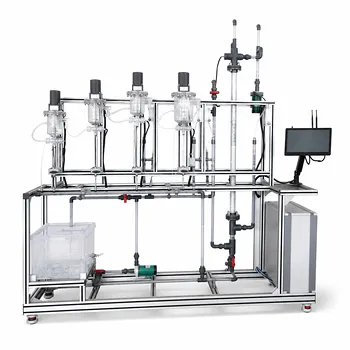
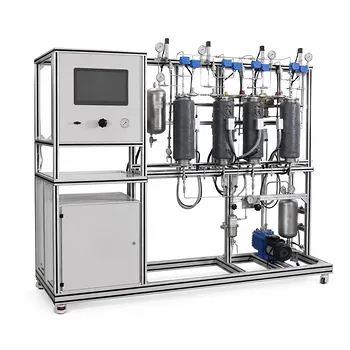
In the world of real-time process monitoring, fluorescence-based PAT isn’t just an alternative to NIR—it’s a specialized solution for problems NIR can’t solve. When integrated into bioprocess and wastewater treatment pilot plants, fluorescence techniques like Laser-Induced Fluorescence (LIF) deliver orders-of-magnitude higher sensitivity than conventional near‑infrared spectroscopy. NIR remains a workhorse for routine, multi‑component bulk analysis, but it often lacks the resolution needed for trace‑level detection, wide dynamic range, or probing subtle molecular interactions. Fluorescence fills that gap by achieving detection limits down to roughly 10⁻¹² M and offering the dynamic response required for real‑time monitoring of native fluorophores or trace contaminants.
Core Insight: NIR excels at robust, non‑destructive monitoring of higher‑concentration bulk properties—like nutrient levels or biomass—with minimal sample prep. Fluorescence dominates when you must detect ultra‑trace analytes, track conformational changes in biomolecules, or control chemical dosing to avoid costly over‑ or under‑treatment. The choice is not about superiority; it’s about matching the technology to the monitoring objective and the process environment.
The Sensitivity Gap: Why Fluorescence Detects What NIR Misses
NIR spectroscopy measures overtone and combination bands of molecular vibrations—signals that are inherently 10 to 100 times weaker than mid‑IR fundamentals. This limits its practical sensitivity.
Orders of Magnitude Lower Detection Limits
Fluorescence-based PAT directly measures photon emission from fluorophores excited by a light source. This zero‑background technique can reach picomolar (10⁻¹² M) detection limits under suitable conditions. In contrast, NIR’s weak absorption makes it poorly suited for quantifying analytes at very low concentrations; its strength lies in the millimolar to percentage range.
Wide Dynamic Range for Fluctuating Processes
Bioprocesses and wastewater streams often experience rapid swings in analyte concentration. Fluorescence sensors combine an exceptionally wide dynamic range with high sensitivity, allowing them to track both baseline and spike events without switching measurement scales. NIR can struggle to maintain accuracy across such a broad span, especially when the target signal approaches the noise floor.
NIR’s Strengths: Robust Bulk Analysis and Multi‑Component Monitoring
Where fluorescence truly shines at the trace level, NIR offers unparalleled ease of use and model stability for monitoring the major process constituents.
Selective Nutrient Measurement in Bioreactors
NIR spectroscopy can be configured with fiber‑optic probes to selectively measure critical amino acids like glutamine and asparagine directly in the complex bioreactor matrix. Research pilot plants have demonstrated standard errors of prediction as low as 0.10 mM for glutamine and mean percent errors around 2.00%—outstanding for real‑time nutrient control. This enables students and operators to maintain optimal feeding strategies without the delays of offline chromatography.
Non‑Invasive, Preparation‑Free Sampling
One of NIR’s greatest practical advantages is its ability to measure solid, liquid, or powder samples with virtually no preparation using diffuse reflectance. The low absorbance of organic materials in the NIR region allows for non‑invasive, in‑situ measurements—a stark contrast to techniques like mid‑IR that require precise ATR contact or KBr dilutions. This makes NIR the go‑to choice for rapid, online monitoring during unit operations where sample integrity must be preserved.
The Trade‑Offs: Sensitivity vs. Practicality
Choosing fluorescence over NIR introduces a distinct set of operational trade‑offs that must be carefully managed in a pilot‑plant setting.
Environmental and Matrix Sensitivity
Fluorescence signals are exquisitely sensitive to the molecular environment—pH, temperature, quenching agents, and matrix composition can all alter the emission. This sensitivity is a double‑edged sword: it yields rich information about molecular dynamics (e.g., protein folding or guest‑host interactions) but demands tight process control. NIR, by contrast, is far less perturbed by minor matrix changes, delivering more stable bulk readings.
Calibration Stability and Instrumentation Complexity
Maintaining a reliable fluorescence calibration over time means fighting photobleaching, lamp drift, and biofouling on probe optics. NIR systems—especially traditional FT‑NIR—offer excellent long‑term spectral reproducibility and resolution (1–32 cm⁻¹), which is critical for preserving predictive calibration models. While newer MEMS‑based NIR devices trade some resolution for compactness and vibration robustness, they still generally require less frequent recalibration than fluorescence setups. Fluorescence, therefore, demands a higher level of instrument care and periodic validation.
Pilot Plant Scenarios: Where Each Shines
Understanding the application context makes the technology choice clear.
Bioprocess PAT: Tracking Protein Folding and Cell Health
In biopharmaceutical pilot plants, waste costs are extreme. Laser‑Induced Fluorescence (LIF) serves as a real‑time PAT tool for monitoring intrinsic fluorophores (tryptophan, tyrosine, NADH) that report on cell metabolism and protein conformation. It captures subtle phenomena like protein folding dynamics and guest‑host interactions—information invisible to NIR. This feedback allows researchers to optimize fermentation conditions and detect early signs of process deviation.
Wastewater Control: Preventing Chemical Overdose and Discharge Violations
For environmental pilot plants, fluorescence enables real‑time chemical dosing control. LIF can track fluorescent active substances (e.g., antibiotics) in effluent streams, precisely modulating the addition of chemical oxidants. This prevents both untreated discharge—which could cause environmental contamination—and the unnecessary expense of overdosing treatment chemicals. NIR would not detect these trace contaminants at the required levels, making fluorescence the only viable PAT solution for compliance-driven water treatment.
Making the Right Choice for Your Pilot Plant
The right technology aligns with your monitoring objective and tolerance for complexity.
- If your primary focus is ultra‑trace detection or molecular‑level insight: Choose fluorescence‑based PAT (LIF). It gives you the sensitivity and dynamic range to monitor trace contaminants, protein folding, and rapid kinetic changes that NIR cannot see.
- If your primary focus is robust, multi‑parameter bulk monitoring with minimal maintenance: Stick with NIR spectroscopy. It delivers selective, non‑destructive quantification of nutrients, biomass, and metabolites with excellent long‑term model stability and almost zero sample handling.
- If you need to balance cost and performance in educational or resource‑limited pilot plants: Start with NIR for foundational unit operations and add a fluorescence module for advanced studies in molecular interactions or trace analysis, using modular probe designs that can share sample interfaces.
Fluorescence and NIR are not competitors—they are complementary tools. Mapping your critical control parameters to each technique’s strengths is the clearest path to a reliable, data‑rich pilot plant.
Summary Table:
| Feature | Fluorescence-Based PAT (LIF) | NIR Spectroscopy |
|---|---|---|
| Sensitivity | High (down to 10^-12 M / picomolar) | Moderate (millimolar to percentage) |
| Primary Strength | Trace-level detection & molecular dynamics | Bulk analysis & multi-component monitoring |
| Matrix Sensitivity | High (highly sensitive to pH, temp, quenching) | Low (stable and robust bulk readings) |
| Calibration | Requires frequent validation & optical care | Highly stable long-term prediction models |
| Best Suited For | Protein folding, cell health, trace pollutants | Nutrient tracking (e.g., glutamine), biomass |
Optimize Your Process Monitoring with LABPARK
Are you looking to integrate advanced process analytical technologies (PAT) like NIR or fluorescence spectroscopy into your training or research workflows?
LABPARK provides premium Educational and Vocational Unit Operations Pilot Plants in chemical engineering, bioprocess & biotech, and environmental & water treatment. Designed specifically for universities, research institutes, and enterprises, our pilot plants enable hands-on learning and precise scale-up testing.
Contact LABPARK today to discuss your pilot plant requirements and find the perfect configuration for your facility!
Related Products
- Multifunctional Membrane Separation Educational Pilot Plant with Ultrafiltration, Nanofiltration, Reverse Osmosis
- Photocatalytic Membrane Separation and Degradation Unit Operations Pilot Plant
- Ultrafiltration Membrane Separation Educational Pilot Plant
- Solid Waste Pyrolysis and Refining Educational Pilot Plant for Unit Operations
- Pressure Swing Adsorption Educational Unit Operations Pilot Plant
People Also Ask
- How do PEI, PVDF, and PSU membranes compare in pilot plants? Find the best fit.
- Pervaporation vs. Vapor Permeation: Handling Suspended Solids in Membrane Pilot Plants
- What are the trade-offs of polymer vs inorganic membranes in teaching pilot plants? Key laboratory comparison.
- What are the advantages of membrane separation in pilot plants? Efficient Organic Vapor Recovery
- How can operators optimize operating conditions and cleaning protocols in membrane separation pilot plants to mitigate fouling?