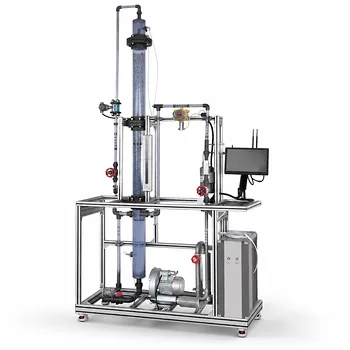
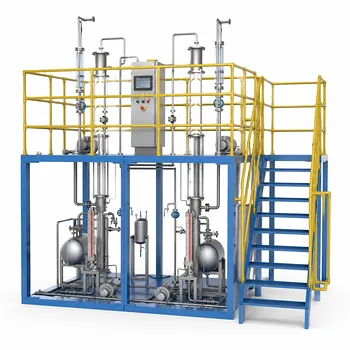
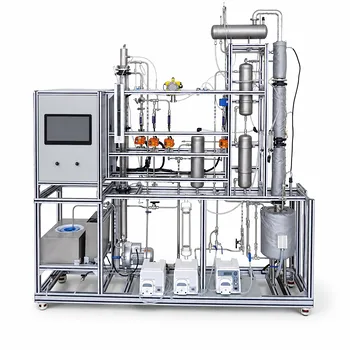
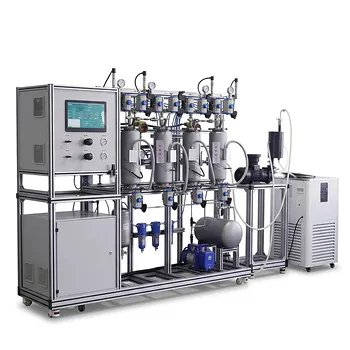
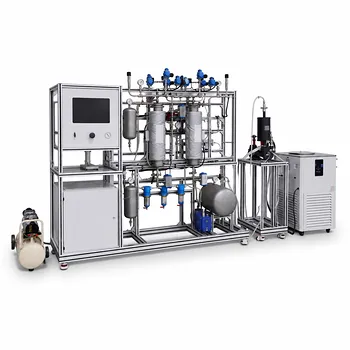
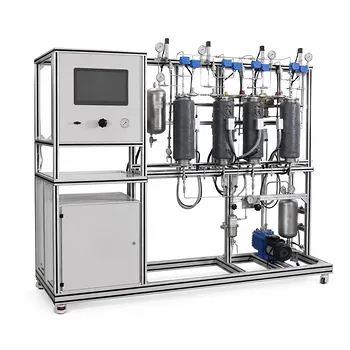
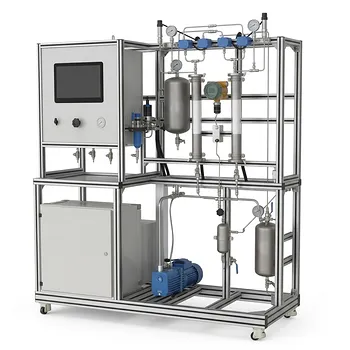
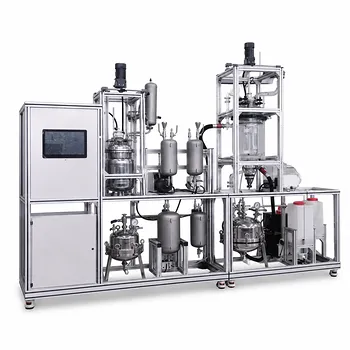
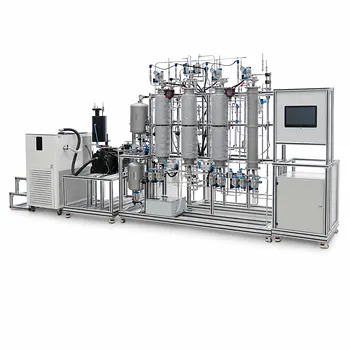
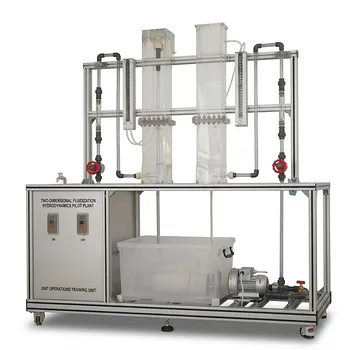
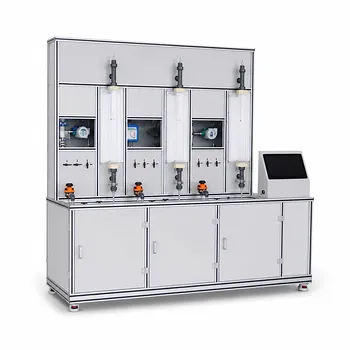
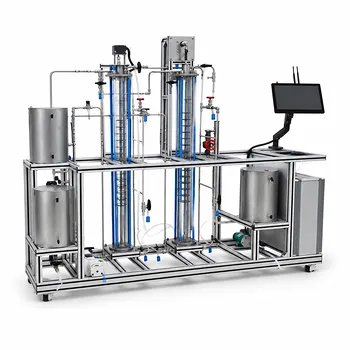
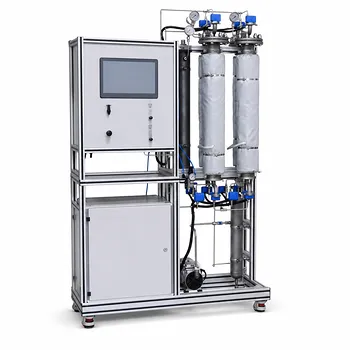
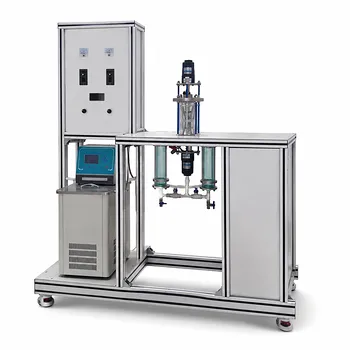
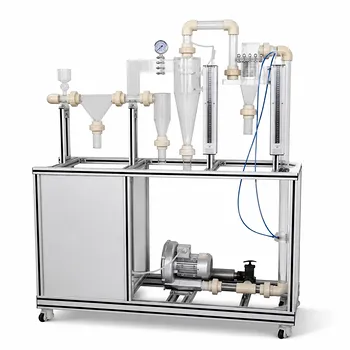
The simulation is achieved through a scaled-down, multi-stage column where countercurrent gas-liquid contact, stratified gas injection, and rigorous thermal management recreate the exact thermodynamic and kinetic conditions of a full-scale carbonization tower. A gas-liquid absorption pilot plant replicates the industrial soda ash carbonization process by introducing carbon dioxide (CO₂) gas of different concentrations at multiple heights into a column flowing with descending ammoniacal brine. This setup allows students and researchers to systematically study the absorption efficiency, temperature profiles, and precipitation dynamics that define the continuous industrial operation.
The pilot plant’s core value lies not in producing tons of soda ash, but in physically demonstrating the interplay between mass transfer, chemical equilibrium, and crystallization. By controlling the liquid-to-gas ratio, gas concentration, and cooling duty, it transforms the abstract equations of chemical engineering into a tangible, measurable system where the precipitation of sodium bicarbonate (NaHCO₃) can be observed and optimized in real time.
Replicating the Industrial Countercurrent Absorption
The carbonization tower in a soda ash plant is fundamentally a countercurrent absorption column. The pilot plant mimics this by establishing a controlled, vertical flow regime where liquid and gas travel in opposite directions to maximize the driving force for mass transfer.
The Role of Multi-Stage Contact and Countercurrent Flow
In the pilot column, ammoniacal brine (NaCl saturated with NH₃) is fed from the top, while CO₂ gas enters from the bottom. This countercurrent movement creates a steep, sustained concentration gradient along the entire column height.
The liquid becomes progressively richer in dissolved CO₂ as it descends, while the gas is stripped of its reactive component as it rises. This ensures the highest possible absorption efficiency, exactly as designed in the industrial process. By measuring the concentration of bicarbonate ions at various taps along the column, you can directly quantify how this gradient drives the reaction forward.
Stratified Gas Introduction for Industrial Gas Profiles
One of the most distinctive features of the industrial Hou process is the use of multiple CO₂ gas streams with different purities. The pilot plant physically simulates this through multi-point gas introduction ports.
A typical configuration feeds low-concentration “kiln gas” (~43% CO₂) at a middle section of the column, where the brine’s alkalinity is still high and can readily absorb a weaker stream. Then, high-concentration gas (>90% CO₂ from a calciner) is introduced at the bottom to polish the remaining ammonia and push the conversion to completion. This stratified approach prevents the inefficient use of pure gas and reflects a key operating optimization that the pilot plant makes visible.
Managing the Exothermic Reaction and Crystallization
The absorption of CO₂ into the ammoniacal brine is highly exothermic. If left unchecked, the temperature would rise above 30°C, which is detrimental because sodium bicarbonate has significantly lower solubility at cooler temperatures.
The pilot plant replicates this thermal challenge by integrating heat exchangers or a cooling jacket along the column and in the crystallizer section. Students can monitor thermocouples, adjust cooling water flow, and directly observe how holding the temperature below the critical threshold triggers the formation of sodium bicarbonate crystals. This demonstrates the vital link between thermal control and the crystallization yield that is central to industrial profitability.
Bridging Theory and Practice: Design vs. Operating Calculations
Beyond physical replication, the pilot plant serves as a bridge between the theoretical models taught in the classroom and the real-world constraints of a running process. It allows for the execution of two core types of calculations.
Performing Design Calculations to Understand Scale
Before running the pilot plant, you can apply design calculation methods—like the Kremser equation or graphical integration to determine the Height of a Transfer Unit (H_OG) —to predict the required packing height for a target absorption efficiency. These calculations assume fixed feed conditions and separation goals.
You then run the column with those specifications and compare the actual outlet concentrations to your predictions. The gap between theory and reality teaches you about the imperfect efficiencies and wetting rates that real packing material exhibits, knowledge that is crucial when scaling up to an industrial tower.
Executing Operating Calculations for Real-Time Optimization
Once the column is running, the focus shifts to operating calculations. Here, you change one variable—for instance, increasing the liquid-to-gas ratio (L/V) —and predict how that will shift the outlet CO₂ concentration and bicarbonate yield.
The pilot plant’s instruments provide real-time data on flow rates, temperatures, and compositions. By performing these calculations and immediately seeing the empirical result, you build an intuitive understanding of how an industrial operator would respond to a process upset, such as a fluctuation in kiln gas supply or a change in brine quality.
Understanding the Trade-offs of Pilot-Scale Simulation
A pilot plant is a powerful tool, but it cannot be a perfect, scaled-down replica. Acknowledging these limitations is essential for interpreting the results correctly and avoiding costly scale-up errors.
The Challenge of Continuous Crystallization
In a full-scale industrial tower, sodium bicarbonate crystals grow and are withdrawn as a continuously flowing slurry from the base, while the liquid level and residence time are tightly controlled. Pilot plants often use a separate, jacketed crystallization reactor to study the precipitation step.
This decoupling can simplify operation and prevent column clogging, but it means the pilot plant does not always capture the complex interaction between fluid dynamics and crystal growth that occurs in a single, integrated industrial tower. This is a compromise made for the sake of experimental clarity and flexibility.
Scaling Effects in Fluid Dynamics
The fluid dynamics of gas-liquid contact are heavily dependent on column diameter. A small-diameter pilot column can experience wall effects, where liquid preferentially flows down the internal wall of the column rather than distributing evenly through the packing. This leads to an artificially high mass transfer coefficient that would not be replicated in a commercial-scale tower. Recognizing this helps you interpret pilot data more critically, using it to validate models rather than simply applying the measured efficiency numbers directly to a larger design.
Making the Right Choice for Your Learning Goal
The pilot plant’s instrumentation and configurability allow you to tailor experiments to specific educational or research objectives. Your focus will determine which aspect of this powerful simulation you should prioritize.
- If your primary focus is process fundamentals: Concentrate on the countercurrent flow and stratified gas injection. Run the column at a fixed L/V ratio and map the concentration profiles of both phases to deeply understand the absorption equilibrium and the impact of multi-stage gas introduction.
- If your primary focus is optimization and control: Manipulate the L/V ratio and the cooling water flow rate. Perform the operating calculations before each change and then verify how these variables directly impact the bicarbonate yield and purity, building practical troubleshooting skills for industrial operations.
- If your primary focus is scale-up and validation: Use the pilot plant to verify a design calculation model such as the Kremser equation. Measure the H_OG under different flow rates, consciously account for wall effects, and learn how to translate this data into a safer, more reliable estimate for a full-scale tower height.
The gas-liquid absorption pilot plant is not just a simulator; it is a physical hypothesis-testing machine that transforms the invisible, quantum-scale dance of gas molecules into a predictable, macroscopic process you can control.
Summary Table:
| Feature | Industrial Carbonization Tower | Pilot Plant Simulation |
|---|---|---|
| Flow Type | Countercurrent flow of ammoniacal brine and CO2 | Replicated via adjustable L/V ratios and column packing |
| Gas Feed | Stratified CO2 (kiln + calciner gas) at multiple heights | Multi-point gas introduction ports for varying purities |
| Thermal Control | Highly exothermic; requires precise internal cooling | Integrated heat exchangers, cooling jackets, and thermocouples |
| Crystallization | Continuous NaHCO3 precipitation and withdrawal | Often decoupled using a separate jacketed crystallization reactor |
Bring Industrial Reality to Your Lab with LABPARK
Are you looking to bridge the gap between chemical engineering theory and industrial practice? LABPARK provides state-of-the-art Educational and Vocational Unit Operations Pilot Plants in chemical engineering, bioprocess & biotech, and environmental & water treatment for universities, research institutes, and enterprises.
Our highly configurable systems—including gas-liquid absorption pilot plants—allow students and researchers to master mass transfer, thermodynamic calculations, and real-time process optimization in a controlled environment.
Contact LABPARK today to discover how we can customize the perfect pilot plant solution for your lab!
Related Products
- Packed Bed Absorption Educational Unit Operations Pilot Plant
- Dual-Mode Gas Absorption and Desorption Unit Operations Training Pilot Plant
- Absorption and Desorption Educational Unit Operations Pilot Plant
- Carbon Dioxide Absorption and Desorption Educational Pilot Plant for Carbon Capture Studies
- Multi-Component Gas Pressure Swing Adsorption Pilot Plant for Unit Operations Education
People Also Ask
- How Do Flow Regimes Transition in Packed Bed Pilot Plants? Key Scale-up Insights
- How does reactant concentration determine absorption column control? Gas-film vs. dual-film.
- How is the packing height of an absorption column calculated? Master HTU & NTU Concepts
- How does static vs. operating holdup affect pilot plant calibration? Avoid Critical Scale-Up Errors
- Why is counter-current flow selected for gas absorption? Maximize Pilot Plant Efficiency