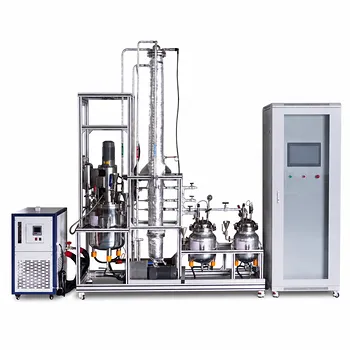
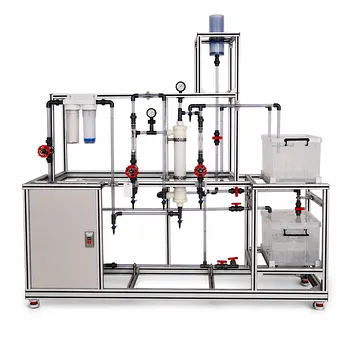
Thin-layer chromatography (TLC) is the indispensable scouting tool—pilot plants then translate its solvent and stationary-phase insights into preparative-scale column chromatography by preserving critical separation parameters while multiplying throughput. In a pilot plant, the same mobile phase ratio that separated your capsanthin spots on a silica TLC plate is pumped through a large-diameter column packed with the same silica gel, with precise flow control, pressure monitoring, and automated fraction collection to recover individual natural compounds at gram-to-kilogram scale. The core challenge is maintaining the separation quality you saw on the TLC plate despite the massive increase in column volume and sample load.
The bridge from TLC to pilot‑scale column chromatography hinges on keeping the linear flow rate and bed height constant while increasing column diameter and volume, and on managing column packing uniformity and fluid distribution to avoid the band broadening that destroys purity at scale.
From Analytical TLC to Preparative Column Chromatography
TLC Screens Solvent Systems and Stationary Phases
The laboratory‑scale TLC plate is not just a qualitative tool—it systematically maps the separation space. By testing mobile phases like a 9:1 ratio of petroleum ether to ethyl acetate, you identify which solvent combination gives the best resolution between target natural pigments (capsanthin, capsorubin, beta‑carotene) on a given stationary phase, usually silica gel. This screening directly defines the elution conditions that will be used in the pilot column.
The Pilot Plant Replicates TLC Conditions at Scale
A pilot‑scale column simply extends the TLC principle into three dimensions. The same stationary phase chemistry and the same mobile phase composition are loaded into a large, vertically oriented column. However, gravity‑fed glass columns are replaced with industrial‑grade hardware that enforces uniform flow, constant pressure, and reproducible separation dynamics. The pilot plant transforms a spot‑based visual separation into a fraction‑based purification process ready for industrial adaptation.
How Pilot Plants Preserve Separation Efficiency at Scale
The Constant Linear Velocity and Bed Height Principle
A foundational scale‑up rule keeps the elution profile intact: linear flow rate (cm/min) and bed height are held constant. As you move from a small‑diameter lab column to a pilot column, you increase the column diameter and the packed bed volume, which raises volumetric throughput without changing the residence time of solutes in the column. This direct geometrical scaling prevents the distortion of the concentration profile that would otherwise reduce purity and recovery.
Minimizing Band Broadening: HETP and Column Packing
Maintaining a low Height Equivalent to a Theoretical Plate (HETP) is the central design goal. A low HETP means the column behaves as if it has many small equilibrium stages, giving sharp peaks. At pilot scale, this is achieved by:
- Using optimized stationary phase particle size and ensuring uniformity to suppress eddy diffusion.
- Employing automated slurry packing systems that eliminate cracks, voids, and air pockets—defects that cause channeling and band broadening.
- Keeping the adsorbent bed flat and continuously wetted with solvent, which prevents drying artifacts that ruin separation.
Column Geometry Adjustments for Difficult Separations
Not all natural‑product fractions separate easily. When the selectivity factor (alpha) is very low (α < 1.15), you need many theoretical plates, so pilot columns are designed to be longer and narrower to maximize plate count. When selectivity is high (α > 1.15), you can afford to lose a few plates and instead use wider, larger‑diameter columns that dramatically increase sample throughput.
Distributor Plates and Radial Mixing
In a wide column, the mobile phase cannot simply enter at the top and flow uniformly—wall effects and radial velocity gradients become significant. Pilot plants incorporate specialized distributor plates, baffles, and headplates to evenly spread the incoming flow across the entire cross‑section. This promotes radial mixing, reduces axial dispersion, and ensures that every solute molecule experiences the same effective bed height, just as it would in a well‑packed narrow column.
Critical Pilot Plant Hardware for Reliable Scale‑Up
Automated Slurry Packing Systems
Hand‑packing a wide column is nearly impossible to do uniformly. Pilot plants use slurry tanks and pumps to transfer a suspension of stationary phase particles into the column under pressure. The bed settles evenly, and the process can be repeated with consistent density—a prerequisite for reproducible HETP values from run to run.
Precise Flow and Pressure Control
Pilot columns operate under controlled pressure, often with back‑pressure regulators and calibrated pumps. This is essential because as you scale up the bed volume with a constant linear velocity, the pressure drop increases with bed height and flow resistance. Maintaining the set pressure profile prevents bed compression and ensures the elution profile matches the lab‑scale prediction.
Automated Fraction Collection and Monitoring
The pilot plant’s automated fraction collector is directly analogous to scraping spots off a TLC plate—but it works continuously. In‑line detectors (UV‑Vis, RI) monitor the eluate in real time, and the system switches collection vessels when a peak begins and ends. This turns the visual spots of a TLC plate into quantified, high‑purity fractions ready for further downstream processing.
Understanding the Trade‑offs
Scaling up from TLC to a pilot column never comes free. Increased column diameter can reduce plate count unless flow distributors are perfectly engineered. Higher sample loading may push the stationary phase into non‑linear adsorption, broadening peaks. Narrow, long columns give excellent resolution but suffer from high back pressure and lower throughput. If column packing is not flawless, channeling will let solvent bypass the stationary phase, making the final purity worse than what a simple TLC plate suggested. All of these must be carefully mapped within the process design space using multivariate experiments.
Making the Right Choice for Your Goal
- If your primary focus is maximum purity: Prioritize packing quality and HETP reduction; use longer, narrower columns and sacrifice some throughput for sharp peaks.
- If your primary focus is high throughput: Select wider columns, optimize loading up to the resin’s capacity limit (e.g., >30 g/L), and use flow distributors to keep radial velocity as uniform as possible.
- If your primary focus is educational or process‑development insight: Choose a pilot plant with adjustable bed heights, visible columns, and the ability to vary flow and pressure—this lets you map the design space and observe scale‑sensitive phenomena firsthand.
By meticulously translating the two‑dimensional separation of a TLC plate into a fully instrumented three‑dimensional column, pilot plants give you the predictive control needed to purify natural compounds at industrial readiness.
Summary Table:
| Scale-Up Parameter | TLC (Scouting Phase) | Pilot Column (Scale-Up Phase) |
|---|---|---|
| Primary Objective | Screen solvents & stationary phases | Gram-to-kilogram purification |
| Flow Control | Capillary action / Gravity | Precision pumps & pressure regulators |
| Scale-Up Rule | N/A | Keep linear velocity & bed height constant |
| Fluid Distribution | Natural diffusion | Specialized distributor plates & baffles |
| Monitoring | Visual spots (UV/chemical stain) | In-line UV-Vis/RI detectors & fraction collectors |
Bridge the Gap from Lab-Scale Trials to Industrial Purification
Mastering the complexities of process scale-up requires hands-on experience with industry-grade equipment. LABPARK provides state-of-the-art Educational and Vocational Unit Operations Pilot Plants in chemical engineering, bioprocess & biotech, and environmental & water treatment tailored for universities, research institutes, and enterprises.
Our pilot plants allow students and researchers to safely study chromatography dynamics, fluid distribution, pressure control, and scale-up parameters in a controlled environment.
Ready to elevate your training facilities or research capabilities? Contact us today to discuss your custom pilot plant configuration!
Related Products
- Multi-Functional Membrane Separation Educational Pilot Plant for Unit Operations Lab
- Gas-Solid Heterogeneous Separation Demonstration Educational Unit Operations Pilot Plant
- Hot Filtration Educational Unit Operations Pilot Plant Laboratory System
- Bio-fermentation Ethanol Production Practical Training Unit Operations Pilot Plant
- Pressure Swing Adsorption Educational Unit Operations Pilot Plant
People Also Ask
- What are the key differences in membrane configurations? Choose the Right Unit Operations Pilot Plant
- How Do Pervaporation, Vapor, and Gas Permeation Differ in Pilot Plants? Key Comparison
- What are the advantages of membrane separation pilot plants? Energy-saving process intensification.
- Pervaporation vs. Vapor Permeation: Handling Suspended Solids in Membrane Pilot Plants
- How do PEI, PVDF, and PSU membranes compare in pilot plants? Find the best fit.