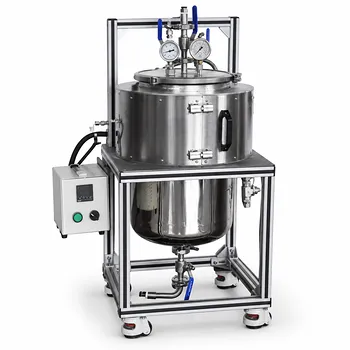
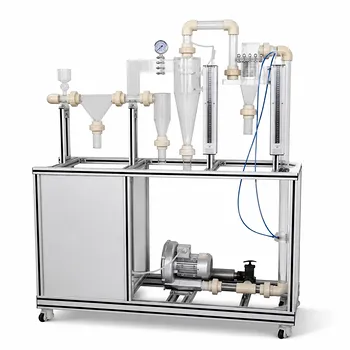
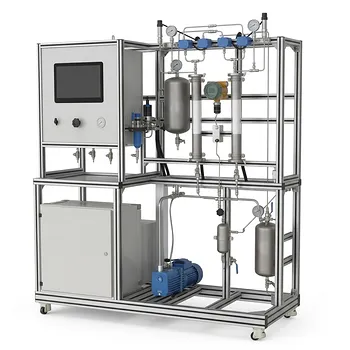
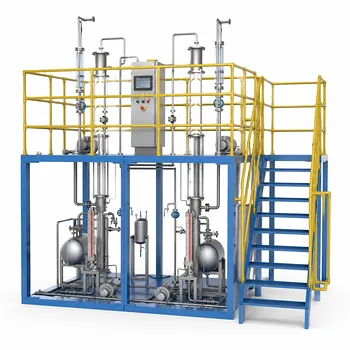
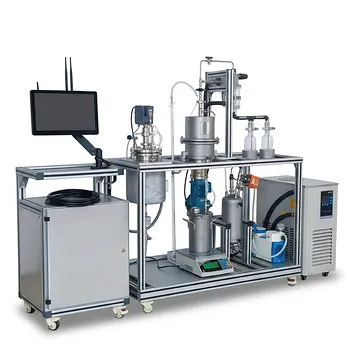
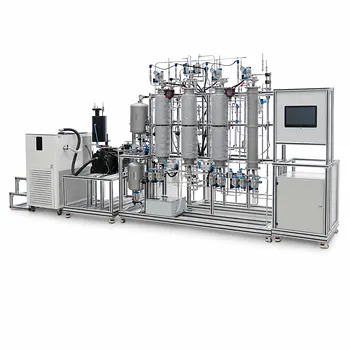
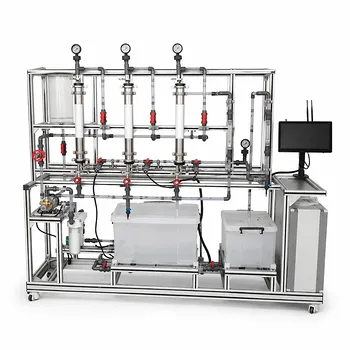
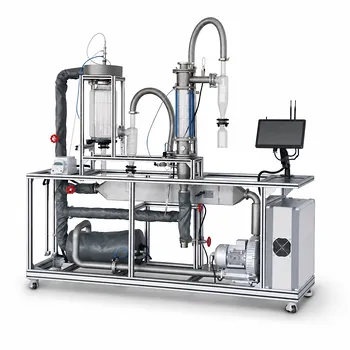
Heating and electrostatic treatment directly accelerate oil-water separation by altering physical properties and inducing droplet coalescence. Increasing the temperature of an emulsion lowers the continuous-phase viscosity and often widens the density difference between oil and water, both of which boost settling velocity. Electrostatic fields, in turn, cause small water droplets to collide and merge into larger particles that rise or settle far faster. In a unit operations pilot plant, these effects are made visible: by precisely adjusting flow rates, heater settings, and applied voltage, you can observe droplet behavior in real time, measure separation efficiency, and validate the sizing equations that guide industrial scale‑up.
At its core, oil-water separation is a race between buoyancy and drag. Heating tips the balance by making the fluid less resistant and the phases more distinct; electrostatic treatment wins the race by building bigger, faster-moving droplets. Pilot‑scale separators let you watch this physics play out while generating the hard data needed to design full‑size equipment.
The Physics of Oil‑Water Separation
The separation of any liquid‑liquid dispersion is governed by Stoke’s‑law‑type settling. The terminal velocity of a discrete droplet depends on the square of its diameter, the density difference between the two phases, and the inverse of the continuous‑phase viscosity. Boosting any of these factors—or reducing the one that holds droplets back—directly increases the rate at which clean water and dry oil can be recovered.
How Heating Accelerates Separation
Raising the emulsion temperature attacks the problem on two fronts. First, heating lowers the viscosity of the oil (and often the water), cutting the drag force that opposes droplet movement. Second, the density difference between oil and water typically increases, because water’s density changes less with temperature than that of most hydrocarbons. A larger buoyancy force combined with less fluid resistance means that even small droplets begin to rise or settle much more quickly.
The pilot‑plant demonstration is straightforward. A heated feedstock tank and an in‑line heat exchanger allow you to raise the emulsion temperature in controlled steps. As temperature increases, the separation time observed in a sight glass shortens dramatically, and the water‑cut of the exiting oil stream drops. You can directly plot separation efficiency versus temperature and confirm the relationship predicted by settling‑velocity models.
How Electrostatic Coalescence Works
Electrostatic treatment tackles the droplet‑size term, which has the greatest influence on settling velocity. When a high‑voltage DC field is applied across the emulsion, polarized water droplets acquire induced charges. The resulting dipole‑dipole forces pull small droplets toward one another, overcoming the stabilizing film of surfactants. The droplets fuse into larger, millimeter‑scale drops that separate under gravity orders of magnitude faster than the original micron‑sized dispersion.
In a pilot plant, this is achieved by inserting an insulated electrode inside the separation vessel. As you ramp up the voltage, you can visually track the rapid growth of water droplets at the coalescing section. Yield measurements show that even a modest field (2‑5 kV) can cut the required residence time by a factor of ten compared to a purely gravity‑driven settler.
Demonstrating Principles in Unit Operations Pilot Plants
A well‑instrumented pilot plant transforms abstract theory into a tangible, tunable experiment. The system typically contains a mixing stage, a coalescer‑separator vessel, and instrumentation to control flow, temperature, and electric field.
Simulating Real‑World Variables
Flow rate, temperature, and voltage become independent knobs. By varying the emulsion throughput, you see the direct trade‑off between residence time and separation quality. By adjusting the heater power, you measure the viscosity‑density interplay. And by altering the electric field strength, you map the coalescence “sweet spot” where droplet growth is maximized without causing electrical short‑circuits or re‑emulsification.
Data loggers capture inlet and outlet water‑cut, pressure drop, and power consumption. This lets you validate the mathematical scale‑up equations—like the required electrode area or vessel diameter—that engineers use to size industrial treaters. The immediacy of the results is what makes the pilot plant such a powerful teaching and research tool.
Integrating Advanced Separation Techniques
Beyond the basic heating/electrostatic combination, pilot plants can demonstrate process intensification by incorporating solid‑state demulsifier adsorbers. For example, hydrophilic micro‑porous polymers (such as sulfonated PolyHIPE materials) can be placed downstream of the electrostatic cell. The polymer removes residual surfactants and fine water droplets, sustaining separation efficiencies above 70 % even at flow rates where the electrostatic section alone would fail. This configuration allows operators to study synergistic effects—how the electric field breaks the emulsion and the adsorber polishes the output—providing a complete picture of modern industrial demulsification.
Understanding the Trade‑offs
Every process lever comes with a boundary condition. A clear‑eyed view of these limitations is essential for designing effective experiments and for interpreting pilot‑plant data correctly.
The Heavy Oil Viscosity‑Density Dilemma
While heating almost always helps light oils, heavy crudes (below 15°API) can defy the trend. Their viscosity decreases rapidly with temperature, but the density difference between the oil and water phases may actually shrink. In extreme cases, the loss of buoyancy can cancel out the viscosity gain, and the separation rate plateaus or even worsens. A decantation pilot trainer lets you map this plateau by monitoring separation speed at multiple temperature points. Students learn that “more heat” is not a universal answer and that the density‑viscosity trade‑off must be quantified for each crude.
Flow Rate and Residence Time Constraints
Increasing the emulsion throughput shortens the time droplets spend in the electric field. Beyond a critical flow rate, immediate phase separation can cease altogether because droplets do not have enough time to coalesce fully. In pilot studies, adding an integrated polymer demulsifier adsorber can maintain high efficiency up to about 90–100 mL/min at 2.5 kV. Without the adsorber, the same system may require hours of quiescent settling to achieve comparable results. This illustrates the reactor‑engineering principle that performance is a function of both intrinsic kinetics and residence time distribution.
Safety in High‑Voltage Separators
Pilot plants that combine flammable hydrocarbons and DC voltages up to 30 kV demand rigorous safety protocols. An automatic current cut‑off (typically tripping at 15 mA) prevents overheating and ignition. All high‑voltage electrodes must be fully insulated—often with multiple layers of lacquer—and a mandatory discharge period (at least 10 minutes) must be observed before personnel handle the cell. Secure rubber gasket seals eliminate the risk of leaking a flammable emulsion around the energized electrodes. These measures transform a potentially dangerous system into a controlled laboratory environment where students can safely explore the principles of electro‑coalescence.
Making the Right Choice for Your Pilot Plant Demonstration
How you configure your pilot plant depends entirely on whether you are teaching fundamentals, researching process optimization, or preparing for industrial scale‑up.
- If your primary focus is teaching core principles: Use a simple gravity settler with a variable heater and a single electrostatic stage. The clear cause‑and‑effect relationship between temperature, voltage, and separation efficiency makes abstract equations tangible.
- If your primary focus is process intensification research: Integrate a solid‑state polymeric adsorber after the electrostatic cell. This setup reveals the limits of electric‑field‑only treatment and opens a window into synergistic separation mechanisms.
- If your primary focus is industrial scale‑up validation: Instrument the pilot plant to capture precise temperature, voltage, flow, and water‑cut data under controlled residence times. Use this data to anchor your computer models and to test scale‑up correlations under realistic fouling and feed variability.
By systematically exploiting temperature and electric fields, a well‑designed pilot plant becomes your most honest teacher—it does not guess, it shows you exactly how oil and water choose to part ways.
Summary Table:
| Separation Method | Primary Mechanism | Key Pilot Plant Variable | Main Limitation / Trade-off |
|---|---|---|---|
| Heating | Lowers oil viscosity and alters phase density difference | Feed temperature | Efficiency may plateau or drop with heavy crudes |
| Electrostatic Coalescence | Induces dipole-dipole forces to merge small water droplets | Applied voltage (2–5 kV) | Shortened residence time at high flow rates |
| Polymer Adsorption | Captures residual surfactants and polishing fine droplets | Adsorber placement & flow rate | Potential pressure drop and eventual material saturation |
Bring Industrial Separation Theory to Life in Your Lab
Looking to demonstrate complex separation physics or validate scale-up models? LABPARK provides state-of-the-art Educational and Vocational Unit Operations Pilot Plants in chemical engineering, bioprocess & biotech, and environmental & water treatment.
Designed specifically for universities, research institutes, and enterprises, our robust pilot plants help your students and researchers safely visualize, test, and master advanced separation techniques.
Ready to upgrade your laboratory capabilities? Contact LABPARK today to discuss your custom pilot plant requirements!
Related Products
- Multi-Functional Membrane Separation Educational Pilot Plant for Unit Operations Lab
- Multi-Modal Distillation Unit Operations Training Pilot Plant
- Multi-Reactor Educational Pilot Plant for Reaction Engineering Unit Operations
- Natural Product Extraction Unit Operations Training Pilot Plant
- Hot Filtration Educational Unit Operations Pilot Plant Laboratory System
People Also Ask
- What are the key differences in membrane configurations? Choose the Right Unit Operations Pilot Plant
- How Do Pervaporation, Vapor, and Gas Permeation Differ in Pilot Plants? Key Comparison
- What are the advantages of membrane separation pilot plants? Energy-saving process intensification.
- How do PEI, PVDF, and PSU membranes compare in pilot plants? Find the best fit.
- Pervaporation vs. Vapor Permeation: Handling Suspended Solids in Membrane Pilot Plants