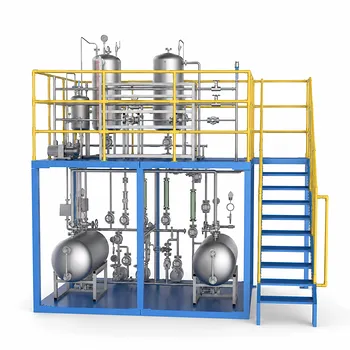
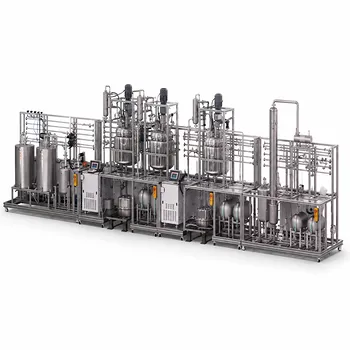
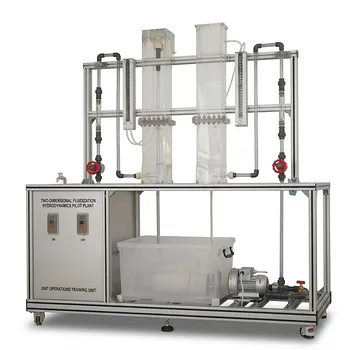
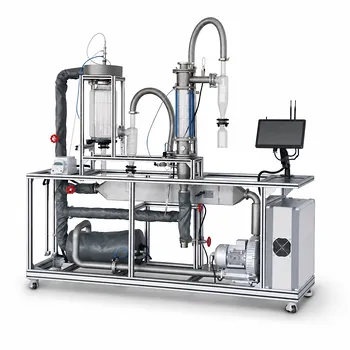
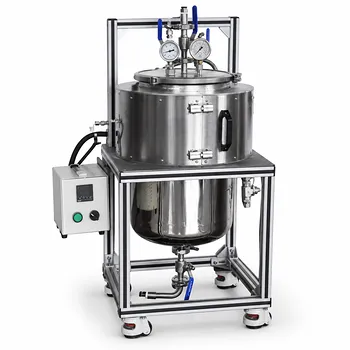
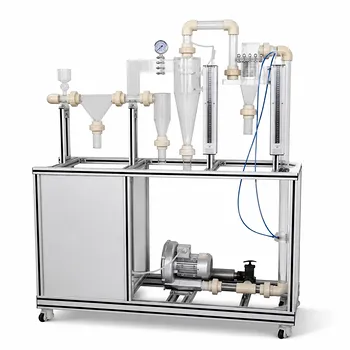
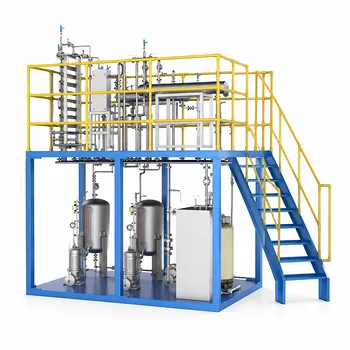
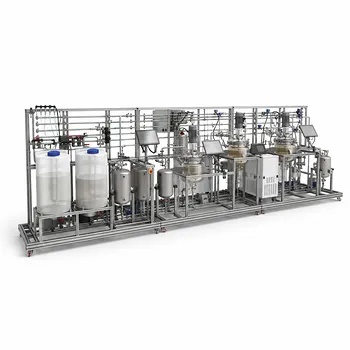
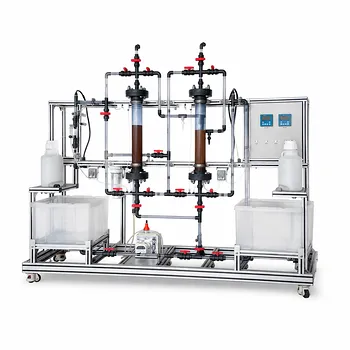
Pilot plants demonstrate the difference by making stoichiometric dosing tangible. You can calculate exact lime and soda ash requirements from raw water alkalinity, magnesium, and total hardness values, then directly observe which chemical combination precipitates carbonate hardness versus non-carbonate hardness. In a running pilot unit, carbonate hardness consumes only lime, while non-carbonate hardness demands soda ash—and magnesium’s double requirement becomes unmistakably visible as you track pH, alkalinity differential, and precipitate volume in real time.
The core insight: A chemical softening pilot plant converts abstract water chemistry into a visible, measurable process. By systematically adjusting lime and soda ash dosages based on M-alkalinity, magnesium hardness, and total hardness, you can prove that temporary hardness is removed by lime alone, permanent hardness requires soda ash, and magnesium’s need for both chemistries reveals itself in shifting alkalinity differentials and precipitate characteristics.
The Two Faces of Hardness: Carbonate and Non-Carbonate
Carbonate Hardness: Lime Does the Heavy Lifting
Carbonate hardness (temporary hardness) travels with bicarbonate alkalinity. Adding lime (calcium hydroxide) converts soluble calcium bicarbonate into insoluble calcium carbonate, which precipitates.
One equivalent of lime removes one equivalent of calcium carbonate hardness. For magnesium carbonate hardness, the stoichiometry doubles—two equivalents of lime are needed because magnesium must be precipitated as magnesium hydroxide rather than as a carbonate.
Non-Carbonate Hardness: Enter Soda Ash
Non-carbonate hardness (permanent hardness) lacks a built‑in source of carbonate. Soda ash (sodium carbonate) supplies the missing carbonate ions to precipitate calcium as calcium carbonate.
Non-carbonate calcium hardness requires one equivalent of soda ash. Non-carbonate magnesium hardness is more demanding: it requires one equivalent of soda ash plus one equivalent of lime to both supply carbonate and raise the pH high enough to precipitate magnesium hydroxide.
The Pilot Plant as a Living Laboratory
A unit‑operations pilot plant transforms textbook equations into hands‑on proof. You set up continuous flow, mix chemicals, settle solids, and analyze effluent, directly watching how the type of hardness dictates the chemical recipe.
Dosing Formulas Reveal the Split Instantly
When total hardness exceeds M-alkalinity, the water contains both carbonate and non-carbonate fractions. The pilot plant uses two distinct dosing formulas that immediately separate the roles of lime and soda ash.
- Lime required (ppm) = (M‑alkalinity + magnesium hardness) × factor₁
- Soda ash required (ppm) = (Total hardness – M‑alkalinity) × factor₂
These formulas make the demonstration crystal clear. Soda ash is only used when total hardness outruns alkalinity—directly proportional to the non-carbonate fraction. The pilot plant lets you adjust these masses in real time and measure the resulting residual hardness.
Observing Precipitation Dynamics in Real Time
Running the plant allows you to see floc formation and settling. Carbonate precipitation often yields a finer, slower‑settling flock, while conditions that force magnesium hydroxide precipitation produce a fluffier, more voluminous solids phase.
The differential alkalinity (2P – M) becomes a live control lever. To ensure efficient magnesium removal, operators keep this value between 12 and 18 ppm. Watching the differential climb as lime is added tells you exactly when magnesium starts to precipitate—a visible transition that pure theory cannot convey.
Validating Stoichiometry Through Water Analysis
Pilot plants provide sampling taps before and after each unit. Measuring total hardness, calcium hardness, magnesium hardness, and M-alkalinity at every stage proves the chemical logic.
- Treating only carbonate hardness with lime drives down both hardness and M-alkalinity.
- Removing non-carbonate hardness with soda ash drops hardness while M-alkalinity stays nearly constant—the added carbonate replaces what is precipitated, leaving alkalinity largely unchanged.
This direct measurement shows that carbonate removal consumes alkalinity, while non-carbonate removal relies on externally supplied carbonate, a difference you can chart across multiple pilot runs.
Understanding the Trade-offs in a Pilot Demonstration
Running a softening pilot plant also exposes practical limitations. Perfect stoichiometry is idealized; wastewater sludge handling, mixing energy, and temperature can skew results.
- Sludge volume: Non-carbonate removal with soda ash creates a larger mass of calcium carbonate sludge, making handling more burdensome.
- Over‑dosing risks: Adding too much lime can push the differential too high, leading to scaling, excessive pH, or carryover of magnesium hydroxide fines.
- Analytical lag: Real‑time hardness and alkalinity measurements have delays, so the pilot plant shows that formula‑based dosing must be paired with operational feel and periodic verification.
These trade-offs demonstrate why textbook stoichiometry is a starting point, not the final answer.
Making the Right Choice for Your Pilot Demonstration
Tailoring the pilot plant’s operation to your learning goal will make the difference between carbonate and non-carbonate hardness unmistakable.
- If your primary focus is understanding the stoichiometric split: Create a synthetic feed with known carbonate and non-carbonate fractions, then dose exactly as the formulas prescribe and compare residual hardness.
- If your primary focus is visualizing the process: Run side‑by‑side trials—one dose of lime only, one dose of lime plus soda ash—and film the floc formation, settling rates, and turbidity differences.
- If your primary focus is process optimization: Vary the differential (2P – M) across runs to find the sweet spot where magnesium removal peaks without overdosing lime.
- If your primary focus is training operators: Use the pilot plant to simulate feed shifts, show how online titrators respond, and reinforce why alkalinity and hardness measurements must always be paired.
By deliberately manipulating influent profiles and chemical doses, a pilot plant turns the invisible chemistry of lime‑soda softening into a tangible, repeatable proof of how carbonate and non-carbonate hardness are truly removed.
Summary Table:
| Hardness Type | Key Chemical Required | Stoichiometry | Operational Indicator (Effluent Analysis) |
|---|---|---|---|
| Carbonate (Temporary) | Lime | 1 eq lime per eq Ca 2 eq lime per eq Mg |
Drops both total hardness and M-alkalinity |
| Non-Carbonate (Permanent) | Soda Ash (+ Lime for Mg) | 1 eq soda ash per eq Ca 1 eq soda ash + 1 eq lime per eq Mg |
Drops hardness; M-alkalinity remains stable |
Bring Water Chemistry Theory to Life with LABPARK
Are you looking to bridge the gap between textbook stoichiometry and real-world water treatment operations?
LABPARK provides advanced Educational and Vocational Unit Operations Pilot Plants designed for universities, research institutes, and enterprises. Our systems in chemical engineering, bioprocess & biotech, and environmental & water treatment empower your students, researchers, and operators to:
- Visualize Complex Processes: Observe real-time chemical dosing, floc formation, and precipitation dynamics.
- Acquire Reliable Data: Conduct precise mass balance, stoichiometry validation, and process optimization experiments.
- Accelerate Hands-on Training: Build practical troubleshooting skills using industrial-grade instrumentation.
Ready to upgrade your laboratory or training facility? Contact LABPARK today to discuss your specific pilot plant requirements!
Related Products
- Multi Pump Fluid Transport Process Piping Unit Operations Training Pilot Plant
- Multi-Reactor Educational Pilot Plant for Reaction Engineering Unit Operations
- Multi-Modal Distillation Unit Operations Training Pilot Plant
- Ethyl Acetate Synthesis Unit Operations Pilot Plant for Practical Training
- Fixed-Bed Chemical Reaction and Gas Dust Tar Removal Unit Operations Pilot Plant
People Also Ask
- Why distinguish Newtonian & non-Newtonian fluids in pilot plants? Prevent design errors.
- Why is the chemical plant startup schedule crucial? De-risk scale-up with pilot plants.
- When to transition from PID to adaptive control in pilot plants? Key process indicators.
- Why Use PTFE & Hastelloy in Chemical Pilot Plants? Prevent Corrosion & Ensure Safety
- Why Compare Predicted and Experimental Excess Enthalpy? Key to Accurate Pilot Plant Scale-up