Knowledge Chemical Engineering Education Why distinguish Newtonian & non-Newtonian fluids in pilot plants? Prevent design errors.
Author avatar

Tech Team · LABPARK

Updated 1 month ago

Why distinguish Newtonian & non-Newtonian fluids in pilot plants? Prevent design errors.


The design of your pilot experiment hinges on one question: Is the fluid Newtonian or non-Newtonian? Distinguishing between the two is critical because it dictates whether the fundamental laws of pipe flow and pump affinity are applicable. Newtonian fluids have a constant viscosity, allowing you to use standard dimensionless correlations and scale‑up rules safely. Non‑Newtonian fluids, whose viscosity changes with shear rate, break those relationships outright—meaning that without proper identification, your pressure drop predictions, pump selection, and flow data will be fundamentally misleading.

A pilot plant experiment that ignores rheology is not a scale‑down of reality; it’s a recipe for misinterpreted data and equipment failure. The Newtonian/non‑Newtonian distinction is the first step to building a trustworthy experimental framework.

The Physics Behind the Distinction

Constant Viscosity vs. Shear‑Dependent Behavior

A Newtonian fluid—water, a light oil, or a gas—maintains a fixed dynamic viscosity regardless of the velocity gradient. The correlation between shear stress and shear rate is a straight line through the origin. This predictability is the bedrock of classical fluid mechanics and makes the scale‑up of pilot plant data a straightforward exercise in dimensionless analysis.

A non‑Newtonian fluid tells a completely different story. Its apparent viscosity varies with the flow condition. A polymer solution may shear‑thin (pseudoplastic), losing viscosity at higher velocities. Another fluid, like a concentrated starch suspension, could shear‑thicken (dilatant), becoming more resistant to flow as the pump speed rises. Some materials, known as Bingham plastics, won’t move at all until a yield stress is exceeded. These behaviors are not exotic anomalies; they are the everyday reality of emulsions, fermentation broths, and slurry transport.

The Hidden Assumptions in Standard Design Equations

Every classic correlation for pressure drop—whether for laminar or turbulent flow—assumes a fluid with a single, unchanging viscosity. When the fluid’s viscosity is a moving target, the Hazen‑Williams equation or generic friction factor charts give numbers that bear no resemblance to reality. You are no longer working with a clear error margin; you are working with a systematic error that grows with any change in flow rate. The distinction therefore determines whether your pilot plant measures reproducible science or generates chaotic noise.

Consequences for Pilot Plant Experiment Design

Pressure Drop and Flow Meter Calibration

A shear‑thinning fluid can exhibit a counter‑intuitive drop in pressure loss at high velocity, precisely the opposite of what a Newtonian model would predict. If your pilot plant is instrumented to verify a scale‑up rule based on constant viscosity, you will mistake this behavior for a sensor error. The same hazard applies to many flow meters that are calibrated for a specific Reynolds number range—an assumption that evaporates the moment the fluid’s viscosity is flow‑dependent.

Pump Selection and Operational Windows

The choice between a centrifugal pump and a positive displacement pump is fundamentally a rheology decision. Centrifugal pumps generate flow by converting velocity to pressure; a highly shear‑thinning fluid can cause unpredictable head curves and suction-side starvation. A shear‑thickening fluid can overload the same pump in moments. Positive displacement units, which trap a fixed volume per stroke, are more robust for non‑Newtonian fluids, but they can still dead‑head dangerously if a yield‑stress fluid fails to initiate movement. In a pilot plant, running the wrong pump type not only skews data but also destroys expensive equipment.

Understanding the Trade‑offs

Simplicity vs. Industrial Relevance

A water‑only experiment is clean, fast, and cheap. It teaches the fundamentals of flow measurement and pump performance flawlessly—for Newtonian systems. But no industrial process is water‑only. Confining a pilot plant to Newtonian fluids shields students and engineers from the very behavior they will encounter with polymer solutions, pastes, and biological material. The trade‑off is between an artificially elegant data set and a messier experiment that authentically prepares operators for real plant challenges.

The Risk of Ambiguous Data

Non‑Newtonian fluids demand precise characterization: a rheometer, temperature control, and careful sample handling. If these are done poorly, your “shear‑thinning” effect might actually be a thermal viscosity drop or degradation of the fluid. Conversely, an experiment that lumps every unknown fluid into the Newtonian bucket will produce scale‑up factors that fail explosively on the production floor. The primary reference correctly stresses that using both fluid types in a structured educational program gives students the hands‑on skill to recognize and diagnose these pitfalls before they become costly.

Making the Right Choice for Your Pilot Plant Goal

Your experimental design should start with the fluid’s identity, not with the equipment catalog. Map your goal to the fluid selection:

  • If your primary focus is foundational education and vocational training: Design deliberate contrasts. Run water to establish the base‑line Newtonian response, then introduce a transparent polymer solution to visualize shear‑thinning effects on pressure drop and pump curves.
  • If your primary focus is scale‑up for a specific industrial fluid: Begin with a full rheological characterization, then construct the pilot loop so that the range of shear rates mirrors those expected in the full‑scale plant. Use the data only after correcting for the measured viscosity‑shear relationship.
  • If your primary focus is pump performance mapping: Always match the pump type to the fluid class. Prototype with a positive displacement pump for high‑viscosity or yield‑stress non‑Newtonian fluids, and never assume a centrifugal pump’s affinity laws apply without experimental validation.

Ultimately, the moment you treat every fluid as if it were Newtonian is the moment your pilot plant stops predicting reality and starts producing numbers that are merely comforting. The distinction is not pedantry—it is the difference between a faithful process model and an expensive teaching tool with no connection to the plant floor.

Summary Table:

Feature Newtonian Fluids Non-Newtonian Fluids
Viscosity Behavior Constant dynamic viscosity (independent of flow rate) Shear-dependent (varies with flow rate/velocity)
Pressure Drop Equations Standard classical correlations (Hazen-Williams, etc.) Require custom rheological corrections
Pump Selection Centrifugal pumps (highly predictable head curves) Positive displacement pumps (to handle variable viscosity/yield stress)
Experimental Purpose Foundational education and baseline training Realistic industrial scale-up and complex process modeling

Optimize Your Fluid Transport Experiments with LABPARK

Designing a reliable pilot plant requires the right equipment matched to your fluid rheology. LABPARK provides premium Educational and Vocational Unit Operations Pilot Plants in chemical engineering, bioprocess & biotech, and environmental & water treatment. Designed for universities, research institutes, and enterprises, our pilot plants ensure accurate data collection, safe pump operations, and seamless scale-up.

Ready to elevate your training facility or research lab? Contact LABPARK today to get expert advice on custom pilot plant solutions!

Related Products

People Also Ask

Related Products

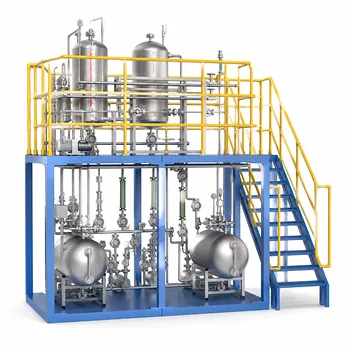
Fluid Transport and Piping Dynamics Practical Training Unit Operations Pilot Plant

Fluid Transport and Piping Dynamics Practical Training Unit Operations Pilot Plant

This industrial-scale fluid transport and piping dynamics training pilot plant provides essential hands-on experience with pump operations, cavitation, piping resistance, flow metering, and process control. Customizable to fit specific academic engineering curricula.

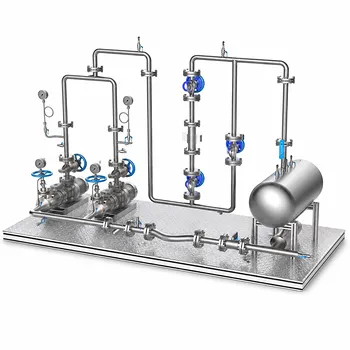
Multi Pump Fluid Transport Process Piping Unit Operations Training Pilot Plant

Multi Pump Fluid Transport Process Piping Unit Operations Training Pilot Plant

Industrial-scale multi-pump pilot plant for unit operations training in fluid transport and process piping, featuring real-material and semi-physical simulation modes, comprehensive pump and flowmeter calibration, and safety-enhanced two-tier platform, bridging academic theory and industrial practice for chemical engineering education.

Chemical Pipeline Assembly and Fluid Transport Practical Training Unit Operations Pilot Plant

Chemical Pipeline Assembly and Fluid Transport Practical Training Unit Operations Pilot Plant

Integrated skid-mounted engineering training pilot plant for university labs offers hands-on experience in chemical pipeline assembly, fluid transport, centrifugal pump operation, and pressure testing. Customizable system bridges academic theory and industrial practice with digital pre-lab resources and comprehensive tools.

Two-Dimensional Fluidization Hydrodynamics Educational Pilot Plant for Unit Operations Training

Two-Dimensional Fluidization Hydrodynamics Educational Pilot Plant for Unit Operations Training

Explore gas-solid and liquid-solid fluidization hydrodynamics with our transparent 2D educational pilot plant. Ideal for chemical engineering unit operations labs, it demonstrates fixed to fluidized bed regimes, measures pressure drop, and integrates QR-code digital learning for enhanced student training.

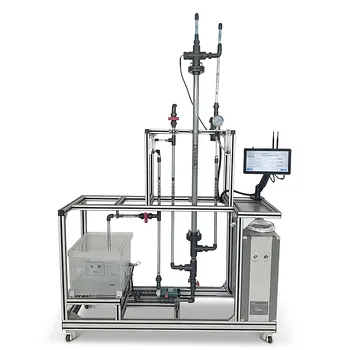
Comprehensive Fluid Mechanics Educational Unit Operations Pilot Plant

Comprehensive Fluid Mechanics Educational Unit Operations Pilot Plant

Hands-on fluid mechanics pilot plant for engineering education covering over 13 principles including pipe flow, minor losses, flowmeter calibration, and pump performance with industrial-grade components, smooth and rough piping, venturi and orifice flowmeters, and centrifugal pump testing and analysis.

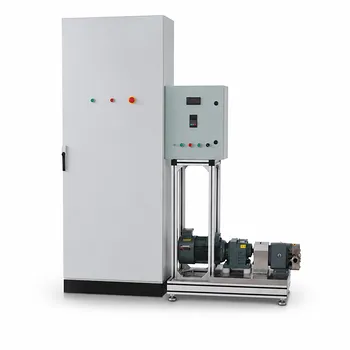
Quantitative Dosing and Liquid Flow Control Educational Unit Operations Pilot Plant

Quantitative Dosing and Liquid Flow Control Educational Unit Operations Pilot Plant

Explore industrial fluid transport and automated process control with this quantitative dosing and liquid flow control educational pilot plant, featuring local and remote control cabinets, variable speed metering pump, high-precision flow sensors, and PLC-based SCADA integration for engineering students.

Multimodal Absorption and Desorption Pilot Plant for Unit Operations Training

Multimodal Absorption and Desorption Pilot Plant for Unit Operations Training

Multimodal absorption and desorption pilot plant for higher education labs. Bridges theory and industrial practice with transparent packed columns, three operational modes (real-material, simulated, semi-physical), and SCADA control. Students explore mass transfer, column hydraulics, and process control. Customizable.

Multi-Reactor Educational Pilot Plant for Reaction Engineering Unit Operations

Multi-Reactor Educational Pilot Plant for Reaction Engineering Unit Operations

Integrated bench-scale educational pilot plant for chemical engineering teaching featuring fixed bed fluidized bed and stirred tank reactors with web-based digital twin controls and safety interlocks for hands-on unit operations and reaction engineering comparative studies in one compact system.

Three-Tube Heat Transfer Educational Pilot Plant for Unit Operations Training

Three-Tube Heat Transfer Educational Pilot Plant for Unit Operations Training

Three-tube heat transfer pilot plant for studying convective heat transfer enhancement and condensation. Allows comparison of smooth, corrugated, turbulent tubes, verifying empirical correlations. Ideal for chemical engineering education with safety and closed-loop steam recovery.

Dual-Mode Rectification Pilot Plant for Practical Training Unit Operations

Dual-Mode Rectification Pilot Plant for Practical Training Unit Operations

Industrial-scale dual-mode rectification pilot plant for chemical engineering practical training. Features real-material and simulated-material operation modes, sieve-plate column with sight glasses for visual observation of hydrodynamics, and customizable SCADA control for safe, hands-on learning of unit operations and mass transfer.

Multi-Functional Membrane Separation Educational Pilot Plant for Unit Operations Lab

Multi-Functional Membrane Separation Educational Pilot Plant for Unit Operations Lab

The Multi-functional Membrane Separation Educational Unit Operations Pilot Plant is an integrated bench-scale laboratory system designed for teaching undergraduate engineering education. It features Ultrafiltration, Nanofiltration, and Reverse Osmosis modules in a compact, mobile unit for practical hands-on learning.

Multi-Functional Drying Educational Unit Operations Pilot Plant

Multi-Functional Drying Educational Unit Operations Pilot Plant

Versatile multi-functional drying educational unit operations pilot plant integrating tunnel, fluidized bed, and spray drying. Enables hands-on study of drying curves, psychrometry, and gas-solid separation for chemical engineering curriculum in higher education labs.

Dual Mode Heat Transfer Pilot Plant for Unit Operations Training

Dual Mode Heat Transfer Pilot Plant for Unit Operations Training

Engineering-scale dual-mode heat transfer pilot plant for hands-on unit operations training in chemical engineering. Features real and simulated modes, multiple heat exchanger types, comprehensive coefficient determination, and advanced process control with data acquisition for engineering students and researchers.

Tubular Reactor Flow Characteristics Determination Educational Unit Operations Pilot Plant

Tubular Reactor Flow Characteristics Determination Educational Unit Operations Pilot Plant

Educational pilot plant for investigating tubular reactor flow characteristics and residence time distribution Features adjustable recycle for plug flow and backmixing studies industrial touchscreen interface and real-time data acquisition Ideal for chemical engineering unit operations laboratory training and education

Orifice and Venturi Flowmeter Calibration Educational Pilot Plant for Fluid Mechanics Laboratory

Orifice and Venturi Flowmeter Calibration Educational Pilot Plant for Fluid Mechanics Laboratory

Enhance fluid dynamics education with the Orifice and Venturi Flowmeter Calibration Educational Unit Operations Pilot Plant, featuring transparent orifice and Venturi meters, industrial sensors, touchscreen interface for real-time data analysis and automatic coefficient calculations in engineering student laboratories.

100L Continuous Loop Hydrogenation Educational Unit Operations Pilot Plant

100L Continuous Loop Hydrogenation Educational Unit Operations Pilot Plant

This 100L continuous loop hydrogenation pilot plant is designed for chemical engineering education, featuring 316 stainless steel construction, advanced gas-liquid mass transfer components, explosion-proof safety systems, and a 15.6-inch touchscreen with 5G connectivity, cloud data logging, bridging theory and industry.

Rising and Falling Film Evaporation Educational Unit Operations Pilot Plant

Rising and Falling Film Evaporation Educational Unit Operations Pilot Plant

Hands-on educational pilot plant for studying rising and falling film evaporation, flow regimes, and heat transfer. Customizable for university labs with industrial instrumentation and data acquisition. Enables comparative evaluation of evaporation modes and energy efficiency.

Multi-Modal Distillation Unit Operations Training Pilot Plant

Multi-Modal Distillation Unit Operations Training Pilot Plant

Multi-modal distillation pilot plant for practical unit operations training in chemical engineering education. Features real, analog, and semi-physical simulation modes, industrial construction, customizable for university labs. Hands-on fractionation columns, SCADA control, safety systems. Includes sight glasses, sampling ports, closed-loop recycling.

Multi Functional Catalytic Reaction and Reactor Evaluation Educational Unit Operations Pilot Plant

Multi Functional Catalytic Reaction and Reactor Evaluation Educational Unit Operations Pilot Plant

Bench-scale educational pilot plant for catalytic reaction and reactor evaluation, integrating fixed bed, fluidized bed, and stirred tank reactors. Students compare reactor designs, evaluate catalysts, and study reaction kinetics and hydrodynamics. Perfect for unit operations labs in chemical engineering curricula.

Educational Unit Operations Pilot Plant for Intraparticle Diffusion Effective Factor Measurement

Educational Unit Operations Pilot Plant for Intraparticle Diffusion Effective Factor Measurement

Designed for chemical engineering university labs, this pilot plant allows hands-on determination of catalyst particle intraparticle diffusion effective factors and gas-solid reaction kinetics using a fixed-bed tubular reactor with industrial touchscreen control, bridging theory and practical reactor design.


Leave Your Message