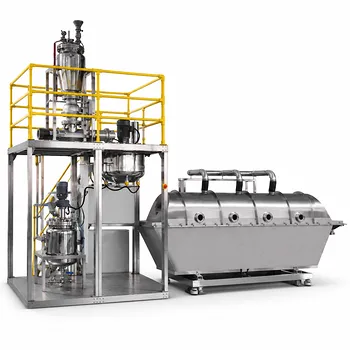
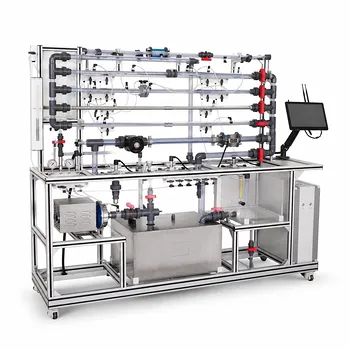
The most effective way to grasp the fundamental difference between physical and chemical separation methods is to operate a pilot plant. Chemical engineering unit operations pilot plants give students and researchers a hands-on environment where physical separations (driven by boiling point, solubility, or size) and chemical separations (driven by reaction, ion exchange, or complexation) can be run side-by-side on the same feed. By measuring stage efficiency, mass transfer coefficients, and energy balances in real time, they see exactly how a chemical reaction can slash energy consumption or boost selectivity compared to a purely physical route. This direct, comparative experience transforms textbook theory into an intuitive, data-backed understanding of when and why each method works.
The real learning happens not by memorizing definitions, but by running controlled pilot-plant experiments that pit physical and chemical separation against each other. This side-by-side comparison reveals the profound impact of chemical affinity on capacity and energy cost, while also making the limitations of each approach unmistakably clear.
The Core Distinction: Physical vs. Chemical Separation
Physical Separation Relies on Inert Property Differences
Physical separation methods exploit differences in physical properties—boiling point, molecular size, density, or solubility—without altering the chemical identity of the components.
In a pilot-scale distillation column, a mixture is separated by vapor pressure difference alone. Membrane filtration uses size exclusion. Extraction driven solely by a solute’s partition coefficient between two immiscible solvents (the “like dissolves like” rule) is a classic physical approach. In every case, no new chemical bonds form.
Chemical Separation Adds a Reactive Driving Force
Chemical separation introduces a selective chemical reaction between a component and an active agent. The solute is temporarily transformed, and that new chemical state dramatically alters its equilibrium or mass transfer behavior.
Liquid-liquid extraction becomes chemical when the organic phase contains a complexing agent that bonds with a metal ion. Absorption of CO₂ into an alkaline solution (e.g., NaOH) is chemical, because the gas reacts to form carbonate. Ion exchange swaps ions via resin functional groups. These reactions radically increase separation capacity and selectivity.
How Pilot Plants Make the Abstract Concrete
From Equations to Physical Reality
Theoretical courses teach equations for mass transfer and equilibrium. A pilot plant translates those symbols into observable temperatures, flow rates, and concentration profiles. Students see that a distillation column’s tray efficiency directly affects product purity, or that the pH drop in a reactive absorption column tracks reaction progress. This tangible feedback locks in the underlying principles.
Instrumentation Turns Data into Insight
Modern pilot plants integrate online sensors—conductivity probes, gas analyzers, thermocouples—mirroring industrial automation. When students compare physical and chemical absorption of CO₂, they log inlet and outlet gas concentrations, liquid temperatures, and flow rates. That data allows them to calculate mass transfer coefficients for both cases and quantify exactly how the chemical reaction enhances the overall rate.
Comparative Experiments: The Key to Deep Learning
Absorption: Water vs. Alkaline Solution
A standard absorption pilot column can be run first with pure water (physical) and then with sodium hydroxide solution (chemical) while absorbing the same acidic gas. The physical run shows a shallow concentration gradient and limited capacity. The chemical run shows a steep gradient, lower equilibrium partial pressure, and a far greater volume of gas dissolved per liter of solvent. By measuring the temperature rise from the exothermic reaction, students link reaction enthalpy to separation efficiency.
Liquid-Liquid Extraction: Solubility vs. Complexation
In a liquid-liquid extraction pilot unit, students can separate an organic solute using a simple hydrophobic solvent (physical). They then repeat the experiment with a reactive extragent—say, an oxime that complexes copper ions in hydrometallurgy. The physical run follows the partition coefficient. The chemical run breaks that limit: extraction capacity and selectivity jump. Monitoring pH and phase ratios shows how reaction stoichiometry governs the process.
Cryogenic Distillation: When Physical Separation Hits Its Limit
Separating close-boiling mixtures like ethene and ethane requires over 80 trays and cryogenic temperatures. A pilot distillation column operating below 273 K lets researchers observe the extreme energy input and column height needed for a purely physical separation. This visceral experience of thermodynamic limitation teaches why industry sometimes pairs distillation with a chemical reaction—such as selective hydrogenation of acetylene—to reduce the separation burden, a lesson that would remain abstract on paper.
Understanding the Trade-offs and Limitations
Scale-Up Gaps and Pilot Plant Boundaries
A pilot plant is a scaled-down model, not a perfect replica. Fluid dynamics, heat loss, and residence time distributions can differ from full-scale equipment. Students learn that pilot data must be de-risked with engineering judgment. A reactive system that works beautifully in a pilot column may face mixing or safety challenges at industrial scale, a critical lesson in practical design.
Capital and Operating Trade-offs Between Methods
Chemical separation often delivers stellar selectivity but at a cost: reagent supply, regeneration, and waste treatment. Physical separation may require extreme temperatures or pressures. Running comparative pilot experiments forces students to log utility consumption, solvent costs, and yield losses. They see directly that the “best” separation is rarely the most selective—it is the one that balances purity, energy, and capital within the overall process.
Safety and Experimental Complexity
Reactive pilot runs introduce exotherms, corrosive chemicals, or catalyst handling. A pilot plant provides a controlled environment to learn inherent safety principles—proper ventilation, quenching, pressure relief—while still exposing users to real hazards. This controlled exposure is impossible in a lecture hall and prepares students for industrial risk management.
Making the Right Choice for Your Learning or Research Goal
Your choice of pilot plant experiment should reflect the specific engineering question you need to answer.
- If your primary focus is understanding mass transfer fundamentals: Run paired absorption experiments using a physical and a chemical solvent. The measured mass transfer coefficients will show the step-change effect of a reaction on liquid-phase resistance.
- If your primary focus is evaluating energy versus selectivity trade-offs: Compare a cryogenic distillation run with an integrated reaction‑distillation sequence. The energy data will make the economic case for chemical conversion preceding physical fractionation unmistakable.
- If your primary focus is scaling a new bioprocess or specialty chemical purification: Start with a physical membrane or crystallization pilot run, then explore reactive extraction as needed. The comparative data builds a robust business case for the separation train.
- If your primary focus is teaching the next generation of engineers: Design a curriculum where the same binary mixture is separated using a physical column and a chemically enhanced column in the same lab session. Real-time purity and energy dashboards will cement the distinction forever.
Operating a unit operations pilot plant does more than teach separation—it builds the intuition to know when physics alone can do the job and when a chemical helping hand is worth the expense.
Summary Table:
| Feature | Physical Separation | Chemical Separation |
|---|---|---|
| Driving Force | Differences in physical properties (boiling point, molecular size, solubility) | Selective chemical reaction (complexation, reaction, ion exchange) |
| Pilot Experiments | Standard distillation, membrane filtration, physical absorption | Reactive absorption (CO₂ + NaOH), reactive liquid-liquid extraction |
| Key Advantage | No chemical consumption or regeneration steps required | High selectivity, capacity, and rate of mass transfer |
| Main Limitation | High energy requirements for close-boiling or dilute mixtures | Reagent consumption, chemical hazards, and complex regeneration |
Bring Hands-On Separation Science to Your Lab
Looking to bridge the gap between textbook theory and industrial practice? LABPARK provides premium Educational and Vocational Unit Operations Pilot Plants in chemical engineering, bioprocess & biotech, and environmental & water treatment.
Designed for universities, research institutes, and enterprises, our pilot plants empower students and researchers to perform side-by-side physical and chemical separation experiments with real-time data tracking.
Ready to upgrade your teaching or research capabilities? Contact LABPARK today to find the perfect pilot plant solution for your lab!
Related Products
- Carbon Dioxide Hydrogen Methanol Synthesis Educational Unit Operations Pilot Plant
- Multi-Reactor Educational Pilot Plant for Reaction Engineering Unit Operations
- Ethyl Acetate Synthesis Unit Operations Pilot Plant for Practical Training
- Multi Pump Fluid Transport Process Piping Unit Operations Training Pilot Plant
- Multi-Modal Distillation Unit Operations Training Pilot Plant
People Also Ask
- How do temp & pressure affect methanol synthesis pilot plants? Optimize equilibrium and catalyst performance.
- Why is a purge system necessary when operating a gas recirculation loop in a methanol synthesis pilot plant? (Guide)
- Why do modern methanol pilot plants operate at lower pressures? Catalyst & Feed Requirements Explained
- What are the operational requirements for catalyst activation? Safe Methanol Pilot Plant Operation
- Why is the chemical plant startup schedule crucial? De-risk scale-up with pilot plants.